


What kind of power supply tests would it be without Seasonic represented? Under this brand, which has long held one of the best reputations among computer power supplies, there are already three lines of power supplies with support for the ATX 3.0 standard. In the tests we will focus on the most affordable one, the Vertex GX. Before we get into the electrical measurement results though, let’s go over the basic design details.
From the outside…
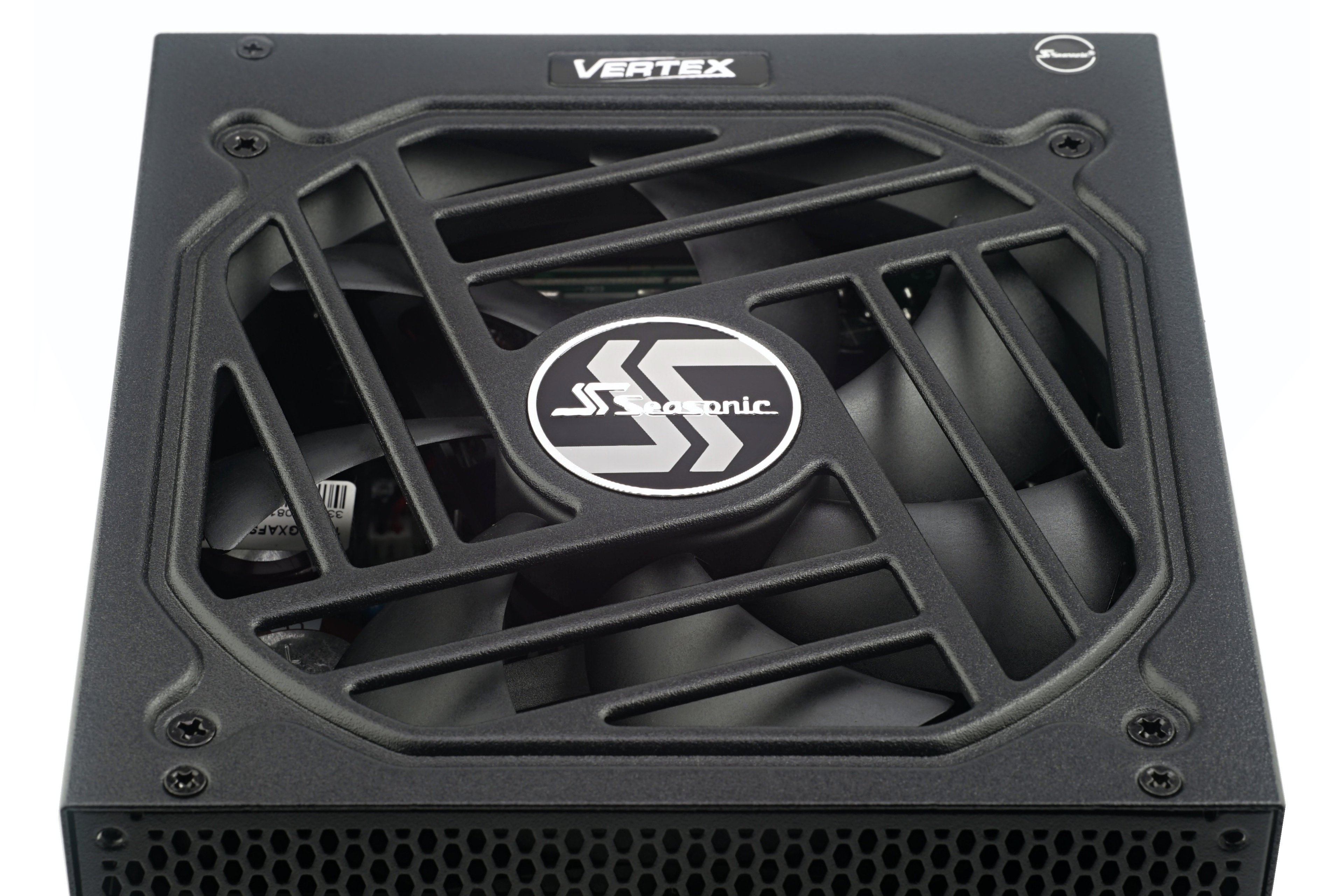
The grille in front of the fan is characterized by both a relatively large degree of opening and a shape that could possibly avoid unpleasant resonant frequencies with unpleasant tonal peaks. This is due to the large holes (with fewer edges on which intake airflow chopping occurs) and rounded edges.
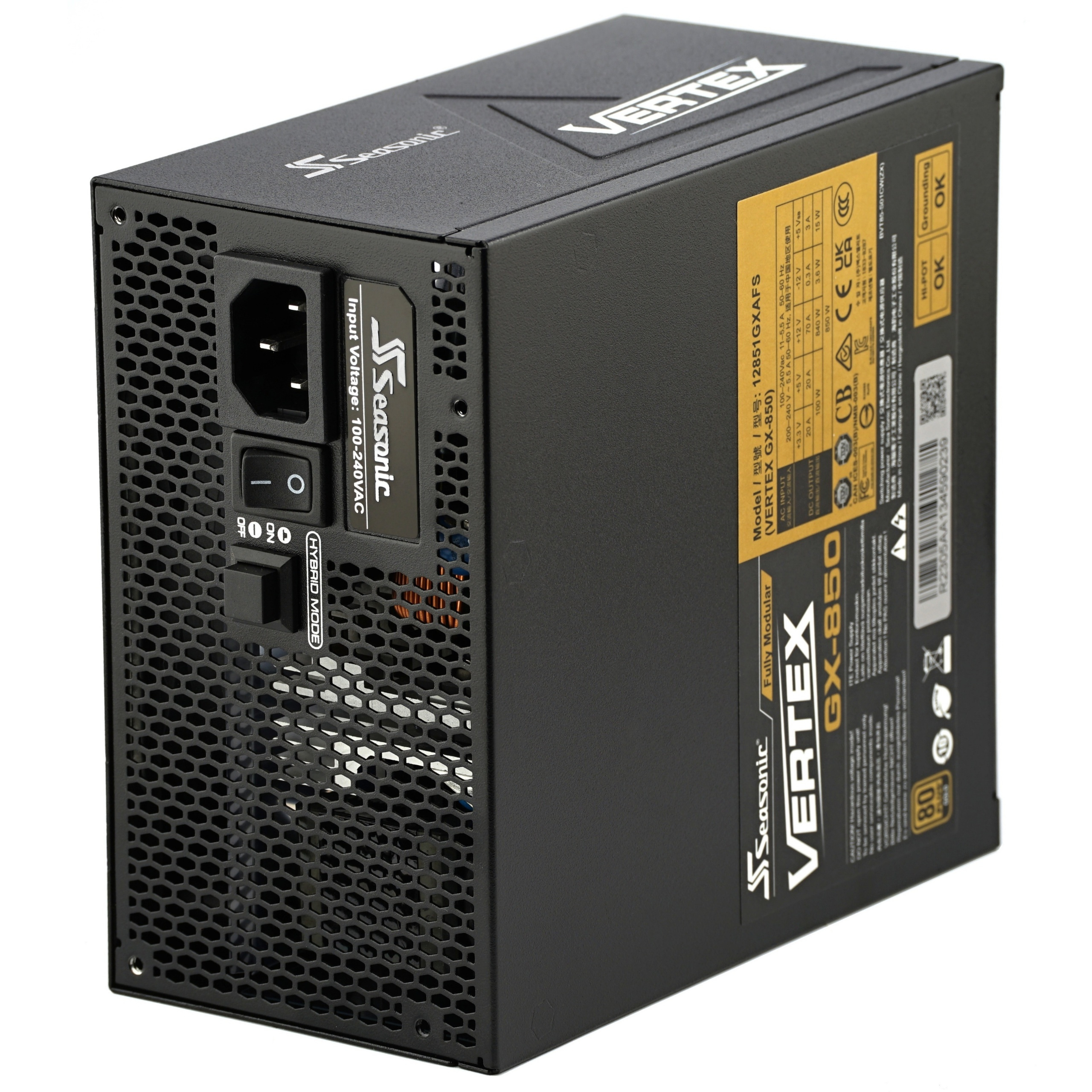
The size of the power supply casing is average, with 160 mm in length. The cabling is fully modular as with virtually all power supplies. However, the design itself is already different. It is neither “glued” flat cables, but nor cables in a common mesh. Each wire has its own insulation and is separated from the adjacent wire.

This design allows for above-standard management where the risk of “too thick bundles” typically of cables in a shared mesh in the space behind the motherboard is minimized, and they can also be better molded in some situations than flat cables with “glued” wires.
The rubber-coated insulation is, moreover, also quite soft, considerably softer than on the older BeQuiet Dark Power Pro 12 power supplies, whose hard cables held their shape almost as if they had a solid core. That’s not the case with this Seasonic design, though. Good flexibility is retained despite the fact that mostly large gauge 1.31 mm2 (16 AWG) wires are used. Smaller cross section (18 AWG) is only used in wires of connectors with lower current carrying capacity. However, all 12-volt CPU and PCIe power cables are made of more robust wires.

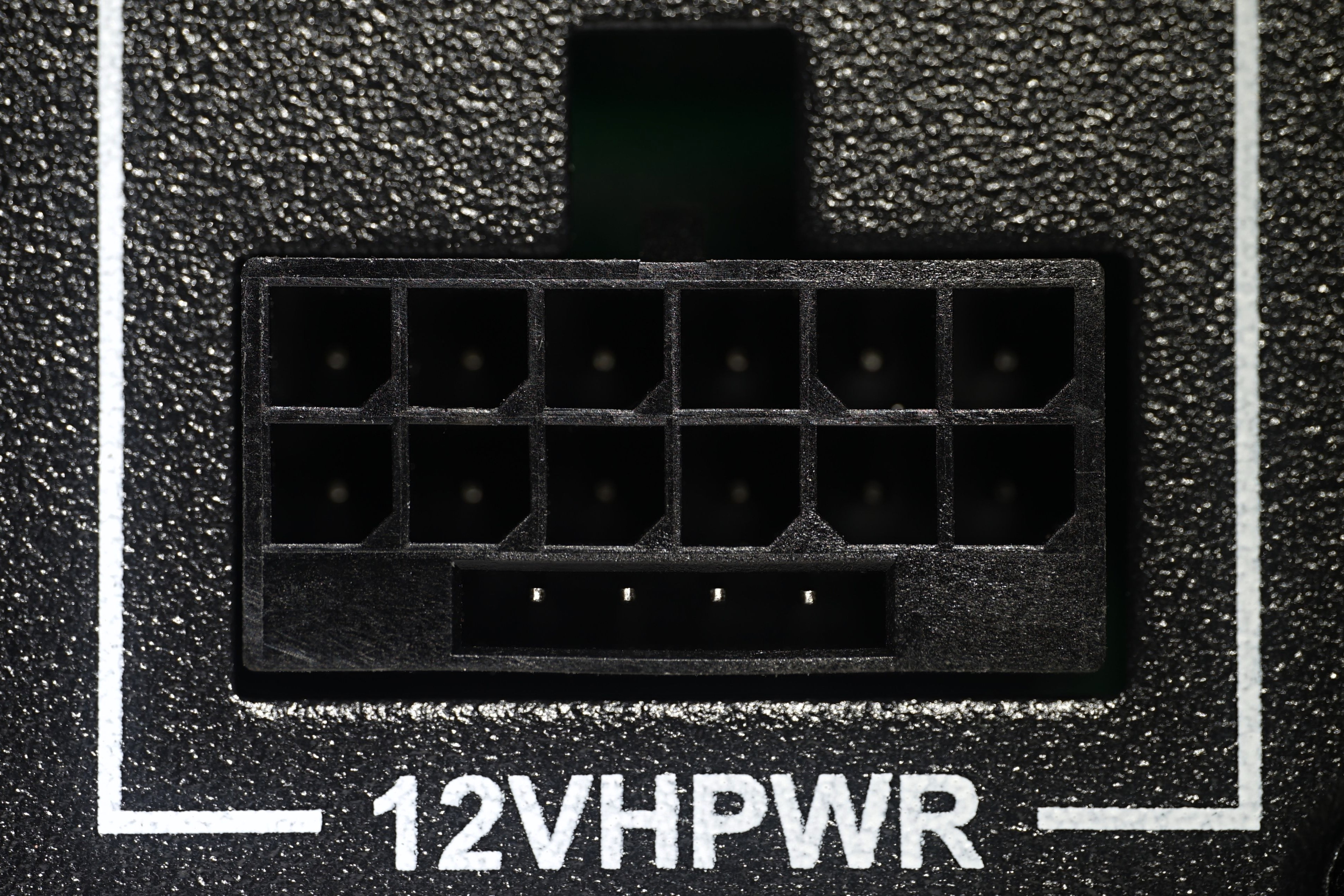
There is one 12VHPWR connector, capable of 600 W (50 A) load as required by the ATX 3.0 standard. There are three traditional 6+2-pin PCI connectors for Radeons or lower-end GeForce graphics cards. All on separate cables.

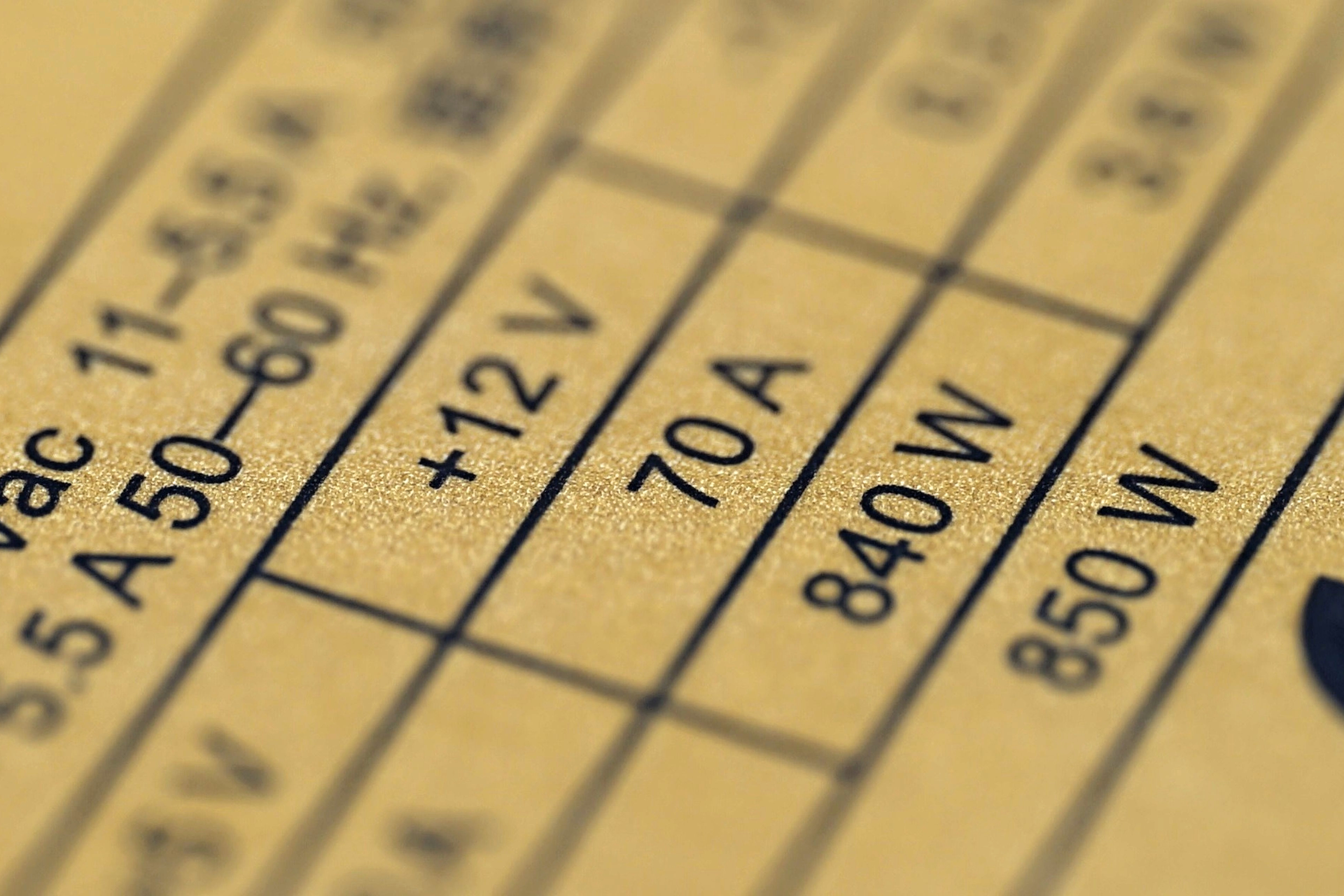
The constant current load on the +12 V branch is 70 A. At peak, for 100 μs, the power supply should sustain up to 140 A. The Seasonic Vertex variant of the test PSU has a sticker rating of 850 W. It’s an 80 Plus Gold certified GX-850 model, which at 230V should achieve 90% electrical efficiency in the most efficient load band around 50%.
Besides the 850 W variant (GX-850), there’s a weaker, 750 W one (GX-750) and two more powerful with 1000 W (GX-1000) and 1200 W (GX-1200).
However, under the Vertex brand but with “PX“, Seasonic also offers models with 80 Plus Platinum rating. And then, only the Prime – TX-1300 (with 1300 W) and TX/PX-1600 (with 1600 W) achieved the “Titan” sticker.
… and from the inside
After a very simple removal of the cover (by removing the four screws, where there is a warranty seal over one of them), you get to, among other things, a 135 mm fan with the designation HA13525F12F-Z. It is connected by a 2-pin connector and uses fluid bearings. By default, cooling is semi-passive, with the fan starting from 30 percent load. This (hybrid) mode is switched off by a button on the rear panel, ensuring active cooling at all times, even at low power supply loads.
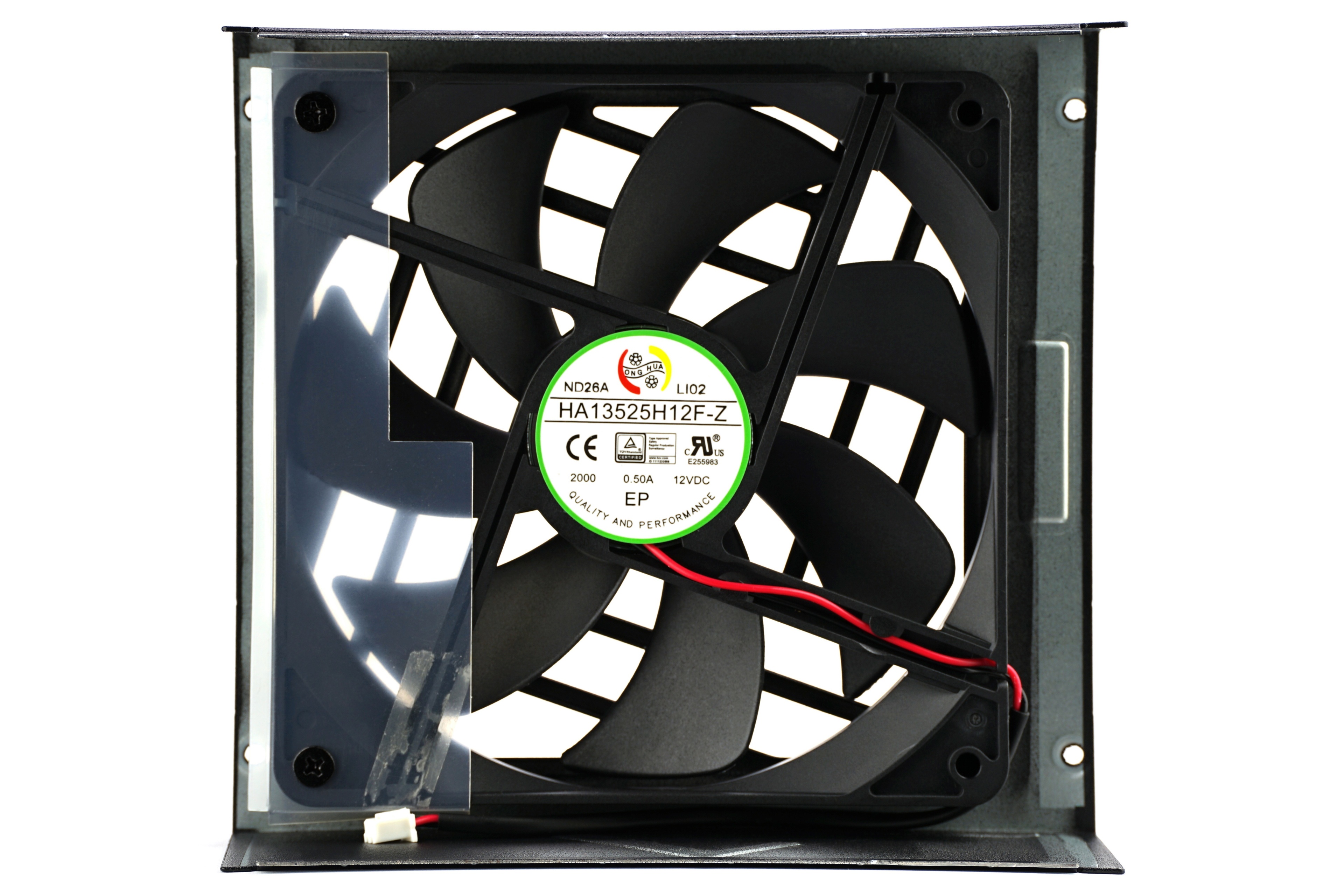
The fan also cools the rather large heatsink on the DC-DC converter. The design of this aluminum monolith is well articulated, comb-like.
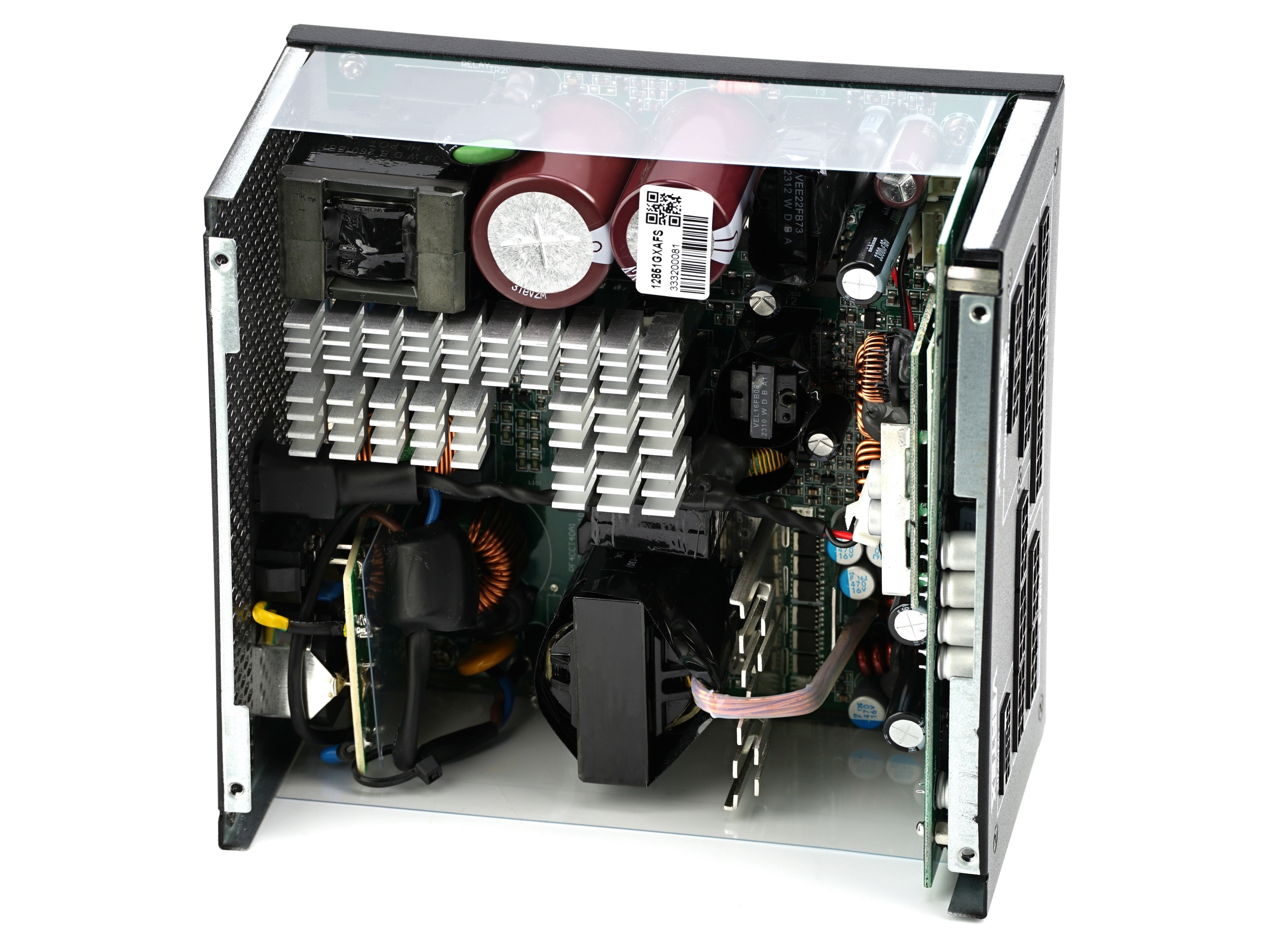
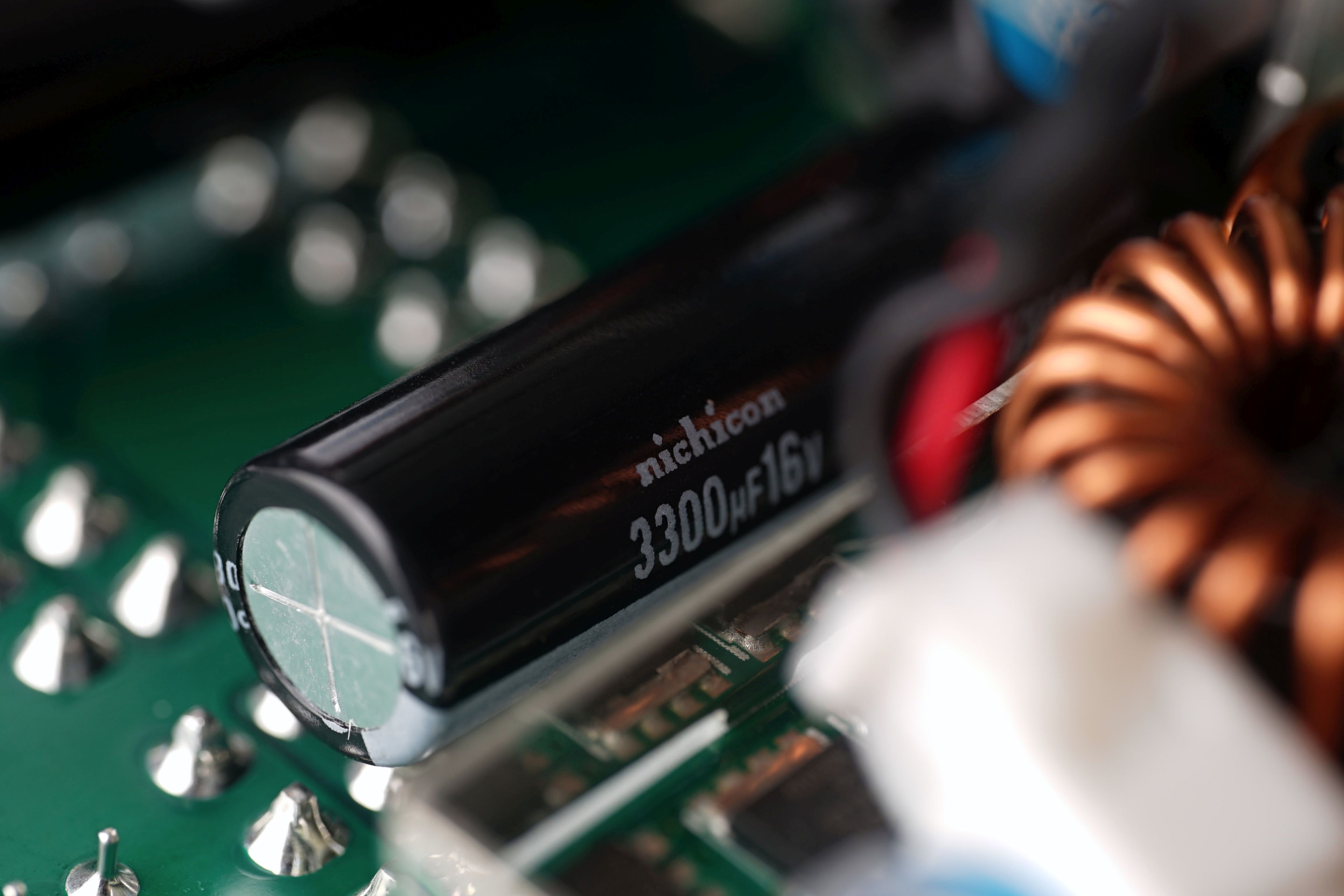
Capacitors are fully under the responsibility of Nippon Chemi-Con’s “105-degree” ones (there are two 420 V KMR models with a capacity of 330 μF in the primary) and Nichicon ones (secondary).

| Brand and model of the PSU | Basic parameters from the manufacturer | Price [eur] | ||||||||||
| Power output [W] | Continuous current load [A] | 80 Plus | Connectors | AWG | ||||||||
| +12 V | +5 V | +3.3 V | 16-pin * | 6+2-pin * | 8/4+4-pin | SATA | 4-pin Molex | |||||
| Seasonic Vertex GX-850 | 850 | 70.0 | 20.0 | 20.0 | Gold | 1+0× | 3+0× | 2× | 8× | 3× | 18–16 | 200 |
| Enermax ERT850 EWT | 850 | 70.5 | 20.0 | 20.0 | Gold | 1+1× | 4+0× | 2× | 12× | 6× | 18–16 | 160 |
| BeQuiet! Dark Power 13 | 850 | 70.0 | 24.0 | 24.0 | Titanium | 1+0× | 4+0× | 2× | 12× | 3× | N/A | 250 |
| DeepCool PX1000G | 1000 | 83.3 | 22.0 | 22.0 | Gold | 1+0× | 3+0× | 2× | 7× | 4× | 18–16 | 180 |
| MSI MPG A850G | 850 | 70.8 | 22.0 | 22.0 | Gold | 1+0× | 4+2× | 2× | 7× | 4× | 18–16 | 169 |
* The number of PCI Express connectors is given as the sum of native and shared connectors (the second number after the “+” sign). Native connectors are those that are the same on both sides. Shared ones are then connected via different connectors on the power supply side, for example, a single 300-watt 16-pin (12VHPWR) is created by using two 6+2-pin connectors, and vice versa – a 16-pin connector can be used to connect a cable with two 6+2-pin connectors.
English translation and edit by Jozef Dudáš



