



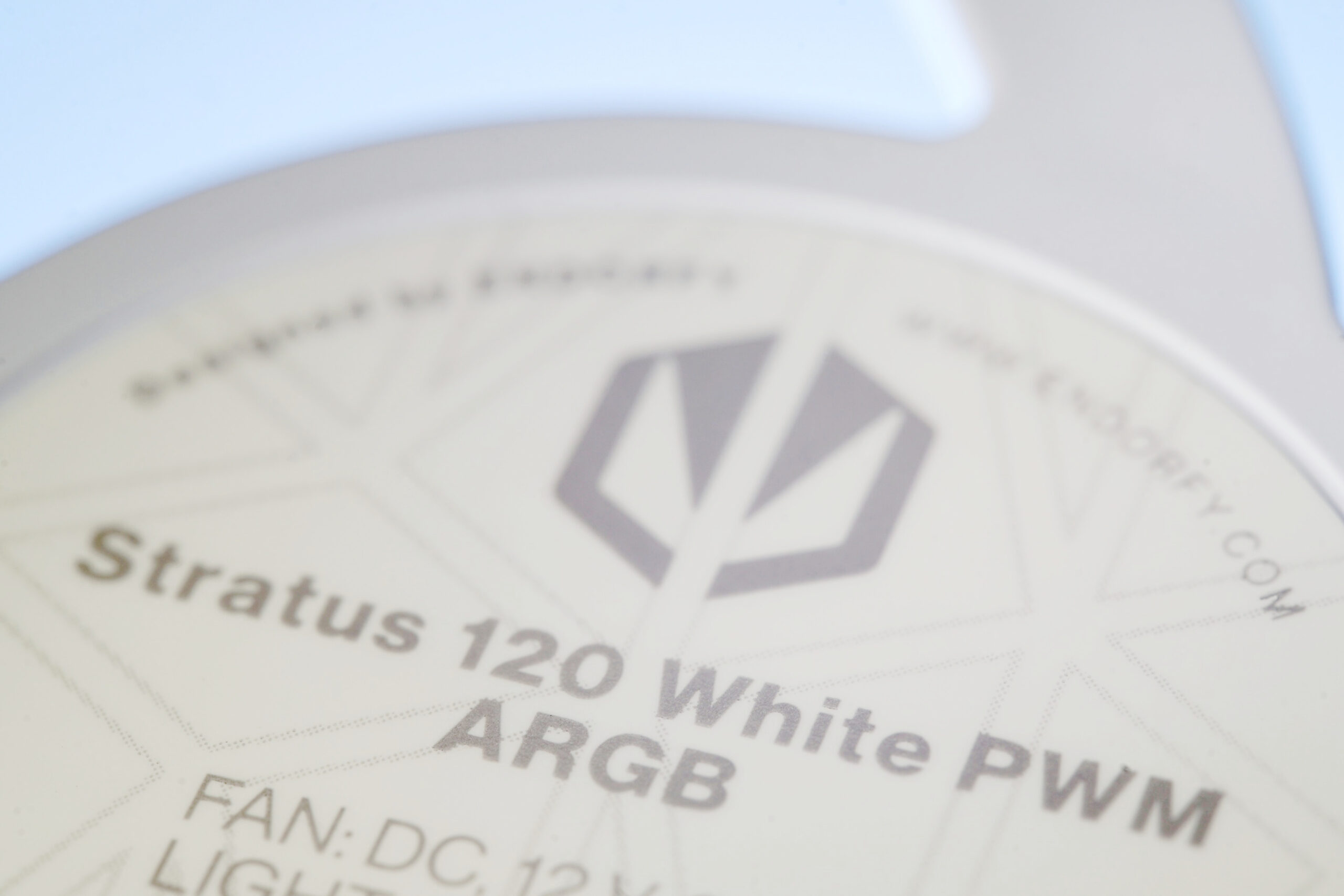
Efficient ARGB fans are rare—especially when, in addition to a low price, they also offer a less common variant. In this case we mean white materials, from which the illuminated Stratus fans are made. To begin with, here is an analysis of these fans in the physical 120 mm format. Prepare for tests packed with details that this article brings. A serious candidate for selection? Absolutely.
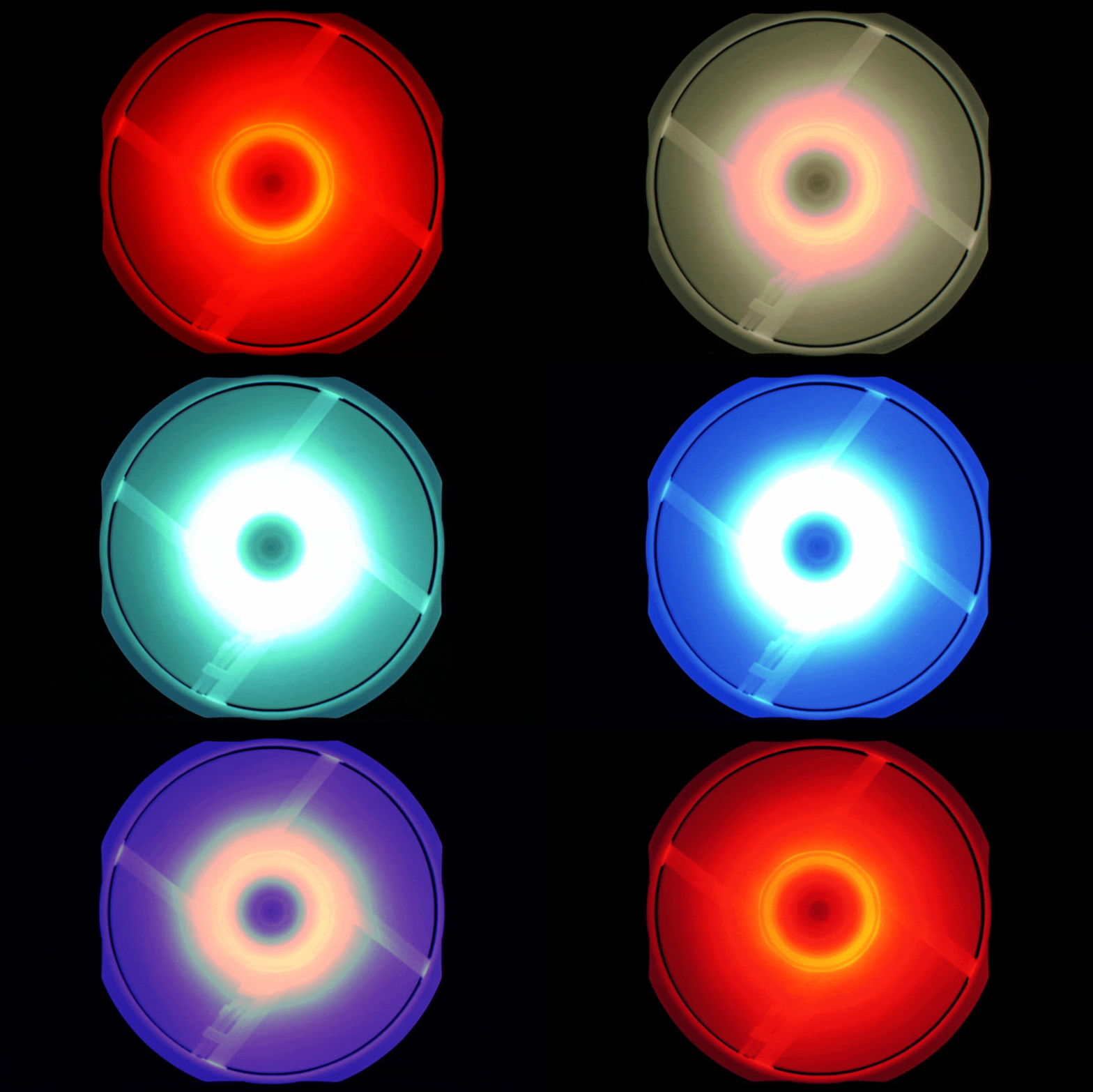
The impeller of the Stratus 120 White ARGB fan is made entirely from a light-conductive material (possibly polycarbonate?) characterized by a lower thickness. There is therefore some flexibility here in combination with the selected geometry. However, the key information for this part is that the fan glows very brightly, yet it can also be significantly dimmed (to lower brightness), typically for darker environments.
The leading edges of the blades are quite noticeably curved, which points to higher, modern aerodynamic efficiency. This is, of course, dependent on several aspects, also defined by the angle at which the blades are pitched and by the obstacle against which the fan operates. In other words—how high the static pressure is.
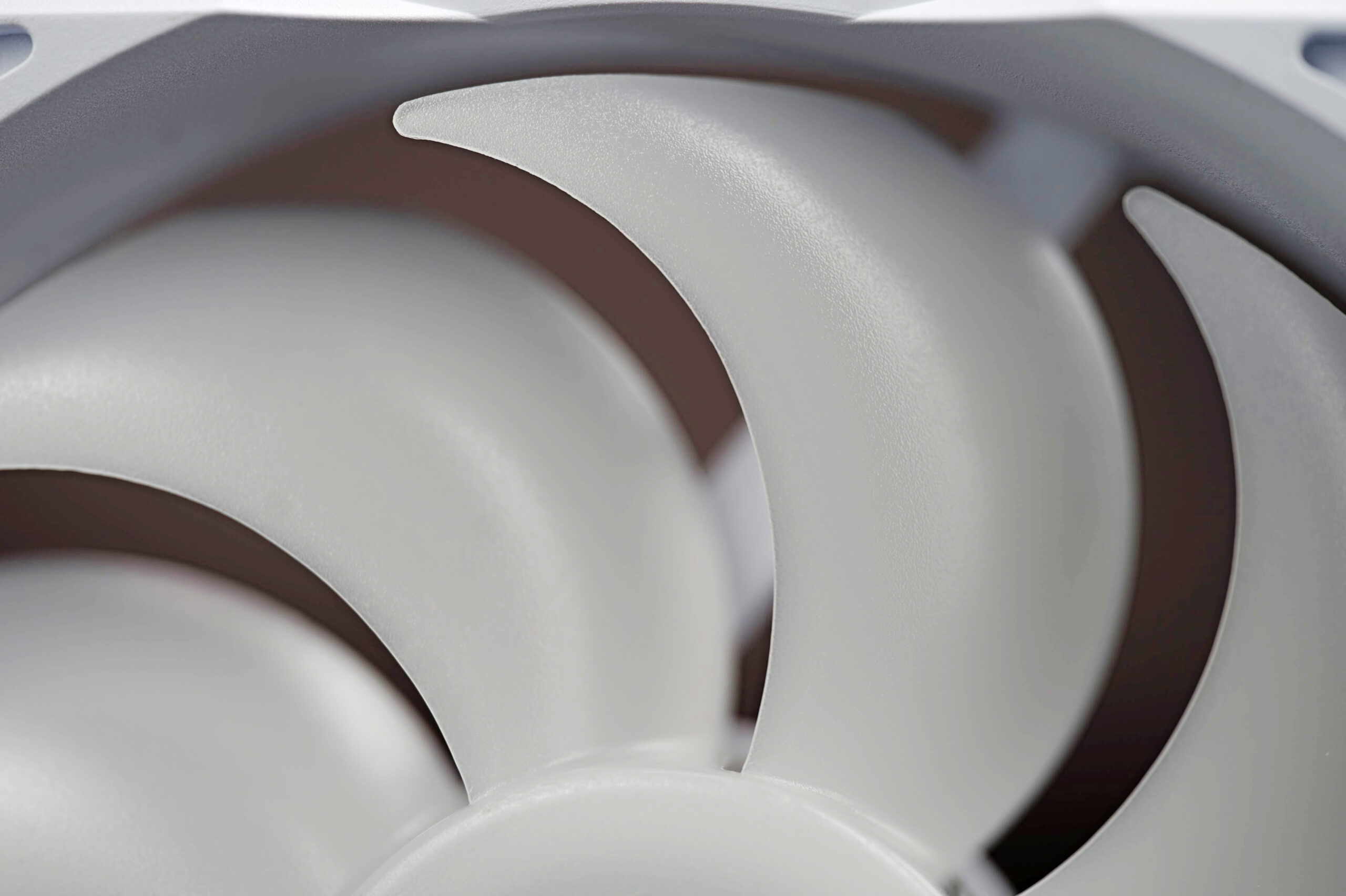
That (static pressure) could be above average, meaning the drop in airflow when resistance from an obstacle increases may not be particularly dramatic. But that is precisely why practical measurements on real obstacles are necessary, which we perform (and which you will also find in the following chapters of the article). In any case, the front view of the fan looks good—efficient.
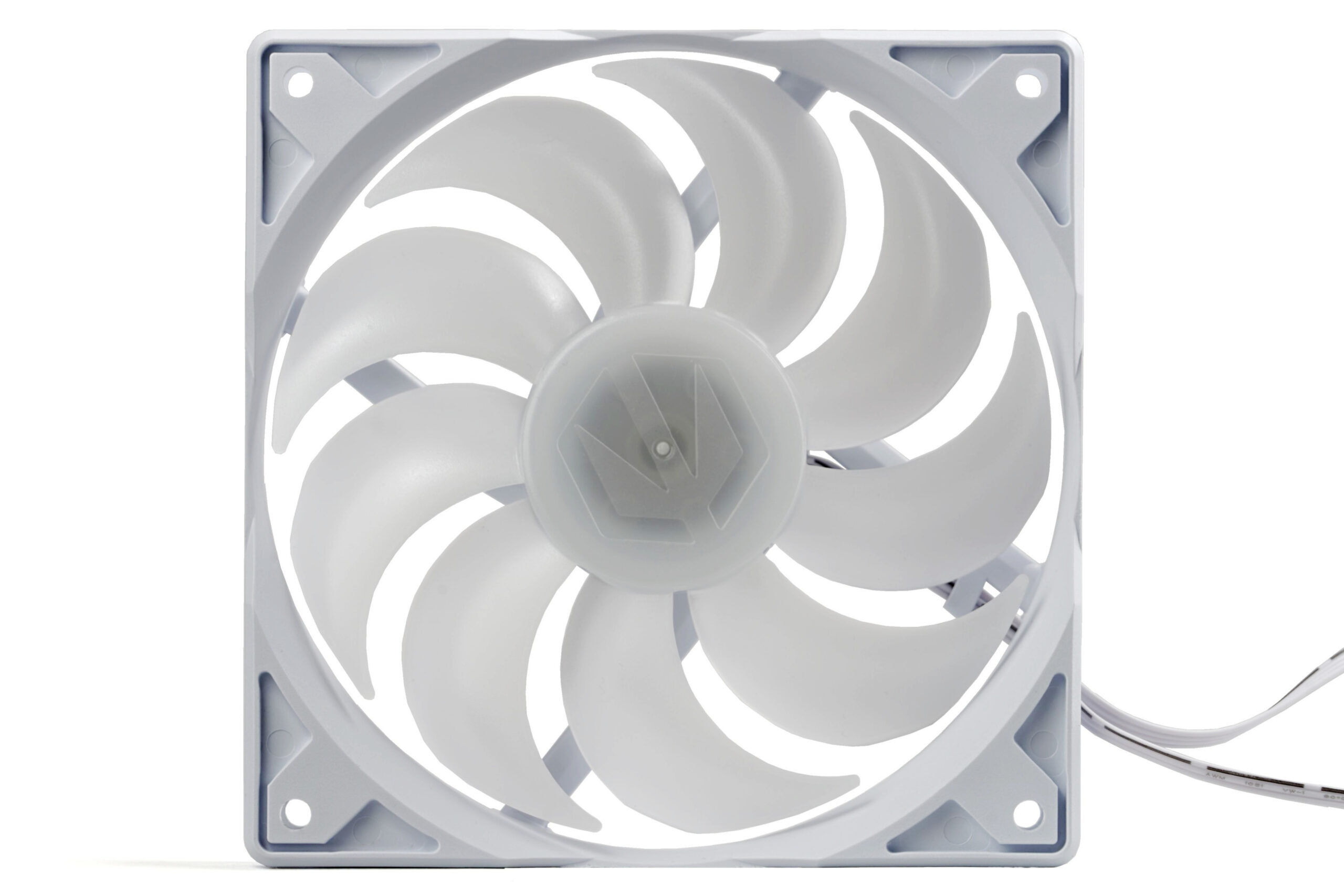

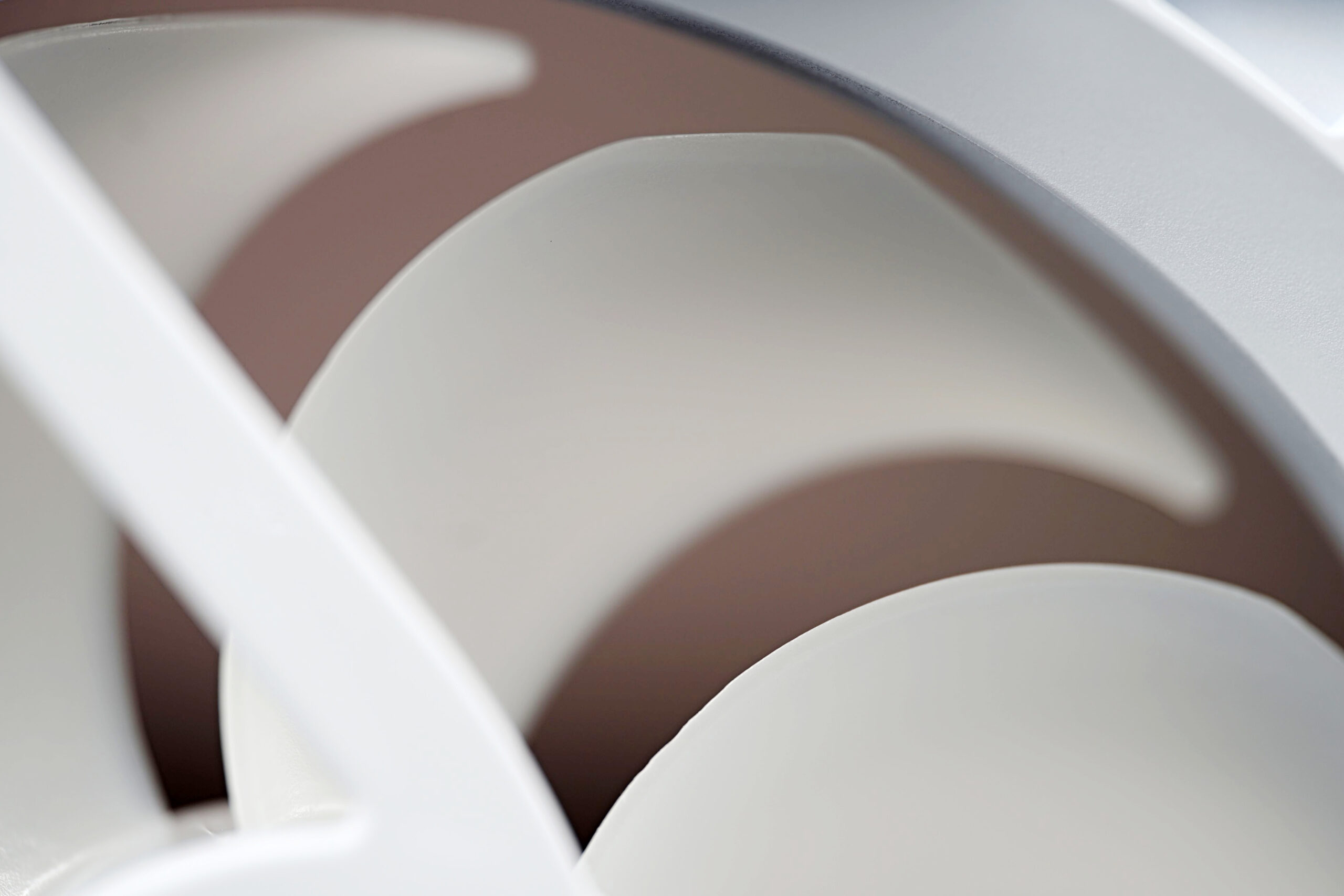
The blades, incidentally with larger “bellies”, are otherwise smooth on both sides—without elements that would influence acoustic or performance characteristics in any way. The Endorfy Stratus 120 White ARGB is simply a straightforward fan, where attention was paid to achieving higher efficiency already in the fundamental shapes.
The fan cables are long (both the 4-pin PWM and the 3-pin ARGB measure approximately 60 cm), but each ends with only a single connector. To interconnect multiple fans, you will therefore need an optional adapter. The accessories include four mounting screws—and that is essentially all.
Please note: The article continues in the following chapters.



For next time (maybe Friday?), how about the Antec Storm 120? That’s the plan, so that we get rid of the, well, 4-year long backlog. 🙂