Nvidia Changes Course, DLSS 5 Coming to Some Older Cards

Nvidia finally released DLSS 5 last week, which you could read about here (and we covered the impact on performance and power draw here). There were also some unpleasant news: when Nvidia announced the first game launch (the release of NBA2K27), the company stated DLSS 5 support would only be available on GeForce RTX 5000 cards, not on older generations. Now, however, there has been a change of course. Read more “Nvidia Changes Course, DLSS 5 Coming to Some Older Cards” »

mVolt+ Unlocks Forbidden GeForce RTX 5000 Overclocking Options

Overclocking graphics cards is quite different from how “OC” works on CPUs. GPUs generally operate at fairly low voltages and clock speeds, and their overclocking is mostly artificially limited by various power or voltage limits in the drivers and firmware. The same is true of Nvidia’s current cards. But the artificial OC limits have now been bypassed, so it may be possible to extract significantly higher performance from them, although not without risks. Read more “mVolt+ Unlocks Forbidden GeForce RTX 5000 Overclocking Options” »

DLSS 5: First Game Out, Inner Workings and Performance Cost

The files of the AI game image enhancement technology DLSS 5 have leaked last week, and modders added the filter to the first games—unofficially. However, the official launch was not far behind. Nvidia has announced that it is now officially launching in the first game, NBA2K27, which is also the title from which the files previously leaked. Starting tomorrow, you will be able to try out what it looks like and what its costs are. Read more “DLSS 5: First Game Out, Inner Workings and Performance Cost” »

Nvidia Has Launched Improved DLSS 4.5 with Ray Reconstruction

In spring, Nvidia announced a new version of the DLSS 4.5 gaming upscaling technology coming in August, promising improved output quality, through settling a debt of sorts: The DLSS 4.5 technology eliminated the Ray Reconstruction technology (originally introduced as part of DLSS 3.5), so you lost access to it when enabling DLSS 4.5. Now this incompatibility has been solved, and Ray Reconstruction is also coming to DLSS 4.5. Read more “Nvidia Has Launched Improved DLSS 4.5 with Ray Reconstruction” »

HWiNFO Now Shows Temps of Individual Video Memory Chips

Not long ago, HWiNFO gained the ability to monitor GPU hotspot temperatures—local hotspots with significantly higher temps than the average having been reported by Nvidia chips. This has been followed by another improvement in graphics card temperature monitoring. You will now be able to look at the temperatures of all memory chips on the card, which can reveal cooling problems in much the same way as the GPU hotspot temperature. Read more “HWiNFO Now Shows Temps of Individual Video Memory Chips” »

Nvidia unveils its most powerful GPU yet: 3nm Rubin for AI

Presenting at SIGGRAPH 2026, Nvidia has revealed more details about its latest upcoming GPU generation—Rubin. We are talking about the Rubin GPU for data centers and artificial intelligence though, not gaming graphics cards. The Rubin AI accelerator will be more important to Nvidia, though, as it promises the company hundreds of billions of dollars more in revenue from various firms hoping to establish themselves in the AI sector. Read more “Nvidia unveils its most powerful GPU yet: 3nm Rubin for AI” »

Even a Temperature Sensor Failed to Prevent 12V-2×6 Cable Melting

The new 12VHPWR—later renamed to 12V-2×6— power connector is plagued with persistent reliability issues involving random overheating, melting, and even burning ever since Nvidia graphics cards adopted it. Since then, every conceivable company—that notably not including Nvidia itself—has been trying out various workarounds. However, it seems that the connector’s tendency to fail is so consistent that even thermal protection cannot stop it. Read more “Even a Temperature Sensor Failed to Prevent 12V-2×6 Cable Melting” »

Nvidia plans GeForce RTX 5090 SE graphics. A chance for gamers?

A few days ago, we reported that the previously canceled GeForce RTX 5080 Super card is once again on track for launch. It was expected to be the fastest model in the Blackwell refresh lineup, but Nvidia is apparently preparing another model above it. However, it will not officially carry the “Super” designation, since it will be a cut-down sibling of the flagship GeForce RTX 5090. As such, it could prove to be an attractive card for gamers. Read more “Nvidia plans GeForce RTX 5090 SE graphics. A chance for gamers?” »

Seasonic confirms Nvidia’s incoming GeForce RTX 5080 Super GPU

If you’re planning to buy an Nvidia graphics card, it may be worth waiting. Nvidia apparently works on a “Super” branded refresh GeForce RTX 5000 cards. In the past, Super models have often offered significantly better specs and a superior price-to-performance ratio than the first wave of cards in a given generation, so the RTX 5000 Super lineup could also improve the product stack like that—including upping the problematic VRAM capacity. Read more “Seasonic confirms Nvidia’s incoming GeForce RTX 5080 Super GPU” »

Nvidia’s plans with Spark CPUs: Next generation, lower-cost chips

Nvidia unveiled its own RTX Spark laptop CPUs at Computex, with considerable support from PC manufacturers and Microsoft, who clearly expect Nvidia processors to capture a significant share of the PC market. Whether that’s achievable for the first generation, which has been delayed by more than a year, remains to be seen. Nvidia, however, already has a full roadmap of successors in development and revealed it at Computex. Read more “Nvidia’s plans with Spark CPUs: Next generation, lower-cost chips” »

Intel Titan Lake, Hammer Lake CPUs detailed: Unified Core and HT

We previously covered information about Intel’s future Razor Lake processors, expected to launch as the Core Ultra 500 generation likely at the end of 2027 (that is, after the upcoming Nova Lake generation). Moore’s Law is Dead, who leaked those details, also revealed information about the following generations—Titan Lake and Hammer Lake. These are even further out, but they will introduce a long‑awaited, radical architectural shift. Read more “Intel Titan Lake, Hammer Lake CPUs detailed: Unified Core and HT” »

Asus ROG Equalizer: Robust 12+4pin connectors that don’t burn?

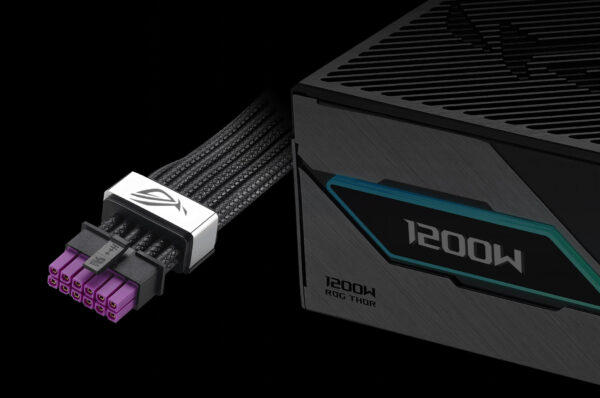
Failures of the 12V‑2×6 power cable (formerly 12VHPWR) have become the scourge of recent GPU generations. Especially for Nvidia cards pushing this power standard, but also for a few Radeon models using these connectors. Various attempts to work around or mitigate the risks have popped up; this time, Asus is introducing the Equalizer special‑purpose cable for its power supplies, that aim to prevent connector melting in several ways. Read more “Asus ROG Equalizer: Robust 12+4pin connectors that don’t burn?” »

A deal that could change everything: Nvidia to acquire a PC maker

A report surfaced online last week that may not be entirely surprising given how wealthy Nvidia has become, but the potential consequences would be shocking. According to SemiAccurate, run by longtime IT journalist Charlie Demerjian, Nvidia is preparing to acquire a major PC vendor—or at least a “PC‑oriented company.” Such an acquisition could turn Nvidia into a vertically integrated market hegemon similar to Apple. Read more “A deal that could change everything: Nvidia to acquire a PC maker” »

Nvidia GeForce RTX 50 Series: Your ideal graphics studio

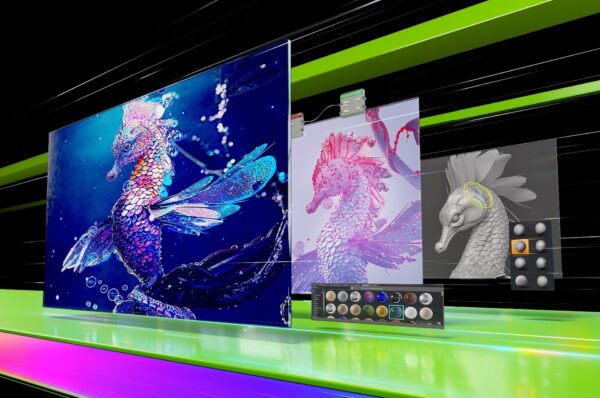
NVIDIA GeForce RTX GPUs are the most popular solution for PC gaming, but they are also designed for use across a wide range of semi‑ and fully‑professional workflows and creative tasks. NVIDIA Studio drivers open give GeForce RTX 50‑series GPUs in desktops and laptops capabilities that were previously limited to much more expensive professional GPUs. That means you can confidently tackle demanding 3D work with them. Read more “Nvidia GeForce RTX 50 Series: Your ideal graphics studio” »

Nvidia App solves the problem of long shader compilation in games

Yesterday we reported on an update to the Nvidia App utility for GeForce graphics cards, which brought owners of the latest‑generation GPUs the ability to use 6× frame generation and a dynamic mode in DLSS 4.5. But that’s not the only new feature the company has prepared. This version of Nvidia App includes another improvement that can free you from the annoying waiting for shader compilation, which often takes several minutes. Read more “Nvidia App solves the problem of long shader compilation in games” »

1 2 3