


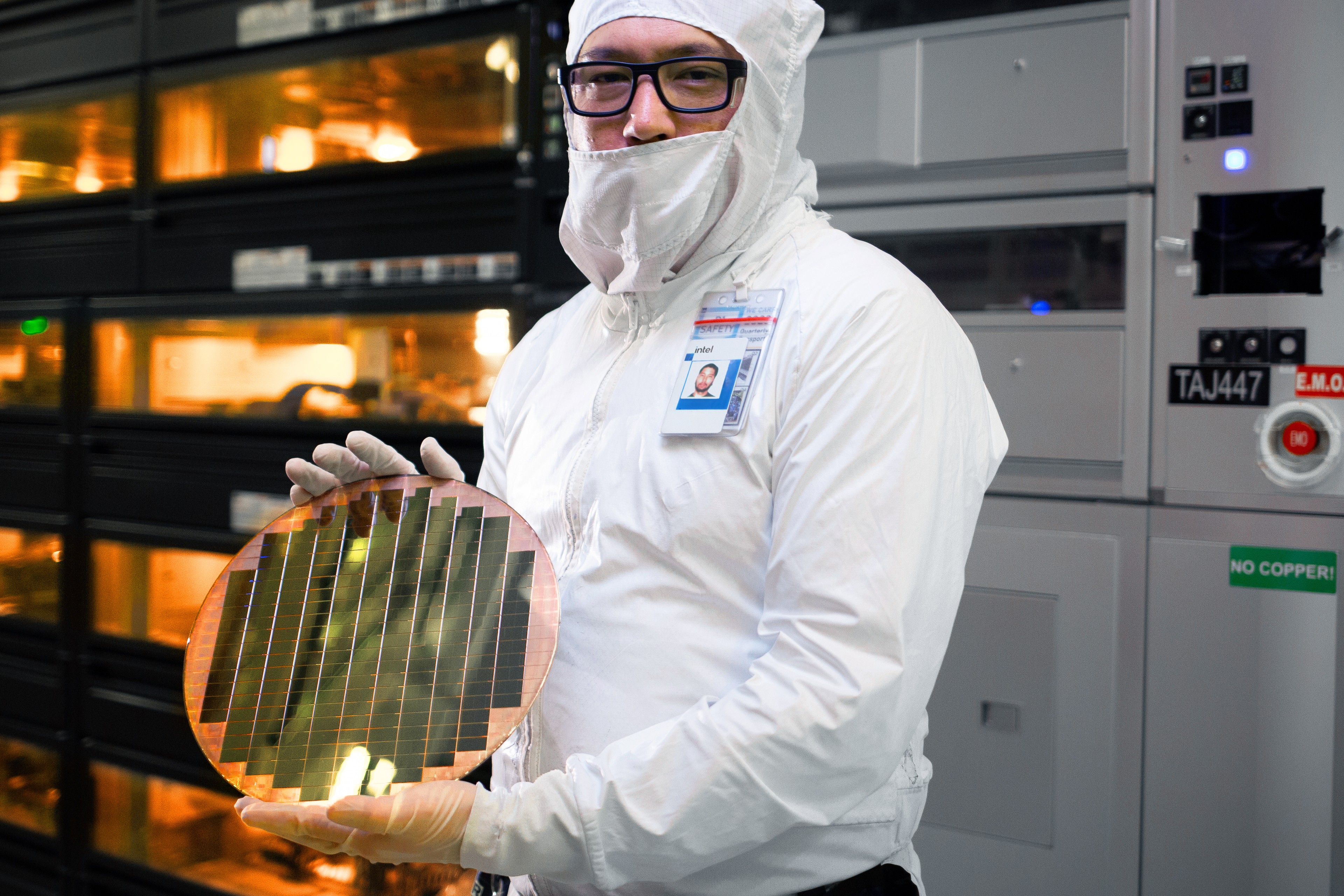
Intel needs to secure large (and numerous) external customers for its chip fabs to be able to keep them running. So far, Intel Foundry has been generating multibillion-dollar losses every quarter—but now it may have glimpsed light at the end of the tunnel. Companies are currently looking to diversify away from their dependence on TSMC, and partly thanks to this, Intel has apparently managed to land a very important customer: Nvidia.
The Taiwanese website DigiTimes reports that Intel has finally begun to see success in attracting potential customers, possibly also due to pressure from the US administration to promote domestic manufacturing. Reportedly, Apple is now planning to cooperate with Intel in some form, and orders for chip manufacturing in its fabs (using its technology) are also apparently being prepared by Nvidia, currently the most valuable company in the world and dominating the chip industry.
Nvidia is said to be planning to use Intel Foundry fabs for the production of its future generation GPU, codenamed Feynman, which is expected to reach the market around 2028. Either the 1.8nm process (Intel 18A), which is now ramping up for Core Ultra 300 processors, or its successor, the 1.4nm Intel 14A node, is to be used. Note, however—Nvidia does not intend to bet everything on Intel. This initial cooperation is to be limited in scope, to mitigate any risks. A similar approach is expected for the manufacturing Apple is planning to do at Intel.
Feynman GPUs are also expected to use TSMC as a supplier, with its technologies continuing to play the main role, accounting for a larger total amount of silicon in the final product. This also means that Taiwanese technology is to be used for the most critical parts—especially the performance-critical compute chiplets (for these, it should reportedly be the 1.6nm process). Intel would be entrusted with less critical chiplets with a smaller die area—according to DigiTimes, it is likely to be silicon playing a role similar to IO chiplets as known from AMD processors. Nvidia could also design a fallback version of the component intended for TSMC’s process in theory, to ensure the whole product is unaffected in case the design on Intel’s process does not work.
Given that this is supposed to be a “small production volume,” Apple and Nvidia by themselves will not yet be the salvation Intel needs. However, with these companies as clients validating Intel’s viability, it will be easier to attract additional customers, and it can be expected that if the first product generations are successful, these companies will then be willing to award Intel further, larger, and more lucrative contracts.
In addition to manufacturing IO chiplets on the 18A or 14A technologies, Nvidia also wants to use advanced packaging on Intel’s lines and its EMIB technology. According to DigiTimes, Intel should package 25% of the total Feynman GPU production volume, while TSMC’s lines will handle the remaining 75%.
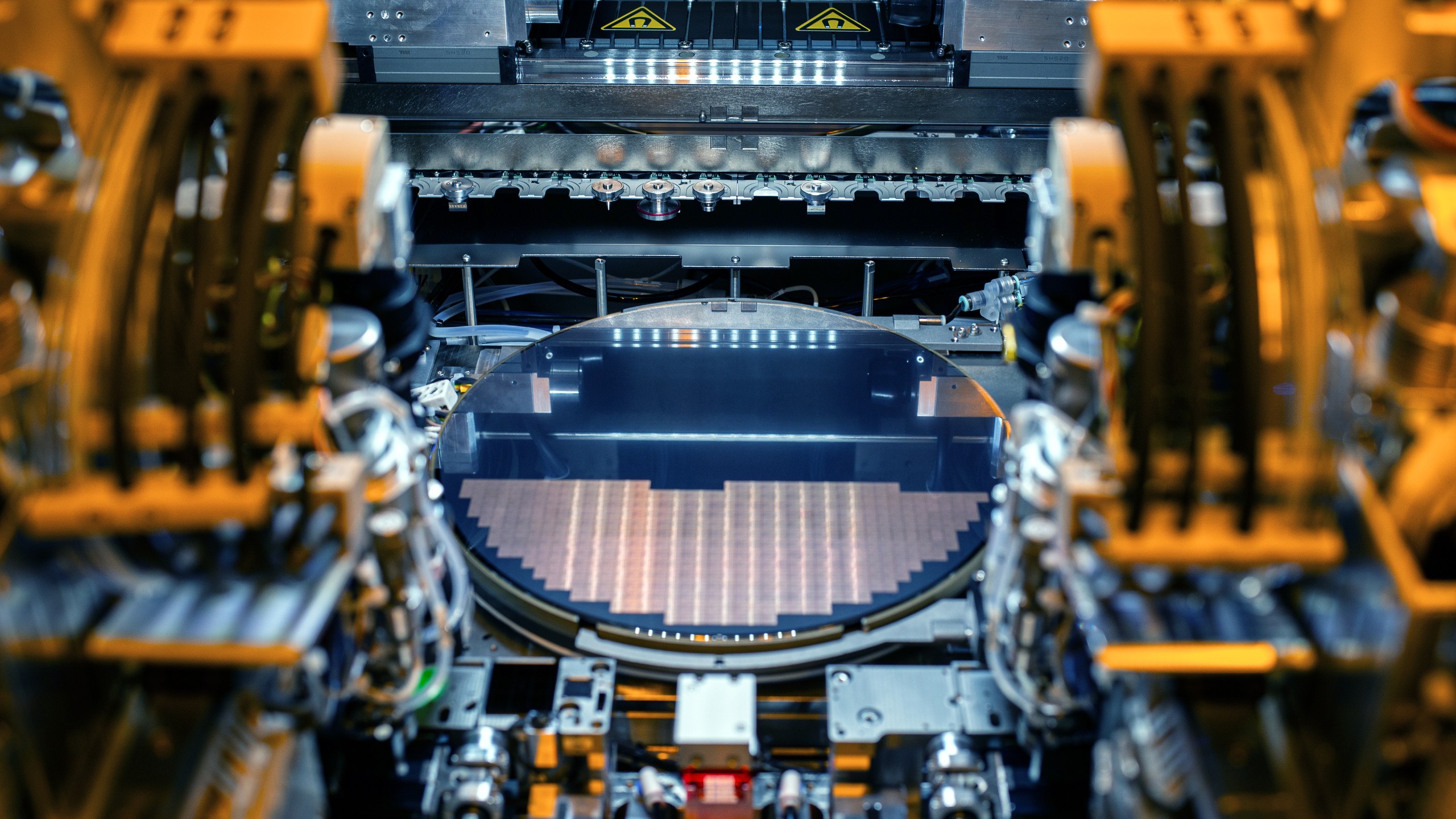
In Apple’s case, leaked reports so far suggest that the company could use Intel’s technology and fabs to manufacture some processors from the M series for notebooks. These would, however, specifically be cheaper tier of SoCs, giving Apple a hedge against the risk that the bet on Intel might fail. While such a failure would create problems if it happened with top-tier flagship chips, it would not be such a big issue with SoC made for lower-cost notebooks, as these could simply be replaced with relabeled silicon from the previous generation. It’s also likely that it would not matter much if Intel’s technology delivered lower performance (clock speeds) in these lower price-tier products.
It’s interesting that the fate of Intel’s chip technology was actually not considered certain until quite recently. The new CEO, Lip-Bu Tan, sent rather stark warning messaging when he stated that if sufficient external customers were not found, future processes would be canceled. The company now has two major customers (reportedly Apple and Nvidia), and this seems, for the time being, to have allayed Lip-Bu Tan’s reservations on investing into Intel Foundry.
Indeed, when announcing the latest quarterly results, it was already stated that Intel is fully invested in ramping up the next 1.4nm process (Intel 14A technology), and its cancellation is no longer being considered. That is good news, and hopefully Intel Foundry will manage to establish itself in the market as a long-term viable competitor to TSMC—even though, of course, it is still too early to be certain, as it is not yet clear whether the currently planned collaborations with Apple and Nvidia will ultimately be fully successful.
Source: DigiTimes
English translation and edit by Jozef Dudáš
⠀


