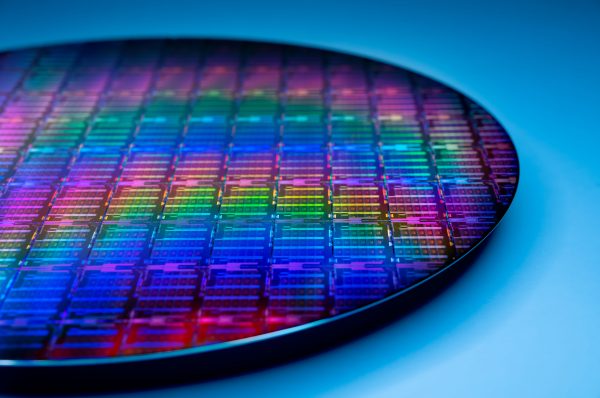

Future Apple Silicon processors will be fabbed by Intel Foundry

For a while, we’ve been seeing reports that Apple could become one of the key major customers Intel signed up for chip production in its Foundry fabs—a critical factor in Intel’s long-term effort to turn the fab division around. At first, this may have been little more than Intel shareholder’s wishful thinking, but it appears the contract may indeed happen, with Intel set to manufacture Apple chips—for laptops as well as mobile phones. Read more “Future Apple Silicon processors will be fabbed by Intel Foundry” »

Next-gen chips: TSMC announced 1.3 nm and 1.2 nm processes

A year ago TSMC introduced 1.6 nm and 1.4 nm chip technologies, which represent—or better said will represent—the most advanced manufacturing nodes for silicon logic circuits that power all modern electronics. Now TSMC has revealed the next milestone: 1.3 nm and 1.2 nm nodes, pushing capabilities even further. Practically all chipmakers and the innovations we’ll see from them in the coming decade depend on TSMC’s technology. Read more “Next-gen chips: TSMC announced 1.3 nm and 1.2 nm processes” »

Intel reportedly landed a deal for fabbing Nvidia’s Feynman GPU

Intel needs to secure large (and numerous) external customers for its chip fabs to be able to keep them running.  So far, Intel Foundry has been generating multibillion-dollar losses every quarter—but now it may have glimpsed light at the end of the tunnel. Companies are currently looking to diversify away from their dependence on TSMC, and partly thanks to this, Intel has apparently managed to land a very important customer: Nvidia. Read more “Intel reportedly landed a deal for fabbing Nvidia’s Feynman GPU” »

Intel doesn’t want to use its own fabs, makes chipsets at Samsung

Intel’s serious fab problems are well known by now. Not only having fallen behind foundry chipmakers in process technology, Intel is also being squeezed by the fact that it does not produce enough of its own chips to keep its fabs profitable. As a result, it too seeks to pivot into the foundry market and serve external customers. And yet, Intel itself is now increasingly outsourcing the production of its own chips. Read more “Intel doesn’t want to use its own fabs, makes chipsets at Samsung” »

Graphics cards, processors to cost more as TSMC raises prices

In recent years, hardware has kept getting more expensive—first during the chip shortage and the pandemic, then as wafer suppliers raised prices and the cost of the newest silicon processes continued to rise. Now another markup may be coming: TSMC plans to raise prices for its advanced nodes (5nm and newer), the ones used to make today’s most in-demand hardware. That could push up prices for processors, GPUs, and even whole PCs. Read more “Graphics cards, processors to cost more as TSMC raises prices” »

Intel kills EU fabs, chip manufacturing exit after 1.4nm node?

Last Friday, Intel released its Q2 financial results, reporting another $3 billion loss (though in reality, the situation isn’t as dire as the figure suggests). Alongside these results, Intel announced various measures its new CEO is taking to rescue the company from its current crisis—or at least improve its finances somewhat. The implications are far-reaching. Beyond drastic layoffs, it also means the death of European investments. Read more “Intel kills EU fabs, chip manufacturing exit after 1.4nm node?” »

TSMC’s 1.6nm chips will be unprecedentedly expensive

For a long time, Moore’s Law meant new technologies provided more transistors for the same or lower cost, as more could fit onto a chip of the same size. But in the last decade, production costs have been rising, transistors are no longer getting cheaper, and same-sized chips are costing more. And after the 2nm process, things will escalate dramatically – a single wafer will cost nearly ten times more than it did ten years ago. Read more “TSMC’s 1.6nm chips will be unprecedentedly expensive” »

GlobalFoundries & UMC Eye Merger in Chip Industry Shake-Up

In recent years, much attention has been on whether Intel can close the gap in cutting-edge chip technologies and become a true rival to TSMC. Samsung on the other hand already competes, the company is also facing mounting challenges, however. But a new challenger may be emerging for the Taiwanese king of silicon lithography: according to reports, GlobalFoundries and UMC may be exploring a merger to create a stronger competitor. Read more “GlobalFoundries & UMC Eye Merger in Chip Industry Shake-Up” »

Intel cancels the 20A node, meant for Arrow Lake CPU production

Last week, Intel officially launched the first of their next-gen Core Ultra 200 CPUs, which brings new architectures as well as more advanced silicon technology. That raised optimistic expectations , but those are getting cast in doubt now. Intel has cancelled its 2nm manufacturing process node (Intel 20A), which was part of its plan to catch up with TSMC. However, the follow-up process nodes are still being developed. Read more “Intel cancels the 20A node, meant for Arrow Lake CPU production” »

Intel is seriously considering selling fabs due to money shortage

It used to be unthinkablebut Intel has, in its own words, run into economic problems, or at least a less than satisfactory situation. The company posted worse-than-expected revenue and a big loss in the last quarter, follow-up cuts and layoffs have already been announced. But it looks like this could lead to an even more significant historic turn. Instead of investing in chip technology, it could close its own fabs or end up broken up. Read more “Intel is seriously considering selling fabs due to money shortage” »

Intel’s 4nm process: Meteor Lake processors will reach 5.1+ GHz

Not long ago, we wrote here about the clock speeds expected from Intel’s first 4nm processors, the mobile Meteor Lake. There were widespread concerns that this new technology would again suffer from clock speed regression, as seen with Intel’s early 10nm process. Recently, however, things are starting to look positive, and so Meteor Lake could end up doing very well, with these processors running above the 5.0 GHz threshold. Read more “Intel’s 4nm process: Meteor Lake processors will reach 5.1+ GHz” »
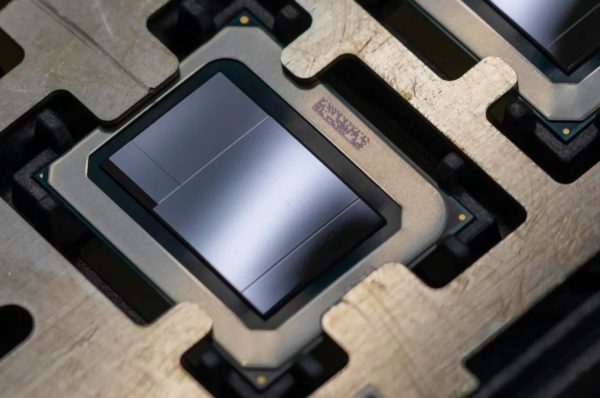
N4X: TSMC unveils special processes for high performance chips

Five to ten years ago, Intel had been the undisputed king of silicon processes, but the delay of 10nm node has ended that and TSMC has been the clear leader since. It is often said that its processes are specialised for mobile use, still remaining inferior to Intel in terms of the maximum achieved clock frequency. But this might change soon. The company will now focus on this very area and high performance chips for PCs. Read more “N4X: TSMC unveils special processes for high performance chips” »

Samsung will start 2nm chip production 3 years after 3nm node

Samsung’s semiconductor production has been a center of negative news lately. Apart form delays, Samsung processes are believed to be inferior to TSMC node-for-node. But despite this Samsung is still the number two in leading edge process nodes out of the Foundry producers. Now the company has announced 2nm node, which should go into production in four years, two to three years after the volume ramp of the 3nm technology. Read more “Samsung will start 2nm chip production 3 years after 3nm node” »