




Intel’s serious fab problems are well known by now. Not only having fallen behind foundry chipmakers in process technology, Intel is also being squeezed by the fact that it does not produce enough of its own chips to keep its fabs profitable. As a result, it too seeks to pivot into the foundry market and serve external customers. And yet, Intel itself is now increasingly outsourcing the production of its own chips.
This issue has been in plain sight for some time with the company’s latest processors. The Core Ultra 100 “Meteor Lake” series was largely manufactured at TSMC, while Core Ultra 200 Lunar Lake and Arrow Lake are virtually entirely made there. But in those cases, it could be argued that TSMC’s technology was more advanced at the time and Intel could not afford not to use it in order to stay competitive.
Intel bets on Samsung’s cheap 8nm manufacturing
However, information has now emerged from Korean media that Intel is outsourcing even the simpler, less advanced chips to foundries that are actually direct competitors (and as such, threats). According to Korea Economic Daily, Intel plans to commission Samsung to manufacture its 900-series chipsets for the upcoming Core Ultra 400 “Nova Lake” processors (for the desktop LGA 1954 platform).
Samsung will reportedly use its 8nm manufacturing process (most likely 8LPP) for Intel chipsets, an improved version of its 10nm technology. This is the same process used to produce Nvidia’s Ampere-generation gaming GPUs and, more recently, the SoC for the Nintendo Switch 2 console. Even five years ago, this process lagged behind TSMC’s 7nm and 6nm nodes, but chipsets do not have particularly high requirements, and the lower manufacturing cost compensates for worse energy efficiency and lower transistor density.
All chipsets for Alder Lake and Raptor Lake are already made outside Intel
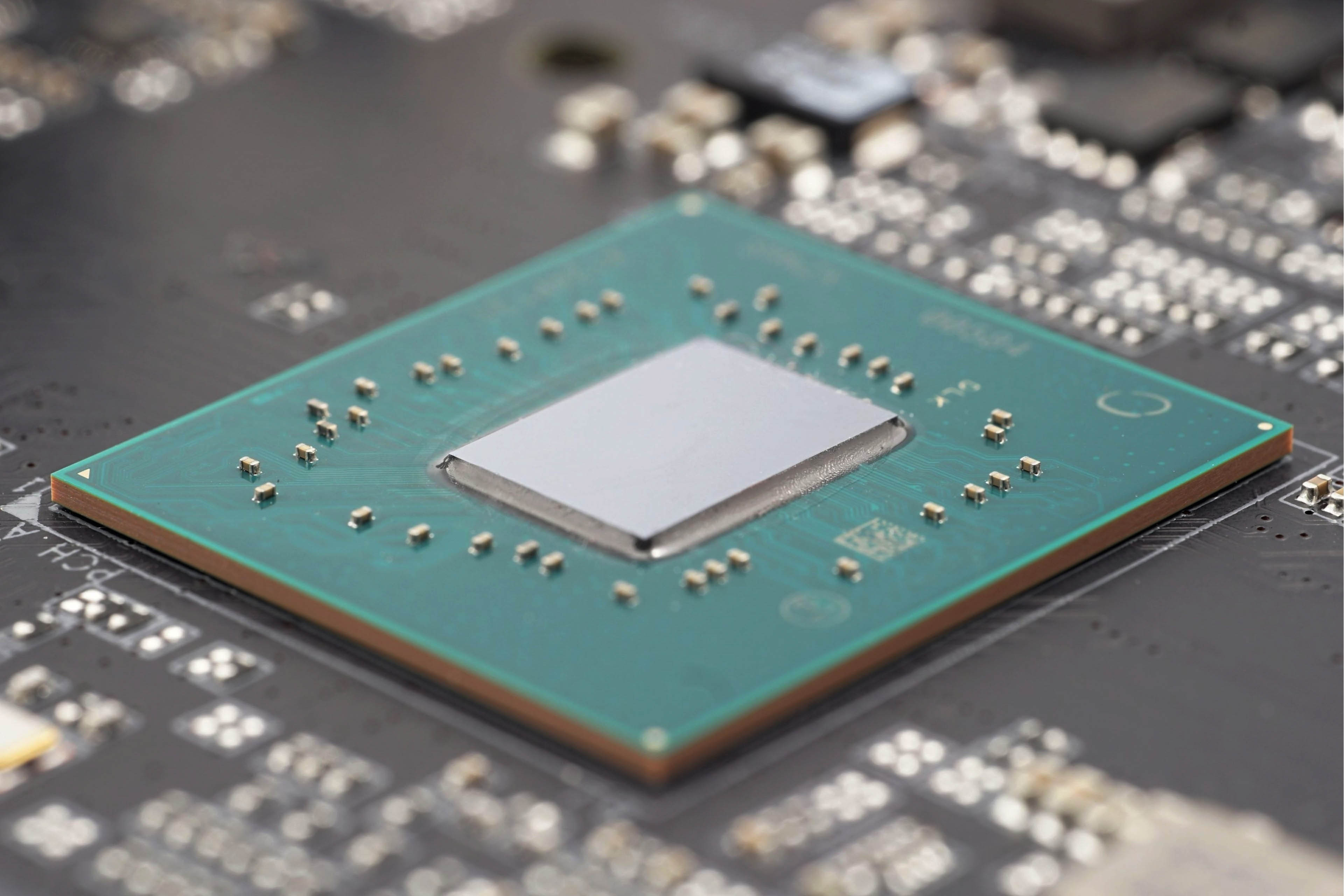
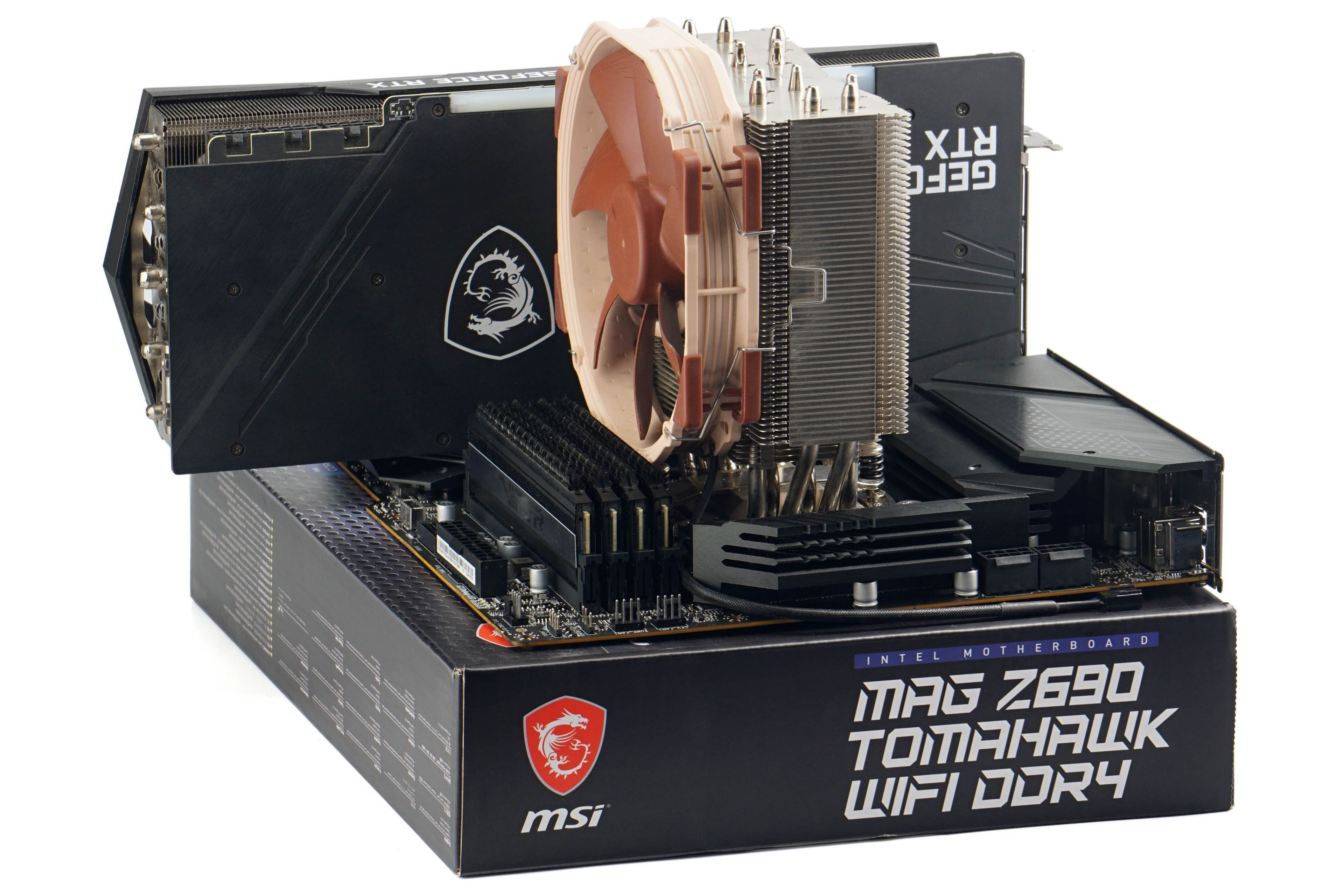
This future outsourcing is not the first case. What has not been widely known so far—because Intel was not publicly admitting to it—is that, according to Korea Economic Daily, Intel has already been manufactured chipsets at Samsung fabs for some time. All chipsets for Intel Alder Lake and Raptor Lake processors on the LGA 1700 platform are reportedly produced on Samsung’s 14nm process. That includes chipsets from H610 through B660 and B760 up to Z690, Z790, and W680 and the silicon is also used by some notebook processor platforms. Note that this is not a case of Samsung being used as a secondary source in case Intel cannot keep up—production is fully outsourced from the outset.
Rumors of this cooperation circulated as early as around 2019, but were never publicly confirmed after the launch of the product. As far as we know, this wasn’t really discussed anywhere. It now appears that those reports were correct, except that they referred not to CPUs (as believed at the time) but to chipsets. Intel thus chose a competitor’s 14nm process even though it has a 14nm process of its own available in its fabs, one that delivered good results in CPUs.
This is unusual, because chipsets are considered an ideal product for keeping older manufacturing lines that are no longer suitable for CPUs utilised. Employing these trailing-edge lines like this helps recouping investments in their construction and lowers the overall cost of running a chip-manufacturing business.
This is how TSMC, Samsung, and previously Intel itself operated (older Intel chipsets used its in-house 32nm, 22nm, and 14nm processes and were typically one or two generations behind CPUs). It seems this no longer works for Intel today for some reason, and its in-house older processes are either too expensive to use or suffer from other issues—assuming this is not sheer incompetence by whoever makes manufacturing decisions. That is quite alarming and may point to serious problems.
What exactly is the issue—and is the situation hopeless for Intel?
The question is what factors are driving Intel toward this seemingly paradoxical outsourcing. It is possible that its older processes are simply not price-competitive at all, even when taking into account that keeping otherwise idle production lines busy also has value that could partially offset higher per-chip costs.
If Samsung can profitably manufacture cheap chips on its 14nm and 8nm processes while comparable Intel technologies are now uneconomical, that indicates a major problem that could persist even with Intel’s most advanced nodes. It could even become a fatal obstacle to Intel’s turn-around effort that seeks to reform its manufacturing arm into a successful, profitable foundry business.
Just an uncompetitive pricing—or is it more complicated?
However, it is also possible that the problems are not primarily (or not only) about cost, but rather about technology compatibility. Intel’s older processes were developed purely for the company’s own needs in the past and often had various quirks or peculiarities. These could allow shortcuts in the physical manufacturing or improve chips’ performance characteristics, but at the same time they would imposed extra requirements and constraints on circuit design, forbidding certain approaches engineers might otherwise use. When design and process were properly aligned, the result could be excellent, but development was more complex.

This methodology is not common in the chip industry. Foundry manufacturers instead offer processes that are more compatible with a wide range of design styles. That has clear advantages: it places fewer demands on engineers, reduces the number of quirks and hazards to account for, and makes such processes more universal for chips with a broad mix of circuit types—exactly what chipsets are. With these universal processes, costs can also be reduced by licensing ready-made blocks and IP during design, saving on staffing, verification effort, and development time. For Intel’s specialized older processes, such IP blocks cannot be licensed; Intel always had to develop them internally.
It is therefore possible that Intel opted for an external process mainly to simplify design, allowing it to license certain technologies and blocks and use cheaper engineering labor. Engineers experienced with Samsung or TSMC processes are easier to find on the job market than those capable of working with Intel’s specialized nodes—those tend to be Intel-trained engineers with higher qualifications, many of whom may have moved on to better positions elsewhere. In this scenario, manufacturing the chip itself on Intel’s 14nm, 10nm, or 7nm processes might still be profitable, but developing a product like a chipset would not be.
New process nodes could eliminate these problems
If these are indeed the real reasons why Intel prefers Samsung for chipsets (and TSMC for SoC chiplets in its Core Ultra processors, which are similar in nature), then Intel’s outlook in chip manufacturing may not be entirely bleak.
Newer Intel technologies—especially the current 18A process—have already been developed with a concept closer to that of TSMC and Samsung: less idiosyncratic, easier to use and broadly compatible, and supported by licensable IP. Naturally, the “friendliness” of these processes is not likely to immediately match that of established foundry services, but it should gradually improve. At some point, it may become worthwhile to move simpler, cheaper silicon such as chipsets, SoCs, and I/O chiplets back to Intel Foundry’s internal technologies.
Personally, I would expect this second factor to play a significant role—and fortunately it’s one that Intel may be able to resolve. It would explain the almost absurd push to manufacture nearly all components of processors like Core Ultra 200 Lunar Lake and Arrow Lake in external fabs, even though this severely hurt Intel’s margins and finances (pushing it into the red, even) and caused major problems with underutilized fabs. From the outside, this strategy looks nearly incomprehensible and reckless, but if the reason lies in design methodologies and ease of development, it starts to make sense. It also explains why Intel accepted the downsides of external manufacturing and believes this is only a temporary necessity—its plan is to transform its own process methodologies so that its fabs become a viable alternative again.
Still, it cannot be ruled out that Intel’s fabs and processes also suffer from a structural cost disadvantage discussed as first possible reason, which would add yet another nail to the coffin in terms of profitability. Given the push to manufacture in the United States and other factors, this may be harder issue to overcome. In theory, the way things will unfold could even be that Intel actually manages to solve the “ease of design” issues, but then it proves unable to overcome the barrier posed by the economics of mass production itself. Ho this all turns out will likely only become clear in the years to come.
Source: techPowerUp, Korea Economic Daily
English translation and edit by Jozef Dudáš
⠀


