FSR 4.1 for Radeon RX 7000 Launched, APUs Will Get Lite Version

In May, AMD announced that FSR 4.1 AI upcaling is coming to Radeon RX 7000 and later also RX 6000 graphics cards. It was supposed to be due next month for X 7000, but AMD went and launched it this week possibly due to the launch of Valve’s Steam Machine, which uses GPUs from the Radeon RX 7000 series. And furthermore: Official FSR 4.1 should work better than the leaked FSR4 libraries that could previously be used unofficially. Read more “FSR 4.1 for Radeon RX 7000 Launched, APUs Will Get Lite Version” »

Advanced Shader Delivery on AMD: No more waiting for compilation

Gamers definitely know the experience: You want to launch a game, but it starts to compile shaders, which can take several minutes. The reason is that shaders have to be built from code specifically for your hardware. And the compilation must be repeated after every GPU driver update, so you can end up seeing this waiting screen quite frequently. But Windows is now getting an improvement that should largely eliminate this waiting. Read more “Advanced Shader Delivery on AMD: No more waiting for compilation” »

FSR 4.1 AI upscaling finally coming to older Radeon GPU users

When AMD launched the FSR4 AI-based upscaling technology for games last year, it was exclusively available for the new Radeon RX 9000 generation GPUs using the RDNA 4 architecture. This was despite the fact that a version using INT8 compute compatible with older GPUs had leaked out, apparently by accident. But owners of older Radeon cards are finally in luck now: FSR 4.1 is coming to RDNA 2 and RDNA 3 as well. Read more “FSR 4.1 AI upscaling finally coming to older Radeon GPU users” »

Linux is getting optimized for better gaming on low VRAM GPUs

It seems the extremely high memory prices caused by the current AI boom will yet again prolong the rule of 8GB memory in the mainstream graphics cards segment and we’ll have to live with them for far longer. Perhaps that’s why Linux developers have currently come up with improvements for such GPUs. 8GB is also the graphics memory capacity of the upcoming Steam Machine, which will be another beneficiary of such optimizations. Read more “Linux is getting optimized for better gaming on low VRAM GPUs” »

Nvidia App solves the problem of long shader compilation in games

Yesterday we reported on an update to the Nvidia App utility for GeForce graphics cards, which brought owners of the latest‑generation GPUs the ability to use 6× frame generation and a dynamic mode in DLSS 4.5. But that’s not the only new feature the company has prepared. This version of Nvidia App includes another improvement that can free you from the annoying waiting for shader compilation, which often takes several minutes. Read more “Nvidia App solves the problem of long shader compilation in games” »

FSR 4.1 released with higher quality and faster Ultra Performance

We have recently covered a leak of driver files that revealed the incoming launch of AMD’s improved AI upscaling, FSR 4.1. Because the library itself was leaked, FSR 4.1 had already been tested in practice. Now this technology is officially arriving for all users (or at least those with sufficiently new GPUs) with version 2026.3.1 drivers, which the company released alongside the launch of the Crimson Desert game. Read more “FSR 4.1 released with higher quality and faster Ultra Performance” »

AMD FSR 4.1 incoming with improved image quality, leak suggests

In December, AMD unveiled the Redstone technology package, which builds on the AI-based FSR4 upscaling introduced with the Radeon RX 9000 series. Redstone added AI-based frame generation, Neural Radiance Caching, and Ray Regeneration. The upscaling component itself, however, was not updated to a new version. It seems that’s changing now with the FSR 4.1 update, which will apparently arrive in one of the upcoming driver releases. Read more “AMD FSR 4.1 incoming with improved image quality, leak suggests” »

AMD AI Bundle: Ready-made AI tools integrated into Radeon drivers

These days, one could paraphrase an old joke from the communist era: artificial intelligence is everywhere, and you’re almost afraid to open a can of food in case you find it there as well. Now AI jumps out at you if you own a Radeon GPU. AMD has long been criticized for lagging behind Nvidia in artificial intelligence, and it is responding with a new “AI Bundle” that introduced into the graphics card drivers. Read more “AMD AI Bundle: Ready-made AI tools integrated into Radeon drivers” »

Ryzen Zen 5 APUs will no longer have drivers for Windows 10

Many people are reluctant to upgrade to newer versions of Windows, be it due to hardware requirements or changes in behavior and look. This is currently the case with Windows 11, but it seems that staying on Windows 10 will soon start to run into obstacles. From AMD, for example. This company is apparently starting to drop support for this OS. The company’s upcoming hardware will probably no longer have any drivers for Windows 10. Read more “Ryzen Zen 5 APUs will no longer have drivers for Windows 10” »

RTX Video Super Resolution alternative: FSR for YouTube and VLC

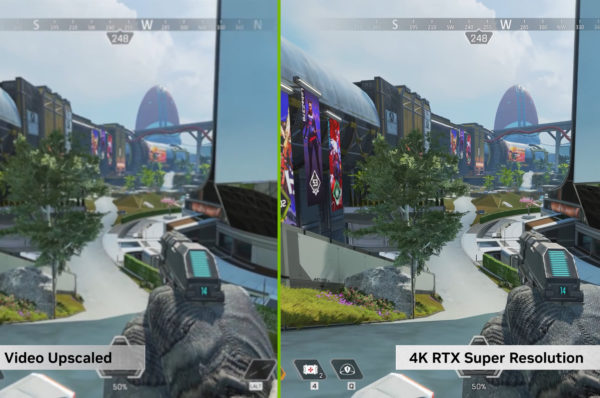
Last year Nvidia came out with RTX Video Super Resolution, a video upscaling and postprocessing technology for usage in web browsers and later also in VLC Media Player. It looks like something similar will be available also for AMD GPUs, but while Nvidia’s approach is the equivalent of DLSS 1.0 applied to video content, Radeon’s upscaling will probably be based on FSR 1.0, so it could be usable by other vendor GPUs, like FSR. Read more “RTX Video Super Resolution alternative: FSR for YouTube and VLC” »
Fluid Motion Frames now also for Radeon iGPUs, leaves preview

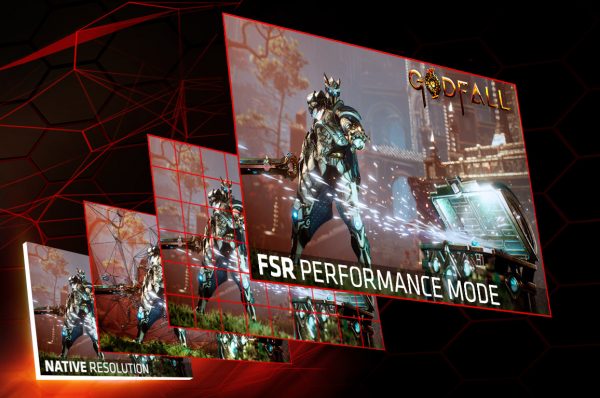
Last year AMD released FSR 3 frame generation, of which a simplified version that doesn’t use game vector data is also usable globally on the GPU driver level as the AMD Fluid Motion Frames feature. It can be used in all sorts of games that lack their own FSR 3 (or Nvidia’s DLSS 3) support. This technology will soon make its way from beta to standard drivers, and it now even works on integrated GPUs, including gaming handhelds. Read more “Fluid Motion Frames now also for Radeon iGPUs, leaves preview” »

End of Polaris and Vega GPU support: AMD provides a redux driver

Recently, it has been reported that AMD may be preparing to discontinue driver support for older Radeon graphics cards with Polaris and Vega architectures (pre-RDNA cards based on GCN lineage). AMD has now released the first new version of drivers for these graphics cards in two months, so it seems that the full end of updates for them is not yet here, but at the same time it is confirmed that support for them is moving to the back burner. Read more “End of Polaris and Vega GPU support: AMD provides a redux driver” »

Nvidia RTX Video Super Resolution 1.5: For GeForce RTX 2000 too

Earlier this year, Nvidia released an upscaler that uses its GPUs for video on websites like YouTube and such. The filter uses similar AI technology to the used in DLSS 2.x (albeit with limitations), and thus requires a GPU with tensor cores. But only the newer GeForce RTX 3000 and 4000 generations were supported initially. But now Nvidia is releasing version 1.5 for older Turing cards as well. And it also has other improvements. Read more “Nvidia RTX Video Super Resolution 1.5: For GeForce RTX 2000 too” »

First games with FSR 3 are out, AMD released AFMF preview driver

A month ago, AMD announced the arrival of FSR 3, or FidelityFX Super Resolution 3, a technology that adds interpolation-based frame generation to FSR, analogous to Nvidia’s DLSS 3. The feature had its public launch last weekend as FSR 3 was patched into the first two games. Fluid Motion Frames, which doubles the frame rate via drivers even when the game doesn’t directly support it, is now also available for testing. Read more “First games with FSR 3 are out, AMD released AFMF preview driver” »

Radeon power draw finally stays low with multi-monitor setups

In a multi-monitor setup, graphics cards naturally have higher power draw, and in some cases significantly so. But it seems that, at least with the RX 7900 XT (Sapphire Pulse), this is no longer the case. We know from measurements that the increase in power draw of this card is very low, several times lower than it used to be in the past in all the older models we have tested. Basically, we can say that the “problem is solved”. Read more “Radeon power draw finally stays low with multi-monitor setups” »