


Last Friday, Intel released its Q2 financial results, reporting another $3 billion loss (though in reality, the situation isn’t as dire as the figure suggests). Alongside these results, Intel announced various measures its new CEO is taking to rescue the company from its current crisis—or at least improve its finances somewhat. The implications are far-reaching. Beyond drastic layoffs, it also means the death of European investments.
Intel to shrink by nearly half
The first—and likely most visible—measure was already hinted at in numerous reports about layoffs coming ahead of the Q2 earnings report. Intel has now officially confirmed it’s cutting roughly 15% of its workforce. That might not sound like a workforce cut that is completely out of the ordinary, but it’s worth noting the company had already laid off another 15% since last summer. Additional reductions came from spinning off divisions like Mobileye and Altera. The actual difference between before and after is stark.
At the end of 2024 (December 28), Intel still had 108,900 employees—already down from its peak (124,800 in 2023 and 131,900 in 2022). After this fresh wave of layoffs, however, the headcount will drop to around 75,000 globally. This represents a massive downsizing—to 69% of last year’s total and just under 57% of the 2022 figure. By the end of September, the company also plans to complete its “return to office” policy, significantly curtailing remote work.
External observers and investors often argue that Intel simply has too many employees for its revenue, that making cuts automatically a good thing. A popular theory is that the company is inefficient due to bloated bureaucracy. Even Lip-Bu Tan, in a public letter to employees (but likely aimed at outside observers as much as the workforce), speaks of improving efficiency and slashing excess management layers (reportedly by 50%)—seemingly nodding to those theories about redundant managers.
However, public layoff reports indicate engineers directly involved in product development are being let go—unsurprising given the scale of cuts. The idea that a 30% reduction could be achieved solely by axing “unnecessary managers” without touching productive staff is naïve (not to mention that when layoff orders come from above, it’s exactly the lower-level managers who get the choice of who to let go).
These layoffs may help Intel as a bitter pill—eventually lowering operational costs (but only after “paying off” all the severance packages involved) and allowing the company to survive with reduced revenue. But the downsizing will inevitably hurt R&D and potentially product quality.
A side effect could be slower future growth—or even declining revenue and market positioning. In the worst case, cost-cutting could worsen sales so much that it could leave Intel in a deeper hole than it was prior to it, only with a smaller market share that before. In short—austerity comes with risks, and much could go wrong.
Growth pillars may contain more investment cuts
Beyond layoffs and cost-saving, Lip-Bu Tan outlined a new growth strategy—with further “cuts” mixed in. The new CEO states Intel still aims to compete in the foundry business, manufacturing chips for other companies (like TSMC).
As we’ve discussed repeatedly, this is Intel’s only path to sustaining its fabs: its own products don’t generate revenue on scale large enough to keep them profitable. The fixed costs of fabs and cutting-edge process development must be covered not just by Intel’s products but by payments from external customers.
Developing leading-edge silicon technology and building production lines grows more demanding with each generation, and costs have surpassed what Intel can shoulder alone. Financial results reflect this: while Intel’s product divisions remain profitable, their output isn’t enough to sustain the fabs (Intel Foundry), which operate at a loss when their results are listed separately.
European fabs in Germany and Poland scrapped
The new CEO still officially maintains Intel’s commitment to chip manufacturing—but cracks are widening. The current stance is that Intel will become a foundry company but with “greater financial discipline.” This means scaling back fab investments compared to former CEO Patrick Gelsinger’s ambitious plans.
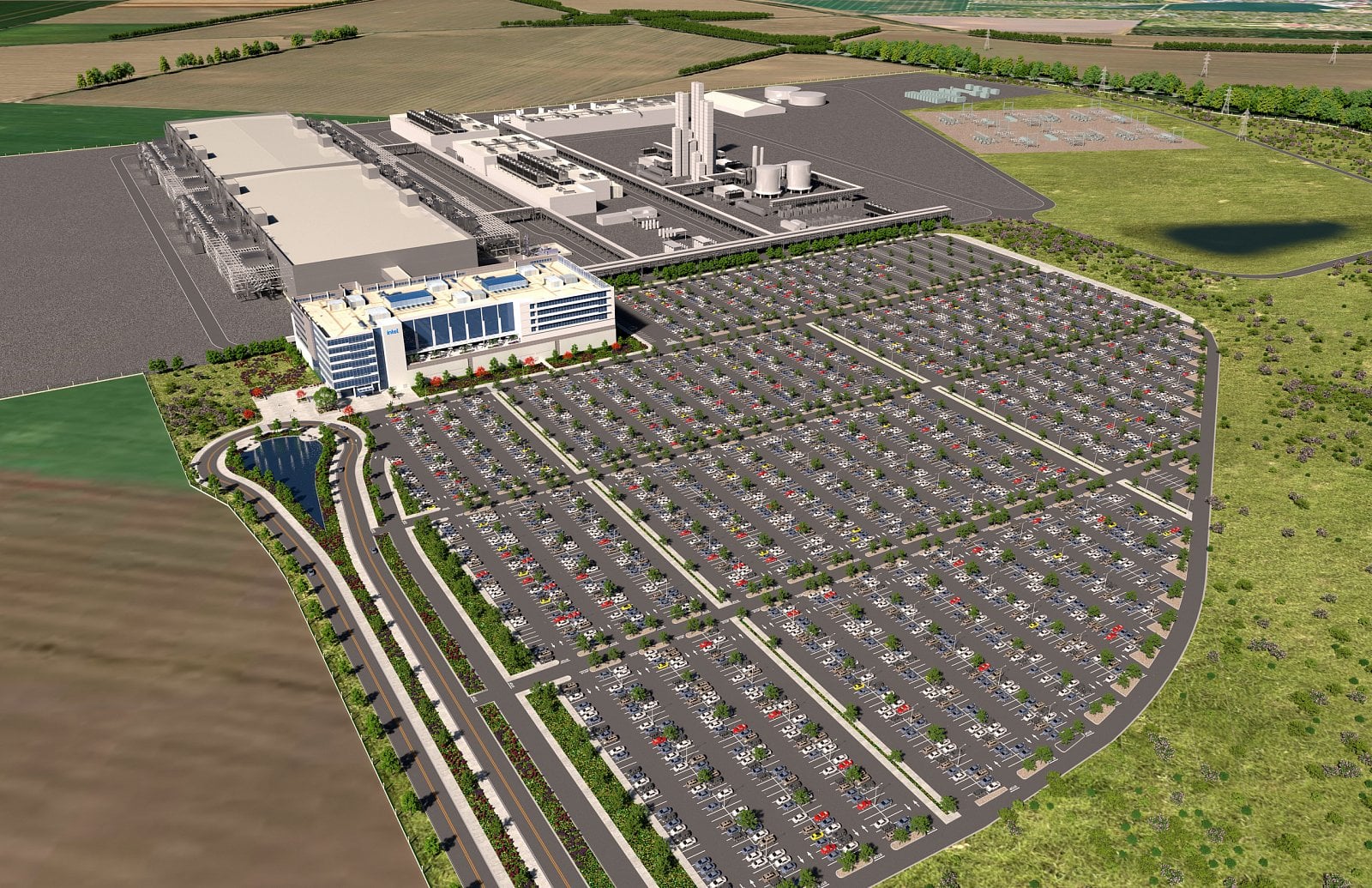
The consequences are particularly direct for Europe, as Intel is cutting investments there. The company has officially announced it is abandoning plans to build its Magdeburg chip fab—once a cornerstone of Intel Foundry’s market strategy.
Alongside this, Intel had planned to expand its Polish R&D center and open a chip packaging and testing facility—a critical secondary step after wafer production (these lines are essential complements to what we traditionally consider chip fabs). This investment has also been cancelled, leaving Intel with only its older Leixlip, Ireland fab within the EU. Both projects were tied to EU and national government support, with particularly substantial subsidies earmarked for Magdeburg.
Intel is also shuttering its Costa Rica operations, where it maintained a packaging and testing facility. Its role will be taken over by similar production lines in Vietnam and Malaysia. These moves will reduce Intel’s future manufacturing capacity—diminishing its ability to attract external clients for its Foundry services.
Additionally, Intel is scaling back investments in its long-planned Ohio fab, though this project hasn’t been fully cancelled—just delayed. The company may yet obtain this production capacity in the future.
The beginning of the end?
On one hand, Gelsinger’s overinvestment undoubtedly contributed to Intel’s current predicament. Yet ironically, this painful sacrifice might have been Intel’s only chance to establish itself as a viable foundry player. The correct decision would have been implementing this strategy earlier—diverting resources from dividend payouts to foundry investments. Unfortunately, Intel’s board lacked the foresight to put short-term profit fixation aside and invest in long-term strategy properly.
Lip-Bu Tan’s announcements can be read like tacit preparation for an eventual surrender of the foundry plans and the fabs themselves: while not openly admitting defeat, by curtailing investments and projecting uncertainty, Intel is arguably raising the chances the foundry plans will end in a failure. The endgame could involve either shuttering fabs entirely or attempting to sell them—though it’s unclear who would acquire a business struggling to secure customers even when under Intel’s umbrella.
Intel would remain a processor vendor, but only as a fabless company in the same vein as AMD, Qualcomm, or Nvidia—dependent on TSMC, Samsung, or other smaller foundries. This would require a fundamental operational shift—one Intel has struggled with thus far, as evidenced by the thin margins on its TSMC-manufactured CPUs.
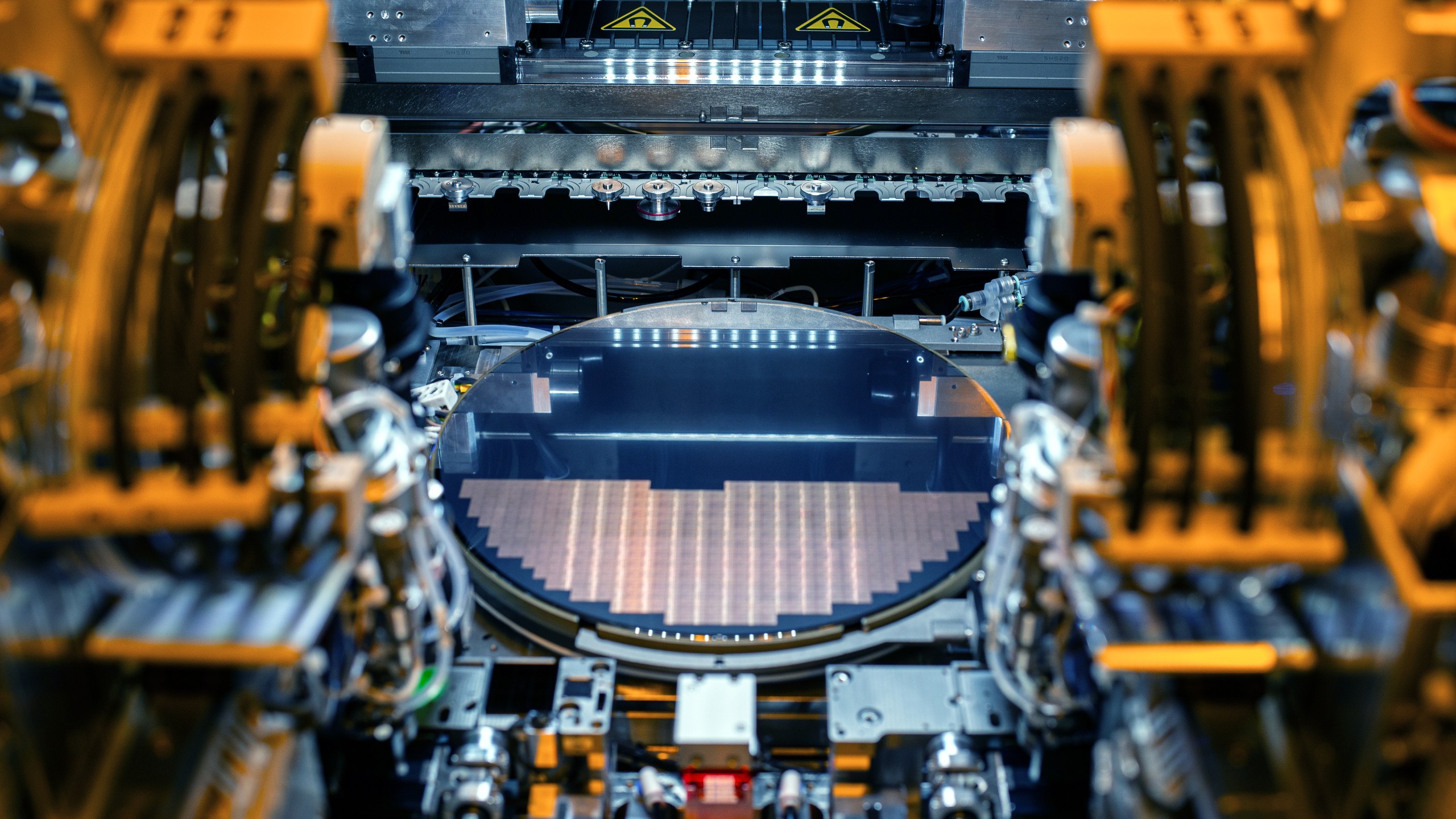
Intel still claims its 1.8nm process remains on track for mass production—but it’s likely it will be mostly used only for internal products like Panther Lake processors. As previously noted, this alone cannot sustain its fabs.
Intel’s 1.4nm process could be is last
At the same time, Lip-Bu Tan uttered a statement that may prove unfortunate or at least tone-deaf: he actually acknowledged the possibility that Intel could cancel the next-generation 1.4nm process (Intel 14A) or not invest in further process generations, should the company not secure enough external customers for Foundry services. This would mean its definitive exit from the club of elite chip manufacturers with leading-edge silicon technology, similar to how IBM, GlobalFoundries and many others before them dropped out when they couldn’t keep up with the costs any more.
Lip-Bu Tan frames this in his employee letter by saying that investments in the 1.4nm process will be conditional on having confirmed customers contractually committed to the technology and that the process development won’t receive “blank checks.”
However, it’s exactly such statements that could undermine the chances of this technology succeeding. They create uncertainty precisely for those customers that Intel needs to attract. If Intel itself signals that actual production using this technology is uncertain, it’s illogical for customers to invest in developing chips for it and commit, as this represents additional risk—while with Samsung or TSMC they enjoy much less uncertainty. Chip development takes several years, and if you rely on a supplier who may in the end say production isn’t worthwhile, you may end up with no product to sell.
- Read more: Intel announces 1.4nm process, first node with high-NA technology
- Read more Intel plans 1nm process, two years after 1,4nm.
Intel apparently hasn’t managed to secure—precisely because of these factors— any significant clients (if any at all) for the 1.8nm process, all while it’s exactly the initial successes of 1.8nm chips that could convince companies to invest significant resources in projects based on the next generation after it.
Now, if Intel is sending signals that the following 1.4nm generation might be its last, that gives customers even less reason to bother—because there’s a high chance that by the time they test and implement the 1.4nm generation technology, it will already be of limited use to them, as there won’t be a subsequent 1.0nm generation anyway.
Lack of clear multi-year roadmap is not good for partners…
Patrick Gelsinger’s “free-spending” foundry strategy always emphasized that Intel would definitely remain in the business and has a “roadmap” for the future—it’s not planning just one uncertain attempt that might end in failure. And that’s exactly what customers want. AMD representatives tirelessly repeated this exact point when they were trying to regain their position in the server market with Epyc processors, at a point there they restarting practically from zero market share. It took them several generations, and they didn’t gain many customers in the first one either—but only through persistence and by promising a multi-year roadmap did they manage to break through.
English translation and edit by Jozef Dudáš
⠀

