


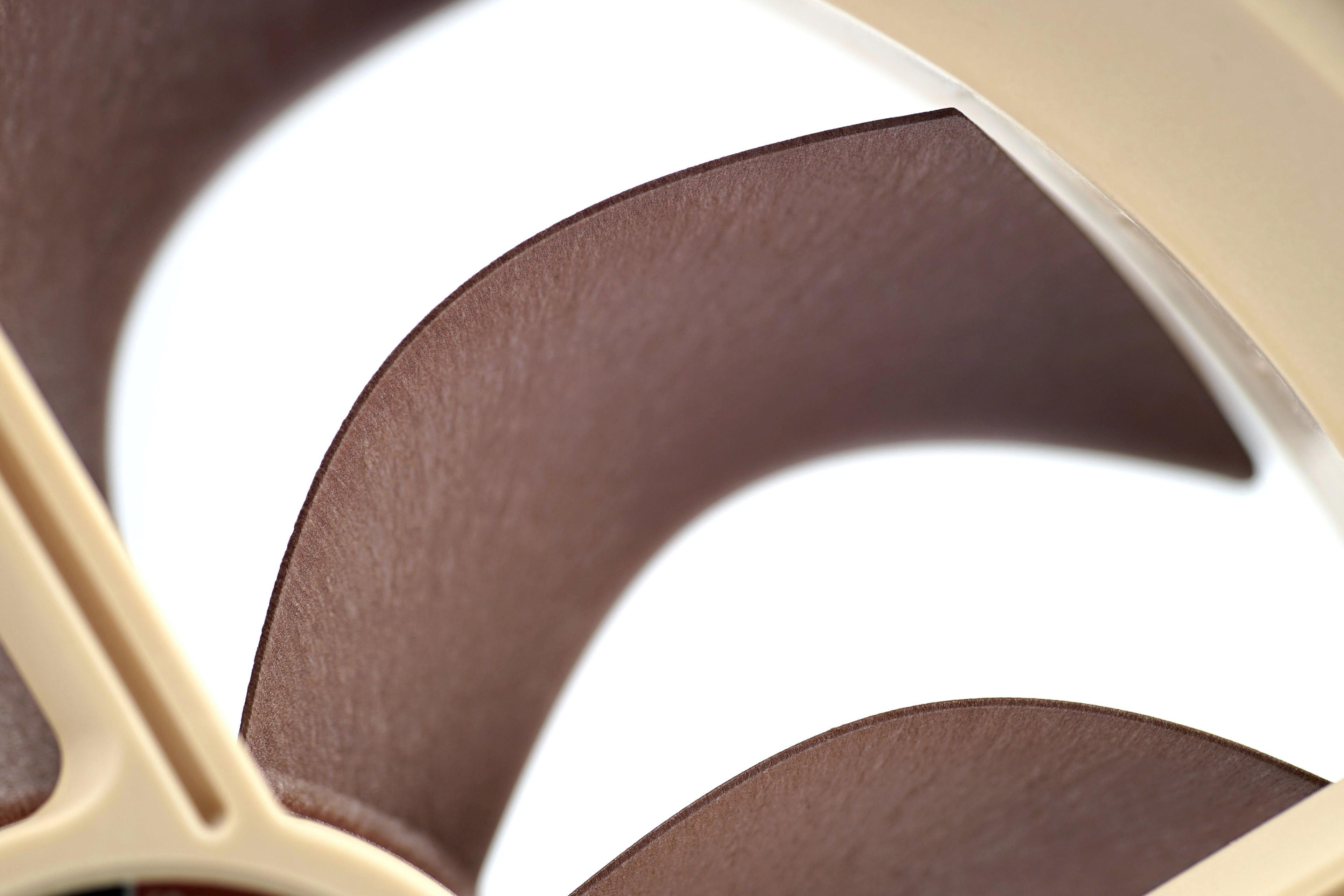
We spoke with representatives of Noctua about the things you wanted to know, supplemented by various other questions. What about liquid coolers using 140 mm fans, the design of the fan hub (does it really need to be that robust?), the aerodynamic design of fans in general, or their white variants? What about the SFF segment? We got answers to many of these questions for you, which you can find in this article.
As in the past, I’m pleased to welcome Jakob Dellinger from Noctua. Following up on our previous interview, we’ll begin by revisiting some of the topics that remained open and looking at what has changed over the approximately half-year period since our previous in-depth interview.

HWCooling: Could you elaborate on how the development of the thermosiphon liquid cooler has progressed recently?
Noctua: Sure, with pleasure. We’ve made very good progress in both overall system performance and performance stability. At the prototype level, we can now match the performance of our NL-LC1-36 under comparable test conditions, and we have resolved most of the issues that can cause inconsistent results in thermosiphon systems. Reaching this point was a major milestone. The key challenge now is repeatability: translating the performance of a handful of carefully built prototypes into a robust mass-production process that can produce thousands of units while consistently meeting the same target.
HWCooling: What do you internally consider to be the biggest engineering challenges? Yes, regarding the thermosiphon liquid cooler. Let’s give it a little more room.
Noctua: The two biggest challenges have been hotspot resistance and performance stability. Modern CPUs can create extremely high local heat flux densities, so the evaporator must prevent vapour pockets, local film boiling and dryout from developing over the hottest areas. At the same time, the system must maintain controlled fluid circulation and the correct liquid-vapour balance under different operating conditions; effects such as entrainment or uneven fluid distribution can otherwise cause sudden performance drops.
The key breakthroughs in both areas came from advances in the evaporator geometry and the addition of a porous sintered copper microlayer. The new geometry provides guided flow paths that improve vapour release, separate the upward vapour flow from the returning liquid and reduce the risk of entrainment. The microlayer enhances nucleation performance and surface wetting through capillary action, helping to prevent local vapour blankets and dryout at high heat flux densities. Together, these measures have proven highly effective in optimising fluid distribution and circulation, which is essential for stable, repeatable performance.

HWCooling: And now, on to TIMs. Noctua will soon be making its debut in the thermal pad segment. How would you characterise the uniqueness of these pads, and in which areas are you confident that they outperform competing solutions and offer some—let’s call it—added value? Let’s set aside the services you offer and focus purely on the technical, hardware-related aspects of the NT-CP1 thermal pads.
Noctua: What sets the NT-CP1 apart is the combination of easy handling, robustness and exceptional long-term performance. The underlying carbon-nanotube technology was developed by Carbice in the United States and has already been used in demanding applications such as satellites, spacecraft and critical infrastructure, where servicing or replacing a thermal interface after deployment can be difficult or impossible. Through our partnership with Carbice, we are now bringing this technology to the DIY PC market.
Although reapplying thermal paste is not especially difficult, even many enthusiasts leave it in place for several years. Over such periods, thermal pastes and many conventional pads can lose performance through pump-out, dry-out, cracking, delamination and other degradation mechanisms. The NT-CP1 behaves differently: it requires an initial activation period, but its performance improves with thermal cycling and remains stable over the long term.
Its construction is central to these properties. A 50µm aluminium backbone is sandwiched between two vertically aligned carbon-nanotube forests, each 20µm thick, and the entire surface is protected by a nanoscale phase-change polymer coating. The aluminium core makes the pad more robust and tear-resistant than many other carbon- or graphite-based solutions, while the polymer protects the nanotubes, keeps the contact surfaces electrically non-conductive before use and provides enough tack to keep the pad in place during installation while still allowing effortless removal. Because the polymer conducts heat less efficiently than the nanotubes, the NT-CP1 initially performs measurably worse than a good thermal paste. After a handful of thermal cycles, however, the polymer reflows and wets the contact surfaces, allowing the nanotubes to establish more direct contact with the CPU and cooler. Performance then continues to improve as individual nanotubes gradually conform to and wick into microscopic surface cavities.
In our testing, we typically see further gains over the first few hundred to several thousand thermal cycles. Carbice has validated the technology for more than 100,000 cycles without measurable performance degradation, so in practical terms the pad is likely to outlast the PC in which it is installed. The important point is that the NT-CP1 is not designed to beat a high-quality thermal paste immediately. It takes time to catch up, but it is designed to deliver better and more stable performance over the long term, without maintenance or reapplication.

HWCooling: One more question about liquid coolers, but this time about models with a pump. Is there a chance you’ll release something like the NL-LC1-28—a 280 mm radiator liquid cooler, potentially paired with NF-A14x25 PWM G2 fans? Whether those fans would actually be included or not (although I can’t really imagine a scenario where they wouldn’t, haha) isn’t all that important here. What matters is whether users can expect to see a wider-format liquid cooler like this. If so, do you already have any idea of the timeframe? And if not, why was the decision made not to pursue it?
Noctua: The main reasons we decided not to launch a 280mm version were that it offered only a modest acoustic advantage over the 240mm model—around 1dB lower noise at the same CPU temperature—while demand for the 280mm form factor appeared comparatively limited. That said, since the launch we have received more requests than expected, particularly from SFF users, so this is something we are monitoring closely. At this stage, we can neither confirm nor rule out a 280mm model. However, our immediate priority is to bring supply of the existing versions in line with demand and allocate production capacity to the planned black variants. Therefore, even if we decided to proceed, a 280mm model would take some time to reach the market.
HWCooling: Can the NT-CP1 thermal pad “beat” thermal paste? If so, we could consider the NT-H1 a benchmark for thermal pastes—it was for a long time the best thermal paste you supplied with your coolers. We tend to think of thermal pads as being useful in situations where more fluid TIMs (pastes) don’t work particularly well, for example between voltage regulators and motherboard heatsinks. Does your pad perhaps have ambitions to be used on CPUs as well?
I realize that comparing a solid pad with a relatively fluid paste such as NT-H1 is difficult simply because of their different physical states. One of the advantages of NT-H1 is that it can fill even very small gaps that thicker pastes cannot penetrate, resulting in contact over a larger area compared with higher-viscosity pastes. Something similar presumably applies to solid thermal pads as well, including your solution?
Noctua: Yes. In our testing, the NT-CP1 ultimately outperforms NT-H1 once it has undergone sufficient thermal cycling. The crossover point varies significantly from setup to setup: we typically see the pad pull ahead after around 150–1000 cycles, while in one particularly slow test setup it did not cross over until roughly 3,700 cycles. The key point is that the NT-CP1 is designed for superior long-term performance, not to deliver its best result immediately after installation.
It is also important not to confuse the NT-CP1 with the soft, compressible gap-filler pads commonly used on VRMs and memory chips. Those are typically 0.5–3mm thick and are designed to bridge relatively large gaps between components and heatsinks. By contrast, the NT-CP1 is only 90µm thick and is designed for direct, tightly clamped contact between a CPU heatspreader and a cooler base. Its phase-change polymer and carbon nanotube layers progressively conform to the microscopic structure of the contact surfaces, allowing the pad to fill microcavities and improve contact over time.
The first version has been tailored and fully validated for AMD AM5 and AM4 CPUs. We have also used the technology successfully on laptop CPUs and GPUs, but because our full-scale validation currently covers only desktop AM5 and AM4 processors, these are the only applications for which we recommend the NT-CP1 at launch.
HWCooling: It has now been more than three years since the white fans were removed from the roadmap. At the time, I believe the position was essentially that there were projects with higher priority and that you had no current estimate of when you would get around to the white fans. The project was not cancelled, however, so what does the situation look like now?
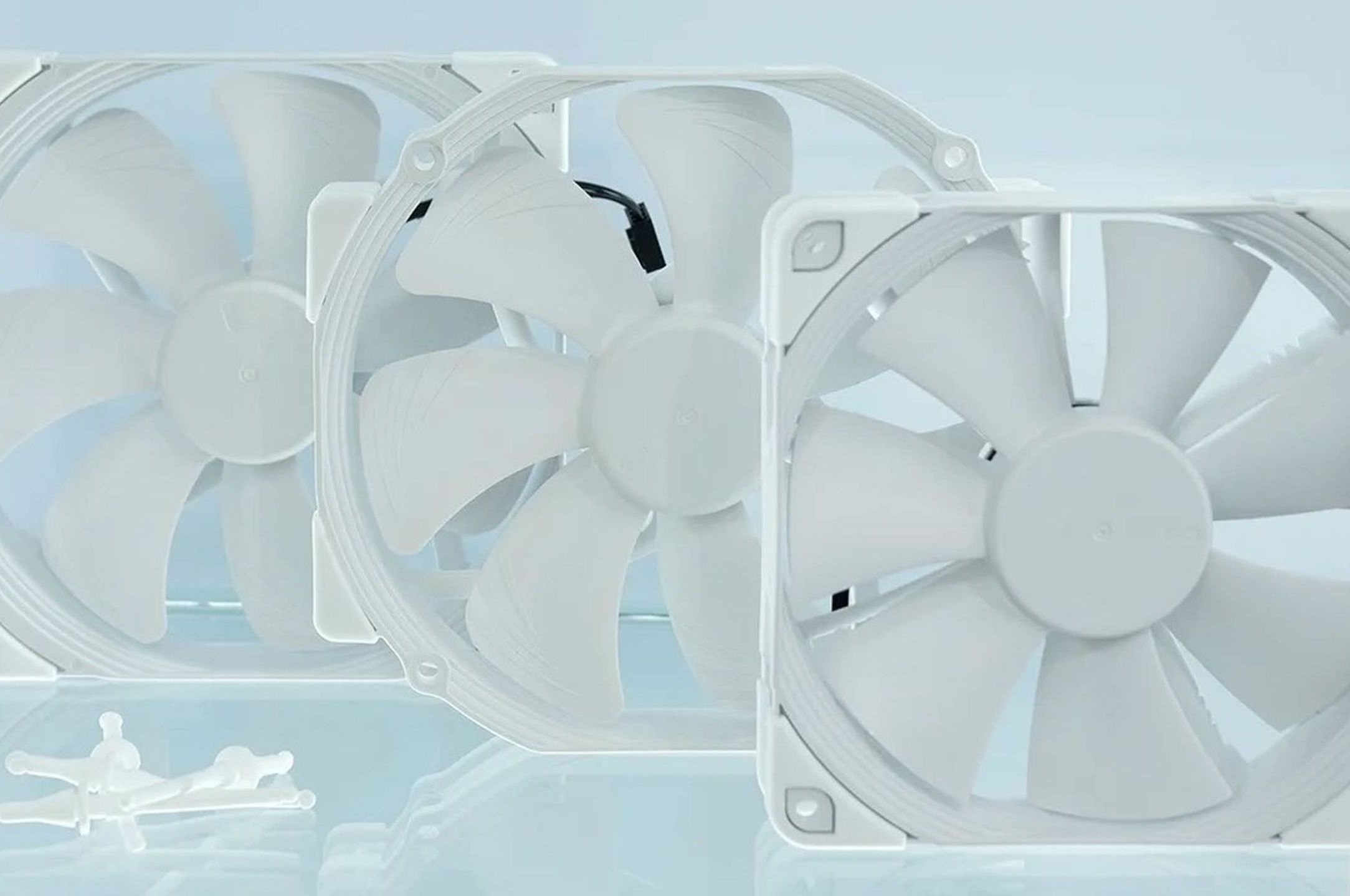
Noctua: The situation has not fundamentally changed. We continue to prioritise the development of new products and technologies over additional colour variants. Producing white fans is not simply a matter of changing the material colour: the white compound behaves somewhat differently, so we would need dedicated injection moulds and a full validation programme. This would consume engineering and manufacturing resources that we believe are better invested in other projects.
HWCooling: Based on the response to the previous question, I assume that AIO liquid coolers are also “off the table” (at least for some time…). So, if white is still nowhere in sight, does that mean Noctua’s product lineup will remain focused on the traditional brown-and-beige and black colour schemes?
Noctua: Do you mean white AIO liquid coolers? If so, yes, we don’t plan to do that. Regardless of whether it’s AIOs or other parts, we don’t plan to go beyond the existing colour schemes.
HWCooling: You mentioned SFF above… is something like the NF-A12x25 G2 planned? In other words, a second generation of low-profile fans…
Noctua: I think you mean the NF-A12x15 G2, not the x25—but yes, we always aim to improve on our existing fan models, and low-profile fans are definitely an area we plan to keep developing in the coming years.
HWCooling: … and to stay on the same topic: what does the future hold for Noctua’s low-profile top-flow coolers? Is there any chance of refreshing the lineup? And perhaps, if we include taller models than the current ones, some of our readers feel that the 47–70 mm range deserves broader coverage.
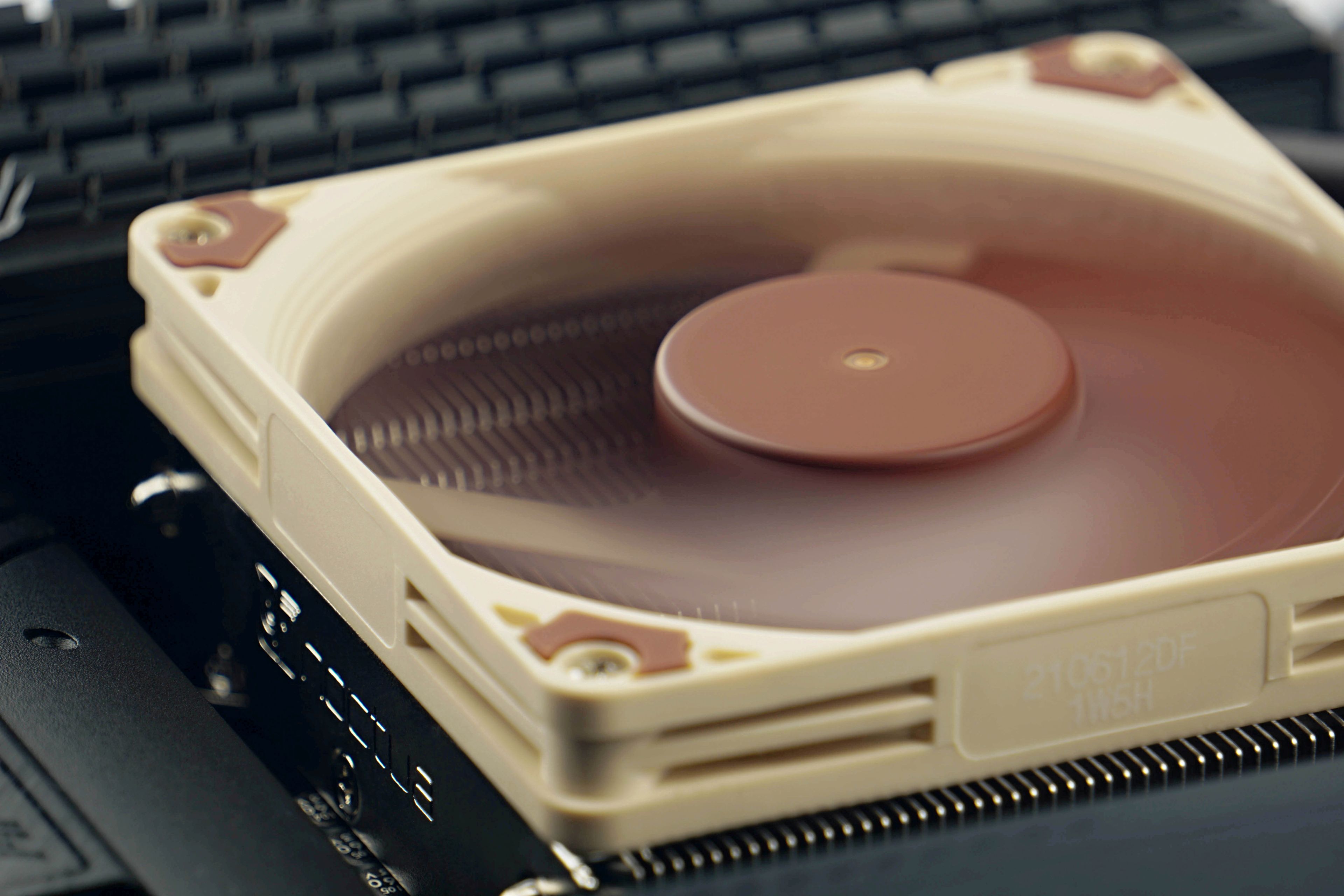
Noctua: We showed a new 70mm tall low-profile cooler for AMD Ryzen CPUs at Computex earlier this year. This will be our next focus in this area, and we’re aiming to bring it to market in Q2 next year. We’re also exploring other height categories in the range you’ve mentioned, but I can’t disclose more at this stage.
HWCooling: Could we expect something like an NH-U12A with NF-A12x25 G2 PWM fans in the future? I realise that the resulting gain in cooling performance would probably be too small to make much sense, but nevertheless: what matters, of course, is how your team sees it. Alternatively, is the modernisation of any of your single-tower CPU coolers on the table?
Noctua: We’d definitely like to do something in this form factor, but as you’ve suggested, the performance gain over existing models would have to be significant enough to make sense, especially if a further refined heatsink design would also increase cost. So this is something we’re still working on, but we’re not yet fully satisfied with the results.
HWCooling: And one more question about the future, haha. What about thicker fans, for example in the 140 mm format? There are relatively few of those, and their availability is also somewhat limited.
Noctua: I think we’ve touched on this before. I can confirm that this is an area where we’re doing quite a bit of research and development, but for us it all comes down to whether we can achieve a meaningful efficiency improvement. We don’t want to move into thicker fans just because they’ve become something of a trend—‘thicker is better’ sounds deceptively simple. Many people assume you can easily gain extra performance just by making a fan thicker, but it actually requires careful groundwork and rethinking long-held assumptions for certain impeller diameters to really unlock that potential. If we see a good chance to capture a meaningful part of that potential, we’ll move into thicker fans—but not before then.
HWCooling: Yes, in the question above I was referring to white AIO liquid coolers. I was assuming that they might be released alongside white fans. As you say, that is not going to happen. Thank you for the response. And yes, in the next question I meant the NF-A12x15 G1 fans, although I wrote it incorrectly (as NF-A12x25 G2… those, of course, already exist and we have tested them too, haha). Could you reveal some basic points about the improvements planned for these LP fans? Just the main areas of improvement. Even if some of them ultimately don’t make it into the final retail version of the fan, that’s perfectly fine.

Noctua: On paper, it’s quite simple actually; the goal is to achieve a significant improvement in performance-to-noise efficiency compared to the existing models in the key target applications. For the NF-A12x15, this is mainly low-profile heatsinks and SFF case cooling and, to a lesser extent, usage on radiators when space is tight. One particular challenge for this model will be intake acoustics as the fans used on low-profile coolers often sit very close to the case panels, which can result in turbulence that has severe acoustic and aerodynamic effects. Making a slim fan more robust against these challenges while, at the same time, maintaining strong performance in applications without inflow restriction is particularly difficult because the thinner profile basically makes it impossible to give the impeller more breathing space on the intake side and also offers less flexibility for the blade design in general.
HWCooling: When it comes to increasing the cooling performance of SFF coolers or the single-tower models we also discussed, do you see the greater potential in developing a more efficient heatsink or in using more efficient fans? I realise that it is ultimately a combination of both and how they interact, but if you were to philosophise about the subject a little, which side would you lean towards?
Noctua: Yes, you’re definitely right that it ultimately takes a combination of both to achieve the best possible results and you can run into problems if you ignore how a fan and heatsink should work together. For example, if you have a fan that can push more air at higher flow impedance, this enables you to build a heatsink with a larger fin surface area or a tighter fin pitch and this will give you a bigger total performance uplift. By contrast, if we assume that this fan has been optimised for this particular high-impedance operating point and doesn’t excel in the low-impedance range of the P/Q curve, it may not provide any performance uplift if you put it on a heatsink that doesn’t create that much flow resistance. On the flip side, if you only increase heatsink fin surface area or fin density but your fan doesn’t really support the increased flow resistance, the fan might operate in stall conditions and you may end up with lower performance than with the original heatsink the fan was suited for. All this doesn’t mean that you always have to design a new fan for a new heatsink or the other way around, but you should definitely be mindful of how they interact and what fits or doesn’t fit.
HWCooling: Yes, we discussed thicker fans in the previous interview, and I completely understand the point that thicker does not automatically mean more efficient (with a more attractive cooling-performance-to-noise ratio). One only has to look at something like the EK-Meltemi 120ER with its 38 mm-thick profile, which makes it quite clear that “thickness alone” is not enough, if we put it very simply. It immediately occurred to me that a thicker fan has a heavier rotor, which requires a more robust hub. How do you see this at Noctua? If a more robust hub is used, there is less space left for the blades…

Noctua: We rarely see mechanical stability of the hub as a limiting factor, so as long as the fan is properly balanced, I wouldn’t anticipate this being a problem. You also have to keep in mind that the blade area close to the hub is usually not actively contributing much performance anyway. Since absolute blade speeds are lowest near the hub, the aerodynamic performance is much lower there, so it would be a misconception that reducing the hub size would automatically improve performance. On the contrary, since it is so challenging to build up sufficient pressure near the hub, there is always a risk of air getting pushed back through this area when the fan is operating against high flow resistance. In such a case, making the hub bigger to prevent that kind of backflow can actually help to improve performance. With our Progressive Bent impellers utilised in the G2 fans, we’re making better use of the inner blade area through a different, customised blade geometry, which enabled us to keep the motor hub smaller as compared to the first-generation NF-A12x25, but it required a novel approach and lots of optimisations to tap this potential. Ideally, the goal would be to use a similar structure for potential thicker-fan models as well. If we can make it work in terms of the aerodynamics, I currently wouldn’t anticipate limitations due to mechanical stability.
HWCooling: Reading your last response, a thought occurred to me: why do some fans have a larger hub than others? We could apply this, for example, to some of your fans. With the NF-A12x25 PWM G2 models, we noticed a hub with a smaller surface area than on the NF-A12x25 PWM G1 models. I understand that during development, it may have been discovered that the fan hub could be made smaller while maintaining the original or even improved characteristics. I’m now looking purely at the mechanical side of things. Not micro-optimizations such as the Centrifugal Turbulator (on the NF-A12x25 PWM G2 models), of course.
Noctua: The reasons can differ from fan to fan, of course, and the size of the motor definitely imposes a certain minimum size. However, in many cases such as the NF-A12x25 G1, the hub could easily be made smaller since the motor doesn’t take up as much space, so the reasons why you still want to keep the hub larger are either to prevent the type of backflow phenomena I’ve described earlier or to address blade stability considerations. You also need to keep in mind that the longer your fan blades are, the more challenging it will become to deal with things like creep and blade vibration, or to ensure general mechanical robustness. If you combine that with the fact that it’s hard to get decent performance out of the near-hub region anyway, it’s easy to see why hubs are often bigger than they would seemingly need to be. It helps to run tighter tip clearances, keep vibrations low and make your blades less prone to break if someone happens to stick a screwdriver into the fan.

HWCooling: I think we can probably wrap things up here. Jakob, I would like to thank you for the excellent, in-depth responses. We’ll collect various questions from readers as they gradually come in, and then we can incorporate them into another similar interview that we’ll do together next time.
Noctua: My pleasure, Lubo—it’s always great talking with you, and we greatly appreciate the interest and excitement for cooling topics that you and your readers bring to the table.
English translation and edit by Jozef Dudáš



I’d love Noctua (or someone really, but Noctua has the best record when it comes to flagship fans low noise performance) to make an unorthodox square 4-fan rad and a case to go with that, a cube as small as possible for mITX board, SFX, maybe SFX-L PSU (or even something non-standard if it’s robust enough, hard to get good and quiet small PSU nowadays anyway) and the rad on top, cubes are heavily underrepresented in SFF, you either get a VCR that can barely fit a low profile cooler or relies on a long rad or an uATX case dimensions without enough space inside to put the uATX board in, and cubes are non-existent!