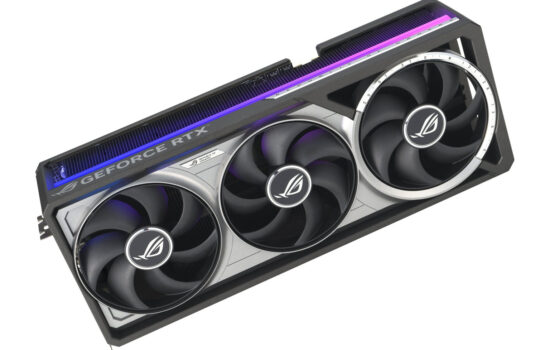
It is widely known that the AI boom has triggered massive DRAM shortages—including GDDR6 and GDDR7. Unfortunately, it appears that one of the consequences will be the cancellation of new gaming graphics cards Nvidia had planned for this year. The so-called “Super” cards were expected to be expected at CES 2026, but that did not happen and according to sources from Asia, Nvidia has completely halted the plans.
The GeForce RTX 5000 “Super” graphics cards were meant to be an improved refresh of the current graphics cards based on the Blackwell architecture, similar to the mid-generation refreshes Nvidia introduced in its GeForce RTX 2000, RTX 4000, and partly also RTX 3000 lineups in the past (although in that case the cards carried the Ti designation rather than “Super”).
There were to be new versions of the RTX 5070, RTX 5070 Ti, and RTX 5080 models, with increased performance and, above all, higher memory capacity. Memory capacity was expected to increase from 12 to 18 GB and from 16 to 24 GB on the cards. Plans to prepare these cards were never publicly announced, but we know about them based on several information leaks from last year:
It was precisely this planned increase in memory capacity that probably doomed the entire plan. Due to market conditions, Nvidia first postponed the release to the third quarter of 2026, instead of launching at the beginning of this year. Now, however, new reports have emerged from the Asian card manufacturer circles via the Board Channels website, according to which this also no longer applies. Nvidia has reportedly halted preparations for the cards altogether. Manufacturers were informed that the Super models are no longer part of current plans for the foreseeable future.
The primary reason is the price and poor availability of memory, which would make production of these models significantly more expensive than originally projected. They would not use standard 16 Gb (2 GB) GDDR7 chips, but 24 Gb (3 GB) chips, which are likely even scarcer now and are primarily destined for compute cards, as they allow 96 GB of graphics memory to be installed on the 512-bit bus of the GB202 GPU. This is an additional roadblock besides just the direct cost of these chips.
Nvidia prioritizes production of AI accelerators and professional Nvidia RTX models over gaming graphics cards, and one of the reasons for canceling the Super models is to ensure that gaming GPUs consume as little as possible of the components available for GPUs intended for the AI market. Although Nvidia has very high average margins (around 75%), GPUs for the AI market are even more profitable, and the company therefore gives them priority.
Another reason Board Channels also cites as the fact that Nvidia is not under competitive pressure from AMD, which is also not releasing new models. This, however, is most likely not a real factor (or not a decisive one). Radeon RX 9000 graphics cards based on the RDNA 4 architecture are considered more competitive and more successful than the Radeon RX 7000 series based on RDNA 3, Yet Nvidia had no issue releasing refreshed GeForce RTX 4000 Super graphics cards against the latter last year.
The problem with the claim that AMD “does not threaten Nvidia at all,” as is often said, lies rather in customer behavior patterns, where the position of the GeForce brand is so dominant that practically nothing would threaten it. It is known from fairly reliable sources that Nvidia was in fact preparing GeForce RTX 5000 Super models, and the only thing that has changed since then is the situation regarding memory prices and availability. This is therefore clearly the decisive reason for canceling these refresh cards—were it not for memory, Nvidia would have released these Super cards against the Radeon RX 9000 lineup.

Indefinite postponement, in practice likely cancellation
This is technically just an indefinite postponement of the GeForce RTX 5070 Super, RTX 5070 Ti Super, and RTX 5080 Super cards, but it likely means the cards effectively scrapped—though we don’t yet have 100% certainly they will never see the light of day. Should market conditions (memory prices) change sufficiently, it would not be particularly difficult for Nvidia to revive the plans; manufacturers would merely need a few months to prepare production of the cards. However, there will only be a limited “window” for such a change of plans before the next generation of graphics cards is due—according to current reports, GPUs with Rubin architecture (most likely coming as GeForce RTX 6000, although the final naming is not yet certain) are expected in the second half of next year.
Nvidia will likely not release a refresh of GeForce RTX 5000 cards if the launch would only precede the introduction of RTX 6000 series by some 6–9 month or less. Moreover, a release after, say, mid-November 2026 would be problematic because it would miss the Holiday season.
It would therefore most likely be necessary for memory prices to drop to more normal levels and for there to be ample availability of these chips sometime during the summer; otherwise, conditions simply will not exist for the company to revive plans for GeForce RTX 5000 Super cards. This seems unrealistic to expect unless there is some extreme sort of a sudden collapse of the artificial intelligence sector in the near future that would cause the demand for AI accelerators and servers to largely disappear overnight and lead to almost immediate halt in production of these products, which would free up DRAM chip supply. Half a year, however, is relatively little time for such a theoretical development.
Sources: VideoCardz, Board Channels
English translation and edit by Jozef Dudáš
⠀