Most hardware is getting more expensive and unfortunately graphics cards are joining the trend. According to Asian sources, major board partners are now raising GPU prices due to increasing costs of GDDR6 and GDDR7 graphics memory. In the short term, this is expected to push prices up by 15–20 %. That may not be the final outcome, however, as further increases could be driven by reduced GPU supply due to supply-and-demand dynamics.
Nvidia informed board partners of higher prices for memory supplied as part of GPU bundles, according to a January 16 report published by the Benchlife website, which often possesses reliable behind-the-scenes information from hardware manufacturers. Because Nvidia holds a stronger negotiating position with memory manufacturers, the approach of supplying GPU and accompanying memory chips as a package is generally the least expensive and complicated way for board partners to secure GPU memory supply, especially under current market conditions.
These GPU-and-memory bundles are now more expensive, with the increase solely attributed to rising memory prices, while the portion of the cost assigned to the GPU itself is said to remain unchanged. Prices have reportedly increased for component bundles meant for production of both GDDR7-based cards and for GDDR6 GPU bundles.
According to industry sources, the official MSRPs set by Nvidia and AMD will not change despite this—at least Nvidia has reportedly kept them unchanged despite higher component costs. This, however, would reduce the margins board partners rely on to cover their own operating expenses. For that reason, the unchanged MSRPs don’t mean end users will be unaffected. What’s likely coming is a repeat of the situation during last year’s GPU shortages, when official MSRPs became largely irrelevant and real retail prices were tens of percent higher.
According to a separate report from China Times, board partners are in fact raising the prices at which they sell graphics cards into the distribution channel (these prices are not the same thing as the end pricing charged by retailers to consumers). MSI reportedly made the first move, with Gigabyte and Asus expected to follow. Since component costs affect all manufacturers, this price increase is likely to apply broadly across the entire graphics card market.
For AMD GPUs, a similar increase reportedly took place a week earlier, while Nvidia-based cards are said to be affected now. Prices of GeForce cards in Chinese and European distribution channels have reportedly risen (or are about to rise) by 15–20 % for 16 GB GeForce models, while Radeon RX 9000 prices are said to be up by 10–18 %. These are channel prices, so the increase may not be immediately visible on store shelves, as big retailers and may still have inventory purchased at earlier, lower prices.
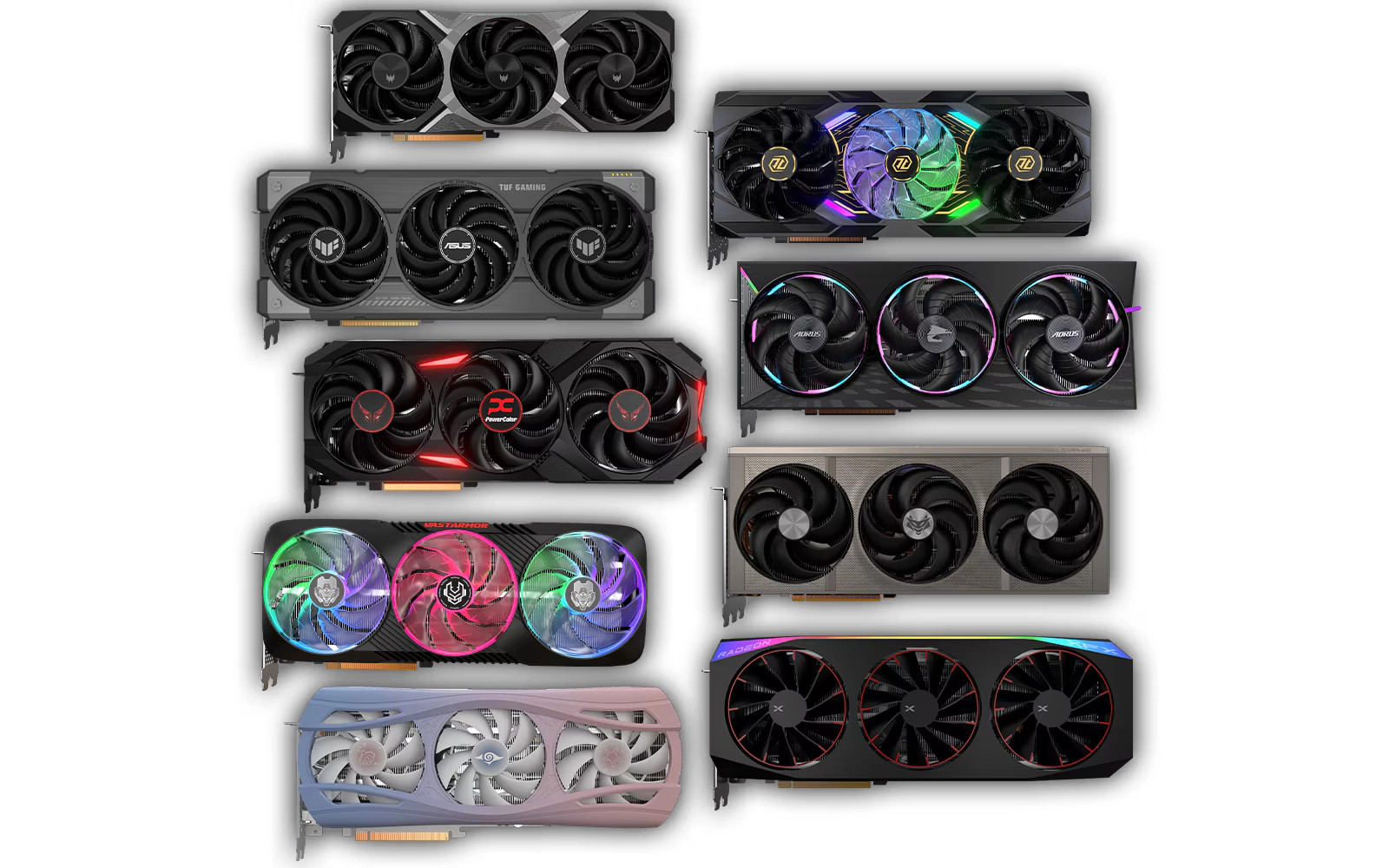
The reported price increases likely reflect purely the higher production costs driven by memory pricing. Separately, however, there are also reports that Nvidia is reducing GPU deliveries to board partners by as much as 15–20 %. This could lead to further price hikes if shortages emerge. For examples of what can happen when demand significantly outstrips supply, one only has to look at the current GPU generation launch period—or earlier periods during cryptocurrency bbbles, when GPUs were widely used for mining and their prices doubled or even tripled. If graphics card production once again fails to meet demand, prices could rise even more on top of the aforementioned 10–18 % or 15–20 %.
Nvidia reportedly has an advantage in memory pricing
According to Benchlife, Nvidia is currently charging lower prices for memory as part of its GPU bundles than AMD does—even after the recent increase. This may be due to Nvidia’s dominant market position, which allows it to negotiate better terms with memory manufacturers (and potentially secure larger allocations in advance), while AMD faces higher costs that are then passed on to board partners.
That said, Nvidia may also be absorbing part of the increased cost at the expense of its own margins, possibly as a temporary measure to slow the impact of price hikes. Still, it’s difficult to fully separate GPU and memory pricing when both are sold as a bundle—cheaper memory could theoretically be offset by a higher price for the GPU die itself.
Sources China Times, Benchlife
English translation and edit by Jozef Dudáš
⠀