




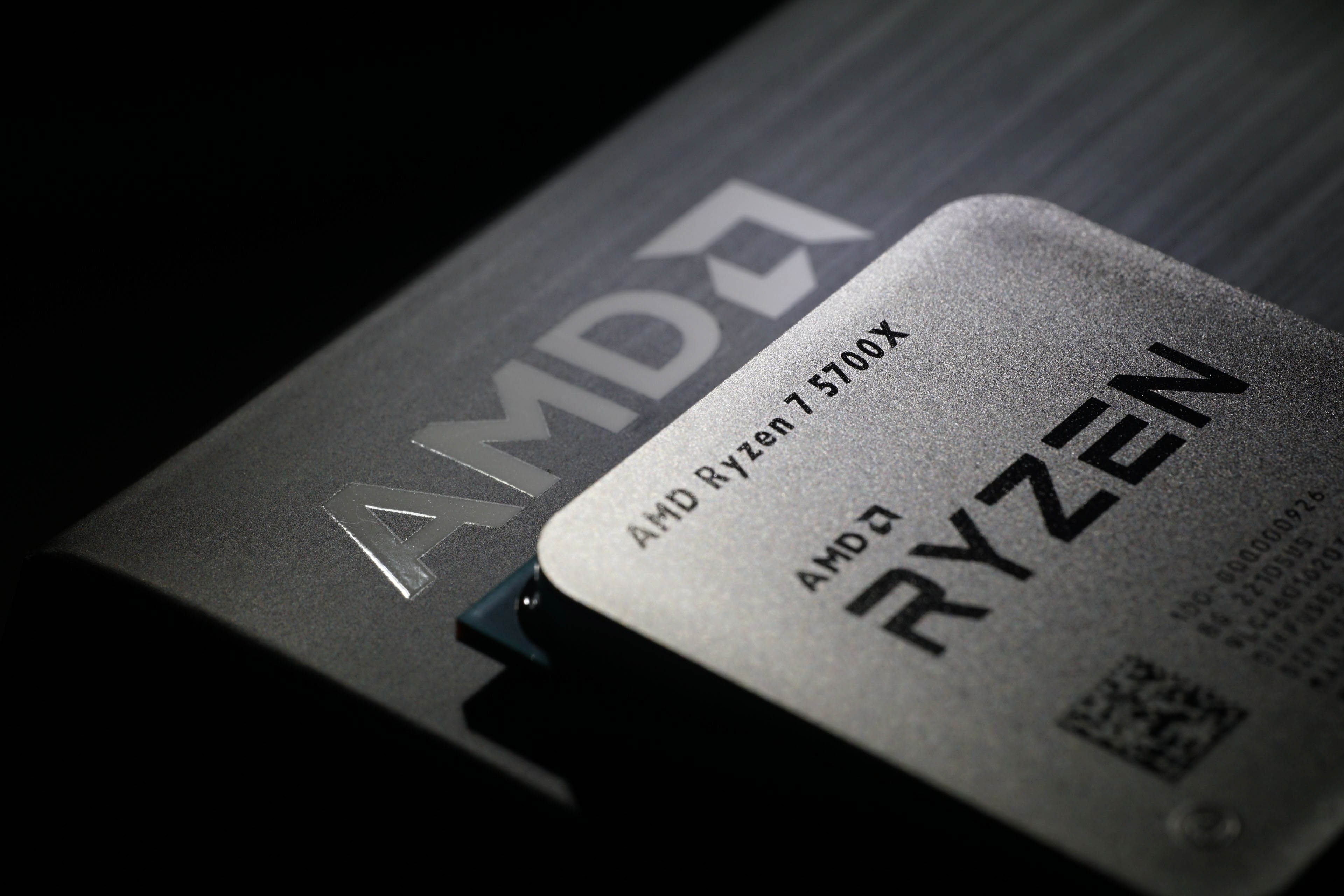
It has been two years since AMD released Zen 5 Ryzen CPUs, and the launch of the next-gen Zen 6 CPUs should slowly be approaching—or at least we hope so. So far, there have not been many leaks indicating what kind of performance to expect, but this week a Geekbench database entry appeared showing a processor that appears to be a laptop Zen 6 sample—a Medusa APU. However, the performance scores raise more questions than answers.
Yesterday, Geekbench tested a Ryzen processor sample identified as AMD Eng Sample: 100-000001713-33_N @ 2.00 GHz (CPU ID: AuthenticAMD Family 26 Model 129 Stepping 0). Judging by the designation of the development platform it was running on—AMD Plum-MDS1—it is most likely a sample of the Medusa Point 1 laptop APU (or perhaps simply Medusa 1). Medusa APUs are expected to use TSMC’s 3nm process and could feature four big Zen 6 cores and six compact Zen 6c cores (or four Zen 6c cores plus two Zen 6 LP cores).
According to Geekbench’s detection, the tested processor indeed had 10 cores and 20 threads thanks to SMT, along with 32 MB of L3 cache. If this is not a false detection, it would represent an interesting improvement, as current APUs typically have just 16 MB. The L2 cache, on the other hand, remained at 1 MB per core, while the L1 data cache stayed at 48 KB (the L1 instruction cache also remains unchanged at 32 KB).
“MDS1” is expected to be the more affordable notebook processor variant, positioned similarly to the Krackan Point APU from which AMD derives its Ryzen AI 5 and Ryzen AI 7 models. More expensive APU variants with additional CPU cores are expected to sit above it. The entire lineup will most likely carry the Ryzen AI 500 branding.

This is not the first leak of a Medusa mobile APU—it has appeared in the Geekbench database before, all the way back in March. However, that sample delivered a low score and was most likely running at significantly reduced clock speeds. Unfortunately, it seems Geekbench keeps being incapable of reading the clocks correctly and, in both the earlier and current tests, reports a boost clock of around 2.1 GHz. That is almost certainly an incorrect reading (and AMD may actually be leaving clock speed detection broken on these samples intentionally to avoid revealing actual performance).
However, the scores measured this time in Geekbench 6.6 running under Windows 11 Pro are significantly better than those from March. The 10-core Zen 6 processor achieved a single-core score of 3,174 points and a multi-core score of 15,092 points.

Good news or bad news?
Desktop Ryzen 9000X processors already achieve higher single-core scores of around 3,400 to 3,500 points, depending on the model (with the highest scores coming from the Ryzen 9 9950X and 9850X3D). However, mobile Ryzen AI processors with Zen 5 cores typically score noticeably lower in Geekbench 6 single-core tests. This is partly due to their smaller L3 cache, while their lower clock speeds also play a role, although it cannot be ruled out that the benchmark code behaves suboptimally. Strix Point, Krackan Point, and Strix Halo APUs typically score around 2,800 to 2,900 points. Compared to that, even the current result would not be bad considering it is coming from one of the more affordable mobile Zen 6 models. And particularly if we assume that as an engineering sample this process still does not represent final performance. The score would would correspond to a single-threaded performance improvement of roughly 9–13%.
Whether this benchmark is ultimately good or bad news depends entirely on the processor’s actual clock speed. If this sample is already running at the maximum clock speeds that retail chips will reach, then the result is somewhat disappointing, as after two and a half years since Zen 5 one would expect more substantial progress. If, however, the sample is currently operating at lower clock speeds and production chips will clock higher, then the score should increase proportionally with the higher clock speed. It should also be noted that Geekbench results tend to fluctuate somewhat, and memory performance can also influence the outcome. We do not know whether this particular result is on the weaker or stronger side for this processor.
Desktop processors should perform significantly better
Keep in mind that this benchmark measures Zen 6 core performance in a mobile APU. It is reasonable to expect that desktop models will deliver significantly higher single-core performance. Partly thanks to a larger cache—although the difference may be smaller this time, as desktop Zen 6 is expected to feature 48 MB of L3 cache per 12-core CPU chiplet. More importantly, however, there could be an even larger gap in maximum boost clock speeds between notebook APUs and high-performance chiplet-based desktop processors. The APUs will be manufactured on TSMC’s 3nm process, whereas the CPU chiplets for desktop and server processors will use TSMC’s 2nm process. That transition is expected to provide a noticeable improvement.
Exactly how big, remains unknown. However, it does provide some hope that desktop CPUs could surpass the symbolic 4,000-point barrier in Geekbench 6.6 single-core performance benchmark, allowing Zen 6 to roughly catch up with current Arm processors from Qualcomm and Apple, against which both AMD and Intel currently trail in single-threaded performance. To reach that milestone, AMD would need just over 800 additional points compared to the leaked score of 3,174 points, while the difference between current mobile and desktop Zen 5 amounts to around 600 points despite actually using the same manufacturing processes.
Mobile chips featuring Zen 6 cores are not expected to launch until 2027 (with an announcement anticipated at CES 2027 in January). It remains unclear whether the same timeline applies to desktop models for the AM5 platform, or whether those will arrive as early as the end of this year.
Source: Geekbench
English translation and edit by Jozef Dudáš
⠀


