Basically everything in your computer can be now cooled not only by air but also by a liquid – there are blocks for CPU, graphics cards, memory modules, and even SSD. Only power supplies stood out for a long time as components which must have a fan. Times are about to change. The company FSP is releasing a power supply that can be cooled trough a liquid cooling circuit.
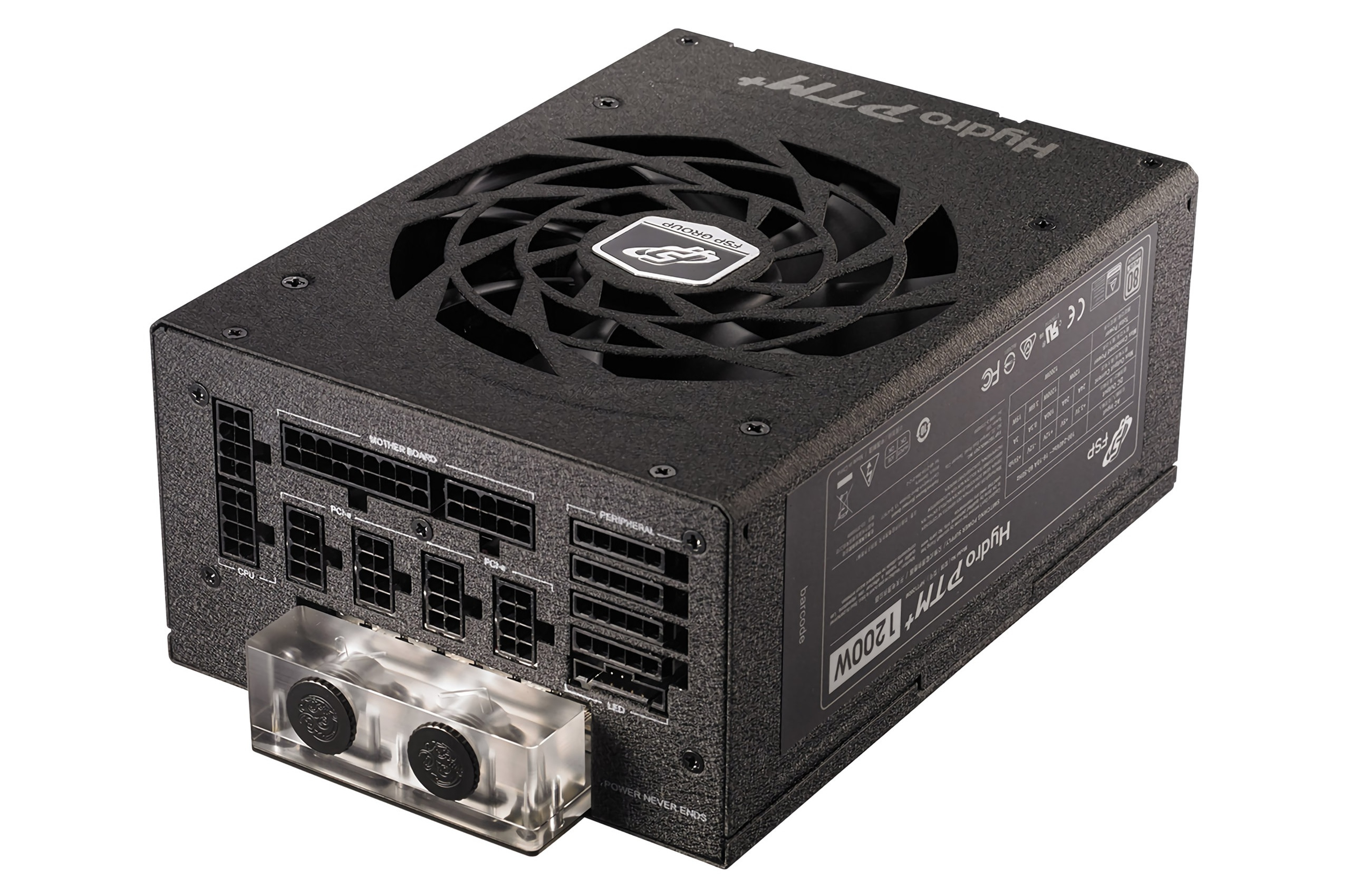
Its name is FSP Hydro PTM +. Maybe you’ve heard about it because the manufacturer announced it last year on Computex. But the production of these supplies was only to begin. Now is Hydro PTM + actually available, and you can buy it. It offers 1400 W, so it’s a pretty strong animal.
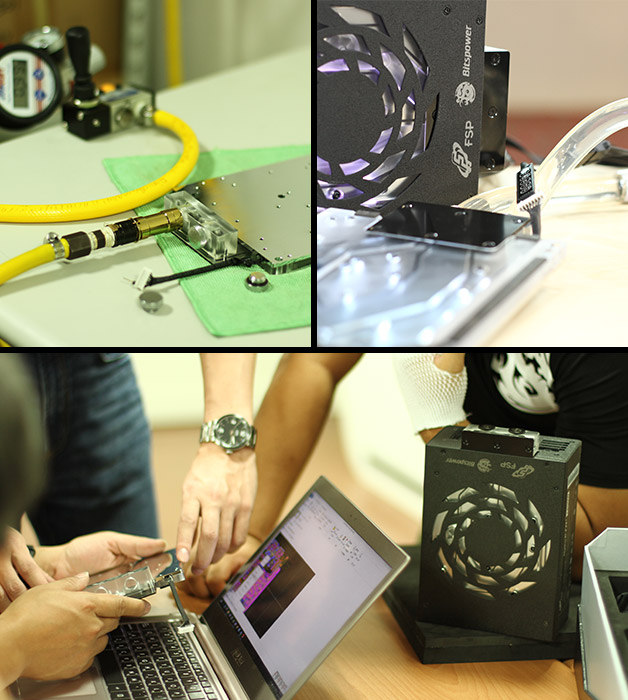
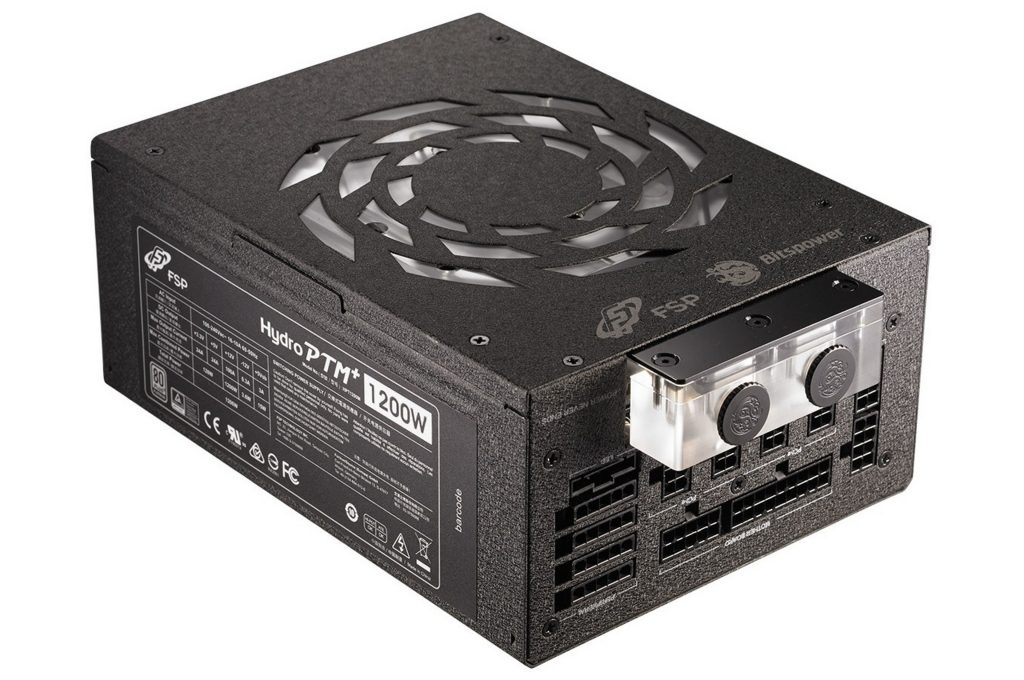
Truth be told, Hydro PTM + is only partially dependent on liquid cooling systems. It does have its own fan. Liquid cooling part is designed by Bitspower. It has a terminal that can be connected to a circuit in the computer through tubes (it is not recommended to use a conductive liquid unless you are a fan of homemade fireworks). It is located on the same side as connectors. However, it seems that the cooling capacity of this block is not enough to completely eliminate waste heat in places where it’s most needed (most likely, it is stored under the PCB). When connected to a liquid cooling circuit, 1400 W can be used, but the liquid cooling can really handle only up to 50% of the load. If this limit is exceeded, a 135mm fan comes to help. Liquid cooling alone will do just for 700 W.
The supply is able to run even without the liquid cooling, up to 1200 W. However, the fan will start to rotate around 360 W. The connected liquid cooling block will therefore increase the reserve for a quiet operation. It might fit in configurations with consumption under 700 W, no fan needed, right? But the problem is that Hydro PTM + is not just a pretty strong animal but also pretty expensive one: officially 699 $. That’s not exactly tempting for a configuration under 700 W.
The efficiency should be 92% (80 Plus Platinum). The design is based on DC-DC inverters with a single 12V branch through which it can deliver 100 A. This obviously applies to the 1200W mode without liquid cooling, there should be more power for 1400 W. Protections against critical voltage, current, and temperatures are included. According to FSP, all of the electrolytic capacitors should be 100% of Japanese production. The power supply has a completely modular cabling, and also a RGB which is compatible with Asus Aura Sync control.
As we said, FSP Hydro PTM + is a quite expensive fun. The first 500 pieces will be part of a “limited edition” which will include cables with textile cover, but also components for Bitspower liquid cooling circuit – pump, radiator, and a 120mm fan with LED.