The new DeepCool LS SE coolers go on sale relatively soon after the LT series models were introduced. Given the very similar parameters, this is an alternative that offers a particularly different look. Mainly in the fact that in this case, fans with ARGB LEDs are used, but the design of the water block cover is also significantly different. This also distinguishes these liquid coolers from older models without SE in the designation.
After the LT520 and LT720 liquid coolers from the end of last year, DeepCool continues to expand its offer with two more models – the LS720 SE (with a 360mm radiator) and the smaller LS520 SE (240mm radiator).
Compared to the LT series, the difference is that the LS series uses fans with ARGB LEDs. Some illuminated elements are also present in the LT series, but only within the water block housing. These are present on the LS520 SE and LS720 SE, but at a significantly higher intensity as the rotors of all fans are fully illuminated. DeepCool does have such coolers (with both illuminated fans and illuminated water block) already, even relatively fresh (from May 2022), but there was clearly something they weren’t happy with.
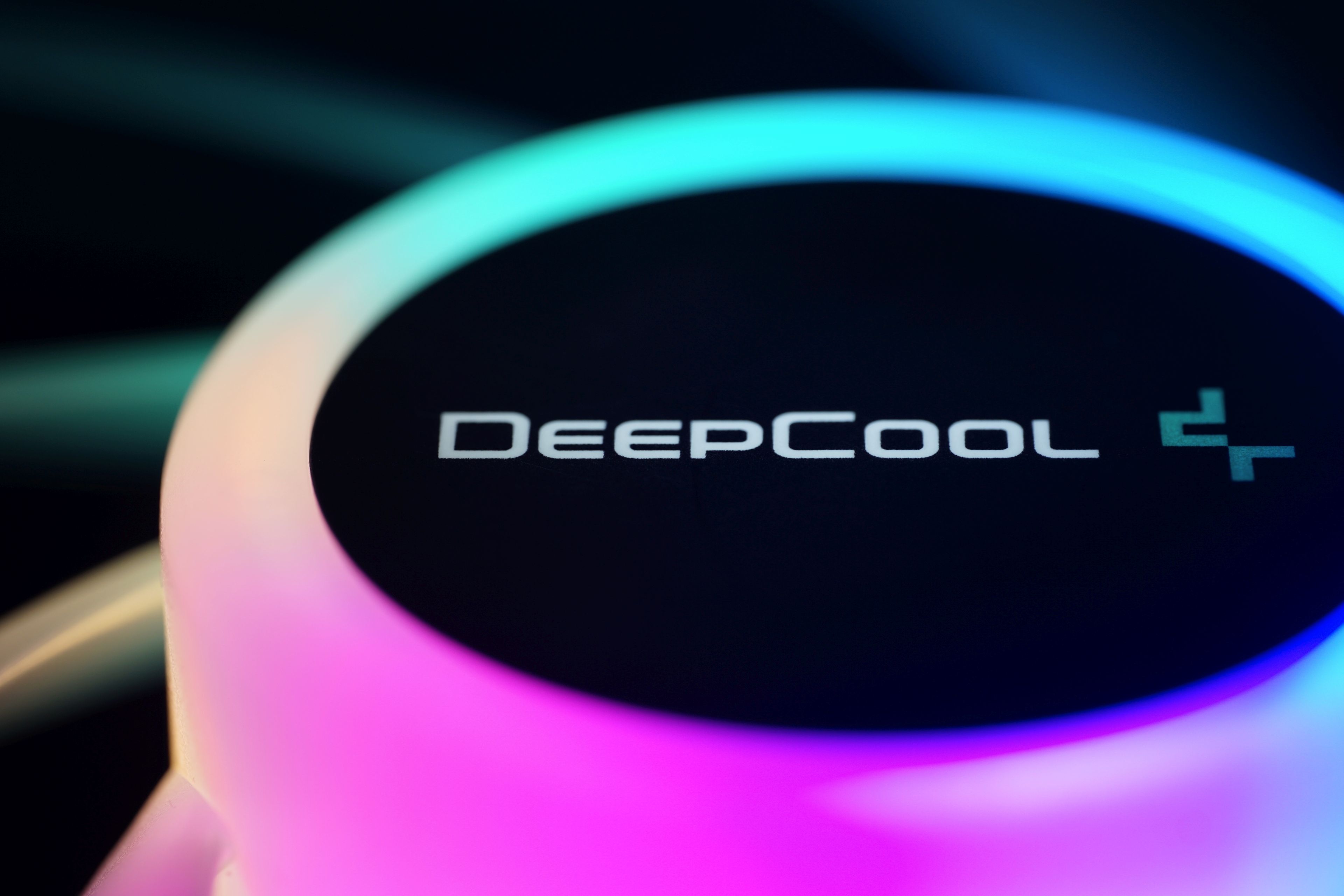
On the outside, it looks like the issue is the waterblock visual, which on the new SE models (second edition?) modeled after the LT water blocks, has a mirror effect for a more impressive look. In other things, though, the LS SE coolers’ block doesn’t look much like the ones on the LT models. This is also because of the circular cross-section (LS SE) instead of rectangular (LT) and the fully illuminated top panel (LT units have it half shielded, covered by an opaque roof).

Functional differences with previous liquid coolers (and that includes the first generation of LS models, which these new LS SEs follow) should be relatively minor. After all, they all have the same 4th generation DeepCool pump (so it’s not an Asetek one) and the same parameters are listed for the fans as well.
Sure, the illuminated variants (LS) compared to the non-illuminated ones (LT) may have slightly different characteristics due to the slightly different material composition of the rotor (similar to how the black and white Corsair AF120 fans are), but that’s going to be on the level of very small differences. DeepCool’s parameters state that a single fan can achieve an airflow of up to 145.8 m3/h at maximum speed. And given that the reported airflow parameters of the slower variants (FC120) of these FE120 fans scale well with our measurements, it’s likely that DeepCool isn’t making things up. Of course, this is accompanied by high noise levels, as the achieved airflow pertains to 2250 rpm, which you will surely hear with 120mm fans. To limit the PWM range (to 500–1600), a deceleration adapter (with electrical resistance) is included for quieter operation.

From the basic parameters: the radiators are made of aluminium and their dimensions are in length/width/height ratio of 402/120/27 mm (360 mm variant) or 282/120/27 mm (240 mm variant). To get the total dimensions (and to check, for example, if it can be installed in a ceiling position in your case), you need to add the height of the fan. This is standard – 25 mm.
Supported platforms are AMD AM5/AM4 and Intel LGA 1700/1200/115x. Suggested retail prices are 115–120 EUR (LS720 SE) and 100–105 EUR (LS520 SE). Availability is reported for January, exact date is not mentioned by DeepCool in the press release.
English translation and edit by Jozef Dudáš