




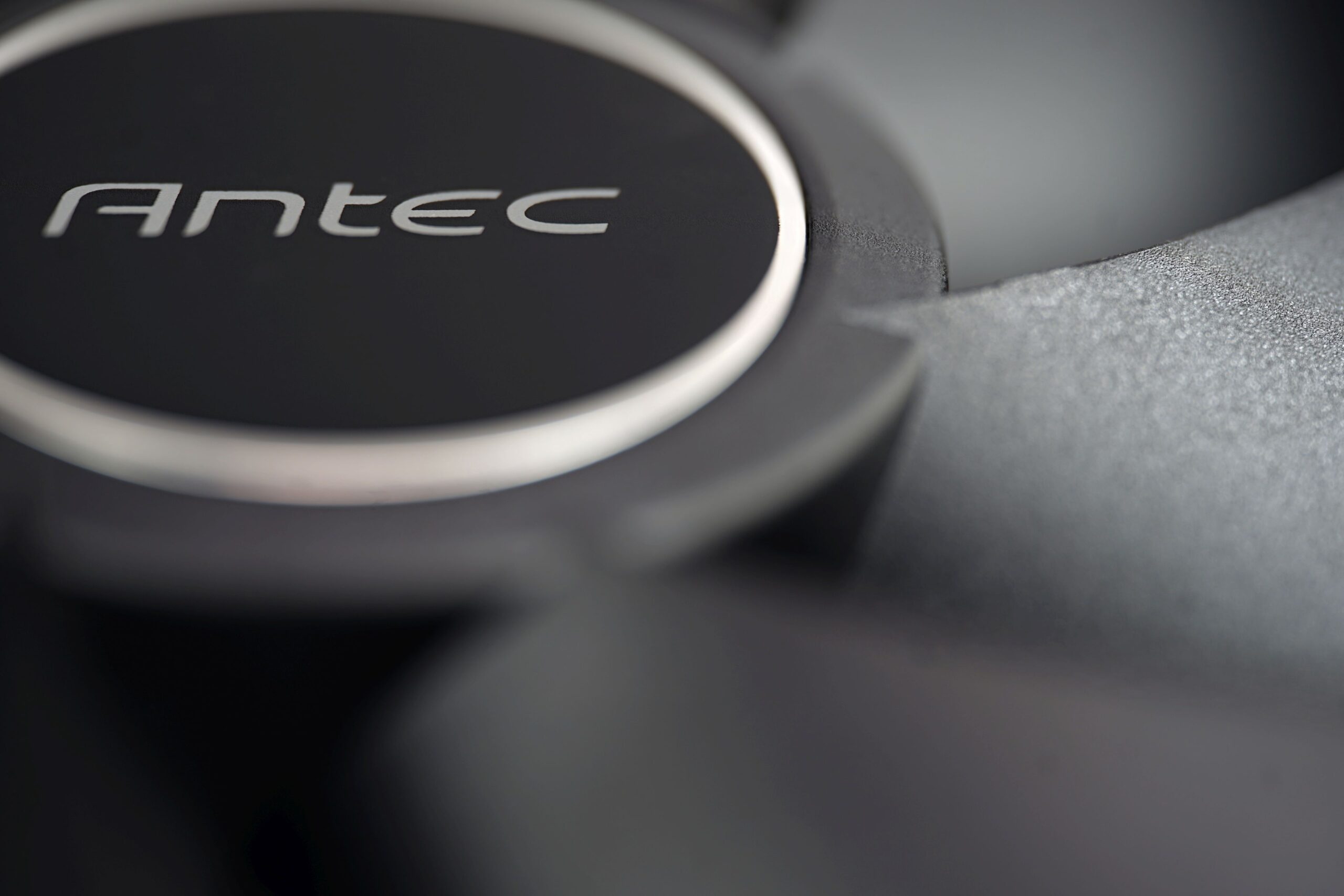
After many years, we finally managed to get our hands on the Antec Storm 120. That is, 120 mm fans combining an attractive (and efficient) geometry with good price accessibility. Although these are not outright cheap fans, the price is still relatively low. The result is quite appealing. Don’t look for technical perfection here, but “for that kind of money” it is good. Especially if you also value other things than the price/performace ratio.
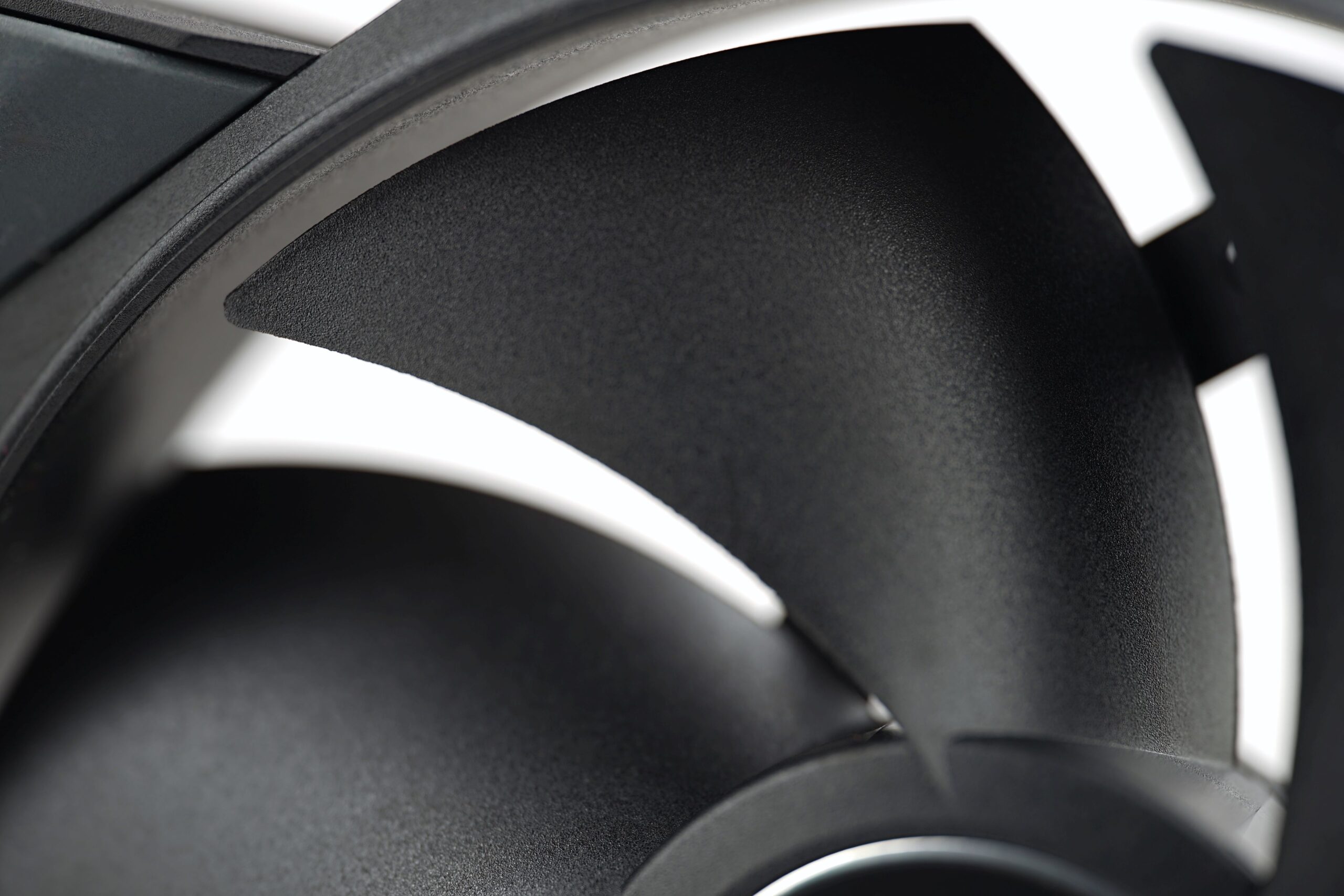
The aerodynamic geometry of the impeller is defined by seven blades combining a more pronounced curvature of the leading edges with a greater overall width. In both cases, however, the word “moderate” fits best. In practice, this would also mean that even with the use of thinner and more flexible material (and Antec builds on this to the extent that good mechanical durability is preserved… so although the blades are thinner, you won’t break them easily), higher vibrations do not necessarily have to occur. That is, those caused by blade ripple.
The final outcome and how a particular fan generates vibrations are also influenced by manufacturing precision of individual elements. Some aspects we can see (for example the edges, and the result of the injection-molding process is nice… without obvious technical defects), while others we cannot. For example, we cannot assess how straight or precisely centered the impeller shaft is.
Vibrations are also damped to some extent by soft pads in the corners of the fan. On this occasion we can also point out irregularities in the frame. Certain leak paths around the corner holes reduce static pressure (and thus airflow) through radiators, but given the area they occupy, the amount of loss will likely be smaller rather than high. In any case, there are paths through which air escapes in certain scenarios. Antec aimed for visual differentiation and variety, which can naturally appeal to some users. Overall static pressure will likely be average, also considering the moderate spacing between the blades.
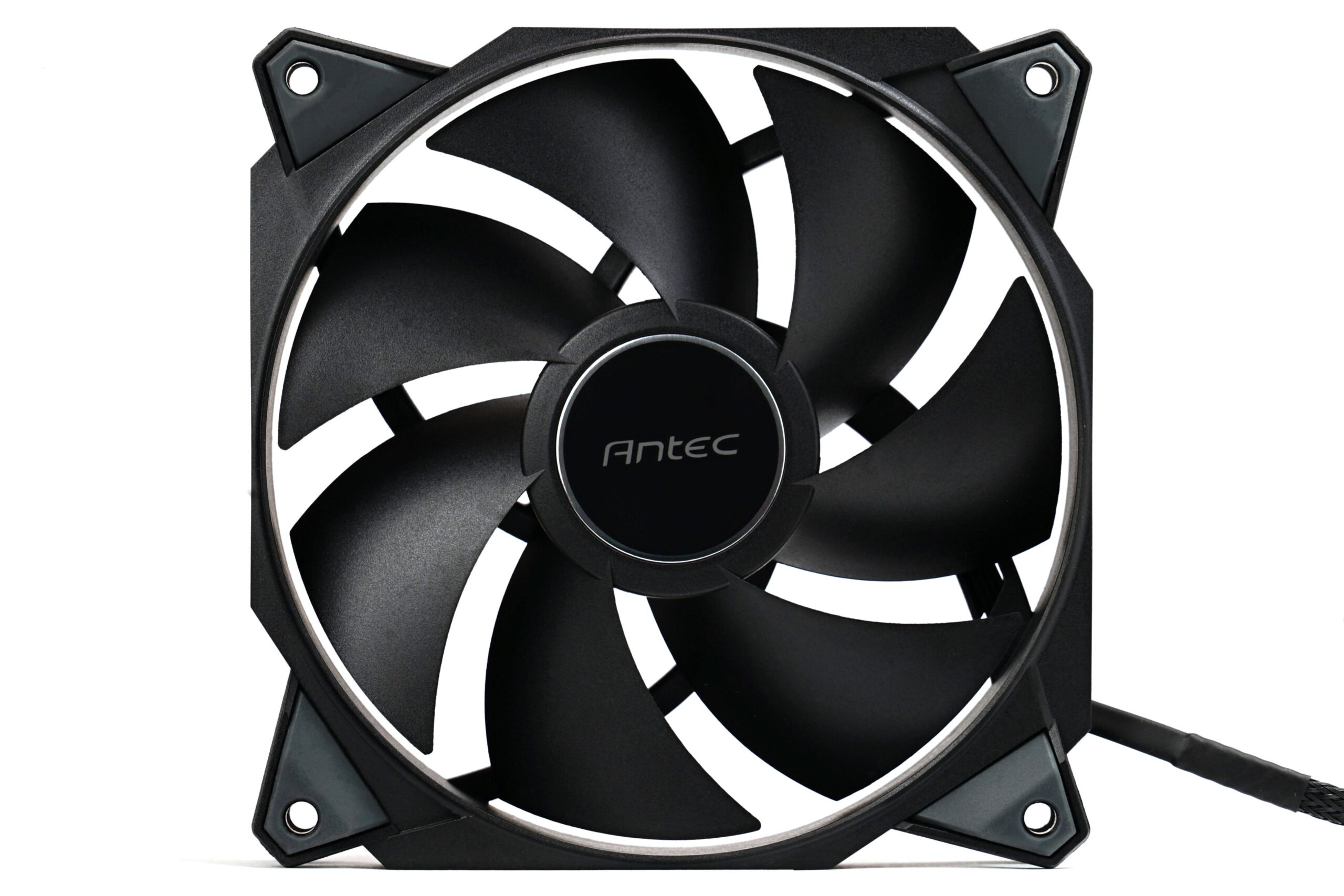
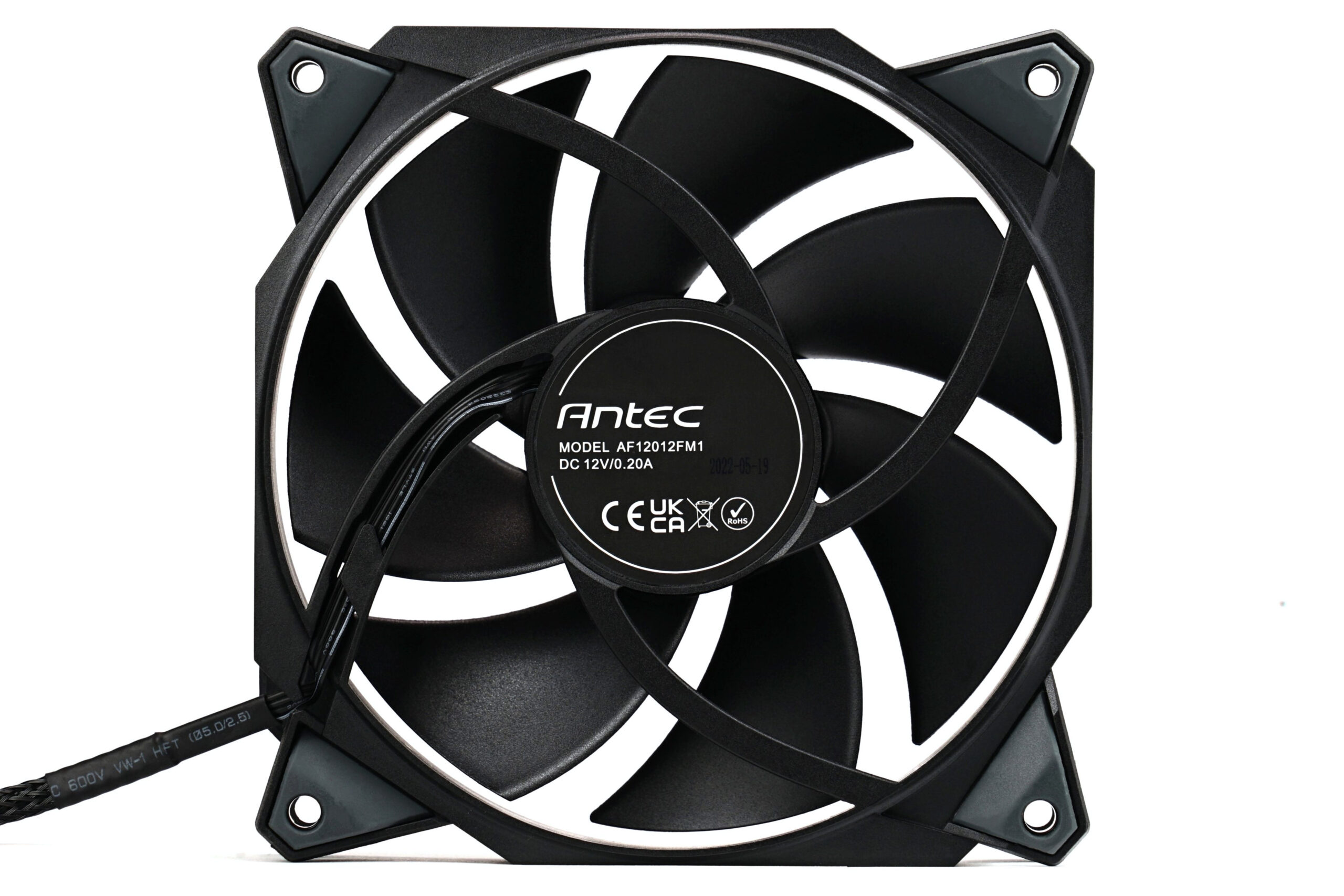
The trailing edges, like the entire blade construction, are clean—without any aerodynamic micro-optimizations. The design relies on what we would call a basic shape.

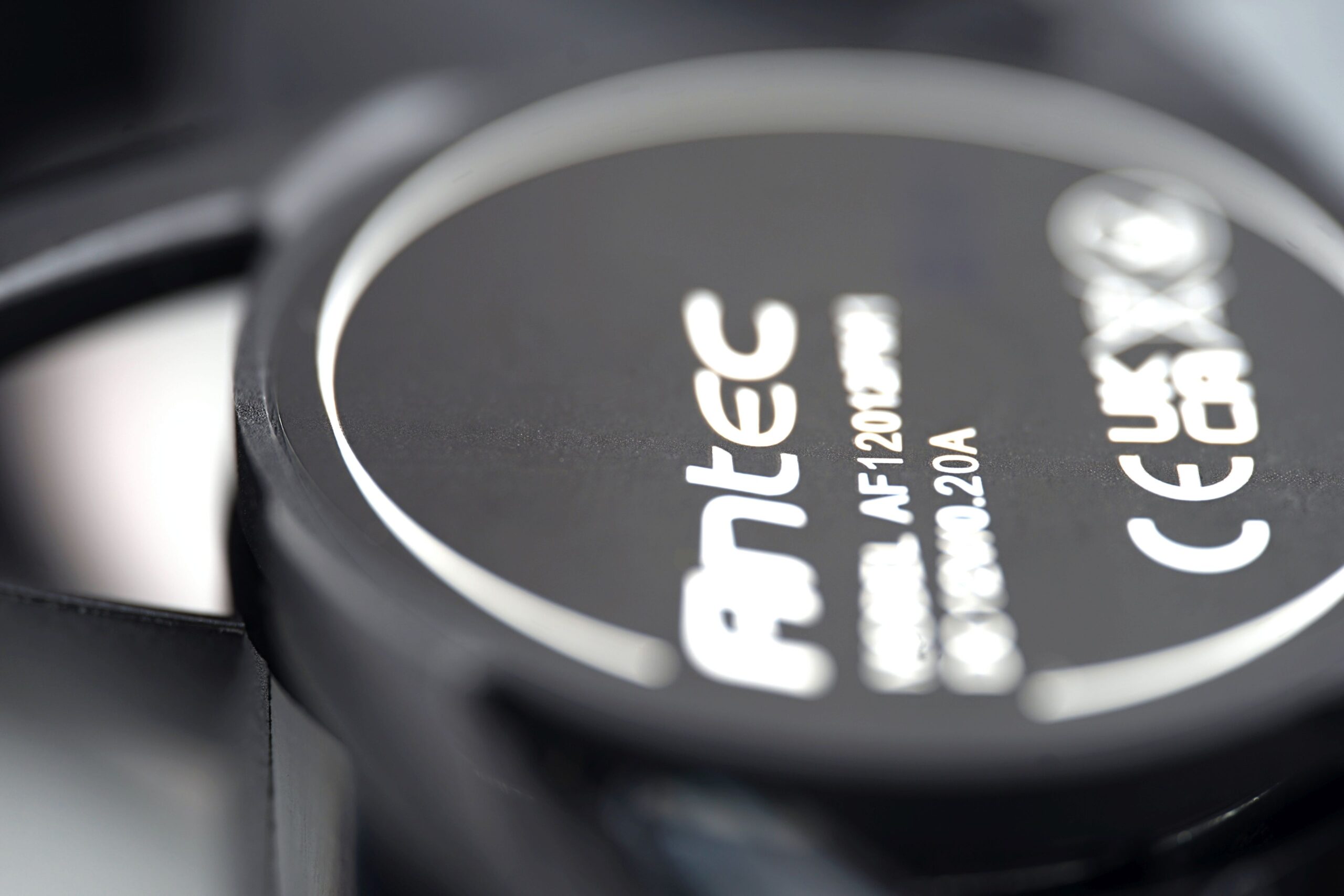
The motor label states 0.20 A, which means that at linear 12 V (or at 100% PWM control, which is effectively the same…) the motor power could be 2.4 W. We measured roughly double that, but the specific value depends on the testing methodology. The way we measure motor power is likely different from how Antec or the laboratories it uses do it. Antec may be listing continuous power at which the fan operates long-term, while our procedures correspond more to peak load. Either way, it is a good showing—the motor is relatively powerful, even above average, which the Storm 120 fan will certainly list among its positives.
Please note: The article continues in the following chapters.


Next up will be ID-Cooling… with one aerodynamic feature that none of the fans we’ve tested so far make use of. 🙂