


Last year’s edition (HWCooling Techtour ’25) revealed many things, and we will work with that experience. Whatever can be technically improved will be. Especially regarding the live stream that you could watch. It certainly wasn’t something we were satisfied with, but we know where the “holes” are and we will do everything in our power to make the result as useful as possible for schools and at a more attractive level than before.
For HWCooling Techtour ’26 we will invite all secondary schools in Slovakia. Those that consider this initiative useful can join. The topics will revolve around processors (AMD), the motherboards designed for them (Asus with AM5 sockets), CPU coolers (DeepCool), or accessories that will likely be presented again by Axagon. And then Martin (Malík), the author of HWiNFO, will probably once again give a presentation about diagnostics. He will be the only speaker presenting in Slovak, and for the foreign speakers we will have an interpreter and work with two language tracks. That is the plan. The goal is for everyone to understand everything and take away information they will be able to apply later.

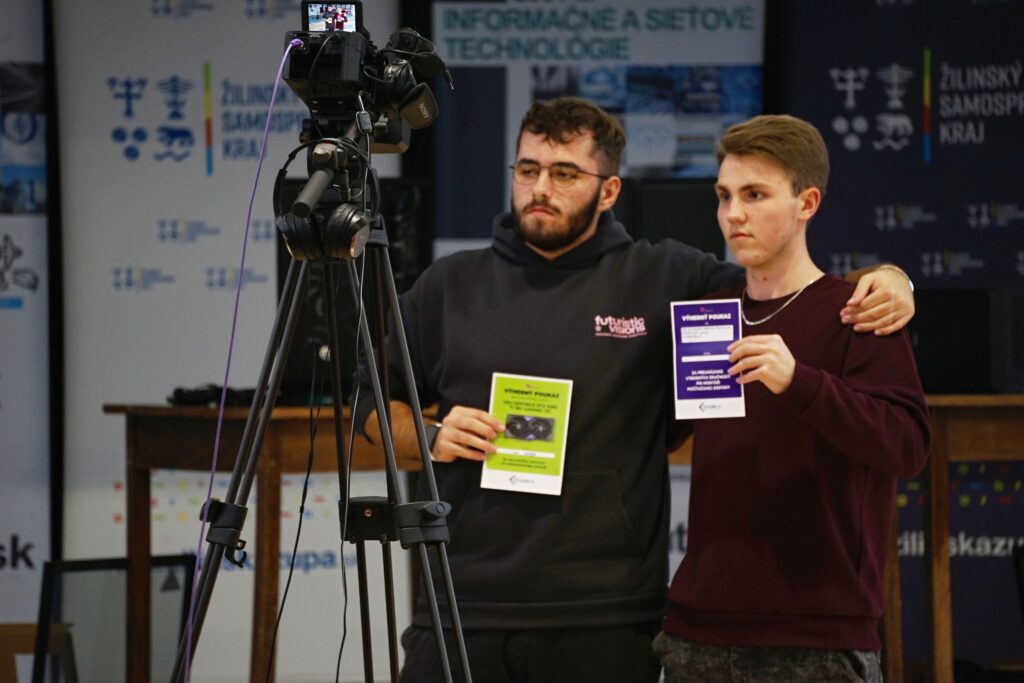
All participants who manage to join the live broadcast will also be able to take part in an online quiz. A bit of competition, a chance to demonstrate knowledge and overview—and in the end to win a valuable prize. Last year the prizes were graphics cards, a power supply, or a case; this time it will be a processor, a motherboard, or a CPU cooler. In fact, it will somewhat resemble the first edition, which took place at only three schools, whereas now there could theoretically be more than six hundred. That is our “national” potential—essentially all secondary schools in Slovakia—and naturally it will depend on how many of them show interest in this upcoming IT conference.

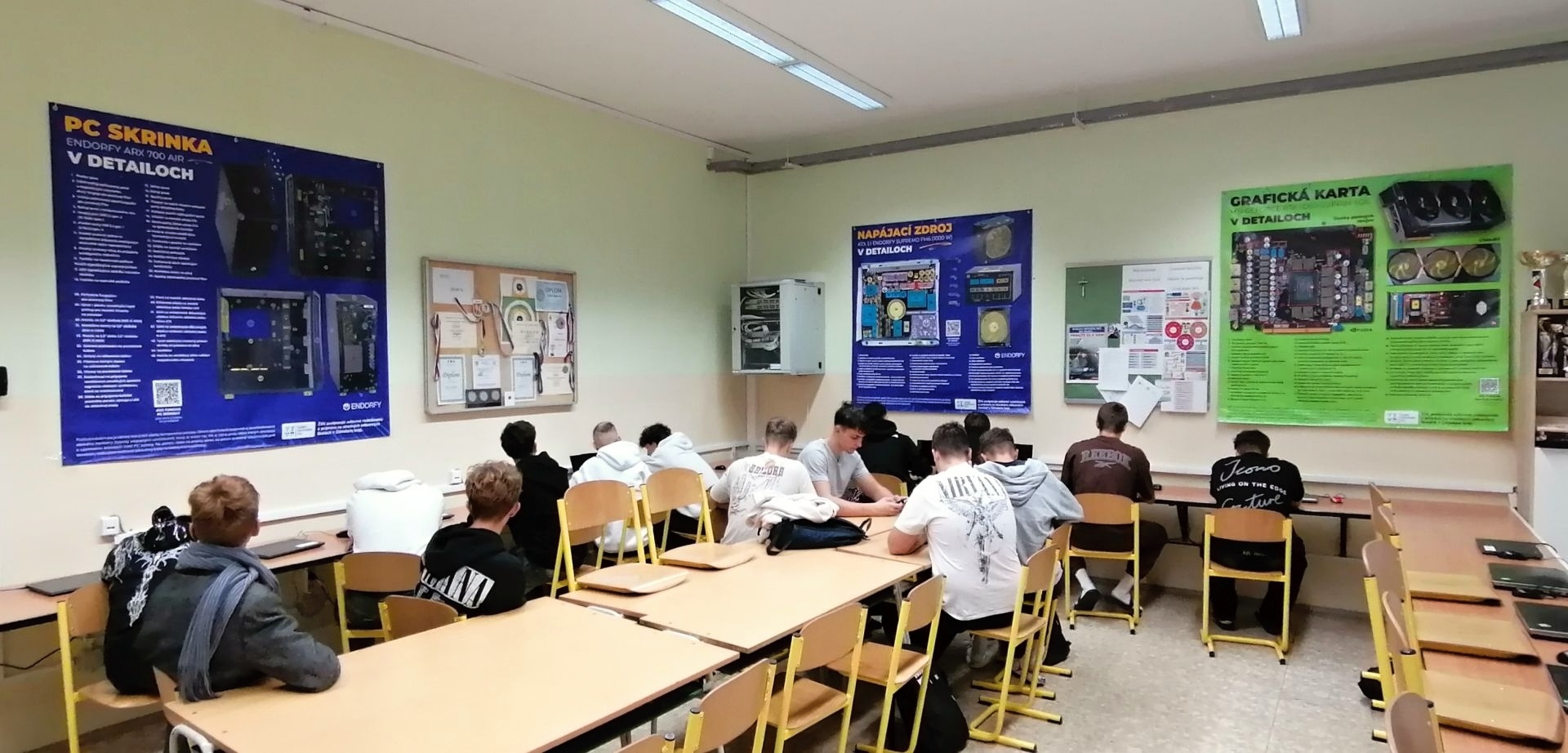
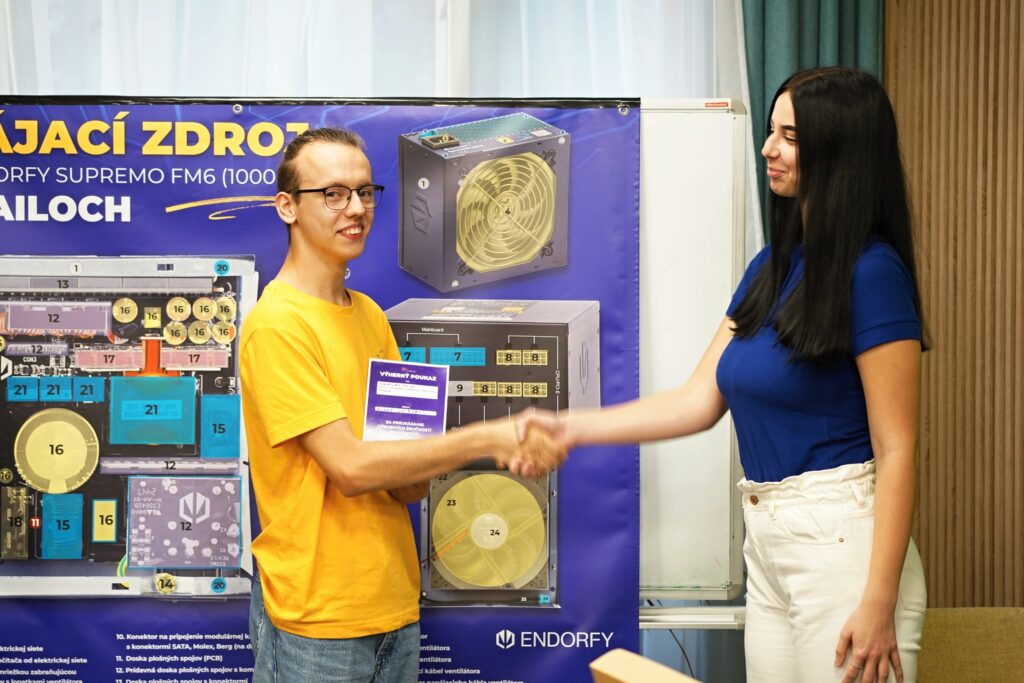
In addition to schools, we are also communicating with their founders, which in the case of public schools are, for example, regional self-governments. In the case of financial support, we have prepared for participating schools large-format boards, sheets, or perhaps maps (use whichever word you prefer—it doesn’t matter that much…) with a breakdown of computer components, which can serve as teaching aids for IT classes. They show what a specific component looks like and what it contains, and through a QR code it is also possible to access articles explaining how they work (for example, a graphics card). It is designed so that everyone can find what they need. Some want to go deeper, others do not (and it may be enough to simply know what, for example, a processor or some part of a motherboard or cooler looks like). As always, it is individual and there will be various possibilities.
Below you can find the video showing what last year’s hardware conference looked like—but be warned, it is more than six hours long. At the beginning there is an infographic with a timeline to make navigation easier. This is also something we want to adjust a bit so that the result is more attractive.
And there will be more changes. HWCooling Techtour ’25 taught us many things, from which we will learn in 2026 and move things to a higher level.



English translation and edit by Jozef Dudáš


