Intel has officially released the so-called Arrow Lake Refresh CPUs for the LGA 1851 desktop socket. This platform won’t receive a new generation like laptops did in the 1.8 nm Core Ultra 300 Panther Lake CPUs. Instead, new models of the 3 nm Arrow Lake generationare coming. And although they do not have a new architecture, they should be very interesting when it comes to the bang-for-buck ratio.
Things are fairly simple with the newly released desktop Core Ultra 200S refresh processors because Intel is releasing only unlocked enthusiast models with a 125 W TDP—and essentially just two models. They are still intended for the same motherboards with the LGA 1851 socket and Intel says they should boot without needing a BIOS update, though it is recommended to update to latest versions afterwards.
Core Ultra 7 270K Plus will be the highest model, featuring the full core count—8 large P-Cores and 16 small E-Cores with 24 threads, along with 36 MB of L3 cache. The processor has a base clock speed of 3.7 GHz and a maximum boost of 5.5 GHz, which is the only aspect where it is worse than the previous Core Ultra 9 285K top model (which has a 5.7 GHz boost). The clock speed of the E-Cores is 3.2–4.7 GHz.
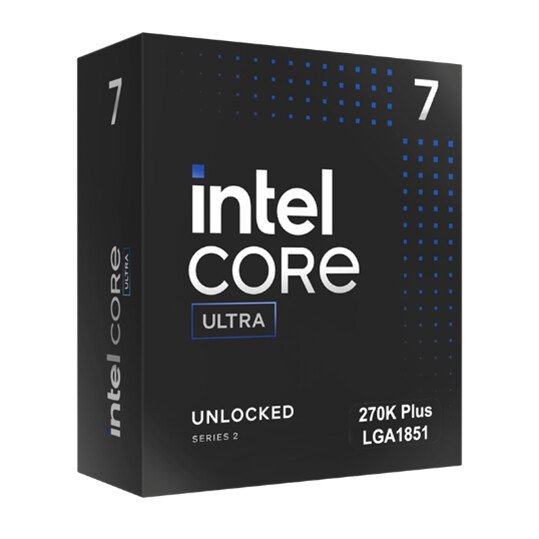
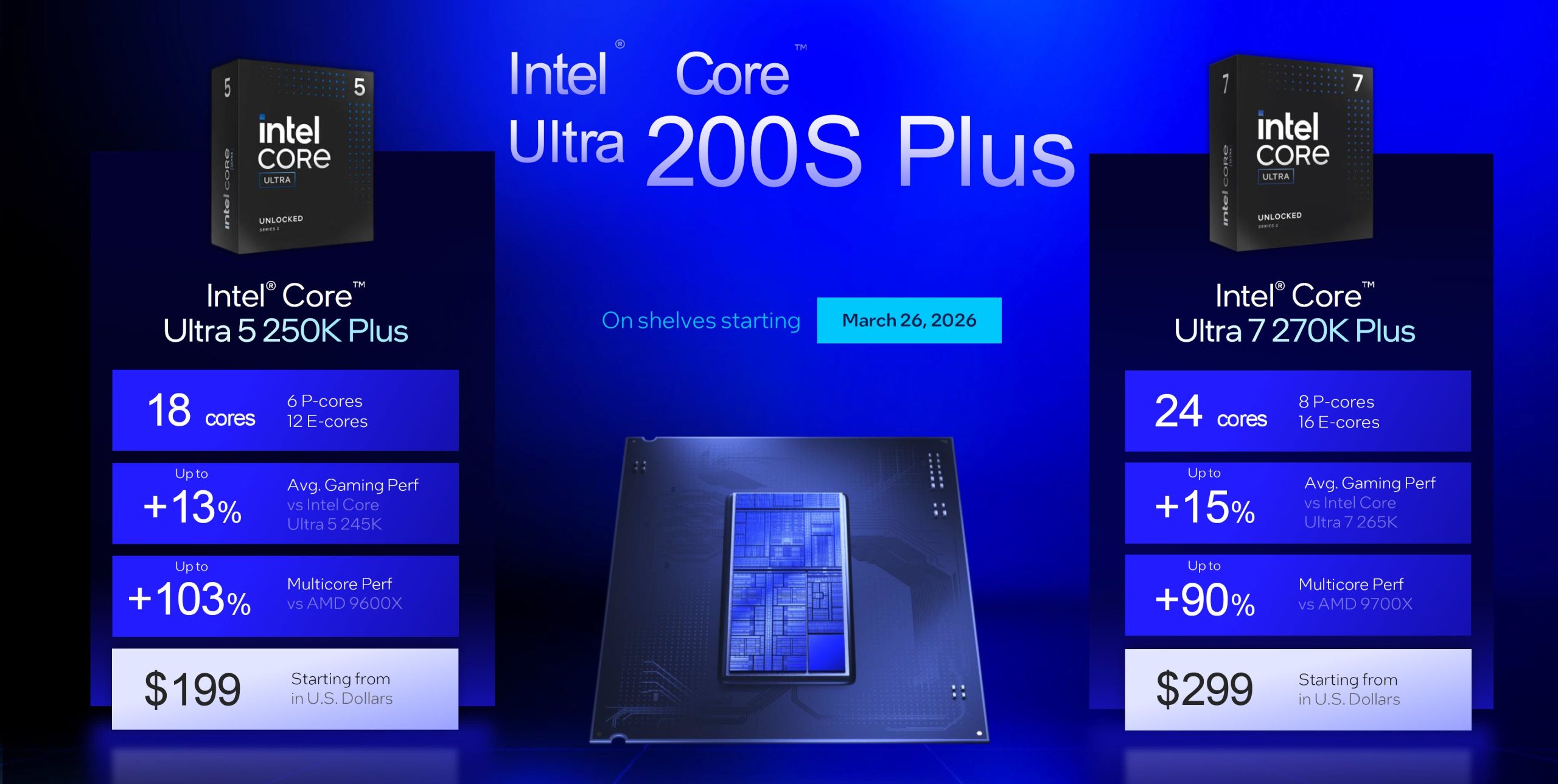
Thanks to the lower maximum clock speed, Intel will likely be able to sell the Core Ultra 7 270K Plus in larger numbers as a mass-market product. Maximum power consumption in boost is 250 W. What is important: although this model now has the full core count and therefore essentially matches the parameters of the old Core Ultra 9 top SKU, it retains a mainstream price of only 299 USD, which is about 318 EUR including VAT. The price of what is essentially the highest desktop model in the company’s lineup has not been this low for a very long time.
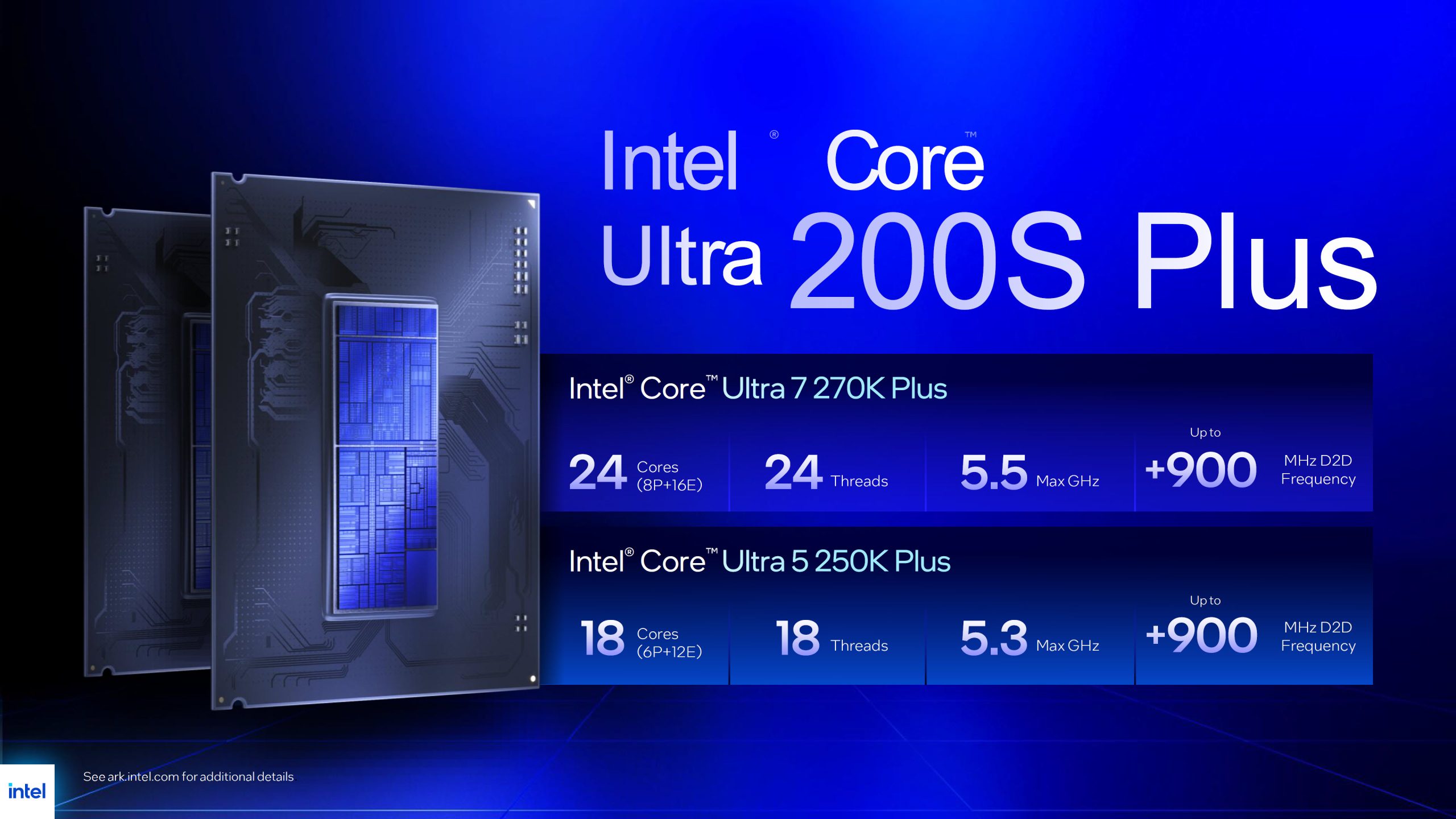
This could therefore be a breath of fresh air with advantageous performance (especially multithreaded) at a low price—which is desperately needed in today’s market conditions. This is a price point where AMD only offers the eight-core Ryzen 7 9700X. The Core Ultra 7 270K Plus will likely deliver tens of percent higher multithreaded performance against it—according to Intel, up to 90% higher. However, these are officially provided vendor benchmarks that may be selective, so it is better to wait for independent tests when they become available before drawing conclusions.
The second model is the Core Ultra 5 250K Plus. This model introduces a configuration that did not exist in the lineup before and sits somewhere halfway between the Core i5/Core Ultra 5 and the Core i7/Core Ultra 7 classes of previous generations. The processor still has six P-Cores, but now accompanied by 12 E-Cores, for a total of 18 threads (L3 cache is reportedly 28 MB). The maximum boost of the processor is 5.3 GHz, the base clock speed is 4.2 GHz, and the maximum turbo power consumption is 159 W. The clock speed of the E-Cores is 3.5–4.7 GHz.
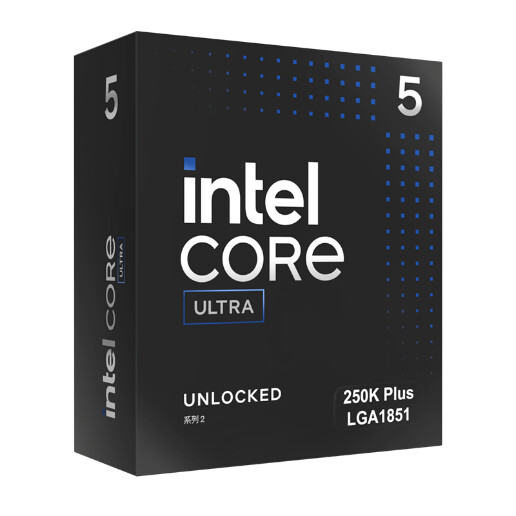
This model costs only 199 USD, which is just over 211 EUR including VAT at the current exchange rate. It is therefore a direct competitor to the Ryzen 5 9600X or the Ryzen 5 7500X3D from AMD.
Against those Ryzen SKUs, this Intel CPU should again deliver a multithreaded performance lead that will put it against several price tiers higher processors. According to Intel, 250K Plus is up to 103% faster in multi-thread than the Ryzen 5 9600X, but this should again be taken with a grain of salt.
Both models are unlocked for overclocking. In addition to the parameters mentioned above, both processors should still have integrated graphics with 512 shaders of the Xe “Alchemist” architecture, and the same multimedia capabilities and connectivity capabilities as previous processors for the LGA 1851 socket (see this article).
Intel should also release the 270KF Plus and 250KF Plus models without integrated GPUs, which will have slightly lower prices, but they are not yet mentioned in the official materials. These KF models could be even more attractive when building gaming PCs.
Faster memory and faster chiplet interconnect
Besides the increased core counts, the refreshed models bring other changes that should mainly improve gaming performance. The first of these is official support for DDR5-7200 memory, while the original SKUs only supported DDR5-6400 (however, with the help of XMP profiles it was already possible to run faster modules before). The DDR5-7200 speed should officially be supported with CUDIMM-type modules, and reportedly it still uses Gear 2 mode rather than the slower Gear 4.
The second change could have a larger effect: the speed of the so-called die-to-die interfaces connecting the processor’s chiplets has been increased by +900 MHz in both models. This will increase interface bandwidth and reduce communication latency, including communication with system memory—therefore improving memory performance and with it gaming performance. These interfaces could already be overclocked in previous models, but in the new 250K Plus and 270K Plus models the clock speed is higher out of the box. Intel states that gaming performance should improve by up to +13% (for the 250K Plus versus the 245K) or up to +15% (for the 270K Plus versus the 265K).
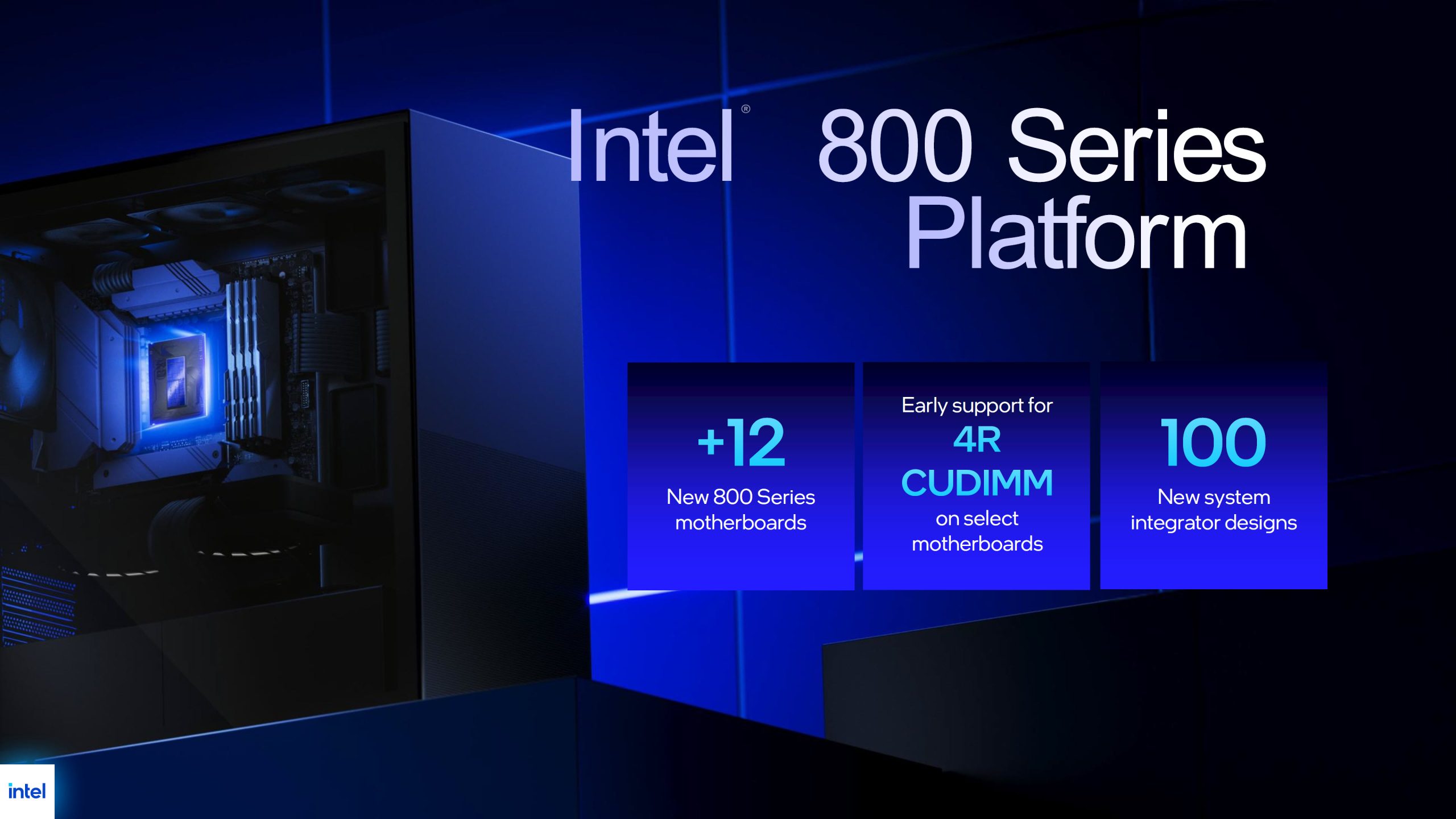
The LGA 1851 platform is also supposed to receive support for quad-rank DDR5 modules, which we wrote about earlier. These will bring capacities of up to 128 GB per module, meaning it should be possible to install up to 512 GB of memory on the LGA 1851 platform—although support may be limited to certain motherboards. Unfortunately, under today’s conditions, purchasing 512 GB will be a very expensive undertaking.
Available in two weeks
These processors will be available to purchase in two weeks on Thursday, March 26, which should be their actual retail launch.
It is remarkable how competition pressure changes the market—it was only a few years ago that the situation was typically such that AMD processors provided lower gaming performance but also usually sold at a price that offered more attractive overall multithreaded performance compared to Intel. Now it is practically the exact opposite…
Sources: techPowerUp, VideoCardz
English translation and edit by Jozef Dudáš
⠀