


You know the feeling: moderate expectations, and then a surprise. With the MaxFlow fan, a fairly positive one. It delivers excellent results not only at its maximum speed, but also in quieter operation. However, it is weaker with obstacles, where it has to overcome higher resistance from the surrounding environment, and it should also be noted that, as with the Phanteks T30 and Sudokoo Mach120, its thicker profile means poorer compatibility.
The fan has relatively large blades. This mainly refers to their area; in terms of blade length, they can be considered medium-sized.
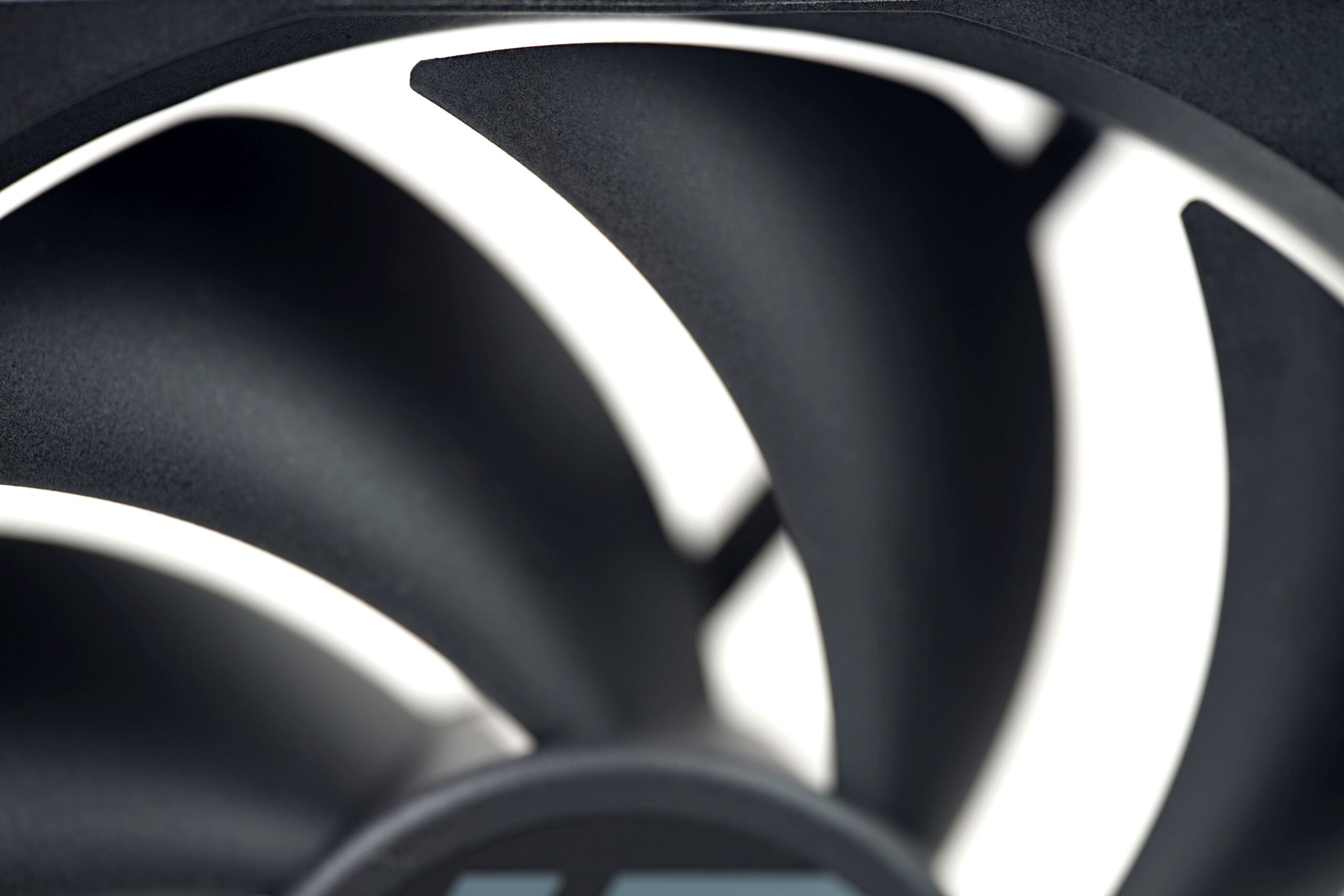
In the 120 mm format, there are nine blades, and considering that the hub has a smaller diameter while the fan frame is relatively narrow, a large portion of the impeller remains involved in generating airflow. And that is what Seasonic is primarily betting on—the specifications state up to 263.09 m3/h. However, our measurements do not confirm such a high value, although the MaxFlow fan’s airflow really is high.
Static pressure is specified at 8.5 mm H2O, but this applies to the maximum speed of around 3000 rpm (HWC measurements confirm this as well). At normalized noise levels, static pressure is lower compared with other fans, and this can also be seen in airflow through obstacles, which we will get to later. For now, let’s look at what characterizes the MaxFlow fan in terms of its construction.
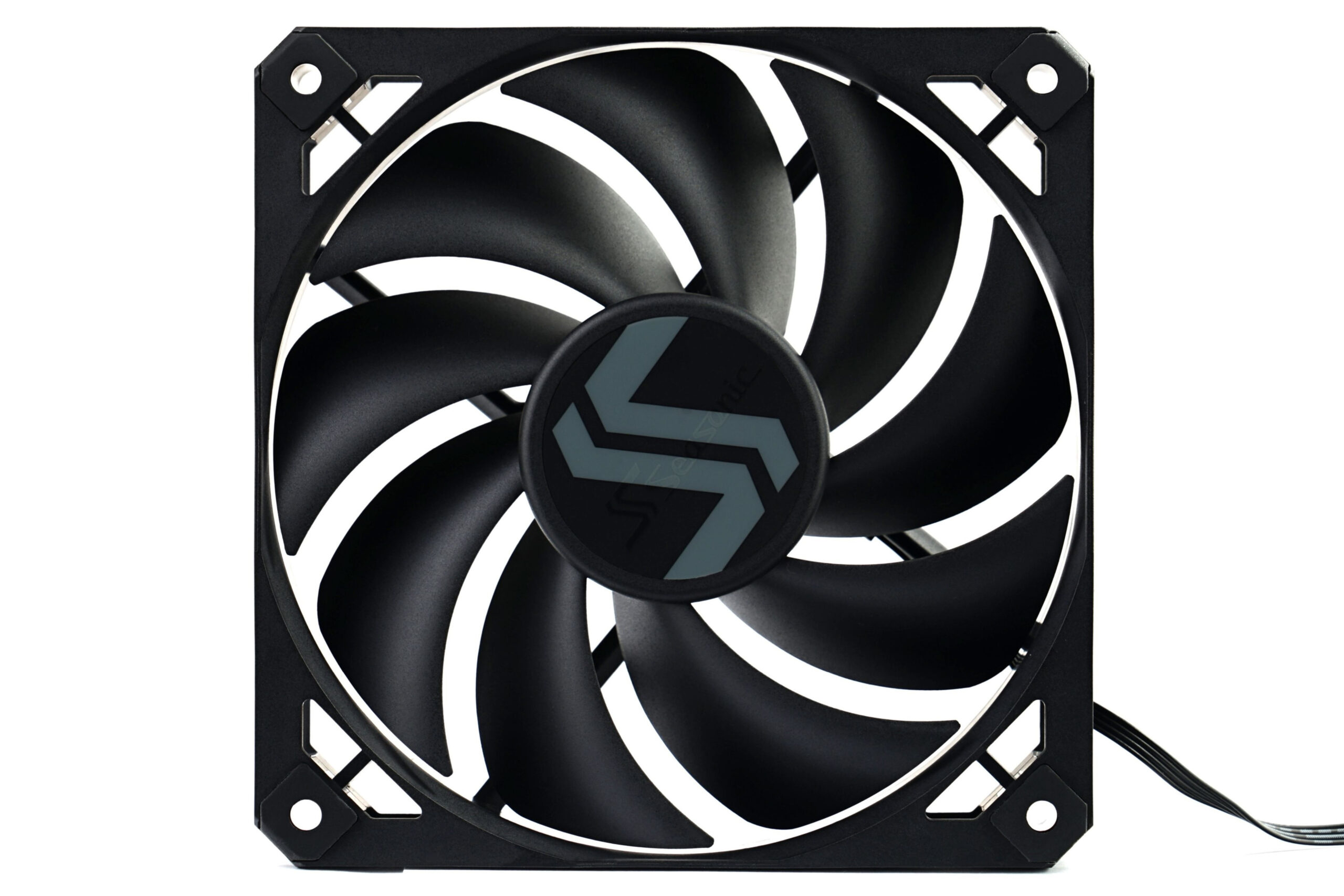
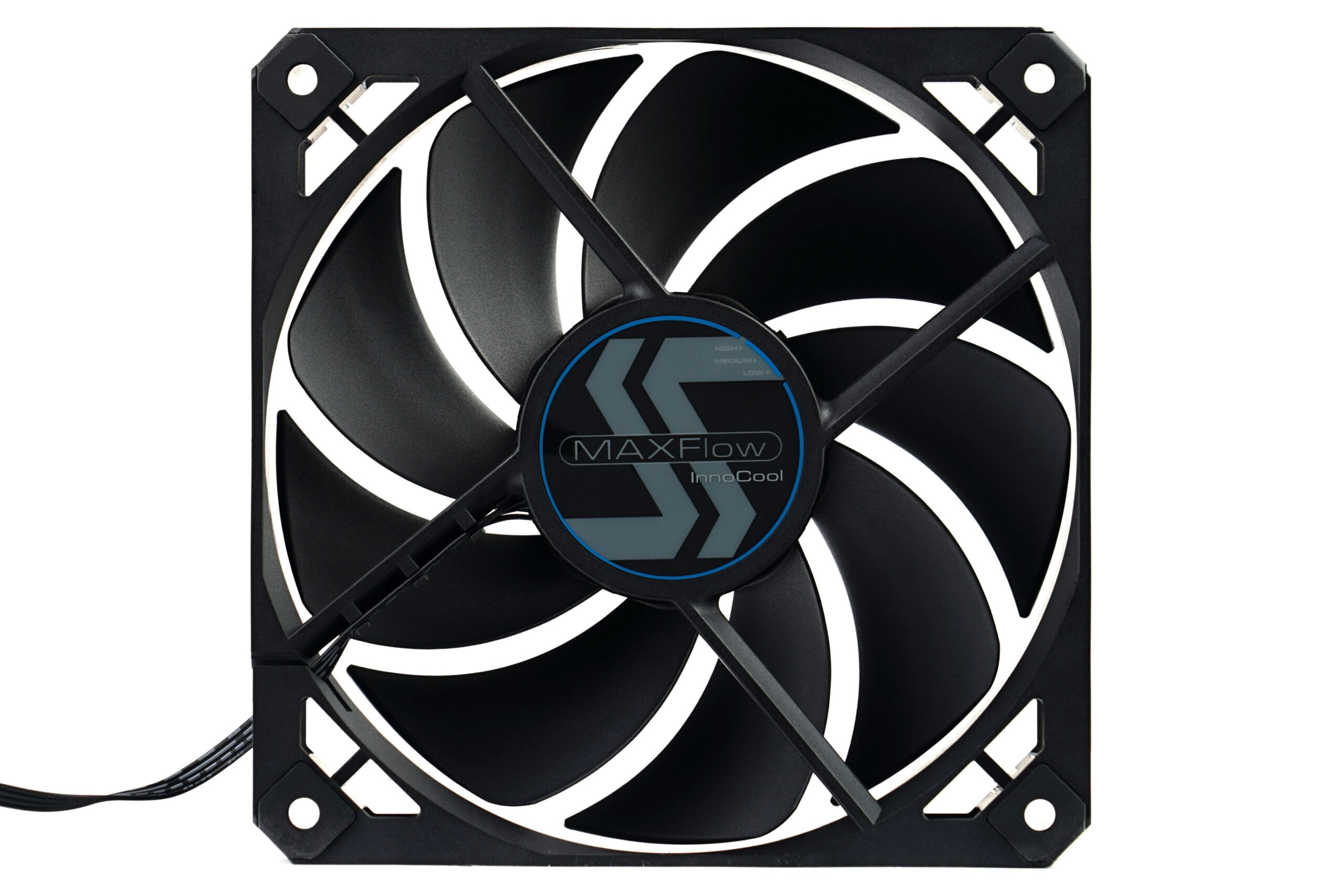
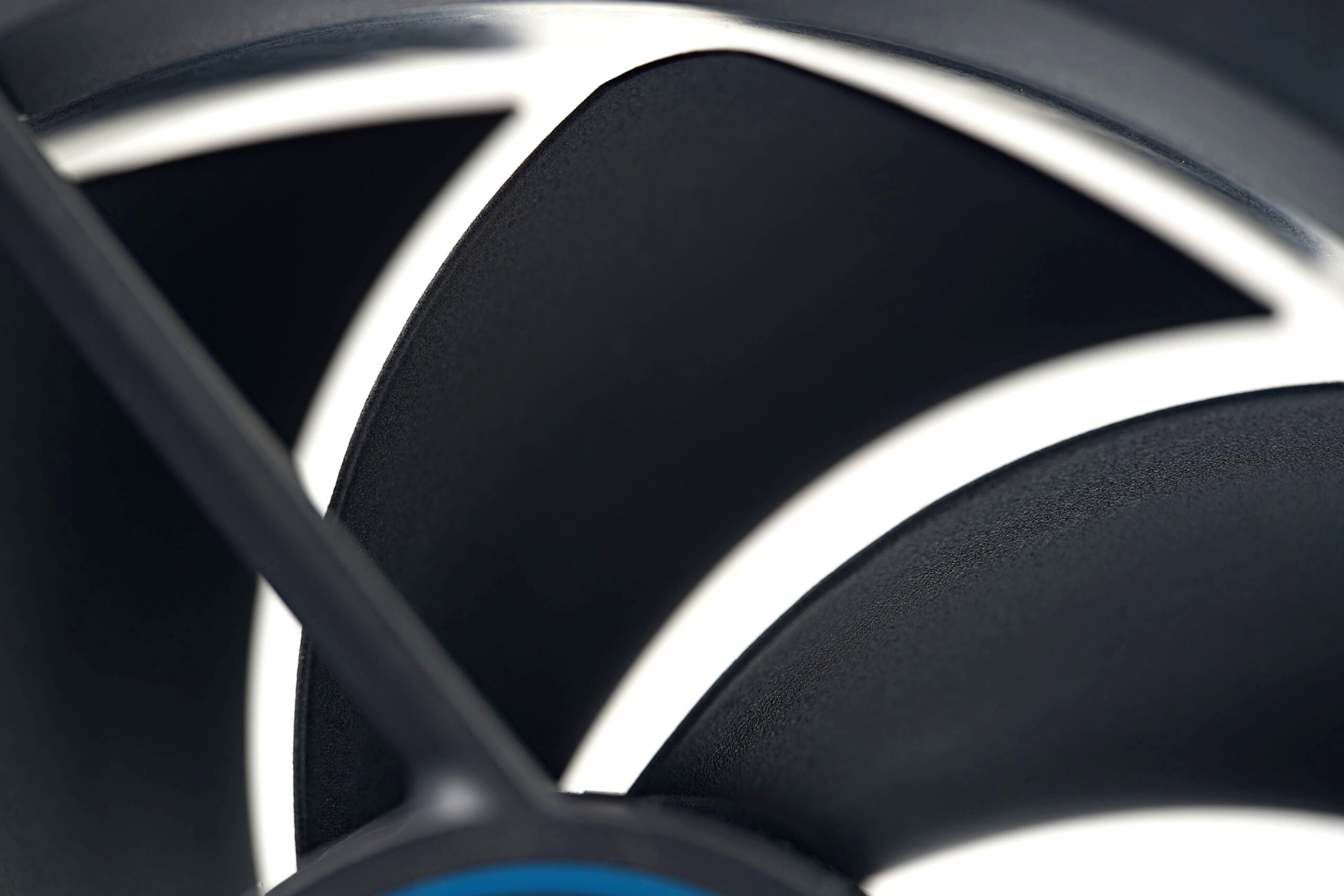
The gaps between the blades can be considered medium-sized, while the unusual feature is the 30 mm frame thickness. Because of this, the fan may not fit in places (for example, with a radiator above the motherboard…) where narrower alternatives would. In some cases this does not matter; in others, a collision may occur. It depends on the individual setup.
At the rear, behind the motor, there is a three-position switch primarily used to limit the maximum speed. We have already discussed the maximum speed (the “High” position, which is the default setting) above; in “Medium”, the maximum is approximately 2000 rpm, while in “Low” it is 1000 rpm. The minimum level during PWM control remains similar in every mode, at around 400 rpm. Even at this speed, however, this aerodynamic design is noisier than our defined normalized noise level of “31 dBA”. Therefore, the results start at “33 dBA”. This fan is thus not particularly suitable for extremely quiet configurations. However, semi-passive operation, in which the fan switches off below a certain low PWM duty cycle, is supported.

The higher noise level is also due to the generally noisier ball bearings used by the MaxFlow fan. It is a double-row type, with a mean time between failures (MTBF) specified at 70,000 hours. For completeness, a note about the longer, 60 cm cable (which provides good installation options even in larger cases, where the distance to, for example, the motherboard’s 4-pin header is greater). The accessories include self-tapping screws, and that is where they end.
Please note: The article continues in the following chapters.


