




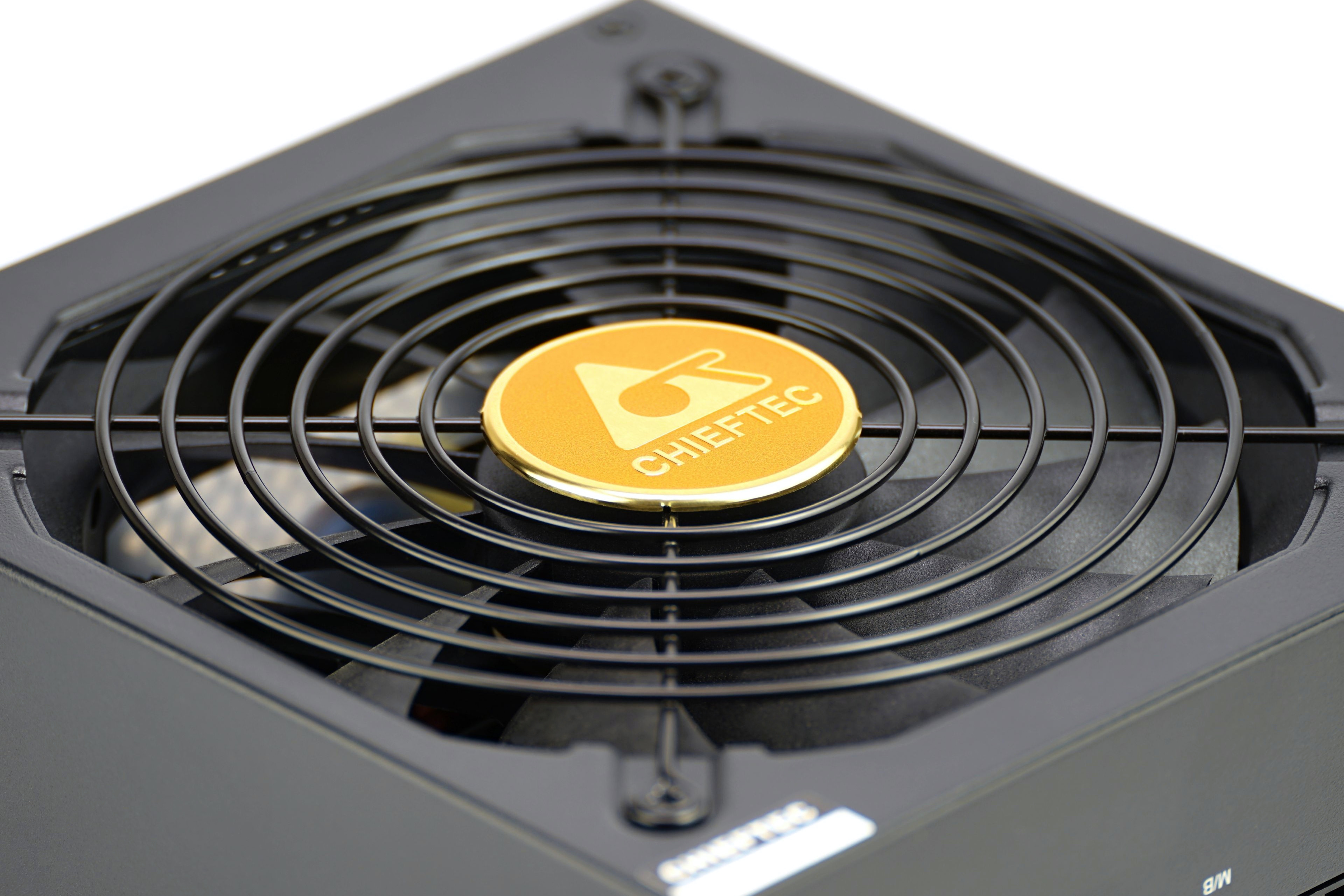
Loyalty beyond the grave. This, too, is how one might define the relationship between Chieftec and the circular grille. Unlike other manufacturers, they haven’t shied away from it, and their Polaris 3.0 is the only one of the ATX 3.0 power supplies we’ll be testing with a really proper setup in front of the fan. Naturally this is a minor thing and what’s key is everything behind the grille. Still, the first impression Chieftec’s PSU gives is a really good one.
From the outside…
One of the few things we can judge in power supplies without any measurements is the design of the grille. Both cooling and noise performance depend on it. And if you see a circular grille somewhere, as is the case with the Chieftec Polaris 3.0, you can be sure that its impact on the acoustic profile will be minimal. We’ve already seen this in a separate test where we compared a circular grille to other obstacles and looked at the effect on noise. And the difference compared to a hexagonal grille, for example is dramatic.
Sure, different power supplies, different grille shapes, and when you add in a combination of different fans, the behaviour can always be a little different. And of course it can’t be claimed that the Polaris 3.0 will have the most pleasant sound, so we consider it a favourite. But in the end, as always, the tests themselves will show how it really is. And yes, in the power supply tests we will also cover frequency analysis of the sound.
The Polaris 3.0 power supply case looks traditional overall – no complexity or emphasis on “visual effects”, just an honest case with a large fan and a sticker with basic parameters.
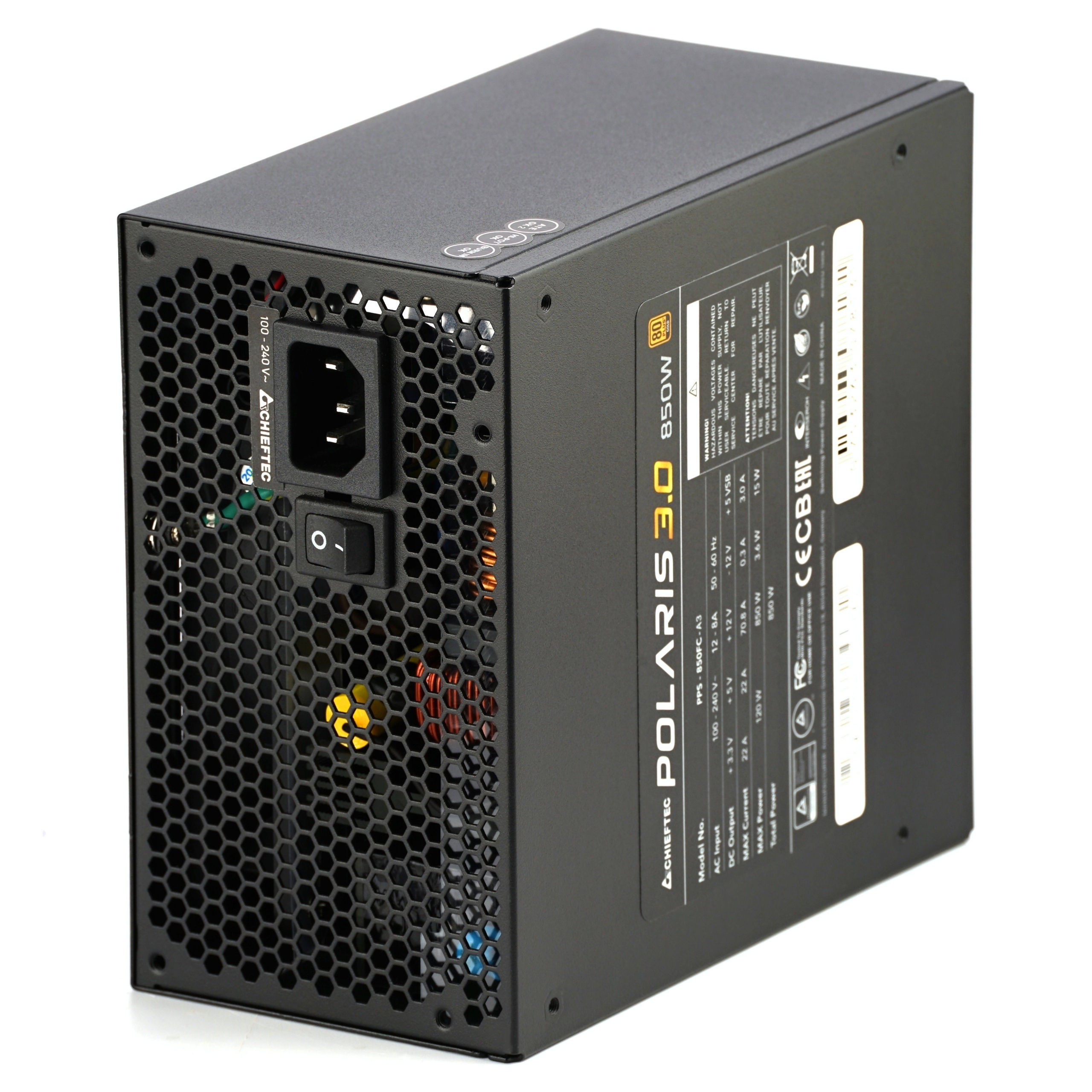
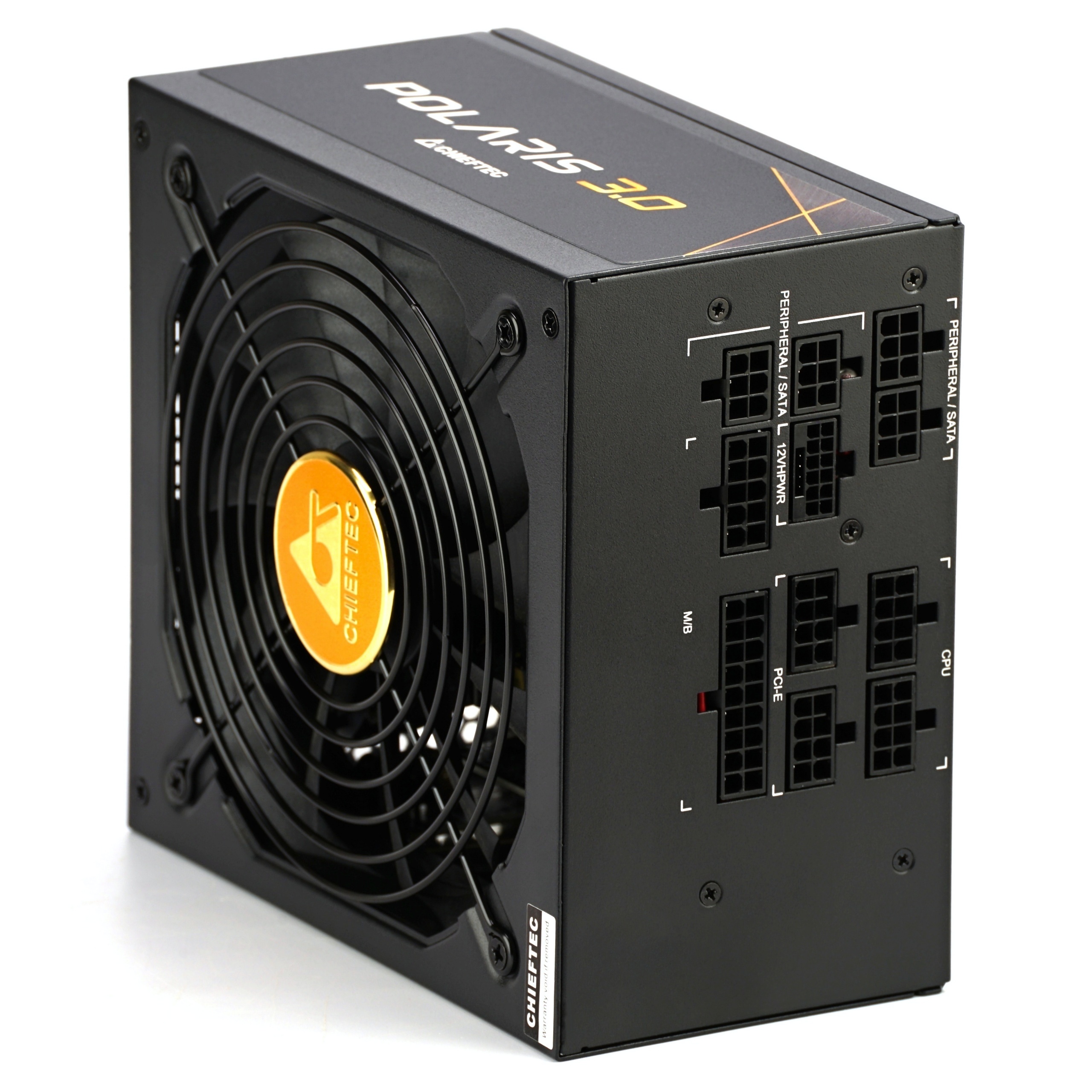
The 850 W test variant (PPS-850FC) is rated to consistently handle 70.8 amps on the 12-volt rail, and a shared 22 amps for the 3.3 V and 5 V rails.
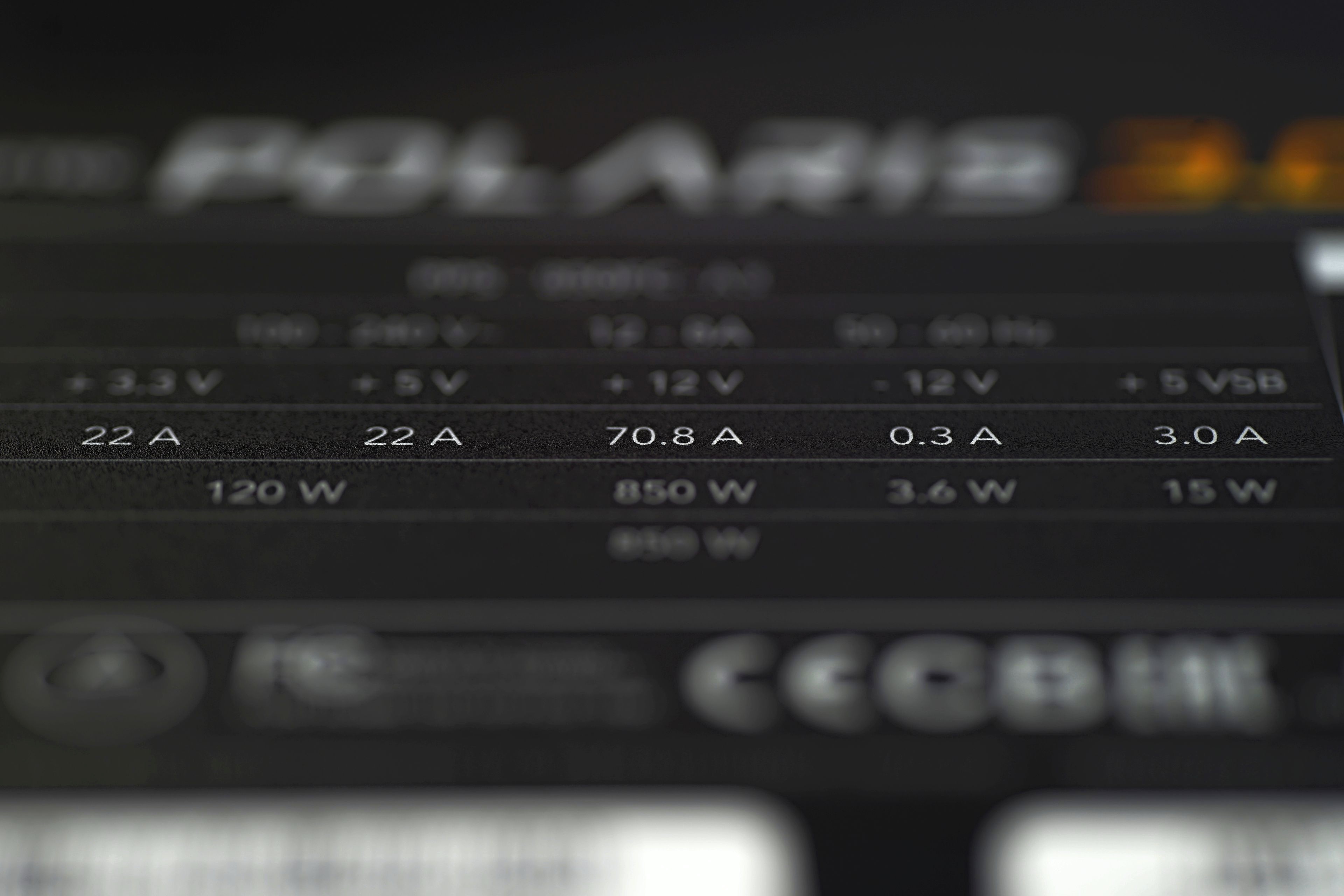
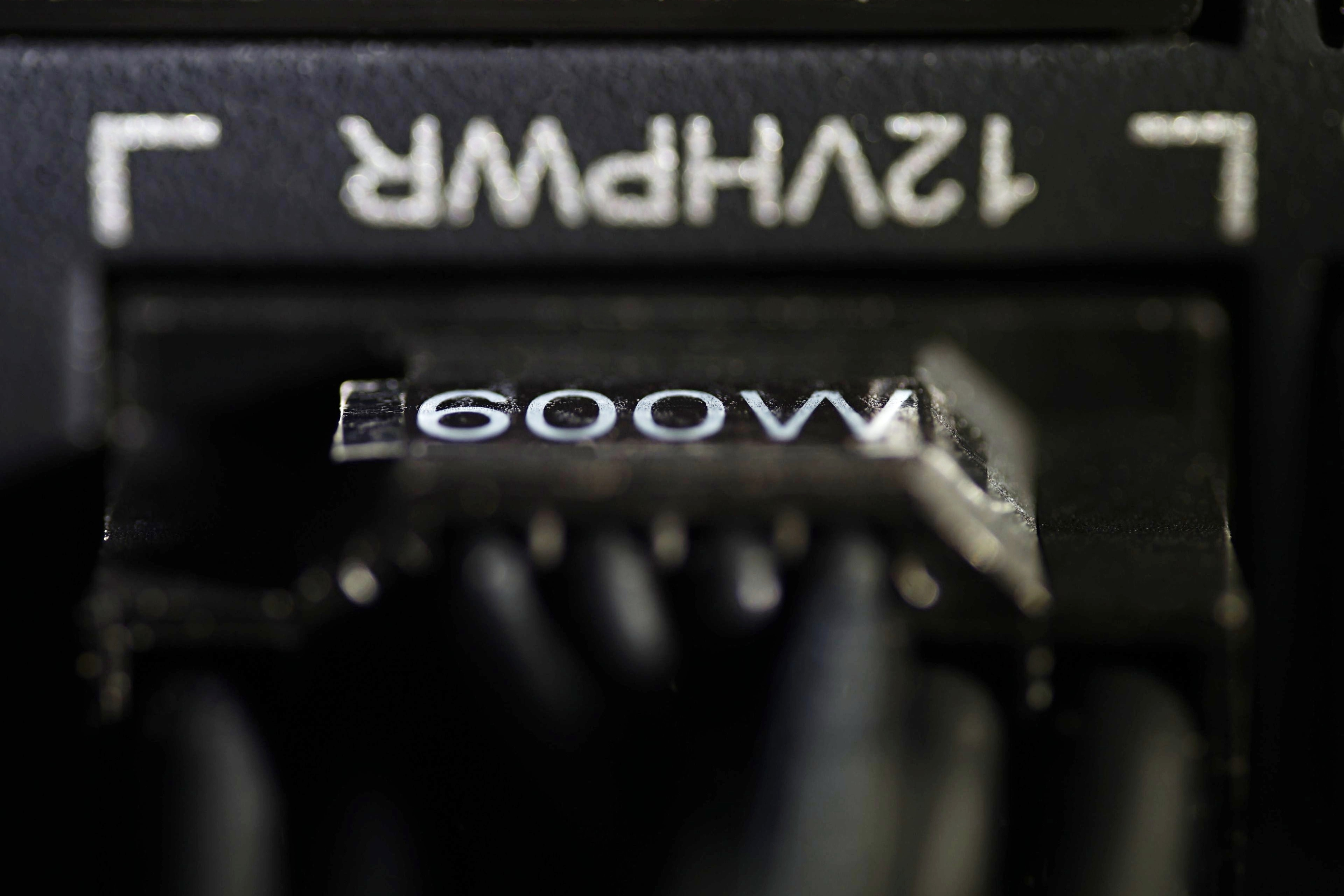
Like all ATX 3.0 power supplies, the Polaris 3.0 also has support for a 16-pin 12VHPWR connector, which is rated for 600 W, or a current load of 50 A, which exceeds the needs of GeForce RTX 4090 graphics cards, even with a margin. Even in overclocked variants, these don’t exceed 40A at maximum performance at more benevolent power limits.

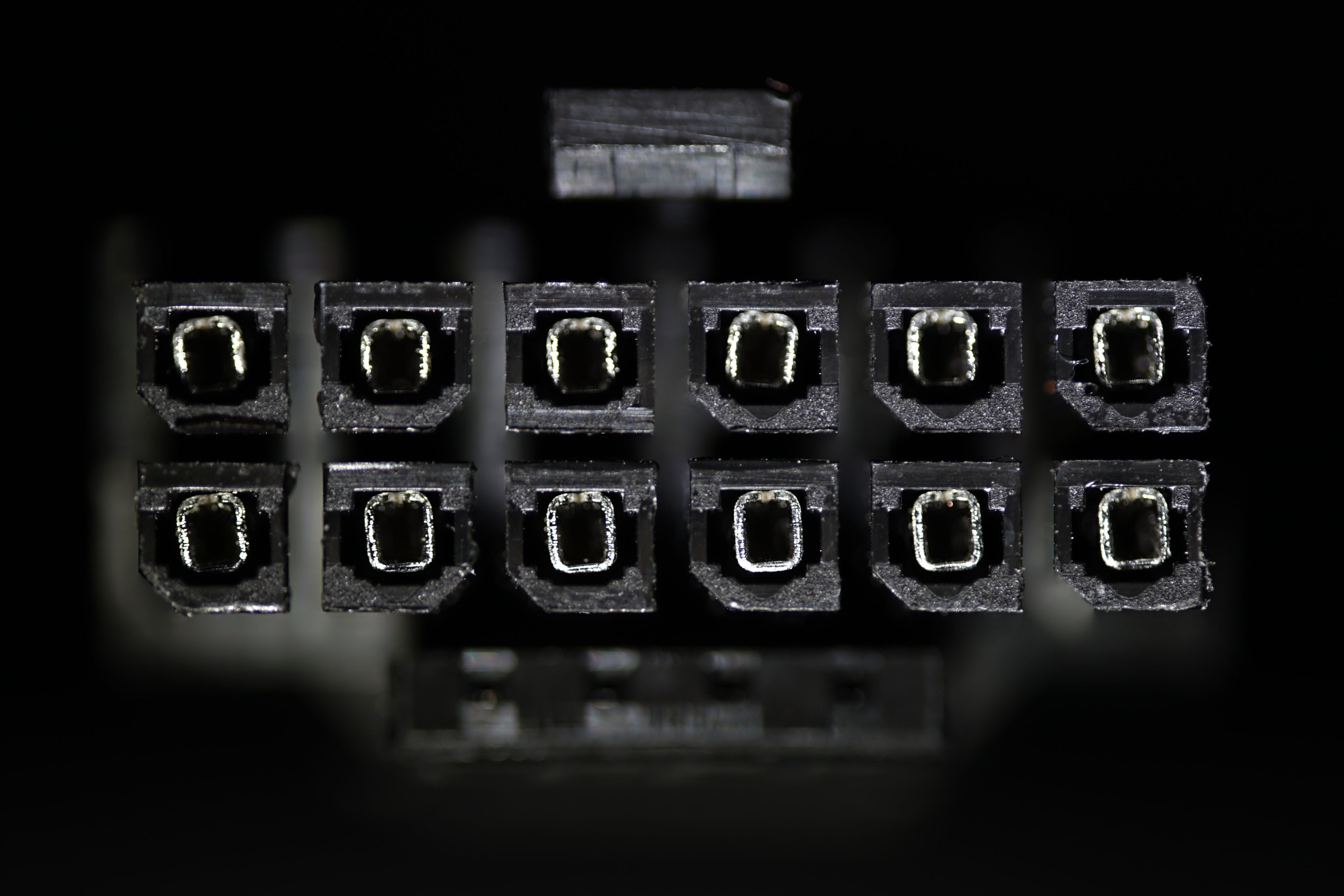
For Radeon owners, 6+2 pin PCIe connectors are available. This means that you can’t plug in the high-end RX 7900 XTX Radeons, but for those, Chieftec has another Polaris PSU model (PPS-850FC) with four 6+2-pin PCIe connectors. The model (PPS-850FC-A3) I’ll be testing is designed exclusively for Nvidia’s new RTX 4000 series graphics cards. For RTX 4070 and lower models, no more than two 6+2-pin connectors are needed, and for more powerful models (from RTX 4070 Ti upwards), a 12VHPWR connector is already available.
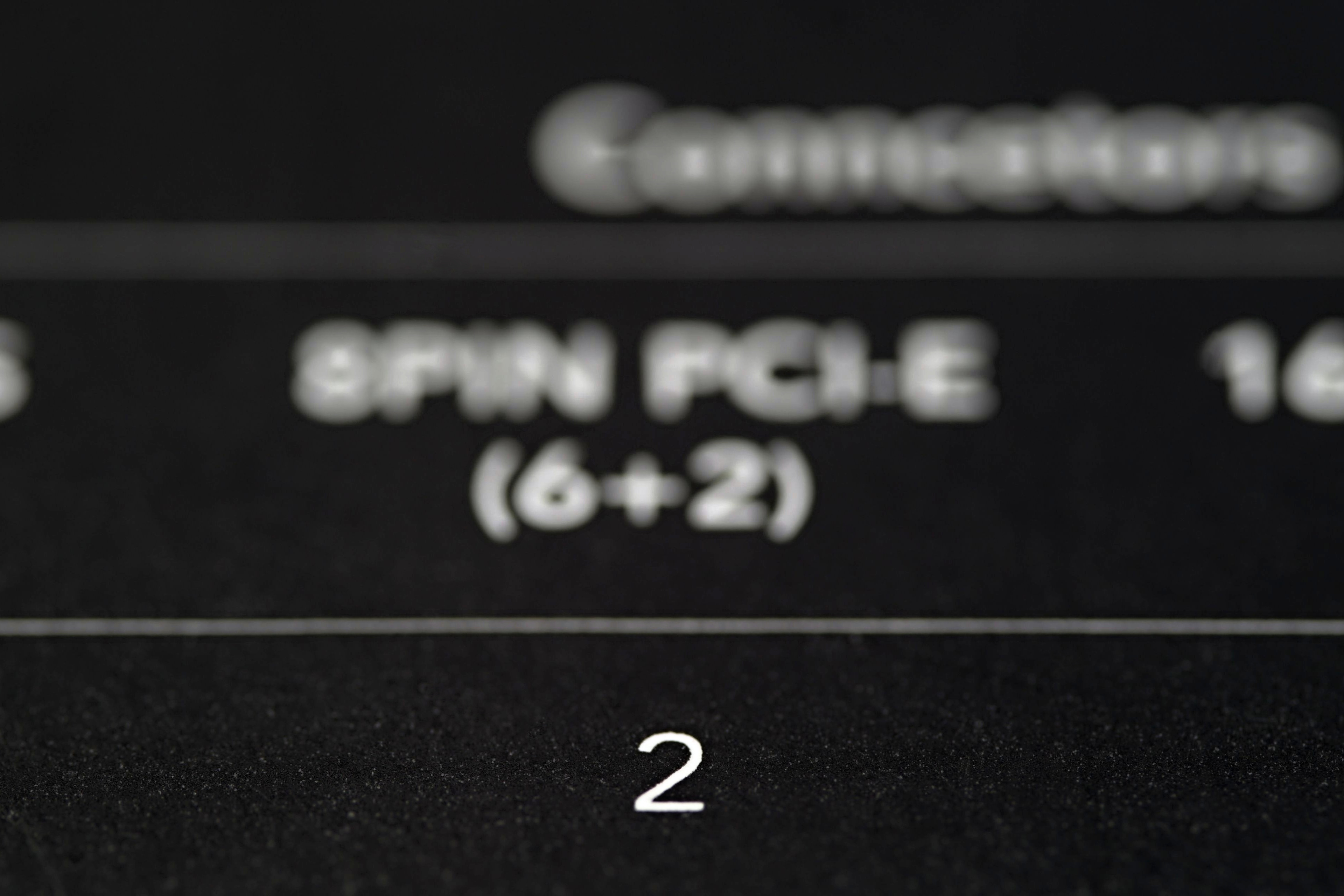
The packaging itself only mentions two connectors. So one information apparently includes “optional” support and the other “standard”. We will confront Chieftec with this and correct the wording of the article if our assumption is incorrect.
All cables are flat, with the insulation of the wires glued together so that they do not come apart from each other.

The Chieftec Polaris 3.0 has an 80 Plus Gold efficiency rating, and it’s a remarkable power supply for it’s price as well. In some stores it appears well below the suggested 152 EUR, making it one of the cheapest ATX 3.0 power supplies on the test list.
… and from the inside
Removing the power supply cover is easy, by loosening the four screws on the front with the fan. However, this step will void your warranty (by breaking the seal on one of the screws), as is common.
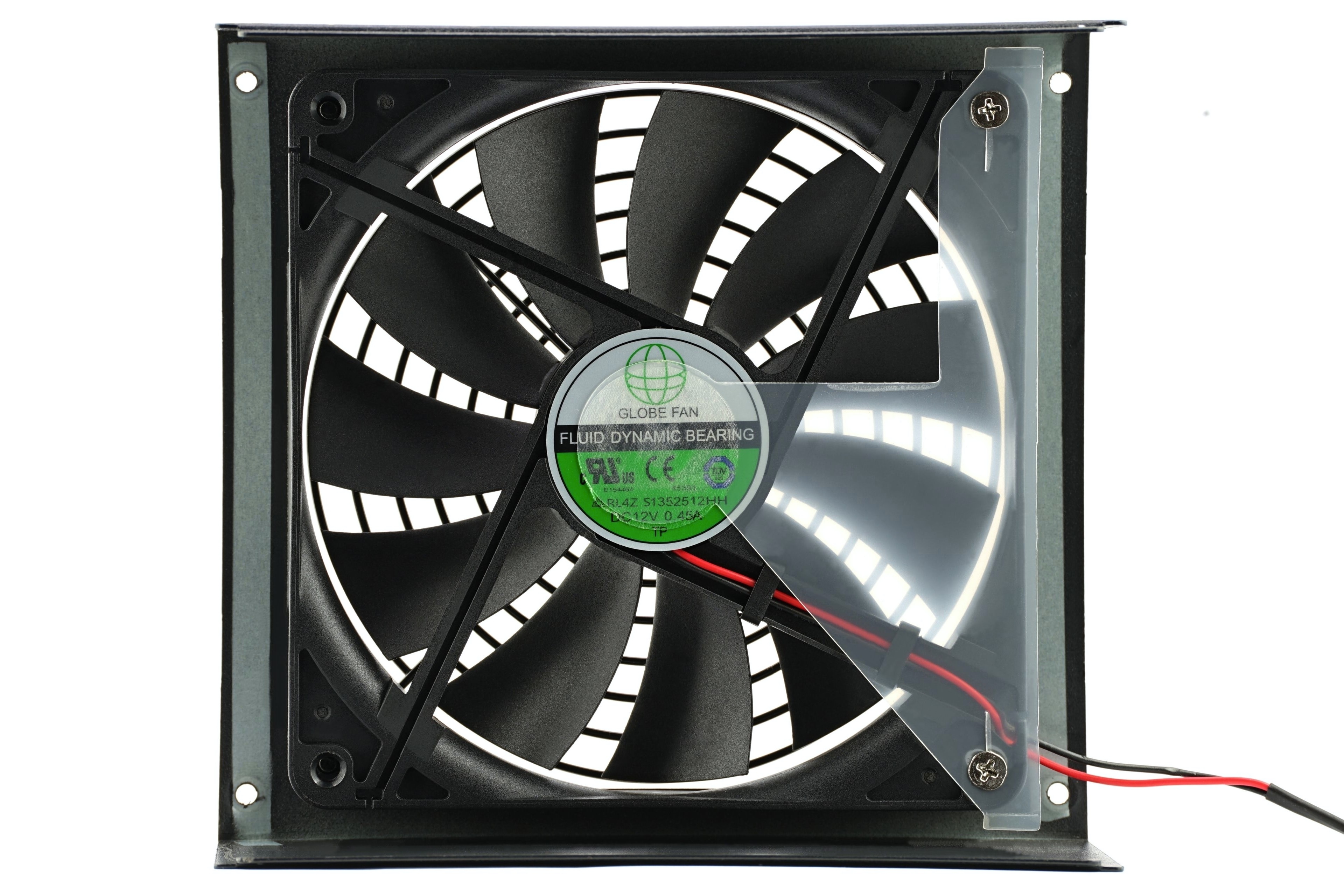
The fan is a 135-millimeter one, it’s made by Globefan, and we also know that it uses fluid bearings. We will bring more information about the fan (with the speed curve and noise) later, in the tests.
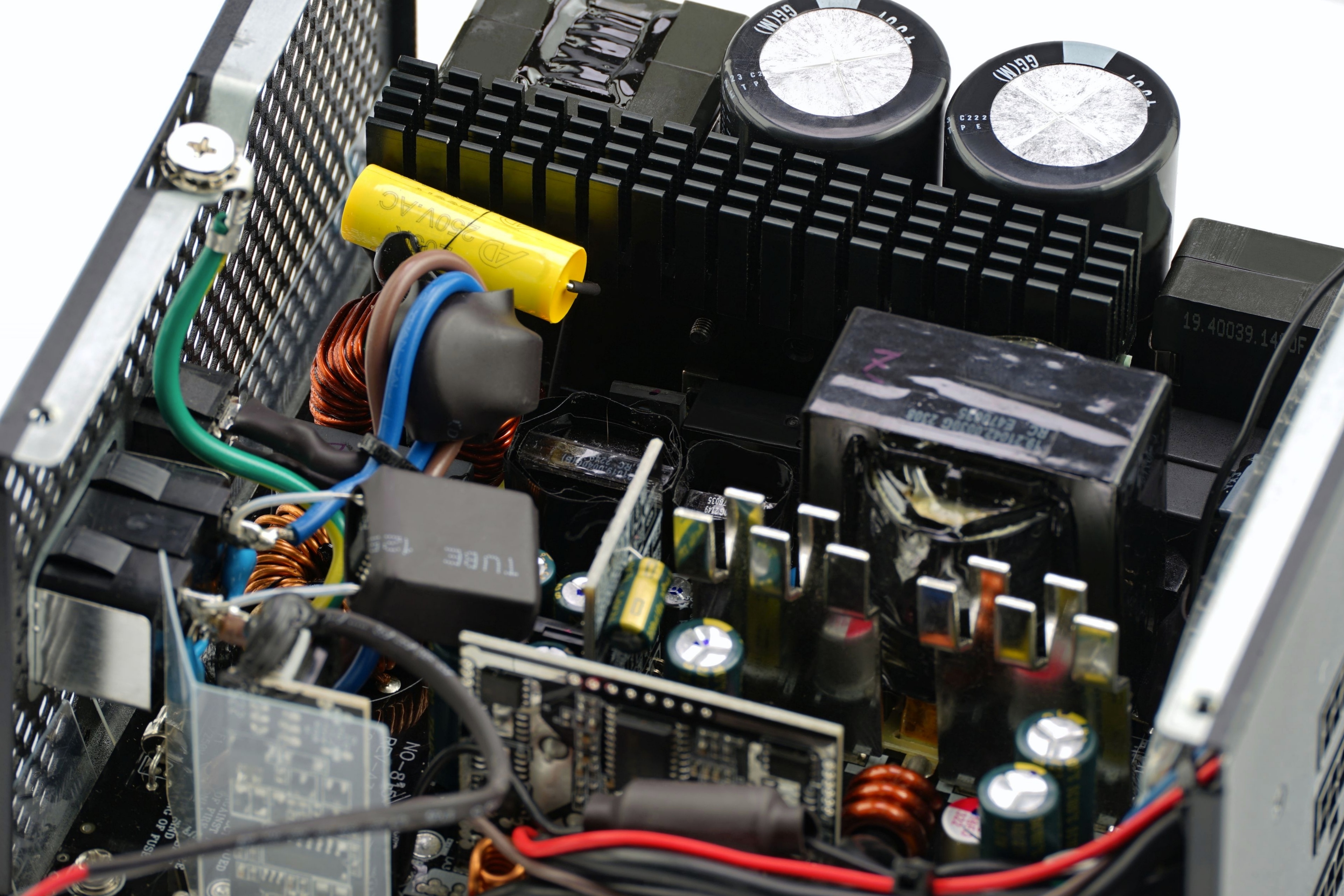
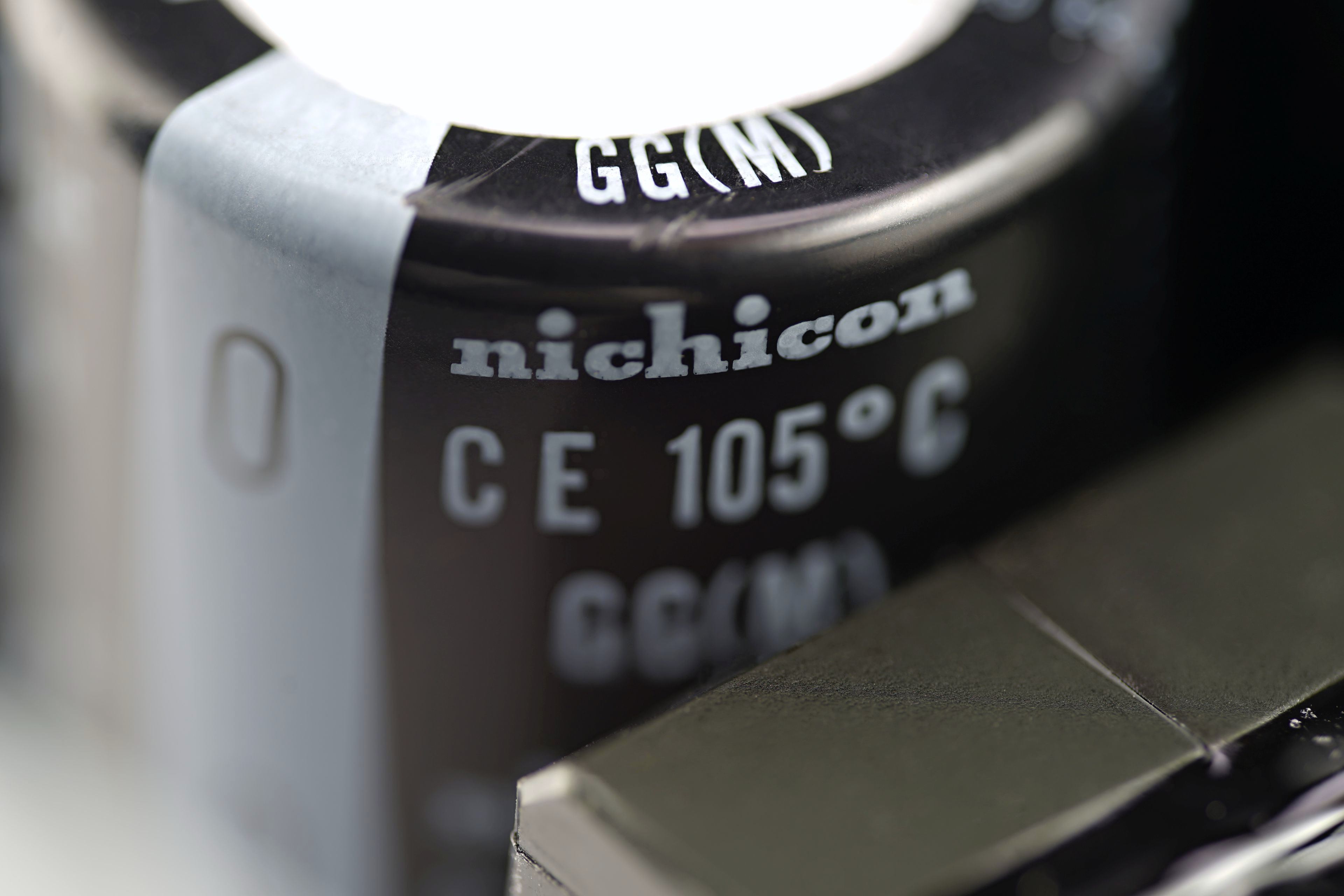
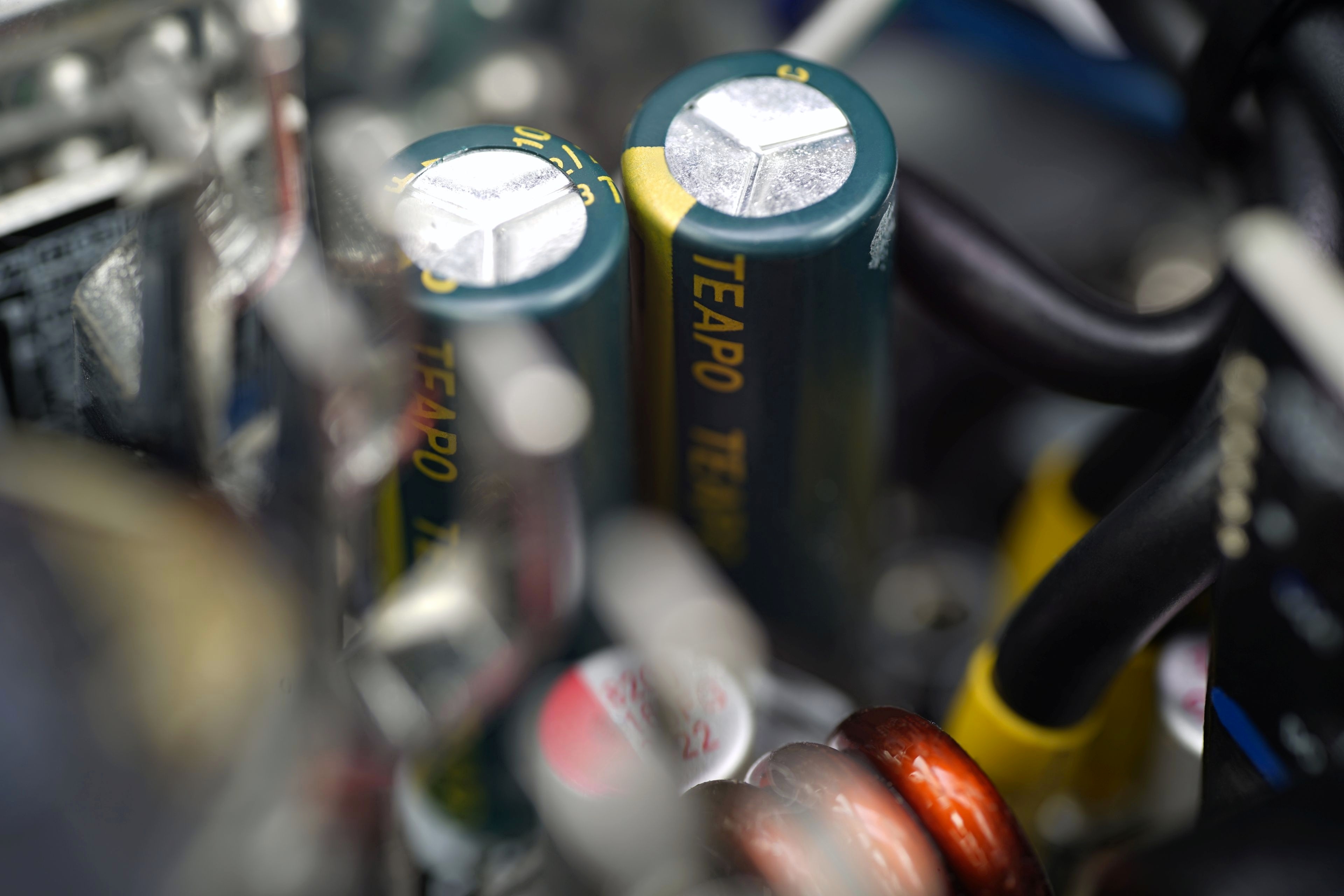
The capacitor lineup consists of Nichicon GG (secondary, 2× 470 µF at 420 V) and Taepo SC. All electrolytic capacitors are “105-degree” ones, so they should be characterized by longevity.
| Brand and model of the PSU | Basic parameters from the manufacturer | Price [eur] | ||||||||||
| Power output [W] | Continuous current load [A] | 80 Plus | Connectors | AWG | ||||||||
| +12 V | +5 V | +3.3 V | 16-pin * | 6+2-pin * | 8/4+4-pin | SATA | 4-pin Molex | |||||
| Chieftec Polaris 3.0 (PPS-850FC) | 850 | 70.8 | 22.0 | 22.0 | Gold | 1+0× | 2+0× | 2× | 12× | 4× | 18–16 | 152 |
| Asus ROG Strix 850G Aura | 850 | 70.8 | 22.0 | 22.0 | Gold | 1+0× | 1+2× | 2× | 5× | 4× | 18–16 | 208 |
| Seasonic Vertex GX-850 | 850 | 70.0 | 20.0 | 20.0 | Gold | 1+0× | 3+0× | 2× | 8× | 3× | 18–16 | 200 |
| Enermax ERT850 EWT | 850 | 70.5 | 20.0 | 20.0 | Gold | 1+1× | 4+0× | 2× | 12× | 6× | 18–16 | 160 |
| BeQuiet! Dark Power 13 | 850 | 70.0 | 24.0 | 24.0 | Titanium | 1+0× | 4+0× | 2× | 12× | 3× | N/A | 250 |
| DeepCool PX1000G | 1000 | 83.3 | 22.0 | 22.0 | Gold | 1+0× | 3+0× | 2× | 7× | 4× | 18–16 | 180 |
| MSI MPG A850G | 850 | 70.8 | 22.0 | 22.0 | Gold | 1+0× | 4+2× | 2× | 7× | 4× | 18–16 | 169 |
* The number of PCI Express connectors is given as the sum of native and shared connectors (the second number after the “+” sign). Native connectors are those that are the same on both sides. Shared ones are then connected via different connectors on the power supply side, for example, a single 300-watt 16-pin (12VHPWR) is created by using two 6+2-pin connectors, and vice versa – a 16-pin connector can be used to connect a cable with two 6+2-pin connectors.
English translation and edit by Jozef Dudáš



Correction in the section on PCI Express connectors:
For Radeon owners, 6+2 pin PCIe connectors are available. This means that you can’t plug in the high-end RX 7900 XTX Radeons, but for those, Chieftec has another Polaris PSU model (PPS-850FC) with four 6+2-pin PCIe connectors. The model (PPS-850FC-A3) I’ll be testing is designed exclusively for Nvidia’s new RTX 4000 series graphics cards. For RTX 4070 and lower models, no more than two 6+2-pin connectors are needed, and for more powerful models (from RTX 4070 Ti upwards), a 12VHPWR connector is already available.
The original statement below is thus invalid…
For Radeon owners, 6-2 pin PCIe connectors are available. But it’s perhaps a bit of a shame that there are only two. So you can only plug in the high-end RX 7900 XTX models after buying an adapter that turns the 12VHPWR connector into at least one, the last and much-needed, third 6+2-pin PCIe connector. Alternatively, after buying one more PCIe cable, for which there is still one free position left after plugging in everything that this power supply comes with. And that’s apparently what Chieftec means by supporting up to four 6+2-pin PCIe connectors, which is listed on the product pages.… the PPS-850FC-A3 model has only two 6+2-pin connectors, but Chieftec, as you already know, with regard to the support of high-performance Radeons and older GeForce cards (RTX 3080/Ti and RTX 3090/Ti) has addressed it differently, with the option of the PPS-850FC model.