


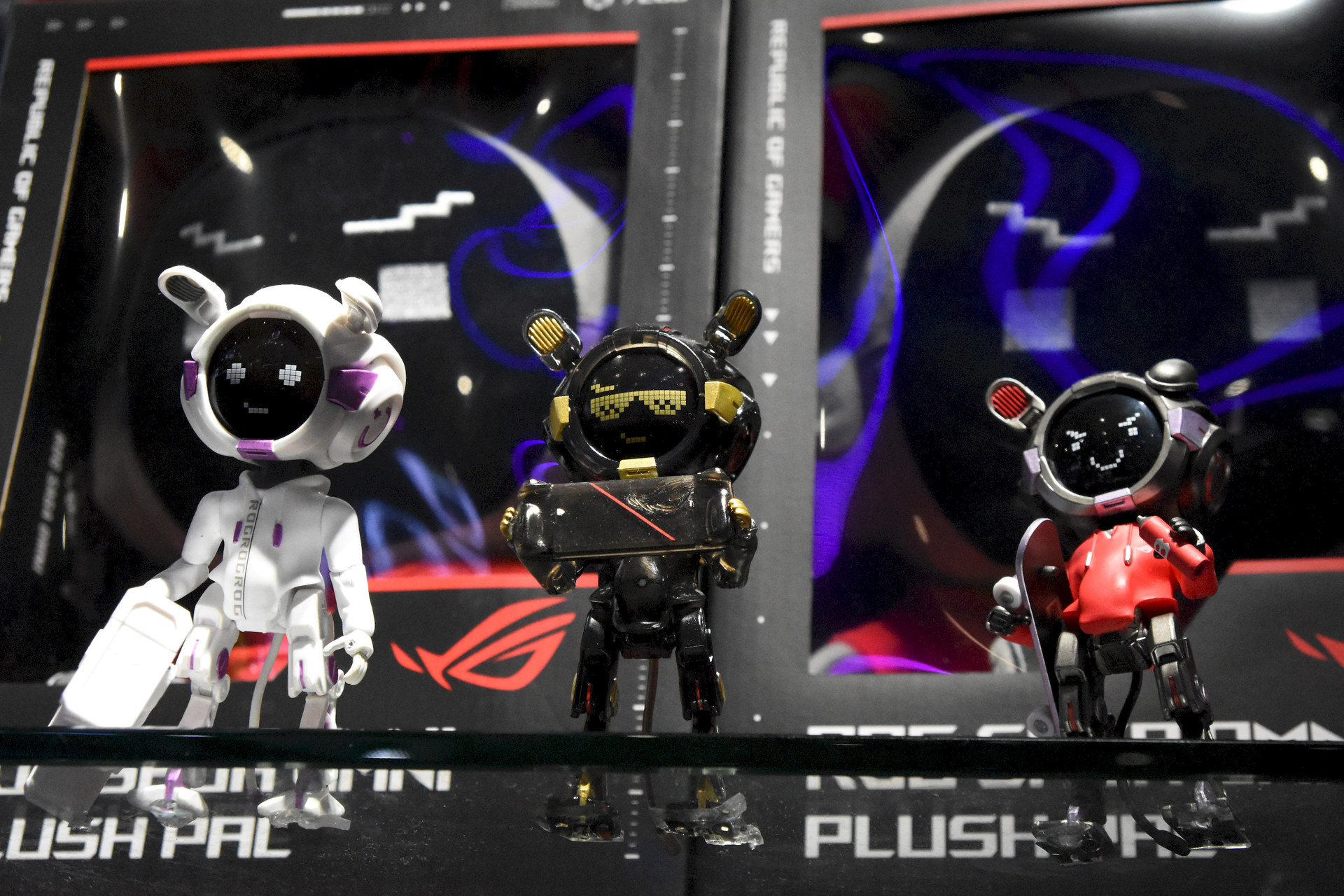
The Computex tradeshow this year seems to involve various anniversaries for many companies. In the case of Asus, the company is celebrating 20 years of its “premium” gaming brand, ROG. We visited the booth Asus has at the trade show as well and will show you some of the new hardware the company brought to its booth—because of this anniversary, much of it is quite extraordinary and forms a celebratory lineup called ROG Edition 20.
Asus ROG Crosshair X870E Edition 20
We have to start with the ROG Crosshair X870E Edition 20 motherboard because it is the most symbolic celebration piece. Twenty years ago, the ROG brand first appeared on a motherboard called ROG Crosshair, designed for AMD Athlon 64 and Athlon 64 X2 processors on Socket AM2 back then.

The new descendant is, naturally, built for Ryzen 7000, 8000, and 9000 processors on AM5. It is probably one of the most heavily „armored“ motherboards we have ever seen—which admittedly does not exactly honor the traditional motherboard look from 20 years ago, but modern taste is modern taste. Removable covers hide almost everything except the DIMM slots. One cover, doubling as an anniversary plaque, even hides the PCI Express slots. Fortunately, the covers are magnetic, so they can be removed easily.
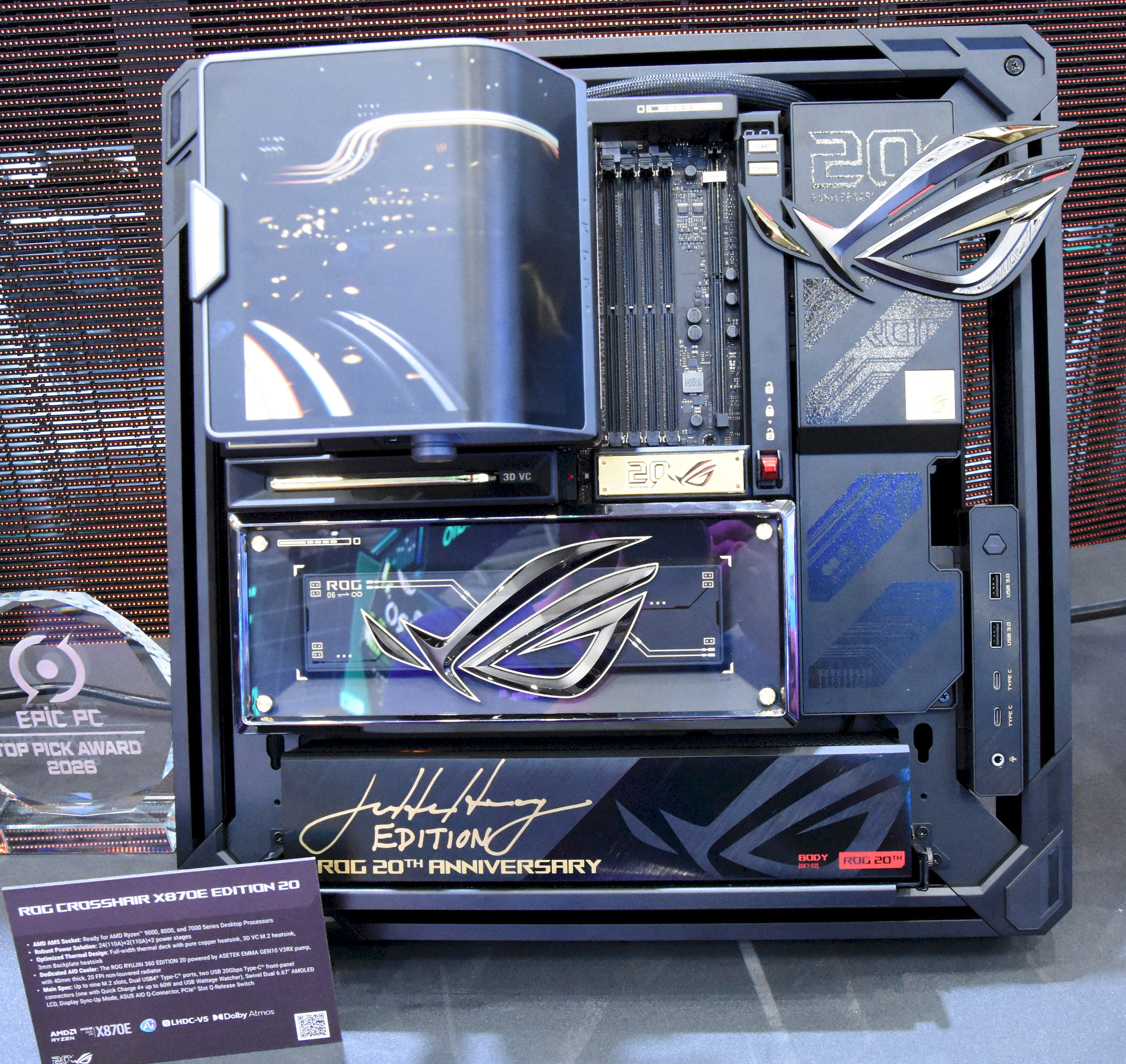
The board is directly designed for cooling the processor with the ROG Ryujin 360 Edition 20 AIO cooler (both will be sold together as a single bundle), consisting of an Asetek Emma Gen10 V3RX pump and a 40 mm thick radiator with a fin density of 20 FPI. The block should cool not only the CPU, but also the VRM.
On the pump block there is a curved AMOLED display (in reality it is made up of two 6.67″ displays with a thin horizontal divider between them), on which any animation or image can be displayed.

Besides these visual goodies, the board also has functional advantages, of course: In total it provides 9 M.2 slots for SSDs—some on the PCB, some on two add‑in cards. Altogether you can get up to 26 USB ports out of it, and the processor is powered by a 24+2+2‑phase VRM. The elongated object with a visible golden heatpipe is the cooler of the primary M.2 slot, which also includes a 3D vapor chamber in its base.
ROG GR20 Edition 20: When components are for show, why keep them inside?
All those covers on the ROG Crosshair X870E Edition 20 board also have a certain use: they allow the board to stay in full display while running outside of a case. Asus has designed an open case, or basically a stand, the ROG GR20 Edition 20, for this board (but it’s also compatible with other EATX boards). You can also see the board in this stand in our photos.

This “PC hanger” provides a frame for the board itself, but also adds supports for holding firmly an installed graphics card up to 368 mm long, and there is space for mounting an AIO cooler’s radiator. It can stand upright, be tilted, or lie flat, basically like a benchtable.

The stand naturally includes front buttons and ports (a pair of 20 Gb/s USB‑C, two 5 Gb/s USB‑A, headphones), but it also provides airflow—although, as you can see, it does not contain classic 120mm or 140mm fans. Instead, there is a cylindrical cross‑flow fan in the base (the kind you can find, for example, in some ovens; it works similarly like the paddle wheel of historical steamships).
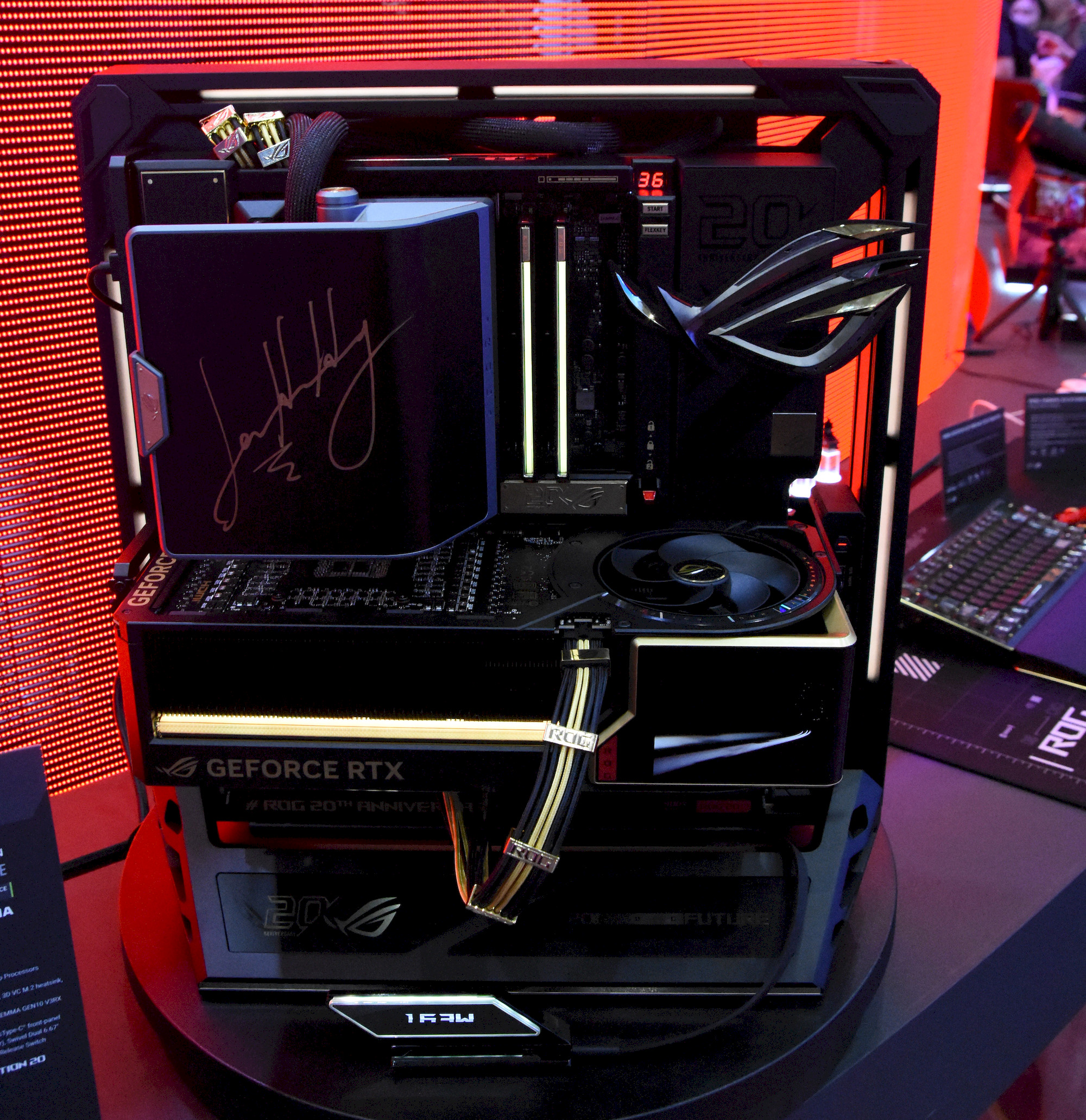
Such a concept is, of course, not for everyone—a PC enclosed in a “box” will always be better protected from unexpected events, like the elements, or dogs, cats and birds both household and wild, children, and ordinary dust and mess of course.
ROG Astral GeForce RTX 5090 Edition 20
The anniversary edition has also received its own graphics card, the ROG Astral GeForce RTX 5090 Edition 20, which is a four‑slot (or perhaps even thicker) and four‑fan edition of Nvidia’s top gaming model, derived from the already existing ROG Astral.
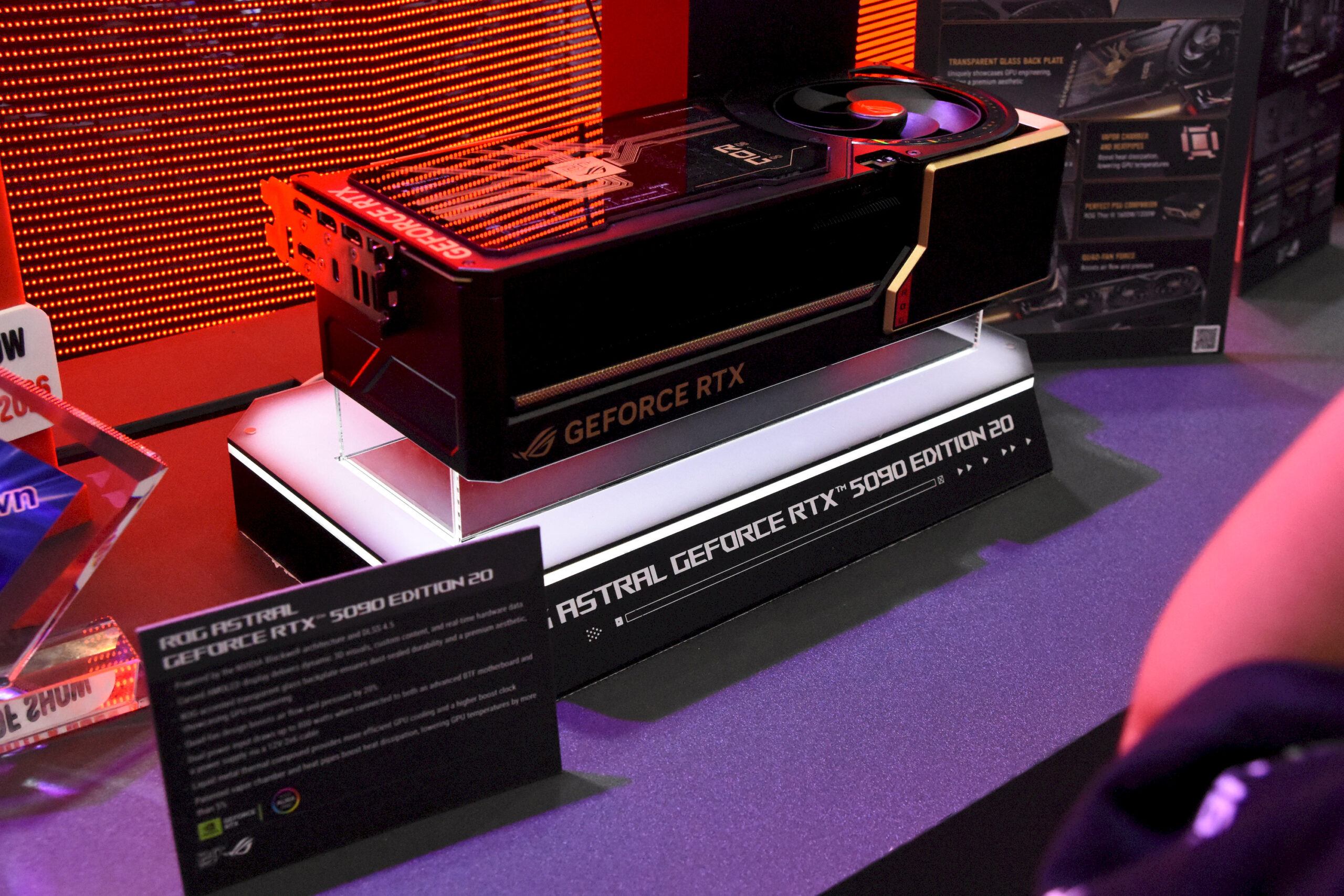
The card has the passthrough window in the PCB and heatsink at the end, which is something quite common these days, but on this card the section also has fans mounted on both sides in a push‑pull configuration. And around the corner of the card, on the spine, there is again a (removable) curved AMOLED display attached, similar to the one on the previously shown board—the visual content on all displays can be synchronized using Asus’s application.
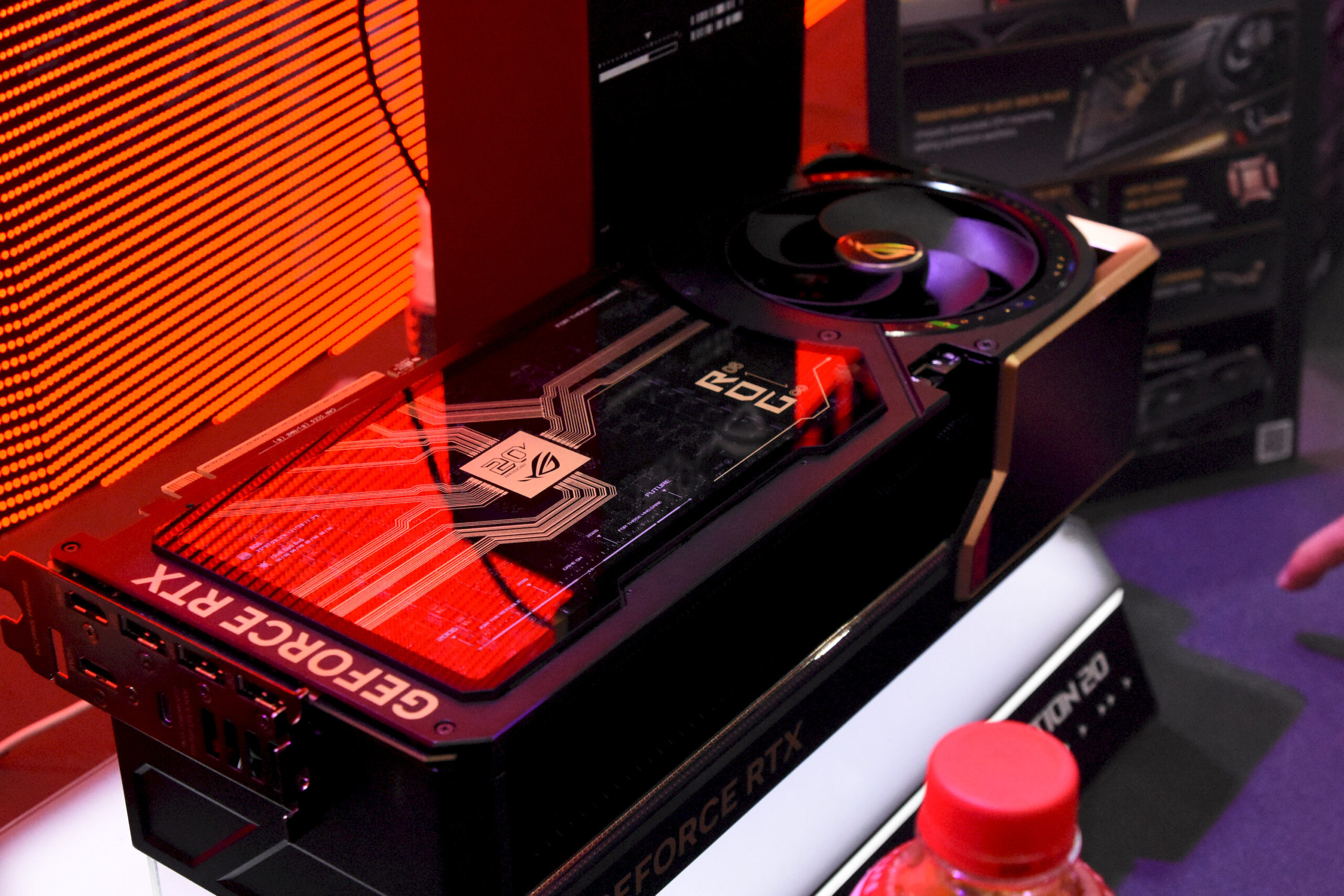
The display is located next to the 12+4‑pin power connector, whose cable may get a bit in the way (and hopefully nothing worse will happen with it—Astral cards fortunately have software monitoring of currents on the pins). But the card also has, besides the classic connector, a removable BTF adapter for power directly from the motherboard, which however requires a 12V‑2×6 cable to be plugged in the motherboard.

Incidentally, when both power connectors are used, the card can consume up to 800 W. The massive heatsink is assisted in dissipating this heat by liquid metal which is applied on the GPU instead of traditional TIM grease.
A 3000W PSU using GaN
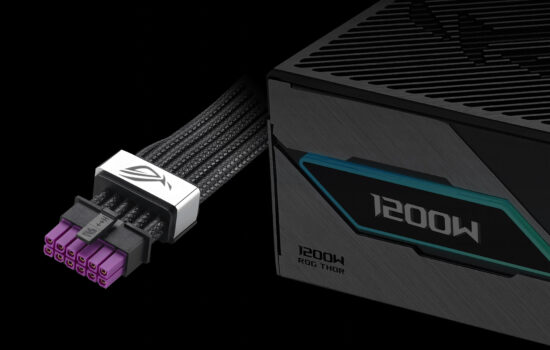
Speaking of crazy power consumption, Asus is also releasing the ROG Thor 3000W Titanium III Edition 20 ATX 3.1 power supply as part of this lineup—yes, with a power rating of 3 kilowatts. It can only unleash it fully when used on a 230 V electrical grid; with the 115 V grid the USA uses it delivers “only” 1600 W so as not to trip typical household breakers.
This PSU provides four 12V‑2×6 power cables for up to four graphics cards that use this type of connector. It comes with ROG Equalizer cables, which we wrote about recently. Its efficiency is rated 80 Plus Titanium and the PSU also has a ten‑year warranty.
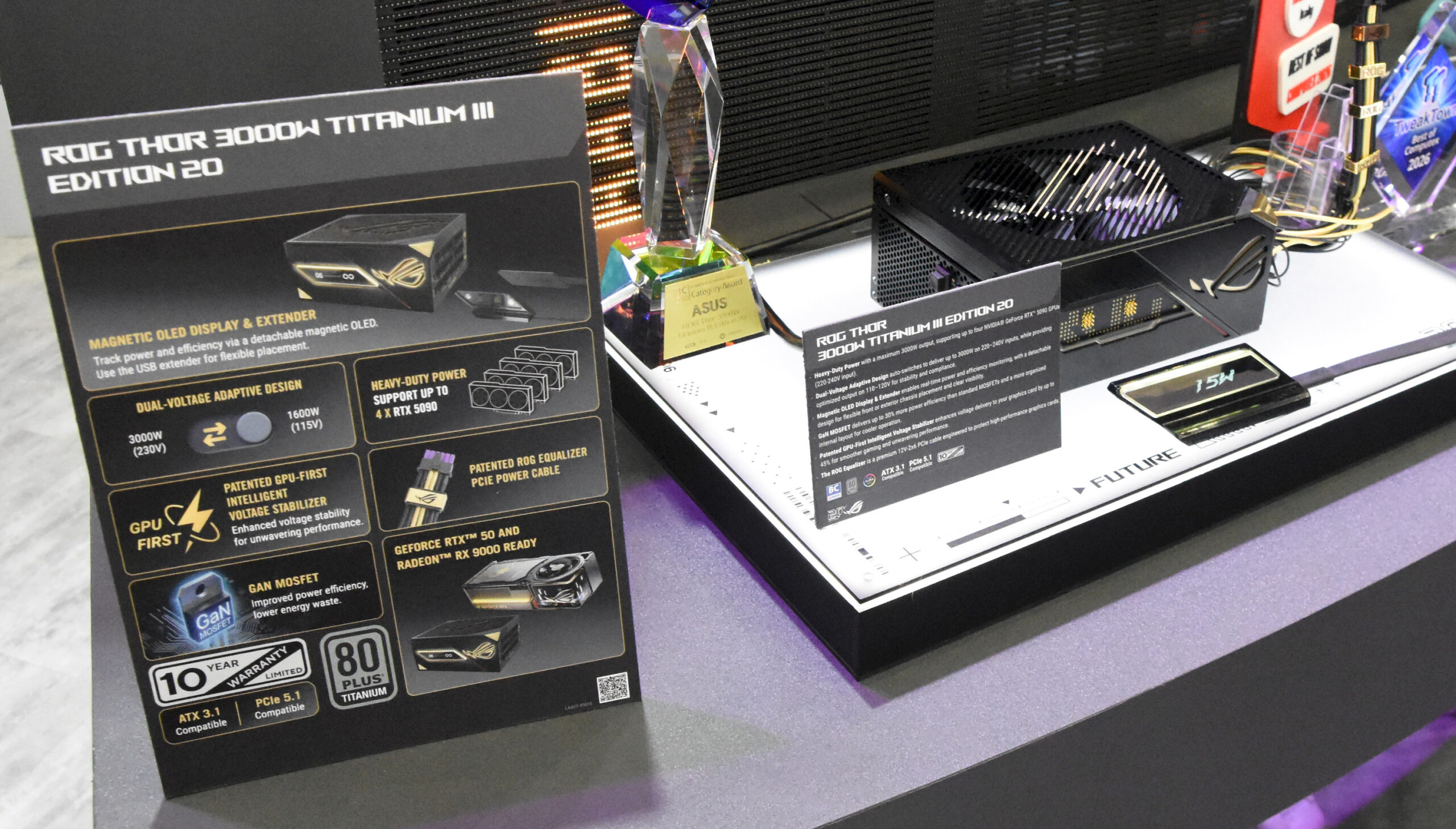
Technically, it is also interesting in that it uses GaN MOSFETs—components based on this technology should have higher efficiency and produce less waste heat. They are often seen in various charging adapters, but they have not yet penetrated much into PC power supplies—which will hopefully change.
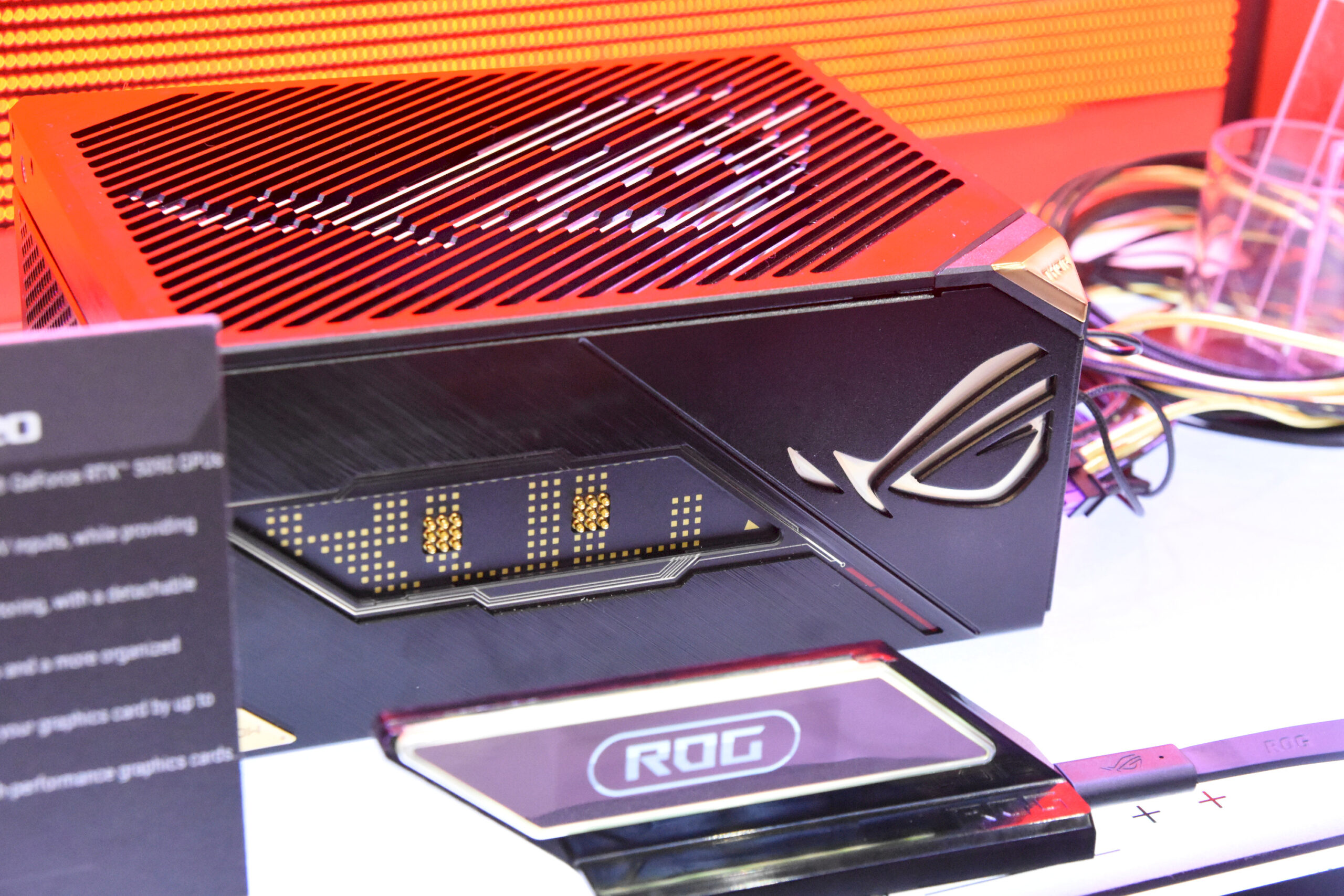
As an accessory, the PSU comes with an OLED display that can be magnetically attached to it or to the case and can show current efficiency and power consumption.

ROG Arcana Edition 20
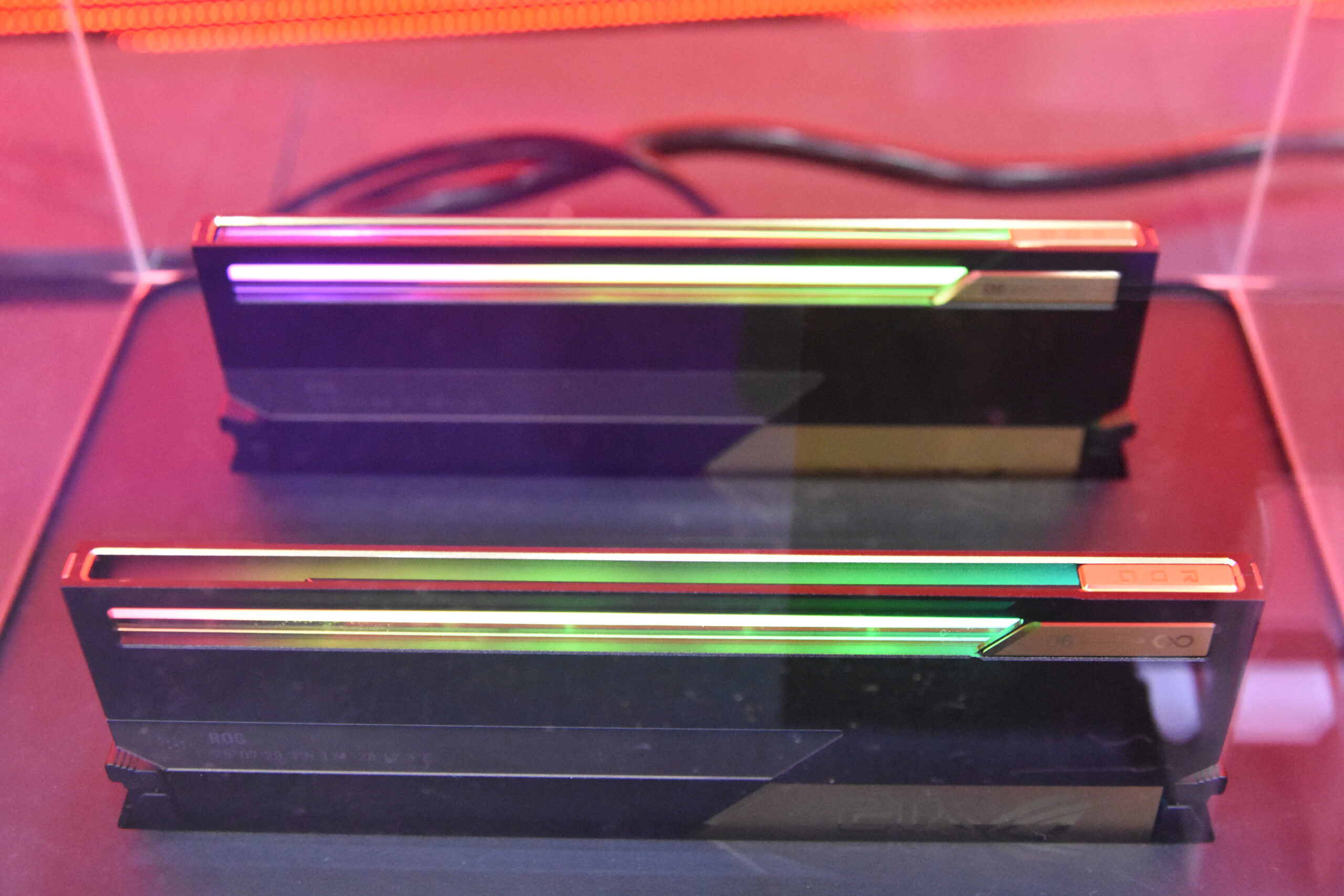
The ROG anniversary series also includes ROG Arcana Edition 20 memory modules, which support DDR5‑6000 CL26 and are again intended for AMD processors (they use an EXPO Ultra Low Latency profile), or alternatively you can use them at DDR5‑8000 effective speed with higher latency.
New peripherals
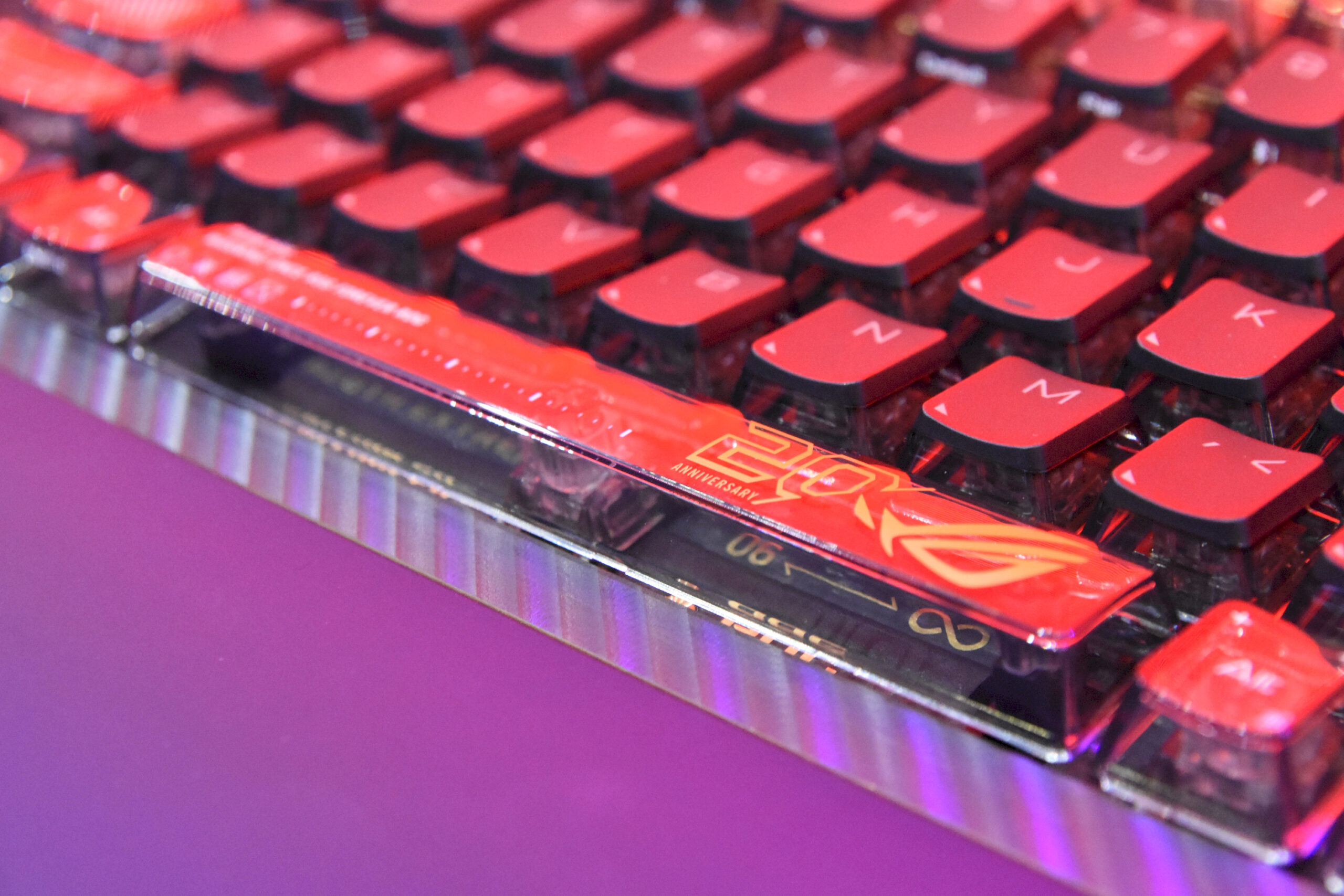
Asus has produced all sorts of offerings in the anniversary ROG line, and gaming peripherals are, unsurprisingly, also present. At Computex 2026, the ROG Azoth Extreme Edition 20 keyboard was on display, with transparent outer keycaps ( you can see the switches underneath though them). The other keys have opaque tops but transparent sides.
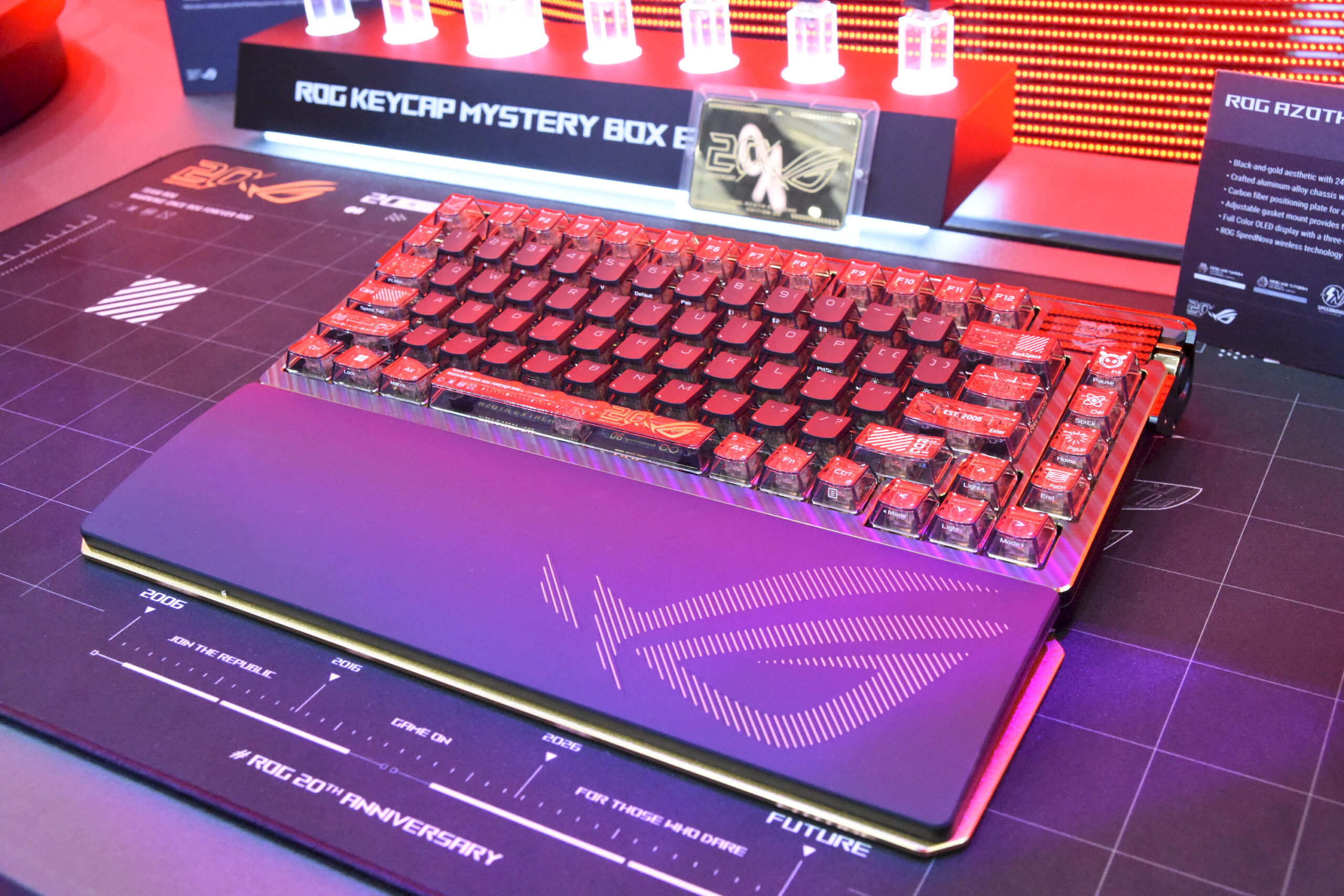
The keyboard also features a color OLED display and various other luxury extras such as magnetic removable feet, a removable wrist rest, the backlighting and some of the decorations are said to use 24‑carat gold (if it even actually to be emphasized, all this ROG Edition 20 hardware is clearly intended to be luxury goods and we expect the products will be very expensive).
If a gold‑accented keyboard is not for you, Asus also has ROG Keycap Mystery Box Edition 20 packs, which contain randomly selected special ROG mechanical keyboards keycaps in the shape of various ROG peripherals and products, in seven different collectible variants.

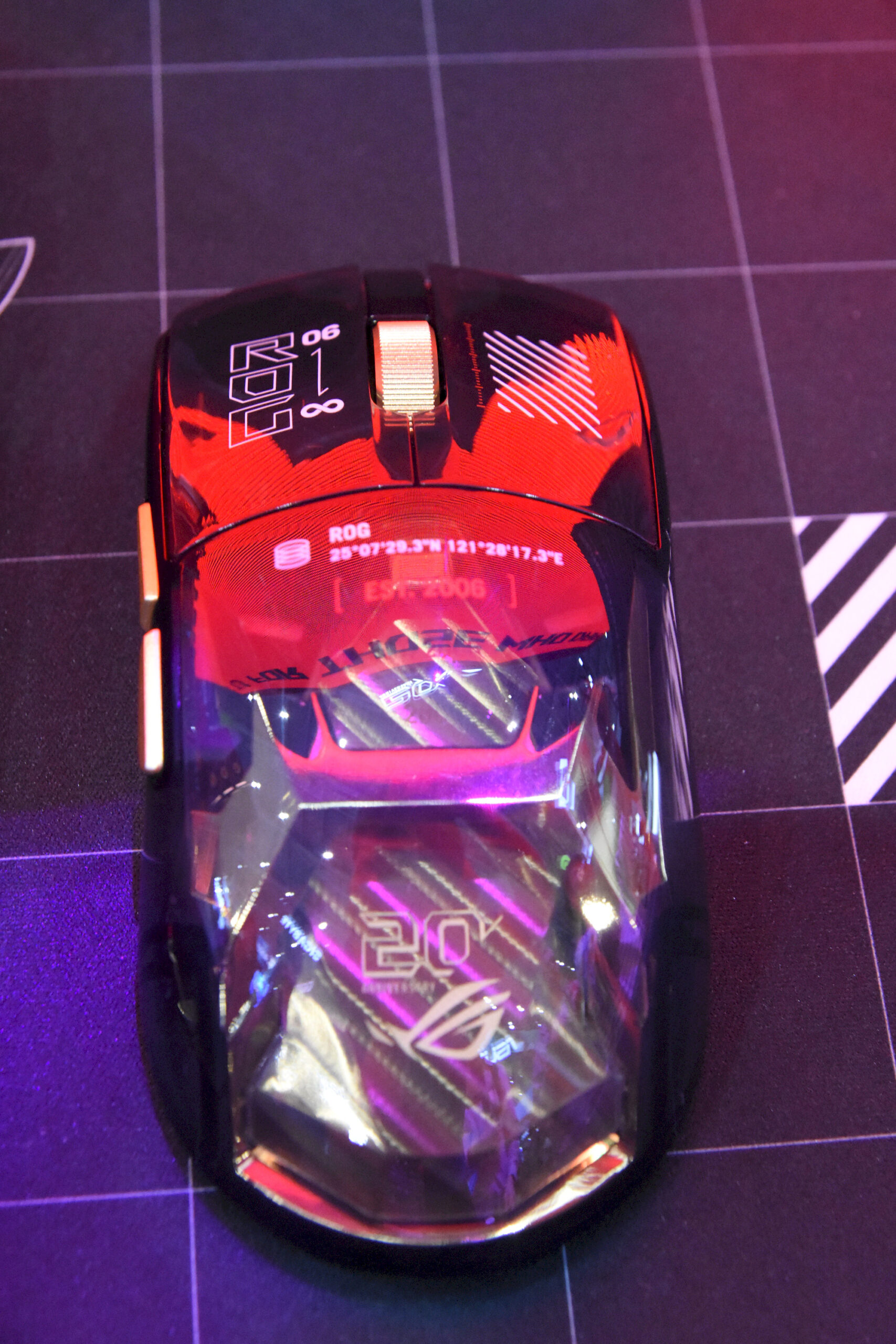
The ROG Harpe II Extreme Edition 20 mouse once again tempts with 24‑carat gold accents combined with a transparent shell. The sensor has a resolution of 65,000 DPI, maximum acceleration is 70G, and tracking reaches up to 8000 Hz.

Asus has also prepared action figures for the fans of ROG brand (the ROG Saga Omni series) and a also a board game called ROG Saga: In Search of Lapuntu.
Sources: Asus, on-site reporting
On-site photography: Jozef Dudáš
English translation and edit by Jozef Dudáš
⠀



Computex may be over, but we still have enough interesting material from it for the entire upcoming week: ASRock, MSI, ID-Cooling, Corsair… well, there’s still plenty to come. 🙂