UL Solutions’ 3DMark suite of performance tests recently added a new multi-platform test, Steel Nomad. With it, UL aims to replace the popular Time Spy in DirectX 12 for Windows while offering cross-platform performance measurement on other modern gaming platforms using other APIs such as Vulkan for Windows on Arm and Android and Metal for Apple iOS.
Trying out technologies in explorer mode
To compare the settings, we will try to use a makeshift image comparator. I tried to test it as best I could, it should run in all newer browsers, but I can’t guarantee that it will really work in any browser. If it does misbehave, or something breaks over time, there’s a pair of the same images below each comparison and a link to the images in their original resolution.
You can open them in new tabs via the links using the middle mouse button.
Volumetric clouds, volumetric sky
The sky is rendered with compute shaders using volumetric ray-march cloud rendering (a method that tracks a ray not only on the surface of an object, but as it passes through the object. It does not stop at the surface, but passes through it, and sampling takes place inside the object as well).
The sky is dynamic, with clouds moving throughout the timeline.


Volumetric sky on | Volumetric sky off
Decals
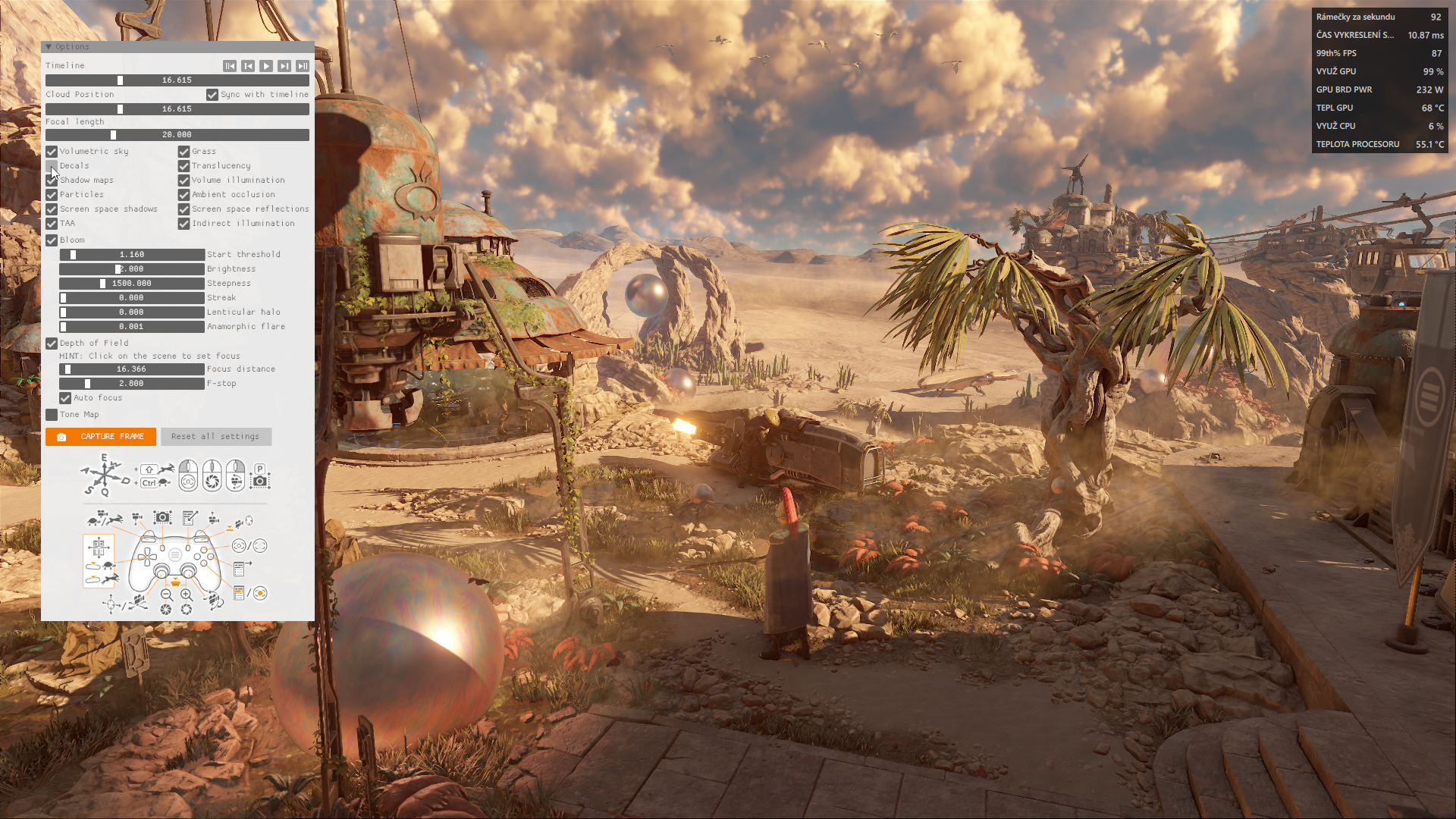
In games, stickers or decals are visual elements that are added after the fact to the surface of 3D objects in a scene. This can include bullet marks, blood, writing on walls, or tire tracks after skidding on the road).
It the test, they are rendered right after G-buffer rendering. Decals modify the G-buffer and add further details to geometry surfaces.
Shadow maps
Shadow maps are used in the benchmark to render dynamic shadows. Shadow maps work by rendering a simplified scene from the light source point of view into a 2D texture with information about the depth of objects relative to the light source. From this, it is then already known when rendering from the camera view whether the object should be in shadow or illuminated.

Shadow maps on | Shadow maps off
Particles
In game engines, particles refer to various visual elements that can have different sizes and a certain lifetime in a scene. These are usually smoke, dust, water or sparks. These are objects that, in a simplified form, mimic real elements that otherwise consist of a large number of small particles and for which it would be too computationally intensive to simulate each particle individually.
In the test, they are simulated on the GPU using compute shaders. The particles are rendered at the same time with transparent geometries using the same order-independent technique. The particles are illuminated by directional light.
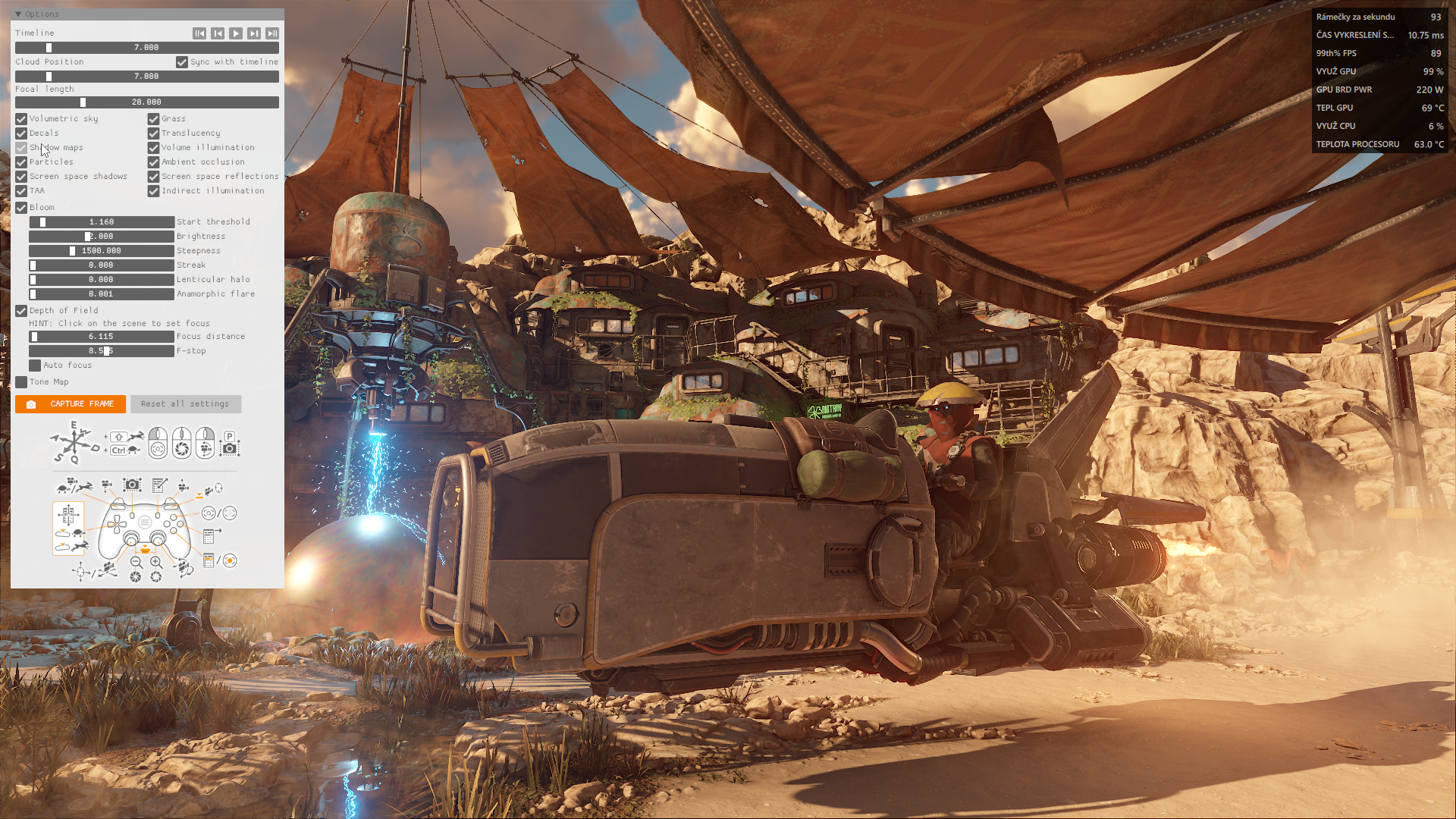
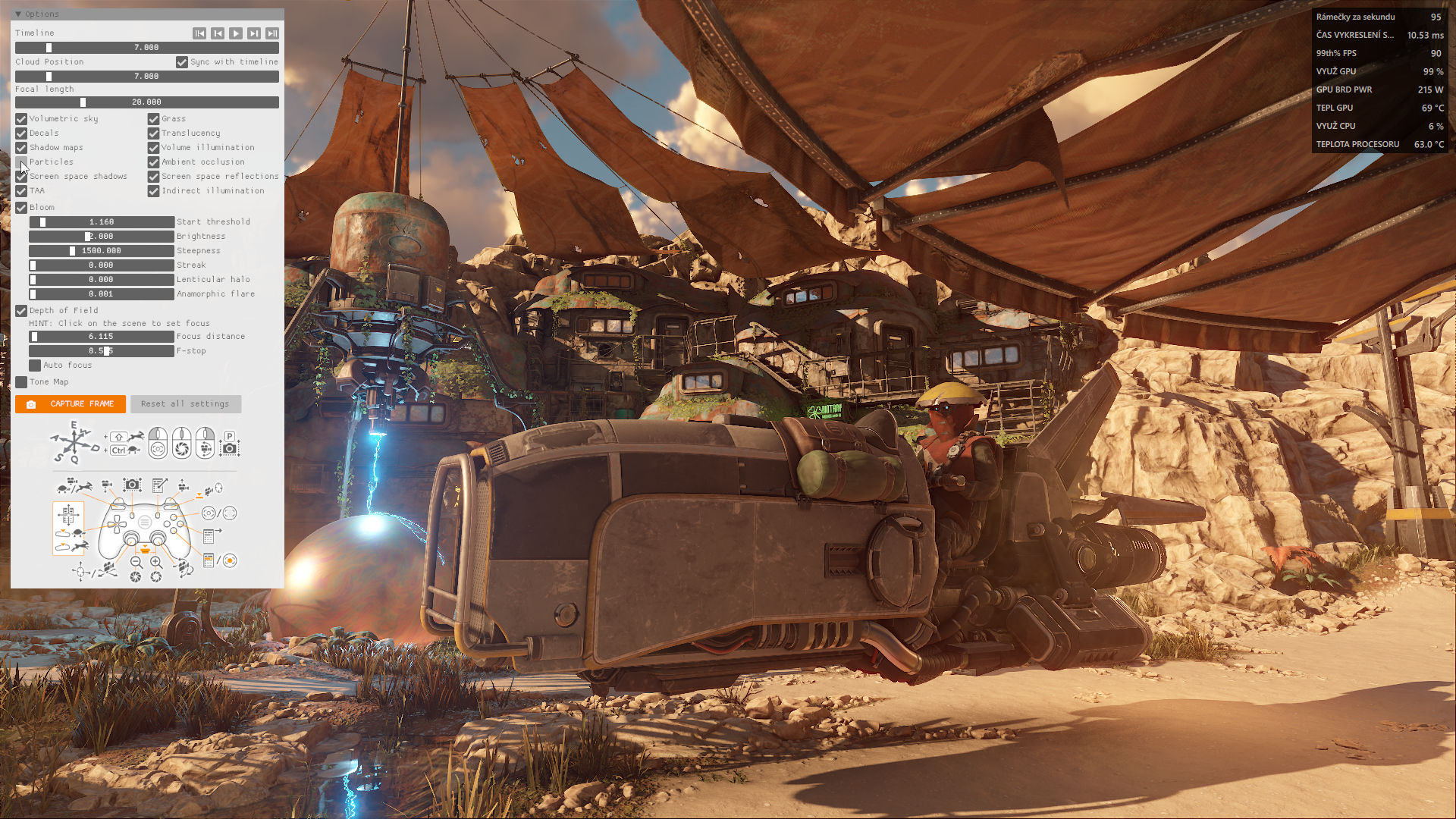
The overall view doesn’t show much particle effects, just a bright flame behind the hovercraft and smoke, so we’ll add another set of images.
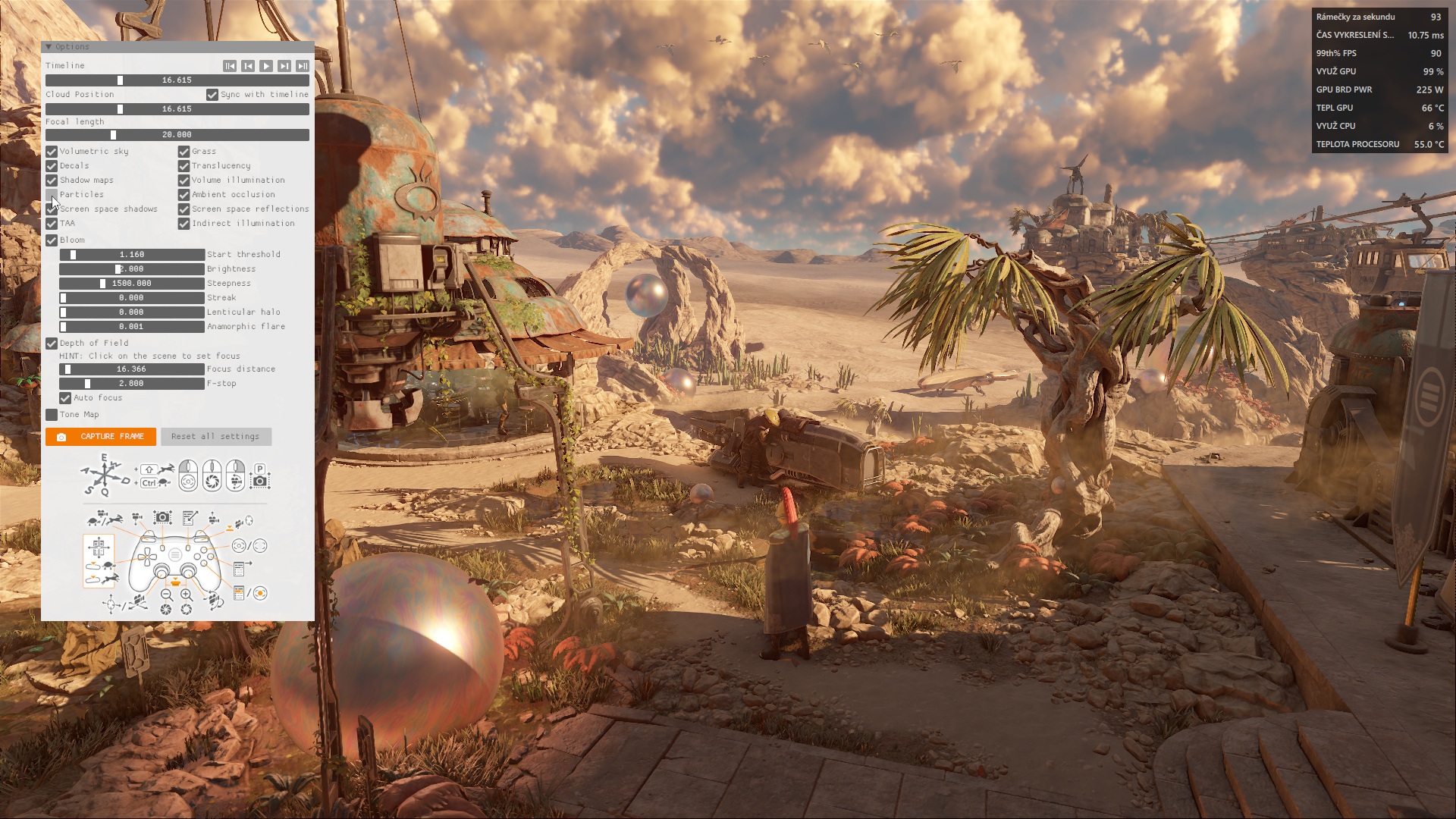
In the next couple of images, you can see sparks and air fluttering around the flame from the nozzles.
Heat Distortion
The heat distortion effect is generated with the use of particles. For particles that generate the effect, a distortion field is rendered to a texture using a 3D noise texture as input. This field is then used to distort the input image in the post-processing phase. In the left part of the picture you can also notice the sparks around the electric arc.