UL Solutions’ 3DMark suite of performance tests recently added a new multi-platform test, Steel Nomad. With it, UL aims to replace the popular Time Spy in DirectX 12 for Windows while offering cross-platform performance measurement on other modern gaming platforms using other APIs such as Vulkan for Windows on Arm and Android and Metal for Apple iOS.
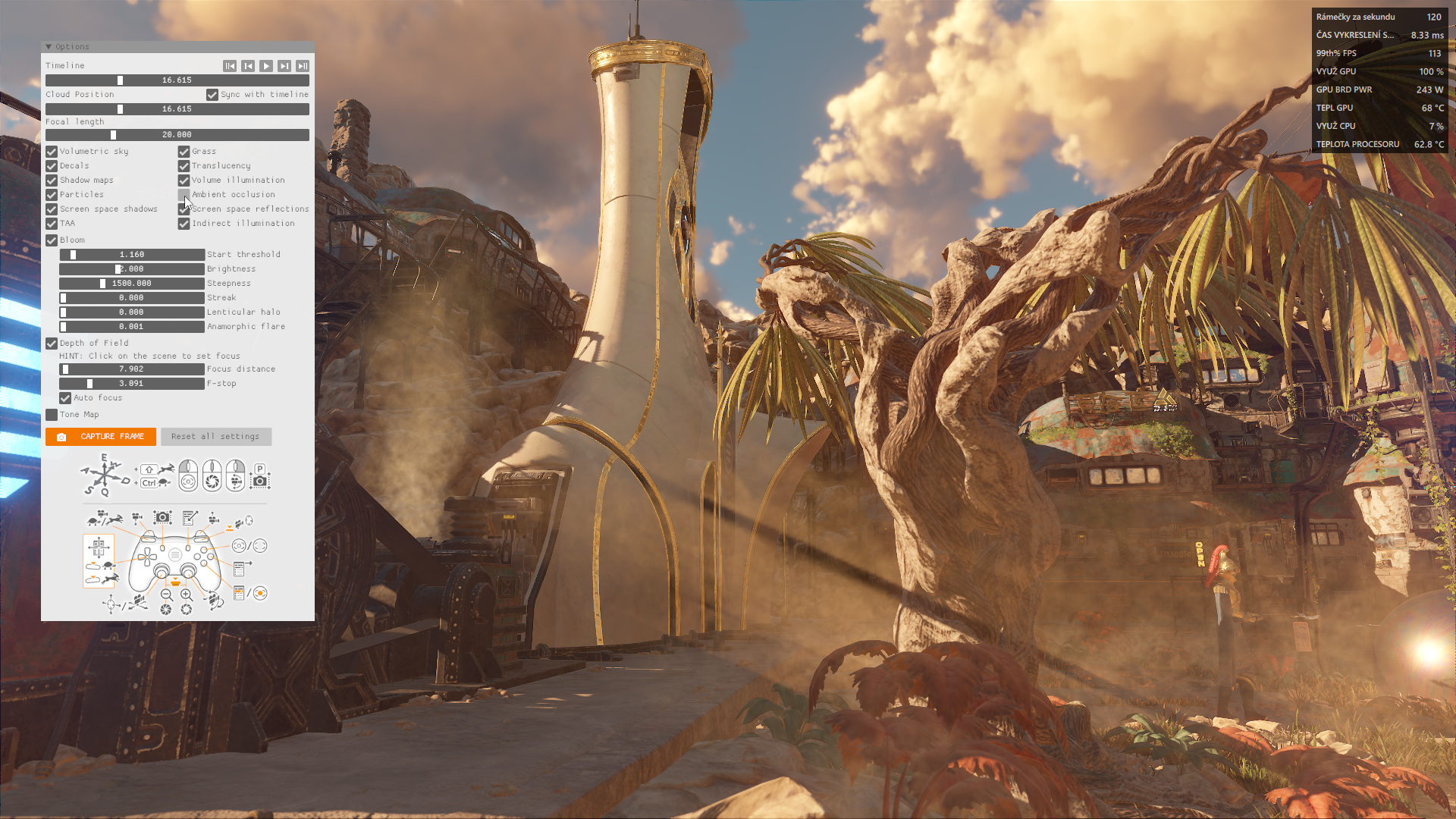
Grass rendering
Grass blades are distributed in the test using the level of detail technique (LOD, the model has multiple levels of complexity that vary) – size and density depending on their distance from the camera. Compute shaders are used for the computations, then rendered into the G-buffer.

Translucency
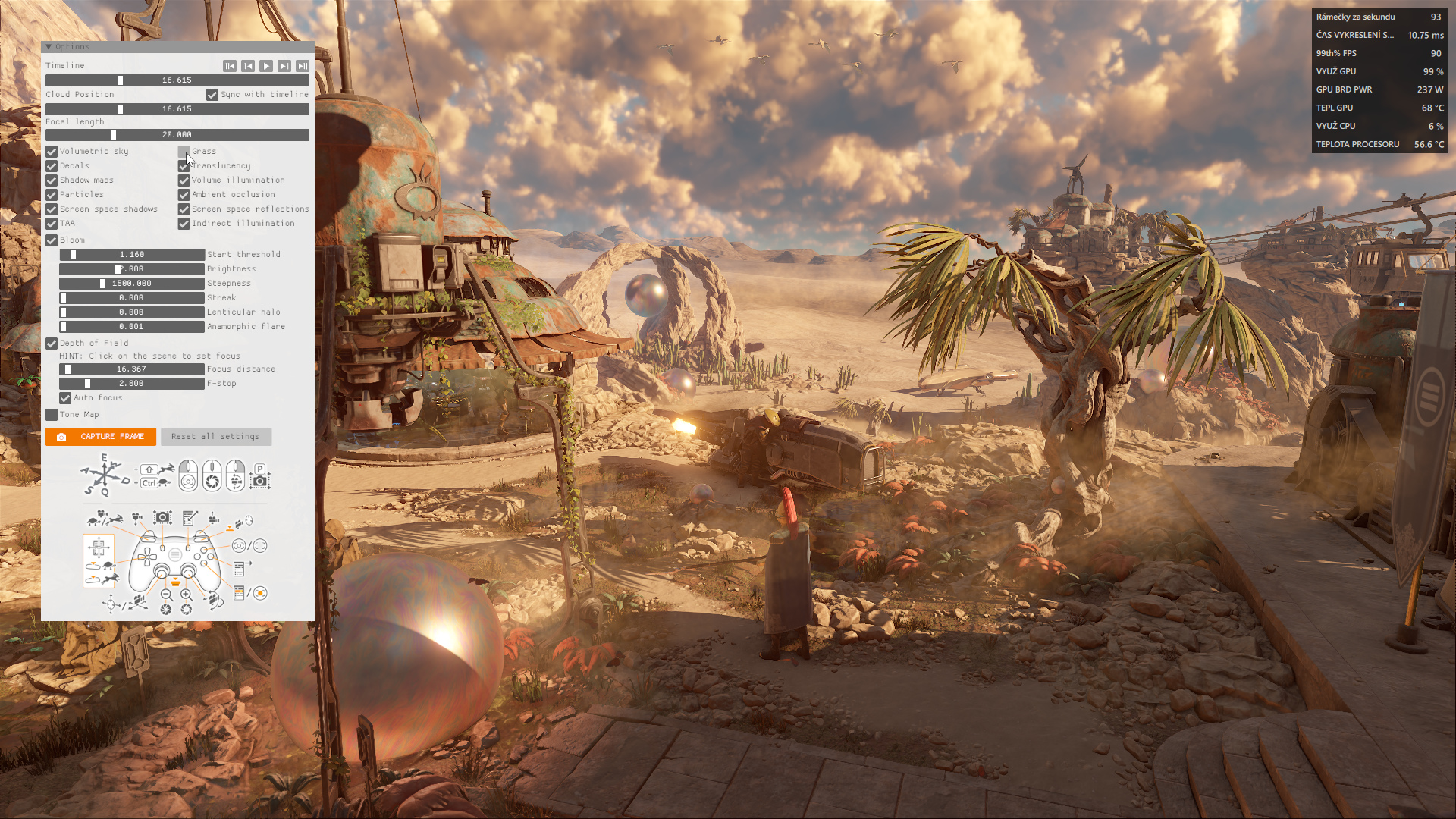
This effect simulates the translucency of materials. In games, it is used to more realistically represent the translucency of leaves, fabrics, but also to more realistically represent skin, which can also be translucent against direct light. But in 3D Mark it’s just the robots so we’ll show the translucency on fabrics. In the first couple of images, you can see it on the flag at the right edge, for example, or on the leaves of the palm tree. On the second set we’ll look at a close-up of a canvas shelter, and you can see the shadows of the ropes that are not visible when translucency is turned off.

Translucency on | Translucency off
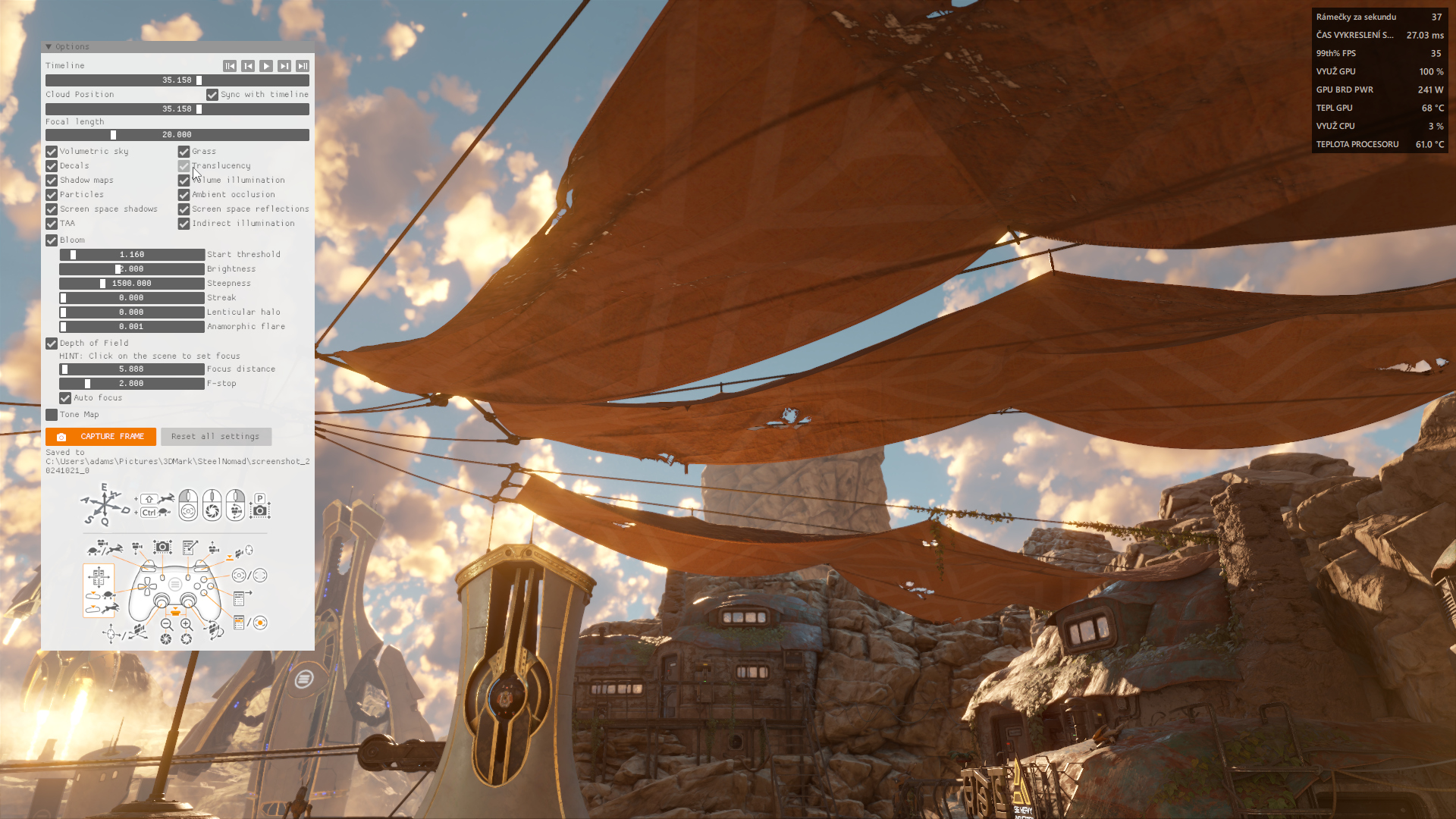
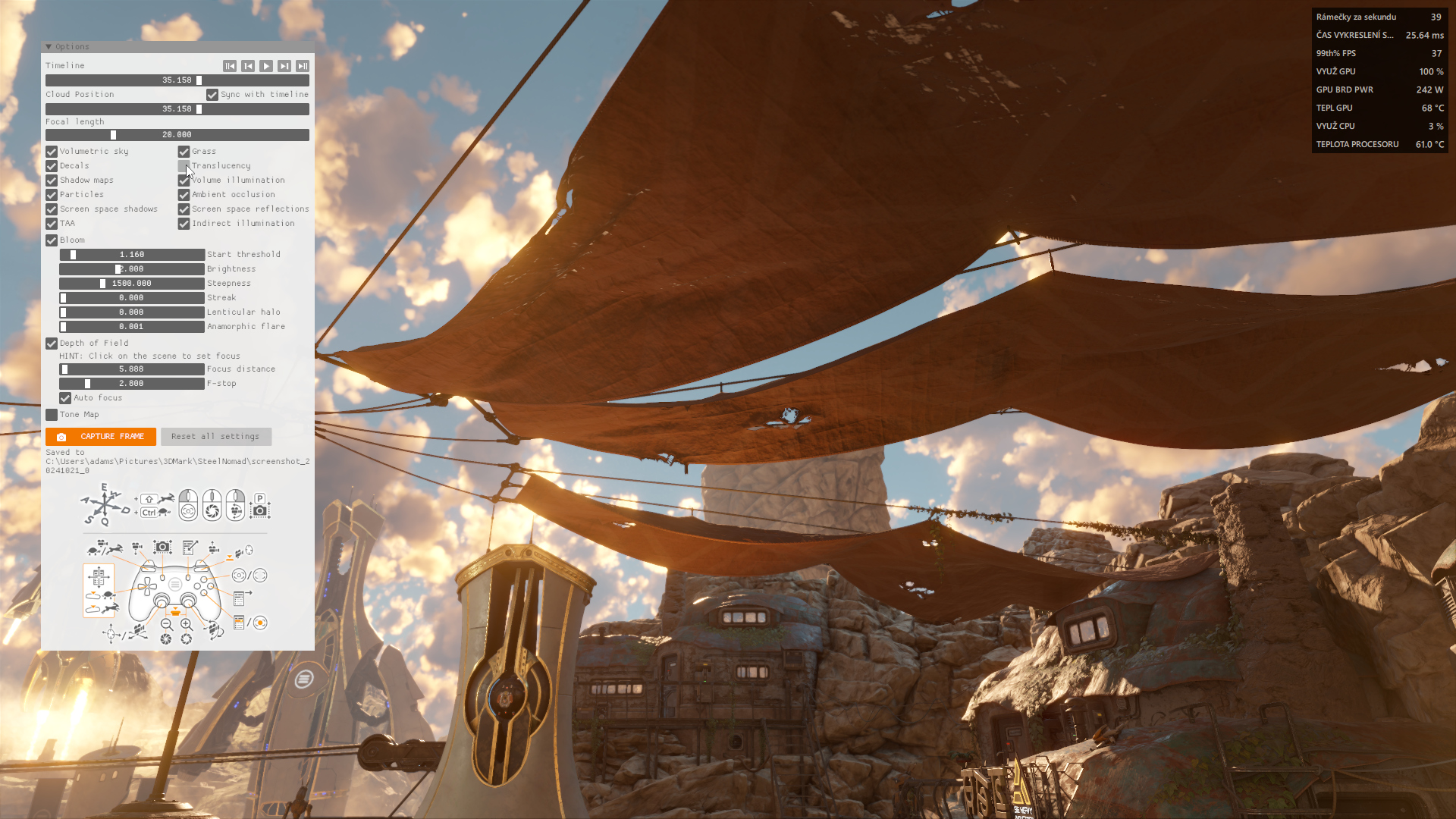
Translucency on | Translucency off
Screen-space shadows
Screen-space shadows for objects are used to calculate contact shadows (shadows are calculated for opaque objects affected by directional light). This can reduce the computational complexity compared to cascaded shadow maps (hierarchical shadow rendering).
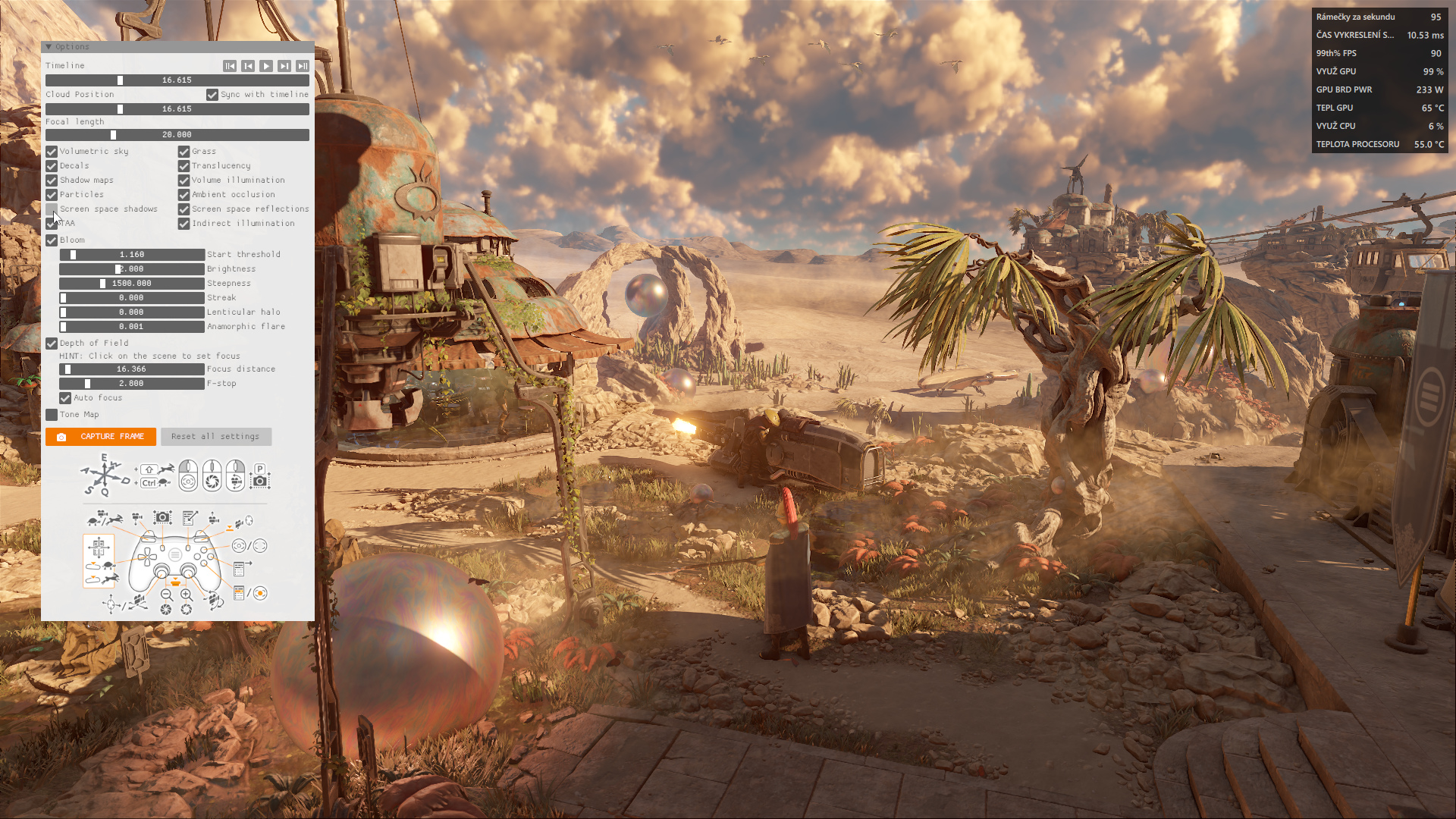
Screen-space shadows on | Screen-space shadows off

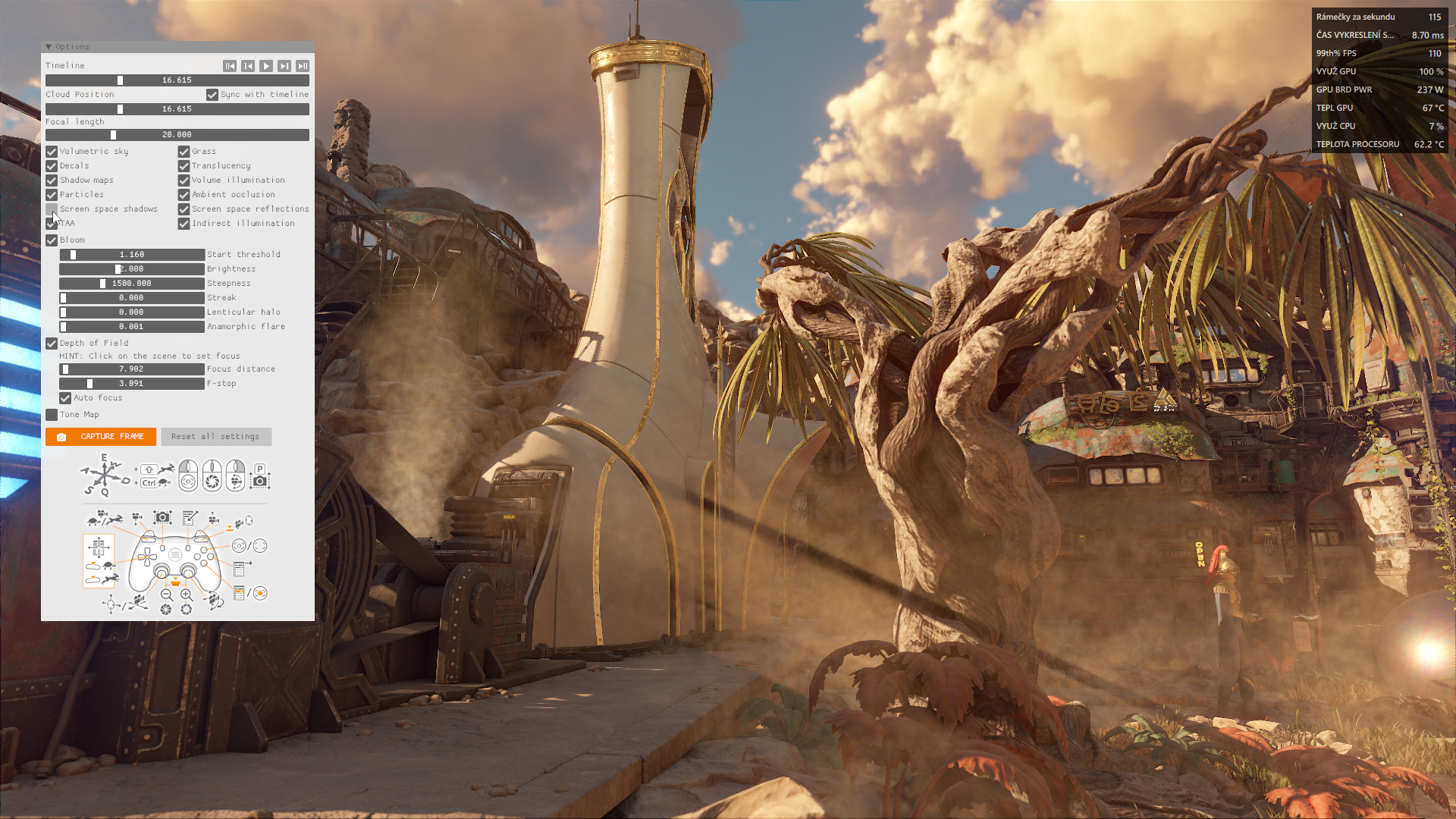
Screen-space shadows on | Screen-space shadows off
Screen-space reflections
Screen-space reflections are used to calculate reflections of pixels rendered on screen. A cube map fallback is used for reflections of surfaces outside of screen-space.
Note: A cube map with reflections is a set of six square textures mapped onto the walls of a cube with reflections of the environment surrounding the object. Each wall represents a view in one direction (up, down, left, right, forward, and backward). It is used to capture the reflections or “surroundings” of objects (such as skyboxes).
This is an efficient way to get objects that are outside the visible area of the screen into the reflections, which is what ray tracing solves, without having to compute them in real time for each frame. The downside of not computing for every frame is that it may be static or only sporadically updated, only limited perspective correction is possible if you change the angle from which you look at objects, and there may be objects outside the range of the cube.
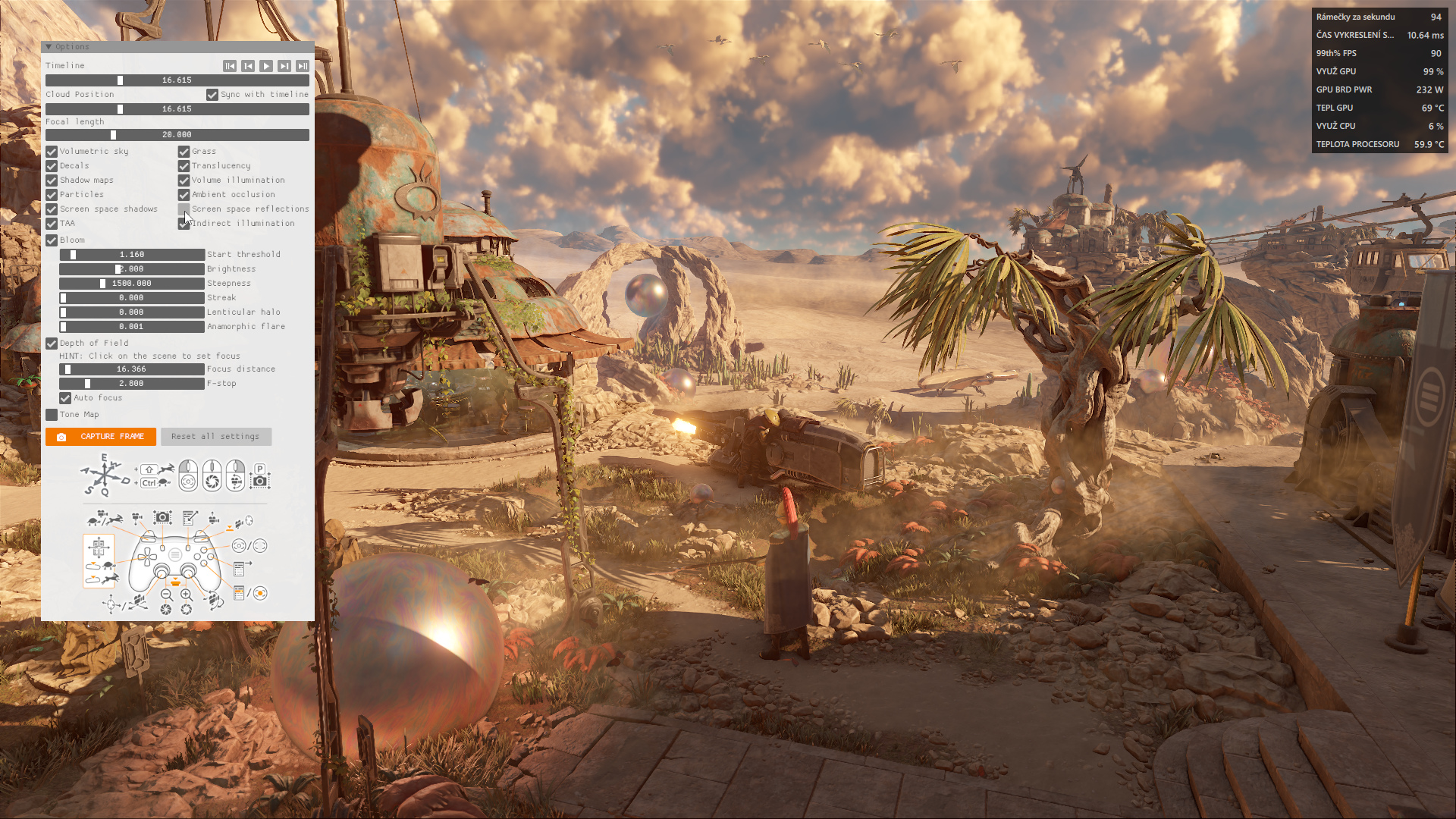
Screen-space reflections on | Screen-space reflections off
Indirect illumination
Indirect lighting simulates the illumination of surfaces by reflected light and diffused light. This is an effect that makes objects in shadow that are not directly illuminated by any light source more visible in a bright scene. In the Steel Nomad benchmark, multiple probes distributed around the scene are used to compute the effect of indirect lighting on the scene.
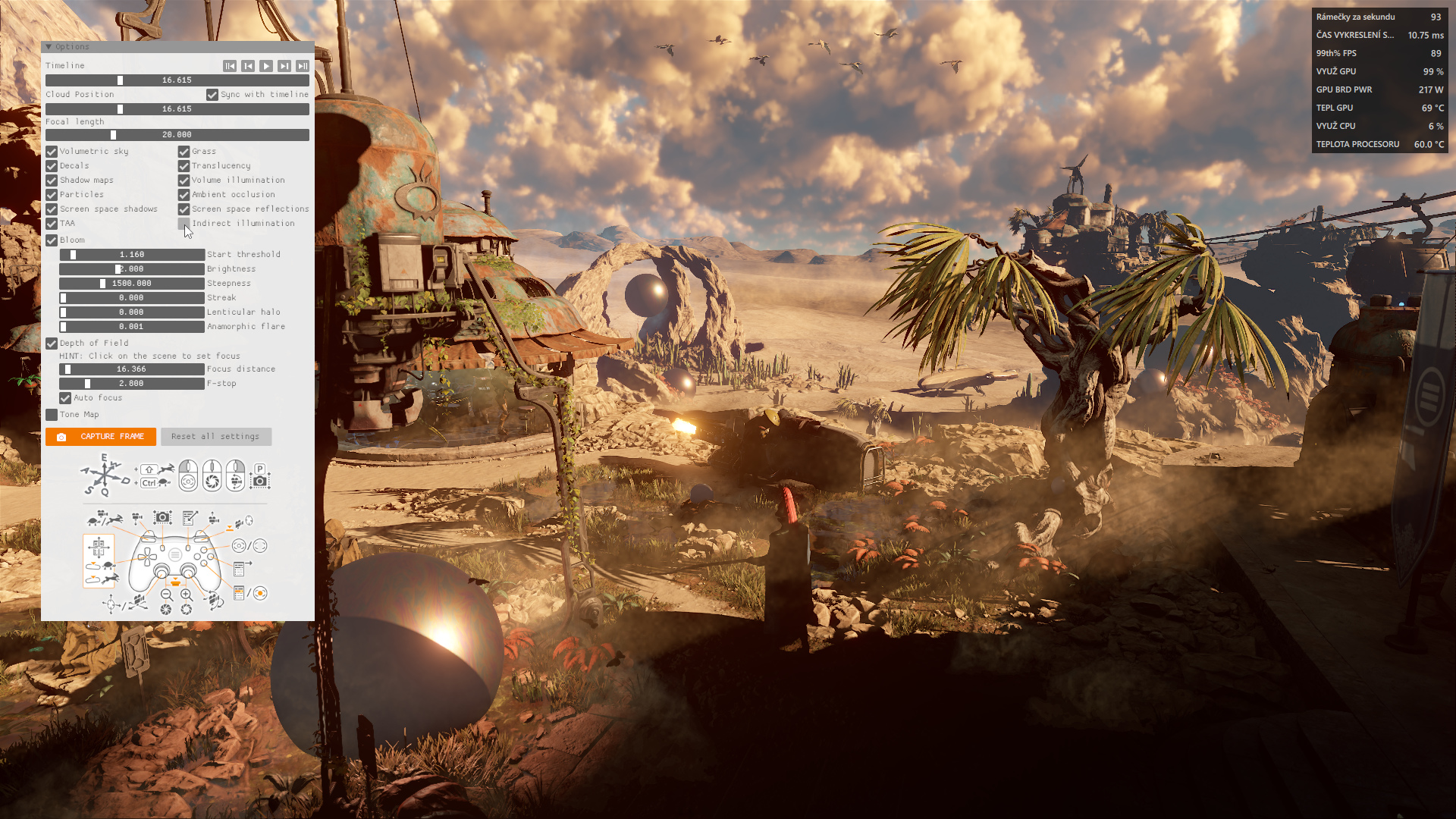
Indirect illumination on | Indirect illumination off
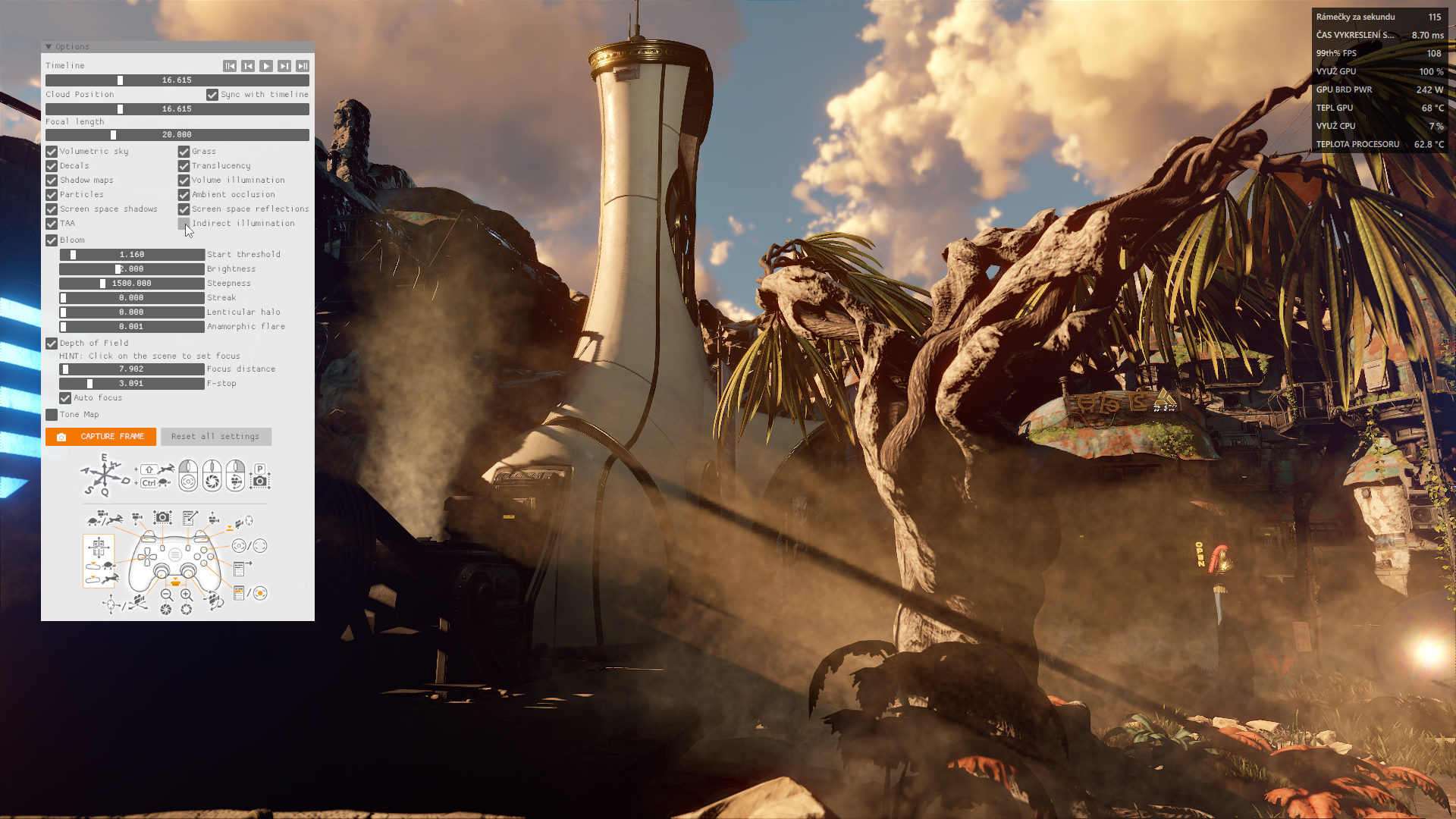
Indirect illumination on | Indirect illumination off