


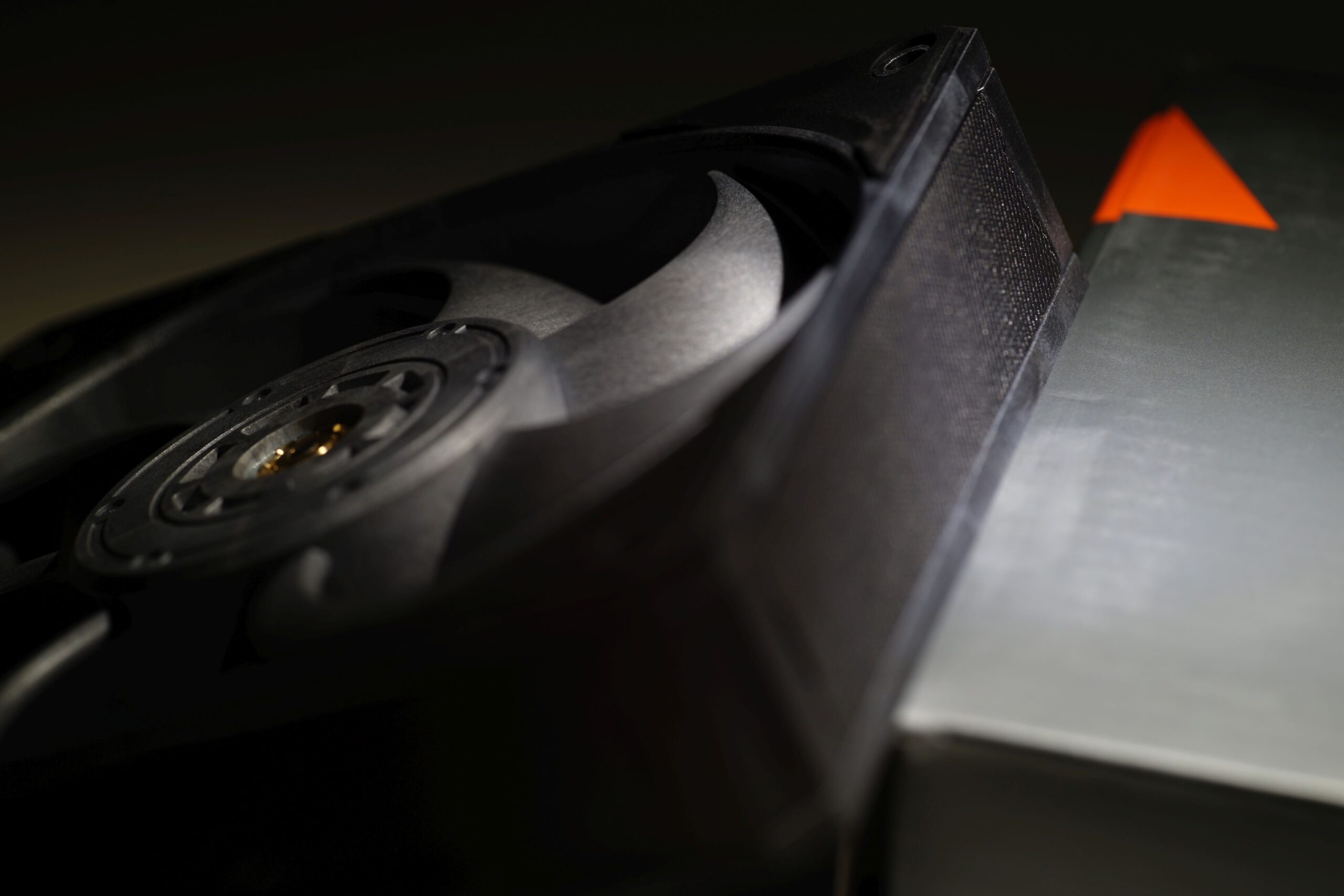
We can state that, regardless of noise levels (indeed very high at maximum), the CPS PCCooler F9 R120 is the highest airflow fan in the 30 mm-and-below profile category. Yes, even the Phanteks T30 comes out “worse” here. However, if your priority is the highest possible airflow at low noise, the picture changes—and it’s not such a happy one, especially with obstacles. That will become clearer in the detailed analysis.
Let’s go straight to the blade design features that matter. The leading edges are aggressively curved, with the manufacturer aiming for an even pressure distribution—in other words, not just maximum pressure at the blade tips, but also near the impeller hub. To achieve this, the blades have a somewhat “humped” shape, with curvature that’s noticeably abrupt compared to what you might be used to.
You might have seen something similar in the aerodynamic design of Noctua’s second-generation LCP fans (NF-A14x25 G2 PWM or later the NF-A12x25 G2 PWM). Compared to these Noctua models, the PCCooler has a wider hub, which leaves less surface area for the blades. This means that at similar speeds, you can expect lower airflow—even though both designs have seven blades.
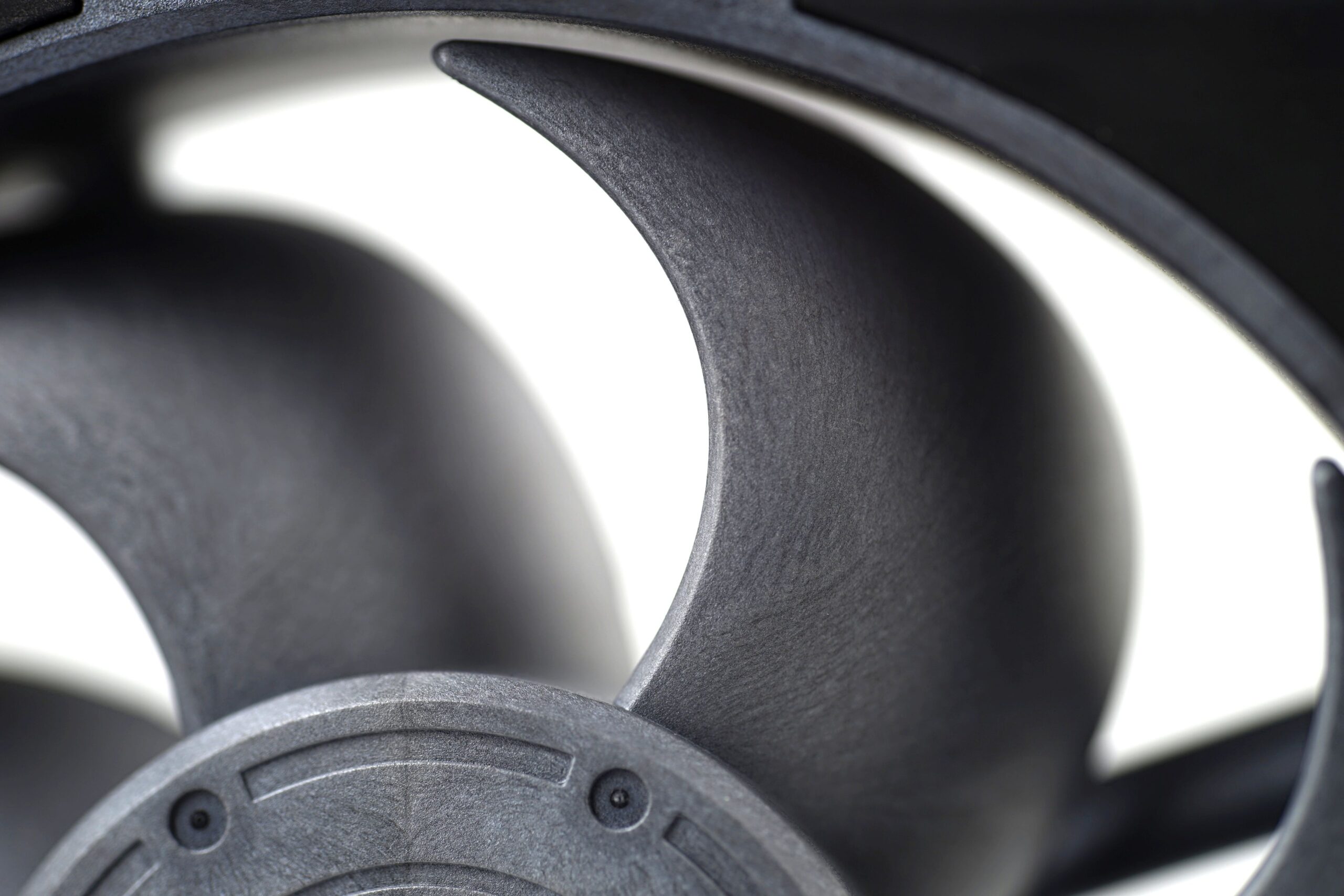
A larger hub is, of course, important for ensuring stability in a relatively heavy impeller. That’s the case here with the F9 R120. The impeller’s weight is further increased by its use of liquid-crystal polymer (LCP), which is heavy in its own right. Altogether, the fan weighs around a quarter of a kilogram—a lot for a 120 mm model. For comparison, Arctic P12 Pro fans are about half that weight.

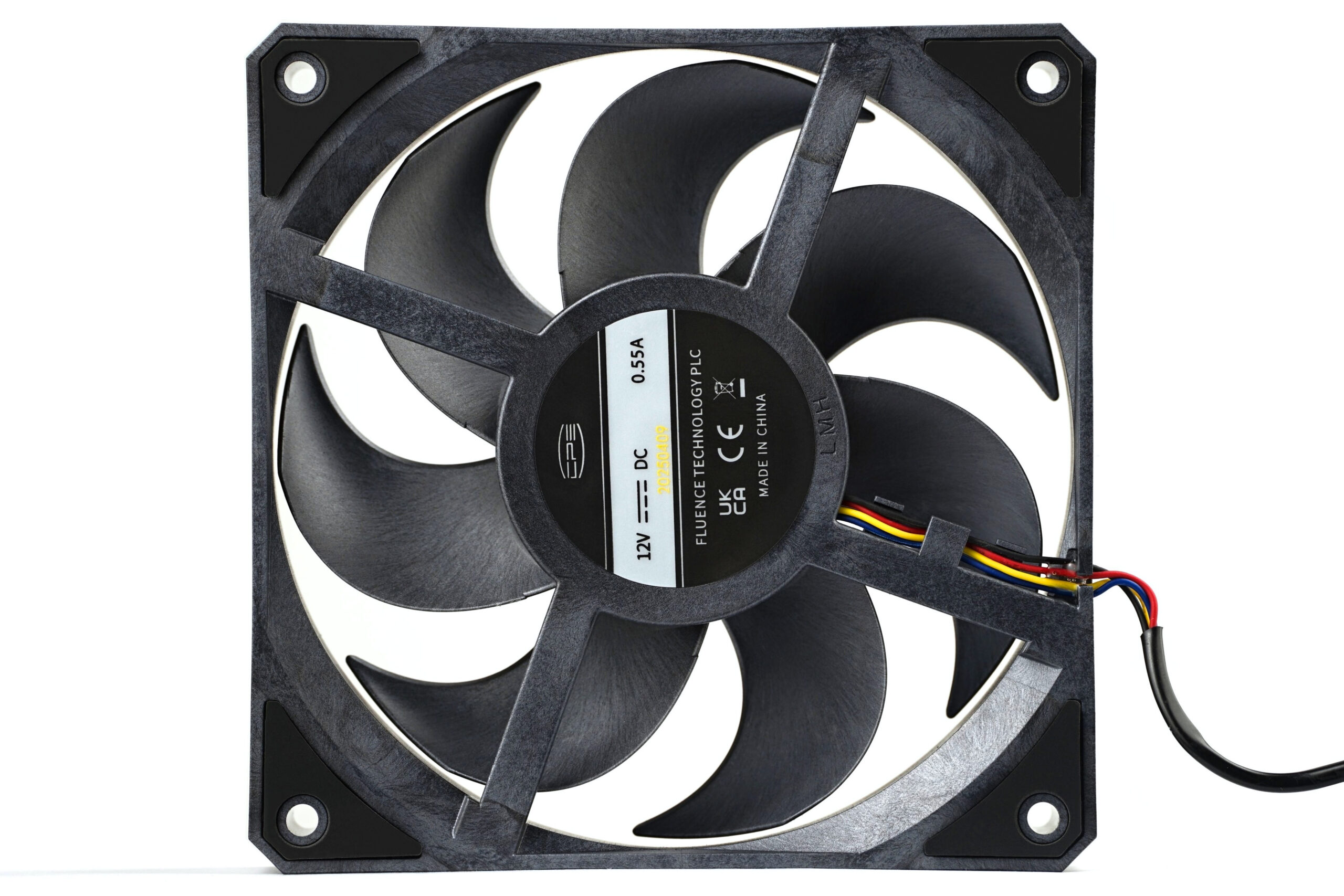
The spacing between the F9 R120’s blades is average, and from blade tip to frame there’s only about a 1 mm gap. This narrow clearance contributes to the fan’s static pressure—a key factor for heatsinks and radiators. Higher static pressure means less airflow drop when faced with resistance, which in turn helps cooling performance, assuming similar speeds. Noise, however, is another variable: airflow through (and around) obstacles can be louder or quieter depending heavily on the aerodynamic design. It’s very much a case-by-case matter that requires detailed analysis.
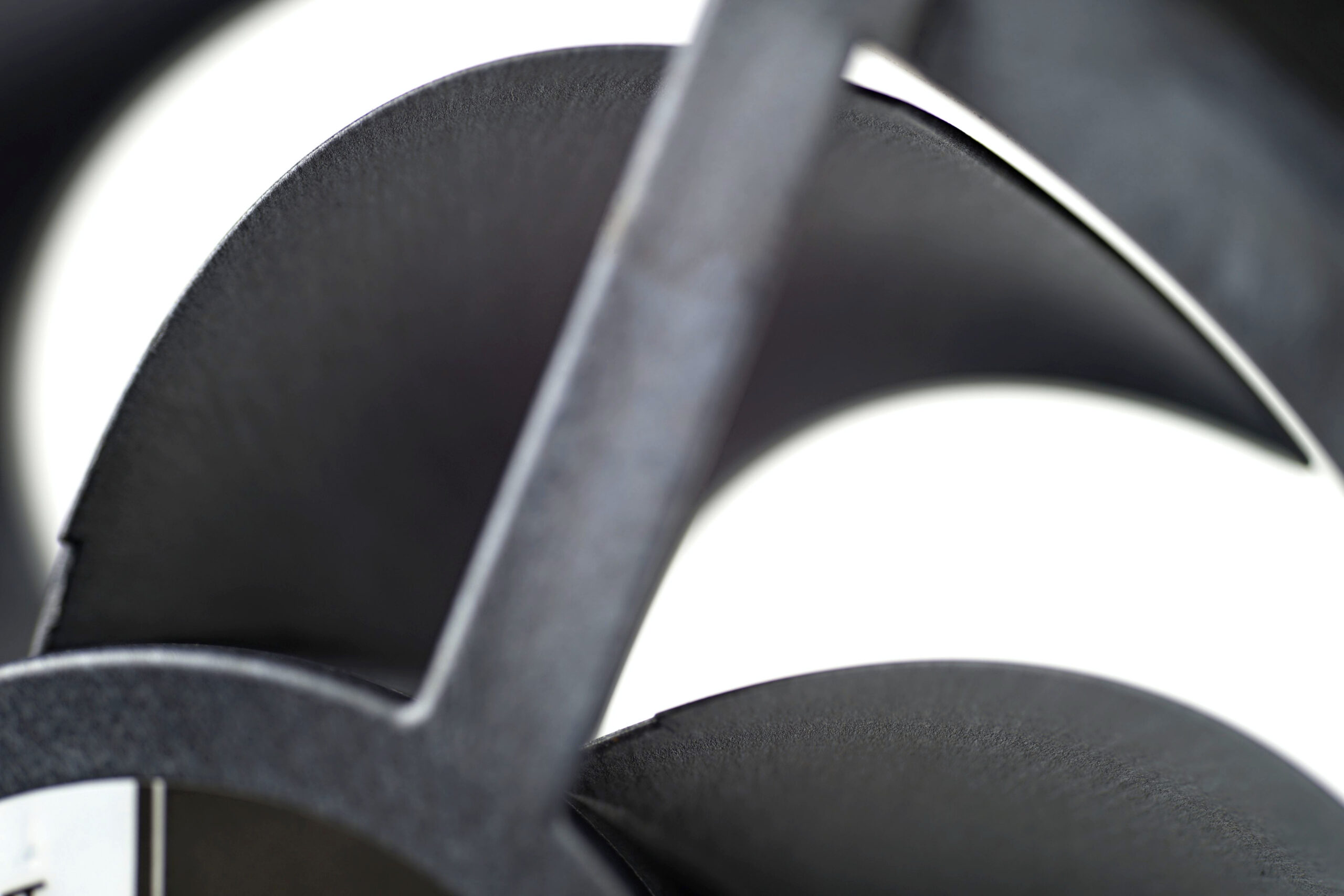
Static pressure is also helped by the fan’s thickness, which here is 30 mm—a full 5 mm more than what’s “standard.” Naturally, increased thickness can mean worse compatibility, as a thicker fan is more likely to collide with other components. Even if this fan is mainly intended for liquid-cooler radiators, a thicker unit mounted on the same radiator could interfere with a motherboard if installed above it (in the top position of a PC case). It’s a trade-off. In front- or side-mounted positions, where there’s usually more space, this is less of an issue.
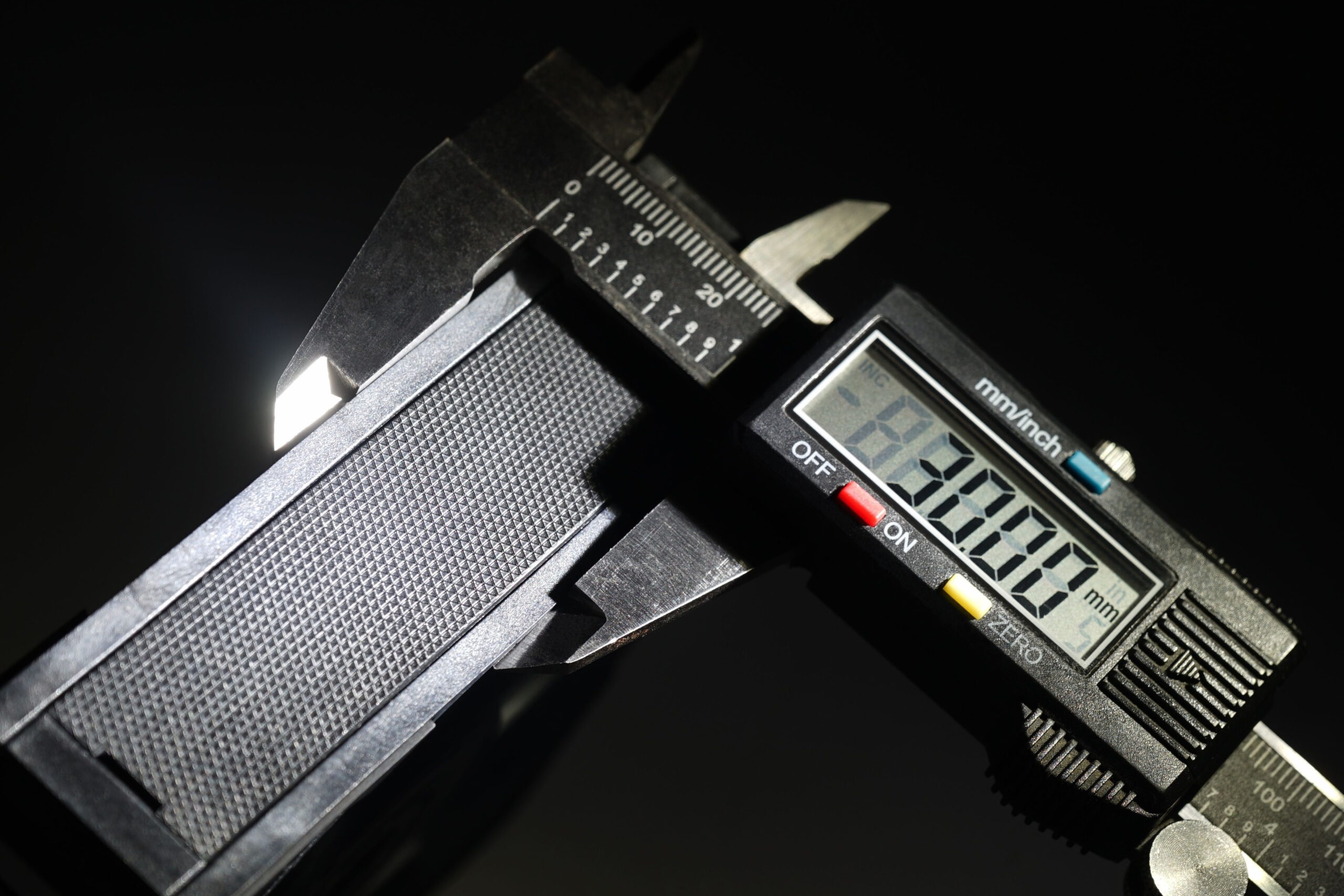
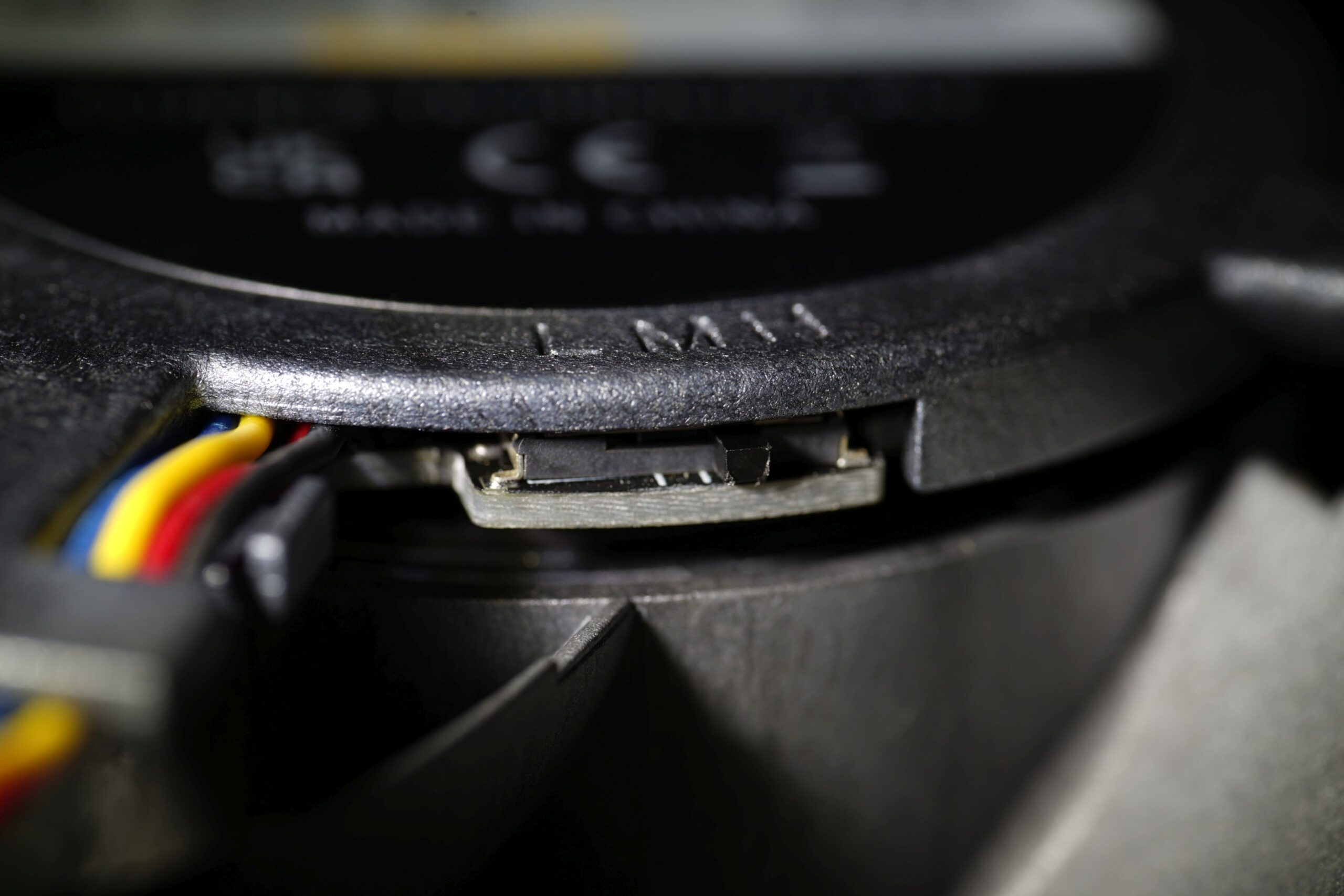
It’s also important to note that this is fundamentally a high-speed fan, reaching up to around 3000 RPM at maximum. The motor also has a built-in switch (or “limiter,” if you prefer) for Medium (M) and Low (L) settings, which cap the top speeds. In Medium mode, we recorded about 2250 RPM; in Low, around 1560 RPM. Once you change the switch position, these limits are never exceeded—even under PWM control. That’s the point: to cap the maximum so the fan never hits noisy speeds. The minimum speed (which is also the start-up speed) is about 500 RPM. There’s no passive mode at low PWM duty cycle—the fan always spins.
For completeness, the F9 R120 uses a dual ball bearing design. According to the product page, these are Japanese “NSK” models. CPS PCCooler refers to this fan as being designed for industrial use. An interesting detail is that it features three-phase torque (and the fan is equipped with six magnets and an equal number of stator poles).
Please note: The article continues in the following chapters.




Hi,
I don’t understand the chart Motor Power 12v 100% PWM and Fan power draw max speed.
Should they be the same watts?
One says 5.41 watts the other 15.23 watts do they rally draw that much power?
Thanks
See chapter 11, it’s explained there. 😉
https://www.hwcooling.net/en/cps-pccooler-f9-r120-rising-to-the-top-with-30-mm-of-thickness-review/11/
Yes, thank you! 🙂
In one case (Motor Power), the higher value appears because the motor, due to braking, has to overcome significantly greater resistance than it does during regular operation at 12 V or 100% PWM control (which are effectively the same). The motor power measurements are meant to illustrate the difference between the best and worst scenarios in terms of friction the fan must overcome. The operating power consumption of an older fan will be higher because friction increases over time with use—and it’s good to know how far the motor’s capabilities extend. 🙂
while we’re at it, 😉
It would probably be appropriate for manufacturers to limit max.motor power to 12W, cause many 4-pin fan headers on motherboards have max. current of only 1A, right?
…or what is your opinion on it? 😛