


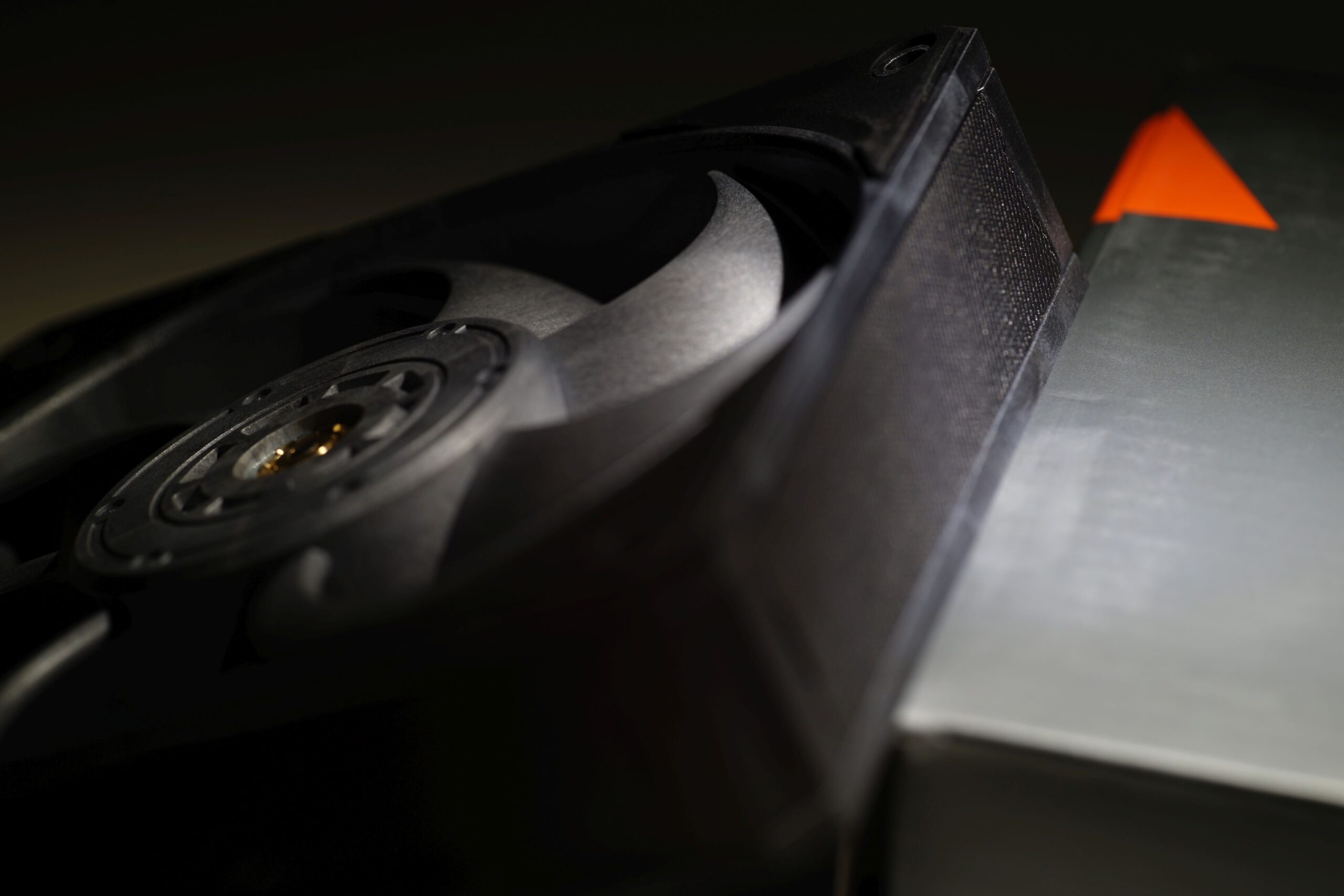
We can state that, regardless of noise levels (indeed very high at maximum), the CPS PCCooler F9 R120 is the highest airflow fan in the 30 mm-and-below profile category. Yes, even the Phanteks T30 comes out “worse” here. However, if your priority is the highest possible airflow at low noise, the picture changes—and it’s not such a happy one, especially with obstacles. That will become clearer in the detailed analysis.
Measuring the intensity (and power consumption) of lighting
Modern fans often include lighting. This is no longer a “cooling” parameter, but for some users the presence of (A)RGB LEDs is important. Therefore, we also measure how intense this lighting is in our tests. These tests are the only ones that take place externally, outside the wind tunnel.
We record the luminosity of the fans in a chamber with reflective walls. This internal arrangement is important to increase the resolution for us to measure anything at all with lower luminosity fans. But also so that the readings do not blend together and it is obvious which fan is emitting more light and which one less.
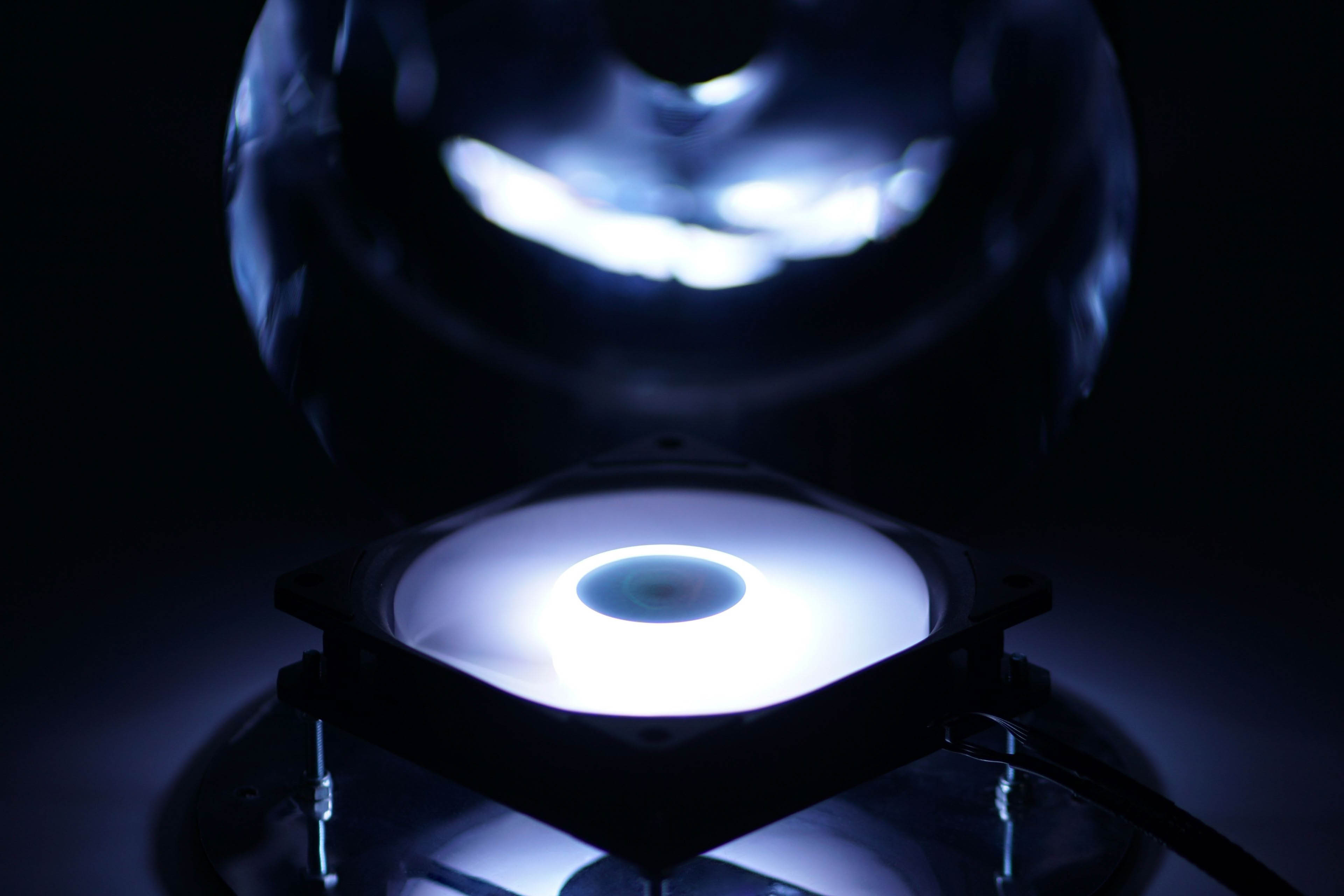
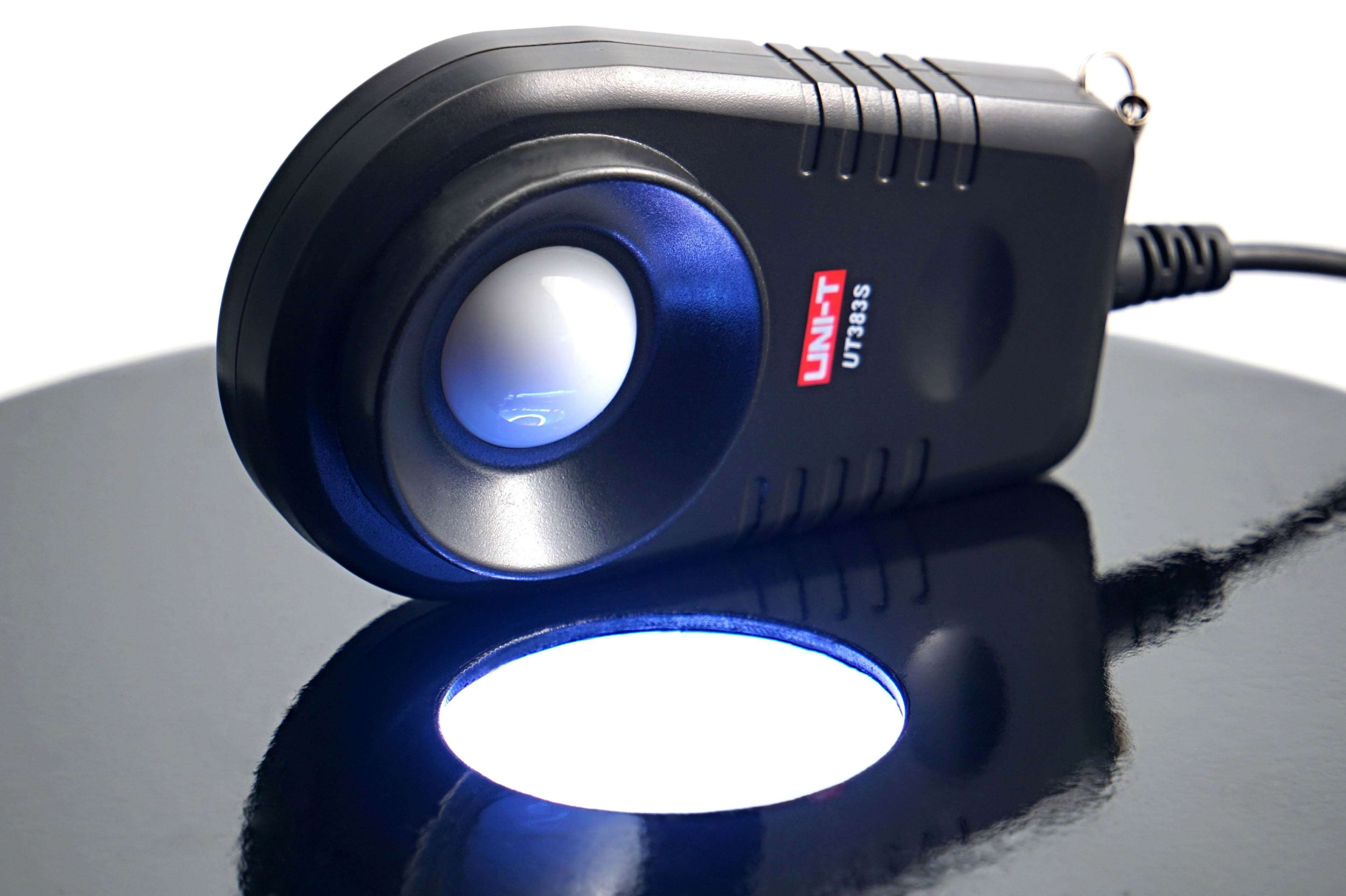
The illumination intensity is measured in the horizontal position of the fan, above which is the lux meter sensor (UNI-T UT383S). This is centered on the illumination intensity sensing chamber.
The illumination is controlled via an IR controller and the hue is set to RGB level 255, 255, 255 (white). We record the brightness at maximum and minimum intensity. According to this, you can easily see if the brightness is high enough, but conversely also if the lower level is low enough for you.
In addition to the brightness intensity, we also measure the power consumption that it requires. This is again through the shunt, which is between the Gophert CPS-3205 power supply and the (A)RGB LED driver. After this we get a reading of the lighting power consumption. In the graphs we show it separately, but also in sum with the motor power consumption as the total maximum fan power.



Hi,
I don’t understand the chart Motor Power 12v 100% PWM and Fan power draw max speed.
Should they be the same watts?
One says 5.41 watts the other 15.23 watts do they rally draw that much power?
Thanks
See chapter 11, it’s explained there. 😉
https://www.hwcooling.net/en/cps-pccooler-f9-r120-rising-to-the-top-with-30-mm-of-thickness-review/11/
Yes, thank you! 🙂
In one case (Motor Power), the higher value appears because the motor, due to braking, has to overcome significantly greater resistance than it does during regular operation at 12 V or 100% PWM control (which are effectively the same). The motor power measurements are meant to illustrate the difference between the best and worst scenarios in terms of friction the fan must overcome. The operating power consumption of an older fan will be higher because friction increases over time with use—and it’s good to know how far the motor’s capabilities extend. 🙂
while we’re at it, 😉
It would probably be appropriate for manufacturers to limit max.motor power to 12W, cause many 4-pin fan headers on motherboards have max. current of only 1A, right?
…or what is your opinion on it? 😛