


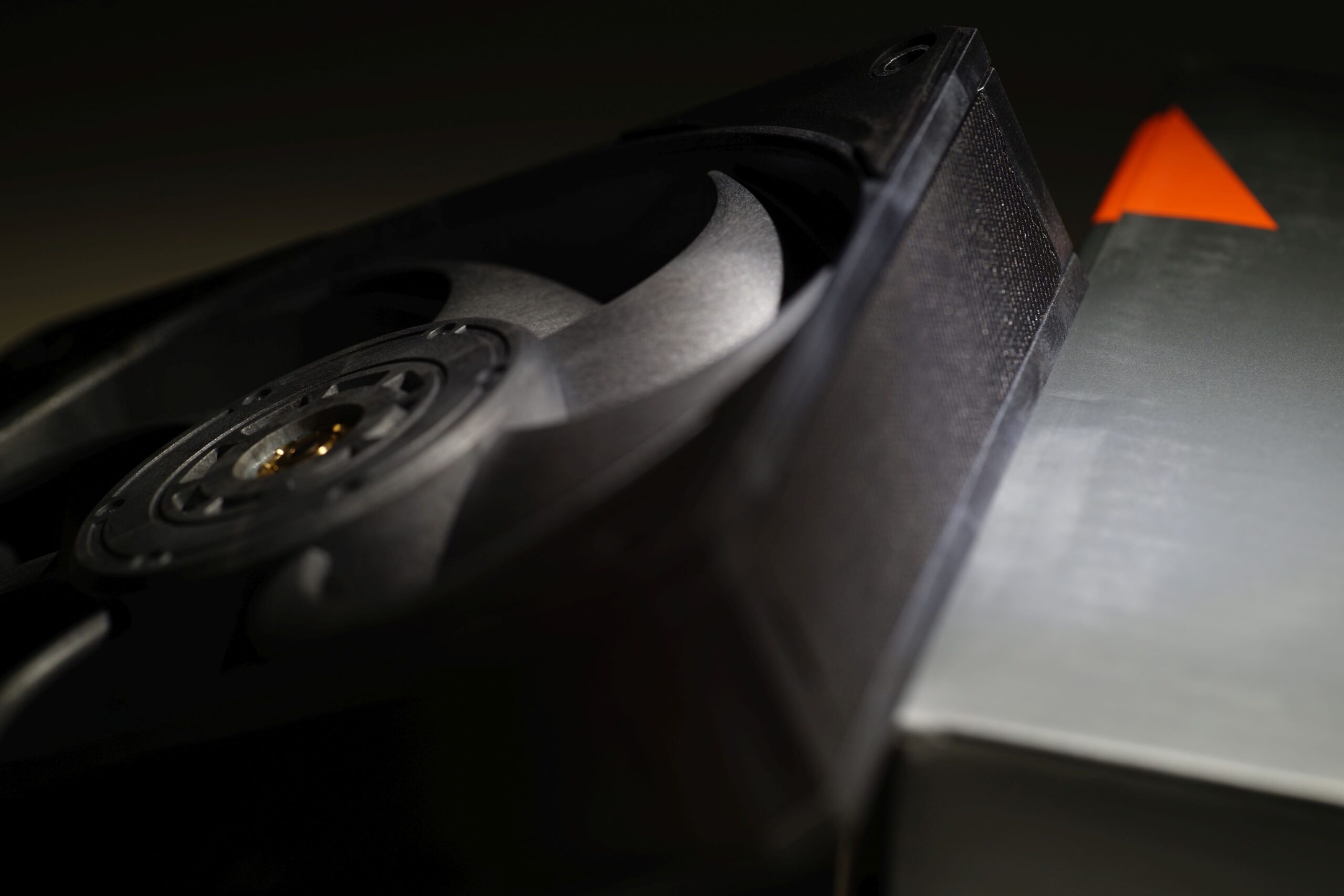
We can state that, regardless of noise levels (indeed very high at maximum), the CPS PCCooler F9 R120 is the highest airflow fan in the 30 mm-and-below profile category. Yes, even the Phanteks T30 comes out “worse” here. However, if your priority is the highest possible airflow at low noise, the picture changes—and it’s not such a happy one, especially with obstacles. That will become clearer in the detailed analysis.
Evaluation
At maximum speeds, the airflow (and cooling performance) of the F9 R120 fan is often exceptionally high. Whether without obstacles, through a grille or on radiators (thin or thick), the results are strong.
After normalizing for lower noise levels, we’re still looking at a high performer—but it falls slightly short of the absolute best. While these are still excellent results, the Phanteks T30, and several other competitors, will often be the more attractive choice. That’s important to make clear. And this applies to lower speeds. At higher speeds—which many other fans cannot reach—the F9 R120 pulls ahead. But that advantage comes at the cost of more noise.
If quiet operation is not your priority and cooling performance comes first, then yes—this fan is a very good choice. In terms of long-term reliability, it could even prove the better pick over the Phanteks T30. That’s impossible to confirm in short-term testing. What we can say is that the F9 R120’s impeller hub is truly robust—arguably more than it needs to be—and this overengineering slightly hurts its airflow-to-noise efficiency.
Performance on a plastic filter is weak, and part of that can be attributed to the fact that noise levels rise significantly—more so than with other designs. With some distance from the filter, this may not hold true, and in relative rankings, the CPS PCCooler could climb higher. In the test scenario we use, however, it ends up near the bottom. In such conditions, cooling efficiency is not optimal—but the fan’s strengths lie elsewhere. Most notably, in high-speed operation, the F9 R120 finds few, if any, challengers—even beating the Phanteks T30. Yes, only at high speed, and with no regard for noise. And that noise is higher than average for the CPS PCCooler.
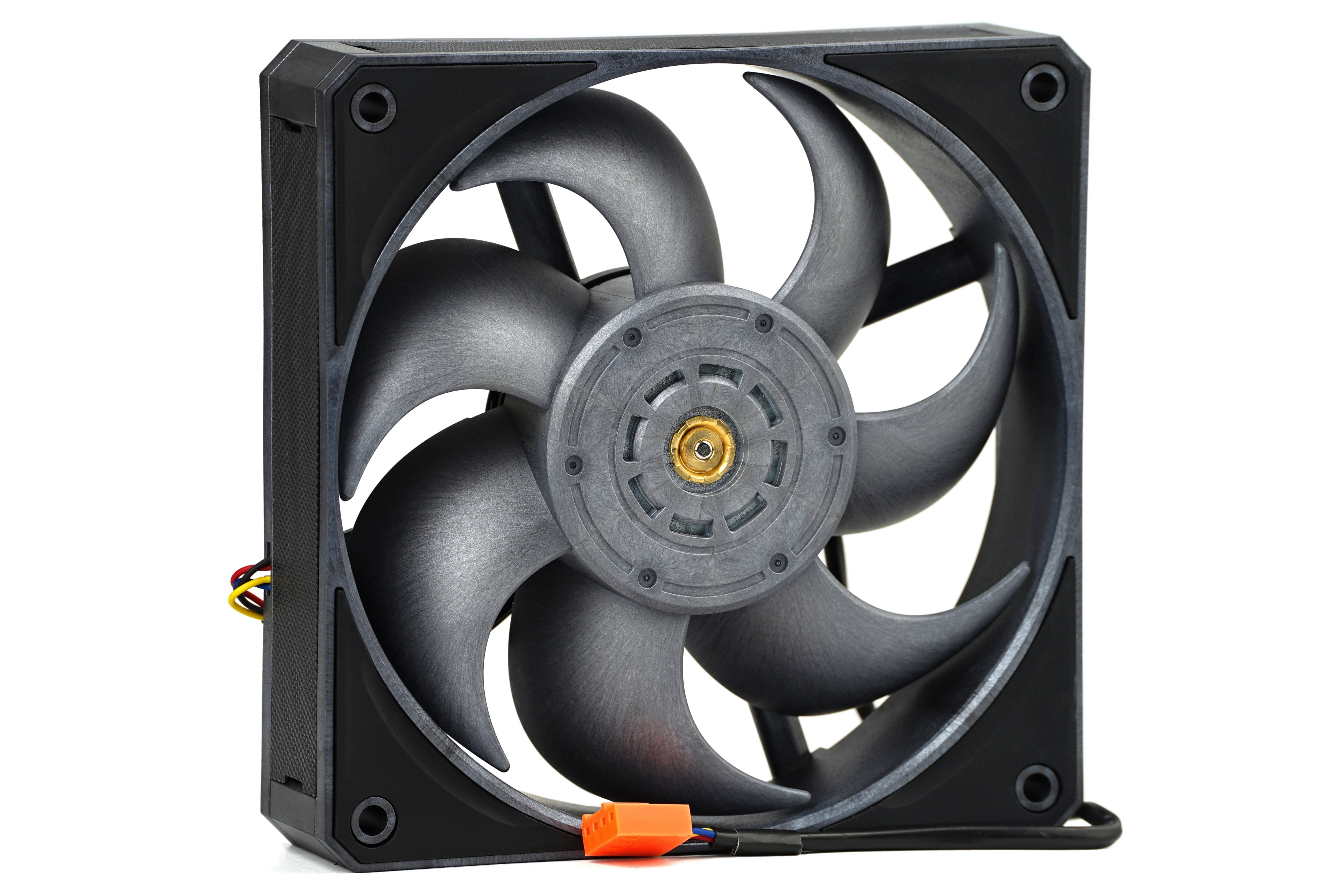
Vibration levels are relatively low even at maximum airflow, helped by the design of the relatively short blades. The tips show very little flex or wobble, and their high stiffness—thanks to LCP construction—naturally plays a part in this.
While in many respects this is an appealing alternative to the Phanteks T30 (and even to models like the Arctic S12038-4K), we’d often describe it as more of a “second option.” In such a competitive database as we have for 120 mm fans, any newcomer faces a tough battle. Without some of the top competitors, the F9 R120 would certainly look more attractive—but even as it stands, its appeal is not in question. It’s an excellent fan for many scenarios. Whether it’s the right choice for your specific use case, however, is something only you can decide. However, it should be noted that this is primarily an industrial fan intended for environments that benefit from its consistently above-standard airflow (even through obstacles, thanks to its high static pressure) and overall robust build.
English translation and edit by Jozef Dudáš
| CPS PCCooler F9 R120 |
| + Suitable for every usage... |
| + Cooling efficiency (airflow/pressure per unit of noise) at a very high level |
| + Very high airflow across various obstacles at maximum speed |
| + Above-average pleasant acoustic profile... |
| + ... with low to negligible vibrations except at very high speeds |
| + Very wide speed range |
| + Practically silent bearings and motor (no non-aerodynamic noise) |
| + Extremely powerful motor (~15 W) |
| + Robust build |
| + Likely to offer very long lifespan |
| - Weaker airflow through the tested plastic filter |
| - Relatively less favorable price-to-performance/airflow ratio |
| - No passive mode support; does not stop at low PWM duty cycle |
| Approximate retail price: 45 EUR |


Hi,
I don’t understand the chart Motor Power 12v 100% PWM and Fan power draw max speed.
Should they be the same watts?
One says 5.41 watts the other 15.23 watts do they rally draw that much power?
Thanks
See chapter 11, it’s explained there. 😉
https://www.hwcooling.net/en/cps-pccooler-f9-r120-rising-to-the-top-with-30-mm-of-thickness-review/11/
Yes, thank you! 🙂
In one case (Motor Power), the higher value appears because the motor, due to braking, has to overcome significantly greater resistance than it does during regular operation at 12 V or 100% PWM control (which are effectively the same). The motor power measurements are meant to illustrate the difference between the best and worst scenarios in terms of friction the fan must overcome. The operating power consumption of an older fan will be higher because friction increases over time with use—and it’s good to know how far the motor’s capabilities extend. 🙂
while we’re at it, 😉
It would probably be appropriate for manufacturers to limit max.motor power to 12W, cause many 4-pin fan headers on motherboards have max. current of only 1A, right?
…or what is your opinion on it? 😛