
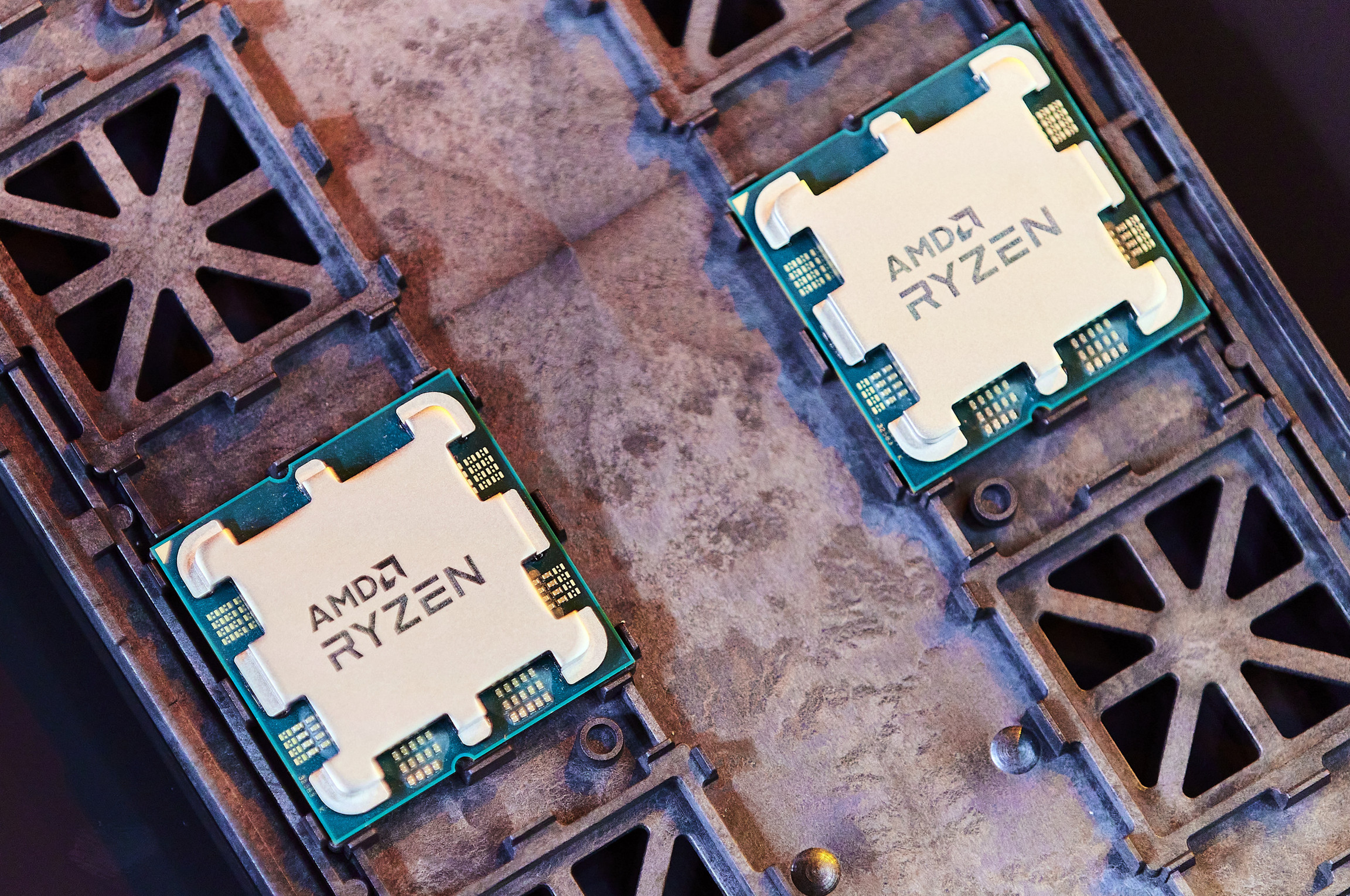
It’s been nearly two years since AMD’s Zen 5 architecture launched (in late July and early August 2024) and time is ripe for a successor—especially given how far competitors such as Qualcomm’s Snapdragon X2 Elite and Apple’s M5 have advanced in the meantime. AMD’s answer in the form of the Zen 6 architecture is now finally getting closer—the company has announced the ramp up of production, which could signal a launch later this year.
This information comes from an official source: AMD itself issued a press release about the milestone. The company announced yesterday that the “production ramp” of 6th‑generation Epyc (9006) “Venice” processors has begun. This means that the previous small‑scale pilot manufacturing—used to produce engineering and qualification samples—is now expanding into full‑scale volume production. This does not necessarily indicate an imminent launch; the ramp‑up phase takes time, and processors must still go through all stages of manufacturing, testing, and logistics. Companies also typically spend some time building up inventory before launch to ensure sufficient stock at launch.
According to AMD, Epyc Venice is a 2 nm product (using TSMC’s 2 nm process), and based on what we know, these are server processors built on the Zen 6 architecture. Zen 6 core will be shared between Epyc and Ryzen processors (and the CPU core dies may even be identical, though they could theoretically differ). Unfortunately, this announcement does not directly confirm that the Ryzen generation based on Zen 6 is at a similarly advanced stage.
AMD states that the product entering production is a 256‑core Epyc Venice. These CPUs are expected to use 32‑core Zen 6 dies with the “dense” configuration of the cores—a compact core variant that reduces die area in exchange for lower achievable clock speeds. Chiplets with 32 dense cores are not planned to be used in desktop (or notebook) Ryzen processors. Those will instead use chiplets with classic “large” Zen 6 cores capable of higher clock speeds, with a maximum of 12 cores per chiplet.
According to AMD, the 256‑core Epyc with dense cores is the first “HPC” product to enter production on TSMC’s 2 nm process—which means a CPU or GPU intended for high‑performance computing, such as supercomputers but also more broadly high-performance servers. This implies it is not the first 2 nm chip overall; that distinction likely belongs to something else (perhaps Apple’s next‑generation chips).
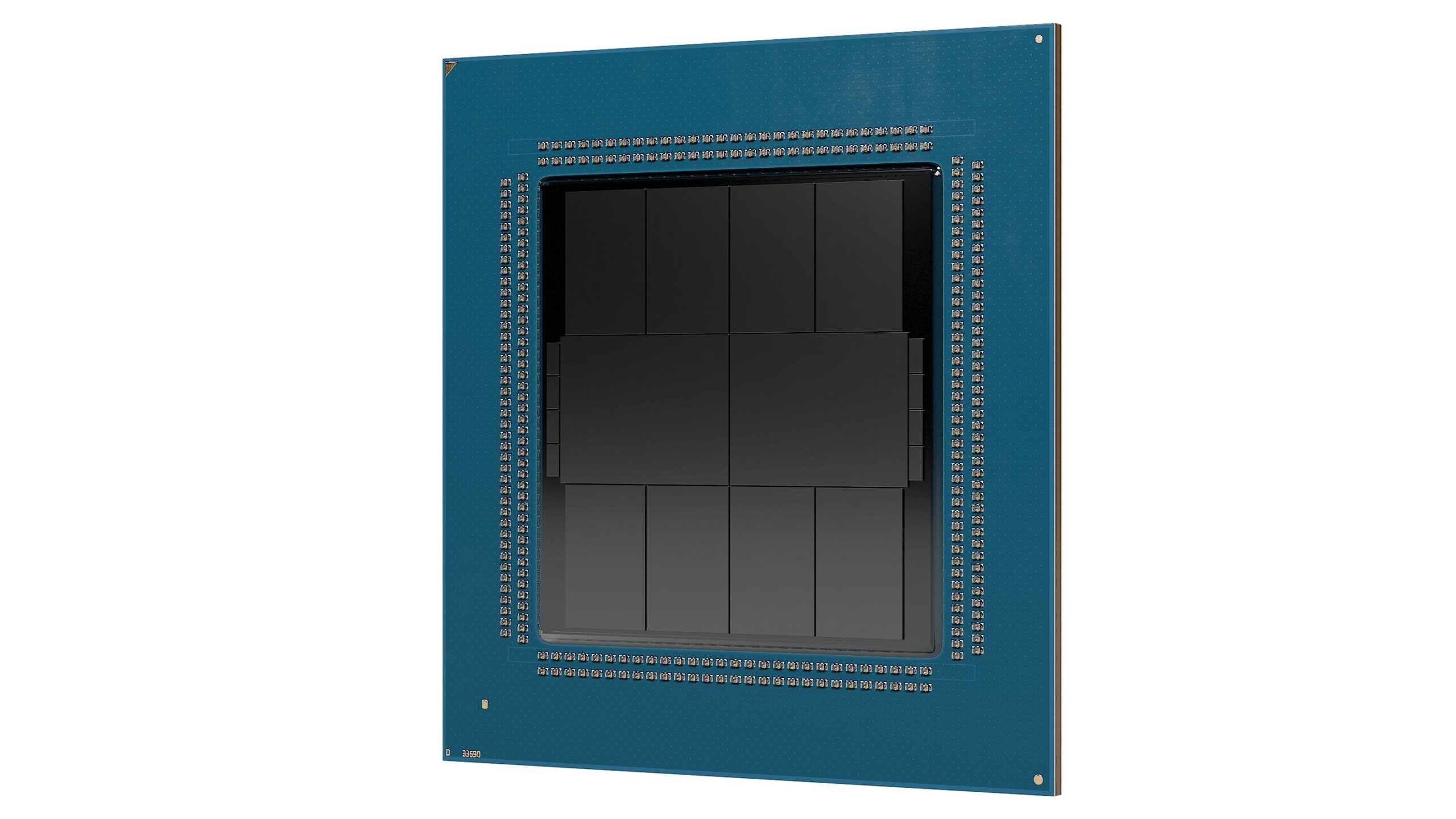
AMD does not state whether the classic Zen 6 variant has also entered mass production (server CPUs with classic Zen 6 cores are expected to top out at 96 cores, which would be less headline‑grabbing for an announcement), or whether its launch is coming later compared to the dense variant. In servers, high‑core‑count processors using the dense architecture are likely the priority, so AMD may have focused on preparing those chiplets first.
The Ryzen launch may therefore be further away than this announcement might suggest. It’s important to note that beyond the CPU chiplets—which may be shared between Epyc and Ryzen CPUs—the Zen 6 desktop launch also depends on the readiness of the IO die, which will be new in this generation. That component may not yet be ready, and the desktop launch could be held back by it. However, since the IO die will be manufactured on a less advanced process, one can hope it has been prepared ahead of time and won’t become a launch blocker.
Based on current reports, Ryzen processors with Zen 6 cores could arrive in the autumn, possibly in Q4 2026. However, some reports even place the launch in 2027. If the release were planned for autumn, AMD might show a demo or reveal some details at Computex in a few days, though the product getting officially announced with a set launch date at this point is unlikely. Still, it would be nice if AMD at least shared an approximate launch window.
2nm Epyc Verano to switch to mobile memory, following Nvidia’s example
An interesting development is that alongside Venice, AMD is preparing another server processor variant built on the 2 nm process that is apparently another member of the Zen 6 family: the Epyc processors codenamed Verano. We originally assumed these processors would be Zen 7‑based, which turned out to be an incorrect estimate.

In reality, Verano is a server processor with Zen 6 cores that will use LPDDR memory instead of DDR5—the type normally used in laptops. This could improve energy efficiency as well as bandwidth. Nvidia already uses this memory type in their server CPUs (Grace and Vera). This represents a significant shift in server‑platform design. AMD will likely manufacture processors for both memory types in parallel (and later also DDR6), but the adoption of LPDDR5X and LPDDR6 in servers could further accelerate the spread of these memory types into personal computers.
Source: AMD
English translation and edit by Jozef Dudáš
⠀