


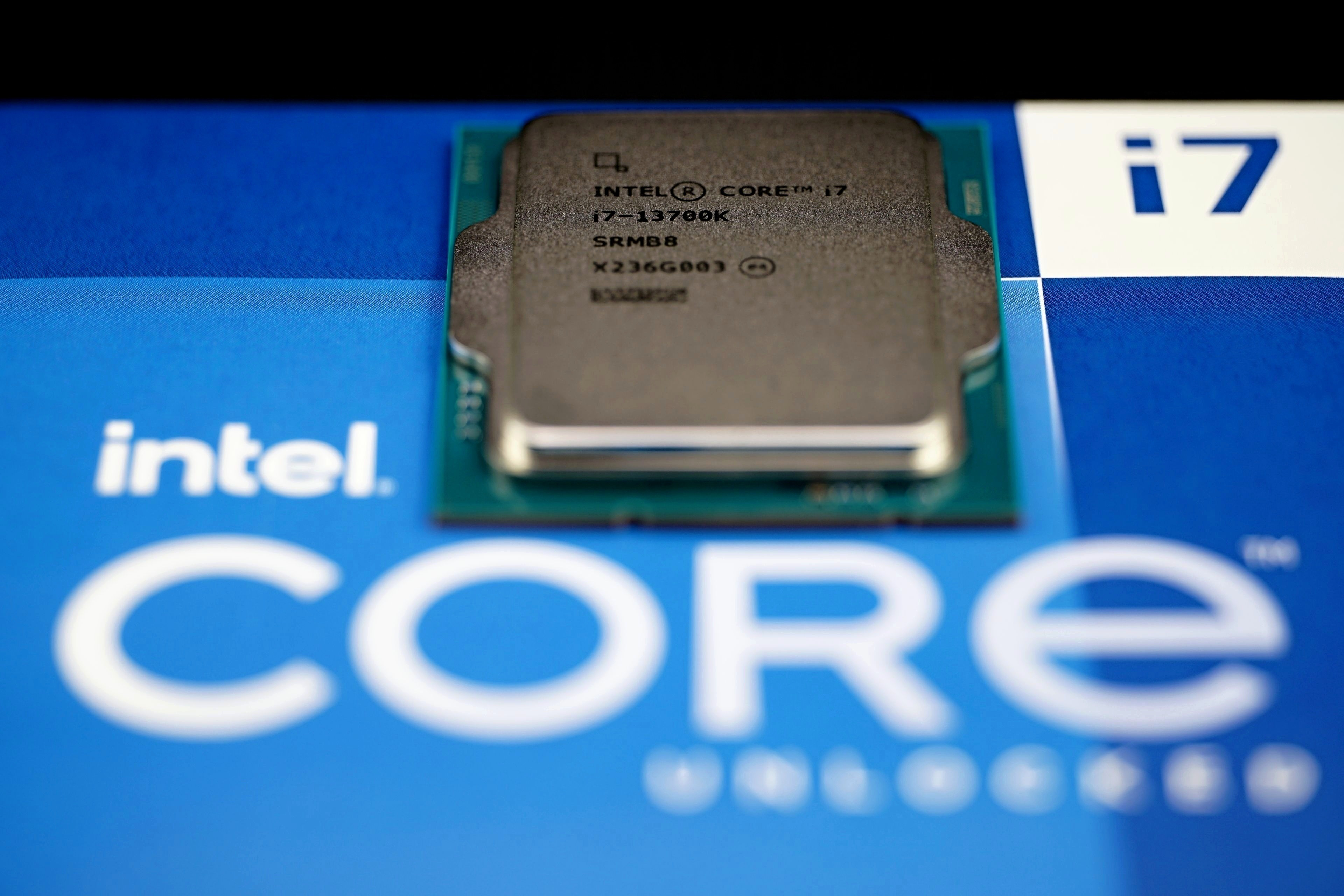
We’ve previously covered Bartlett Lake, a remarkable CPU generation from Intel that resembles something of a parallel Plan B product. While Arrow Lake is being sold for the desktop LGA 1954 socket, Bartlett Lake continues to use LGA 1700, is manufactured on a 7nm process, and supports DDR4 memory. Most notably, it drops E-Cores entirely and consists solely of “big” cores. We’ve now learned the complete specs of these chips.
Bartlett Lake processors are apparently not yet on the broad market, but as with many similar leaks about upcoming Intel products, their models and specifications have now been disclosed by leaker Jaykihn. According to them, the processors will be released in 125W versions (identified by PQE in the name), 65W versions (PE in the name), and reduced 45W TDP variants (PTE in the name). As usual, however, TDP likely does not reflect typical power consumption under multi-threaded load—the real-world figure will be higher (the so-called maximum turbo power), though we do not have those numbers.
All models support ECC memory and retain integrated GPUs inherited from Raptor Lake processors, featuring up to 256 shaders (32 EUs) based on the Xe LP architecture, while some models are cut down to 192 shaders (24 EUs). Unfortunately, current information indicates that the processors will not provide AVX-512 instructions, even though the hardware units for them may still be present in silicon.
The top Bartlett Lake model features 12 cores and 12 threads with 36 MB of L3 cache. The 125W version (Core 9 273PQE) has a base clock speed of 3.4 GHz, can boost to 5.3 GHz under all-core load, and reaches up to 5.9 GHz in single-threaded or lightly threaded applications. The 65W model (273PE) has a maximum boost of 5.7 GHz and a maximum all-core boost of 5.2 GHz. The low-power 45W 12-core (273PTE) reaches up to 5.5 GHz single-threaded and 4.6 GHz across all cores, but performance will likely be heavily constrained by maximum turbo power (and notably, its base clock speed is just 1.4 GHz).
Ten-core models (Core 7) with 20 threads will also be available, carrying 33 MB of L3 cache. These variants run at lower clock speeds. In the 125W category (model 253PE), the base is 3.5 GHz and the all-core boost remains 5.3 GHz, but maximum single-thread boost drops to 5.7 GHz. In the 65W category, the processor offers a 5.2 GHz all-core boost and a 5.5 GHz maximum single-thread boost. The 45W model peaks at 5.4 GHz, with a 4.6 GHz all-core boost and a 1.8 GHz base clock speed—again, full performance will be significantly limited by power constraints.
Bartlett Lake -S P-Core Only SKUs pic.twitter.com/2KmJh6UgdW
— Jaykihn (@jaykihn0) February 20, 2026
Intel is also preparing multiple eight-core models (which will carry Core 5 name) under the Bartlett Lake lineup. The 125W eight-core 223PQE delivers clock speeds of 4.0–5.5 GHz (5.3 GHz all-core boost). The 65W (223PE) and 45W (223PTE) variants operate at 2.9–5.4 GHz and 2.3–5.4 GHz respectively, both with a maximum all-core boost of 4.8 GHz.
However, the 65W and 45W categories will also offer a secondary, lower-cost eight-core models designated 213PE and 213PTE. These will differ by 200 MHz lower clock speeds and cut down integrated GPUs with only 192 shaders. These cheapest models will also lack vPro capabilities support, which is otherwise available across the rest of the lineup..
| Model | Cores/threads | CPU clock speed | All-core boost | Max. boost | L3 cache | TDP | GPU | vPro |
| Core 9 273PQE | 12/24 | 3,4 GHz | 5,3 GHz | 5,9 GHz | 36 MB | 125 W | 32 EU | Yes |
| Core 7 253PQE | 10/20 | 3,5 GHz | 5,3 GHz | 5,7 GHz | 33 MB | 125 W | 32 EU | Yes |
| Core 5 223PQE | 8/16 | 4,0 GHz | 5,3 GHz | 5,5 GHz | 24 MB | 125 W | 32 EU | Yes |
| Model | Cores/threads | CPU clock speed | All-core boost | Max. boost | L3 cache | TDP | GPU | vPro |
| Core 9 273PE | 12/24 | 2,3 GHz | 5,2 GHz | 5,7 GHz | 36 MB | 65 W | 32 EU | Yes |
| Core 7 253PE | 10/20 | 2,5 GHz | 5,2 GHz | 5,5 GHz | 33 MB | 65 W | 32 EU | Yes |
| Core 5 223PE | 8/16 | 2,9 GHz | 4,8 GHz | 5,4 GHz | 24 MB | 65 W | 32 EU | Yes |
| Core 5 213PE | 8/16 | 2,7 GHz | 4,6 GHz | 5,2 GHz | 24 MB | 65 W | 24 EU | No |
| Model | Cores/threads | CPU clock speed | All-core boost | Max. boost | L3 cache | TDP | GPU | vPro |
| Core 9 273PTE | 12/24 | 1,4 GHz | 4,6 GHz | 5,5 GHz | 36 MB | 65 W | 32 EU | Yes |
| Core 7 253PTE | 10/20 | 1,4 GHz | 4,6 GHz | 5,4 GHz | 33 MB | 65 W | 32 EU | Yes |
| Core 5 223PTE | 8/16 | 2,3 GHz | 4,8 GHz | 5,4 GHz | 24 MB | 65 W | 32 EU | Yes |
| Core 5 213PTE | 8/16 | 2,1 GHz | 4,6 GHz | 5,2 GHz | 24 MB | 65 W | 24 EU | No |
Still not planned for desktop
Unfortunately, Jaykihn continues to report that there is no information suggesting Intel plans a desktop version of these processors. They are still considered products for the embedded market and networking applications (falling under the NEX division). As such, these chips will likely function only in selected motherboards (presumably with the W680 chipset) and may not be readily available even if you own such a board.
There is perhaps a small chance that some motherboard vendors could add unofficial or semi-official support on their standard desktop boards, but availability would remain an issue. The fact that these are not standard desktop CPUs also means they will be locked for overclocking. Moreover, being sold over embedded distribution channels they are unlikely to carry attractive prices—so even if you managed to find one at a store, you might find it’s ultimately not what you were looking for.
Intel itself could introduce a standard PC version of these processors if it sees DDR4 memory prices keep tracking substantially lower than DDR5. Even then, pricing could remain a sticking point—from Intel’s perspective, it would make little sense to launch a new processor priced significantly below existing 14th-generation Core “Raptor Lake” models, which also satisfy the demand for a DDR4 platform. You might therefore end up paying the same for a 12-core part as you currently would for an 8+16-core Core i9 model…
English translation and edit by Jozef Dudáš
⠀

