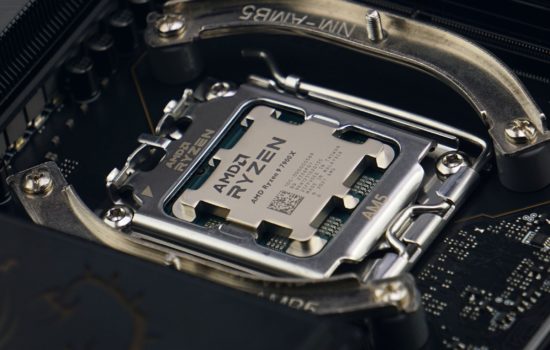
Recently, we’ve covered upcoming Intel products a lot, but here’s something for the fans of AMD looking forward to its next-generation Zen 6 architecture processors to be excited about. In addition to new cores and a newly designed I/O chiplet—expected to deliver better memory performance and lower power consumption—Zen 6 is primarily set to increase core counts.And the actual core counts for various individual models has now surfaced online.
Current AMD desktop processors top out at 16 cores, with lower-tier variants offering 12, 8, and 6 Zen 4 or Zen 5 cores. But how will Zen 6 change that? We already know that for desktop processors using the AM5 socket, the next generation (codenamed Olympic Ridge) will feature a 24-core top SKU configuration. A single CPU chiplet will contain 12 Zen 6 cores with 48 MB of L3 cache, and AMD will once again leverage the option of equipping processors with either one or two chiplets. Until now, however, it was unclear how the higher maximum core count would translate into more affordable models.
Low-cost single-CCD processors will offer more variants than before
According to the leaker nicknamed HXL, AMD will likely use the increased core count per chiplet to expand the number of configurations it offers—from today’s four to seven. In the lower-cost segment featuring single-chiplet processors—which AMD will probably position as its highest-volume products—there will be a model with 12 cores (a fully enabled chiplet). By disabling some cores, AMD will also produce 6-core, 8-core, and now also 10-core models. A 10-core configuration is not currently part of the lineup. The processors will support SMT, meaning thread counts will always be double the number of cores.
It appears AMD will firmly stick to even-numbered core counts. Some may have expected the entry-level model to move up and start at eight cores, but that unfortunately hasn’t happened, and six-core models will continue to exist. Whether this is a drawback will depend on pricing. If these six-core CPUs are priced very low—similar to today’s discounted six-core models from the Ryzen 7000 generation—and the eight-core SKU takes over the current price point of more expensive six-core chips such as the Ryzen 5 9600X, it wouldn’t be a bad outcome (in the Zen 6 generation, the six-core part could even carry a Ryzen 3 branding, in theory). It also remains to be seen whether AMD will price the 10-core and 12-core models similarly to today’s eight-core processors, or closer to the current dual-chiplet Ryzen 9 9900X.
Three Ryzen 9 tiers?
Processors with two CPU chiplets will also see their lineup expand, but only to three variants in total—potentially all branded as Ryzen 9, though this remains unconfirmed. Notably, there will be no dual-chiplet 12-core model as exists today—AMD will not take advantage of producing such a model in parallel with a single-chiplet version (which would differ by offering 2× 48 MB of L3 cache). The lowest configuration here will be a 16-core CPU, built from two chiplets with 8 cores each.
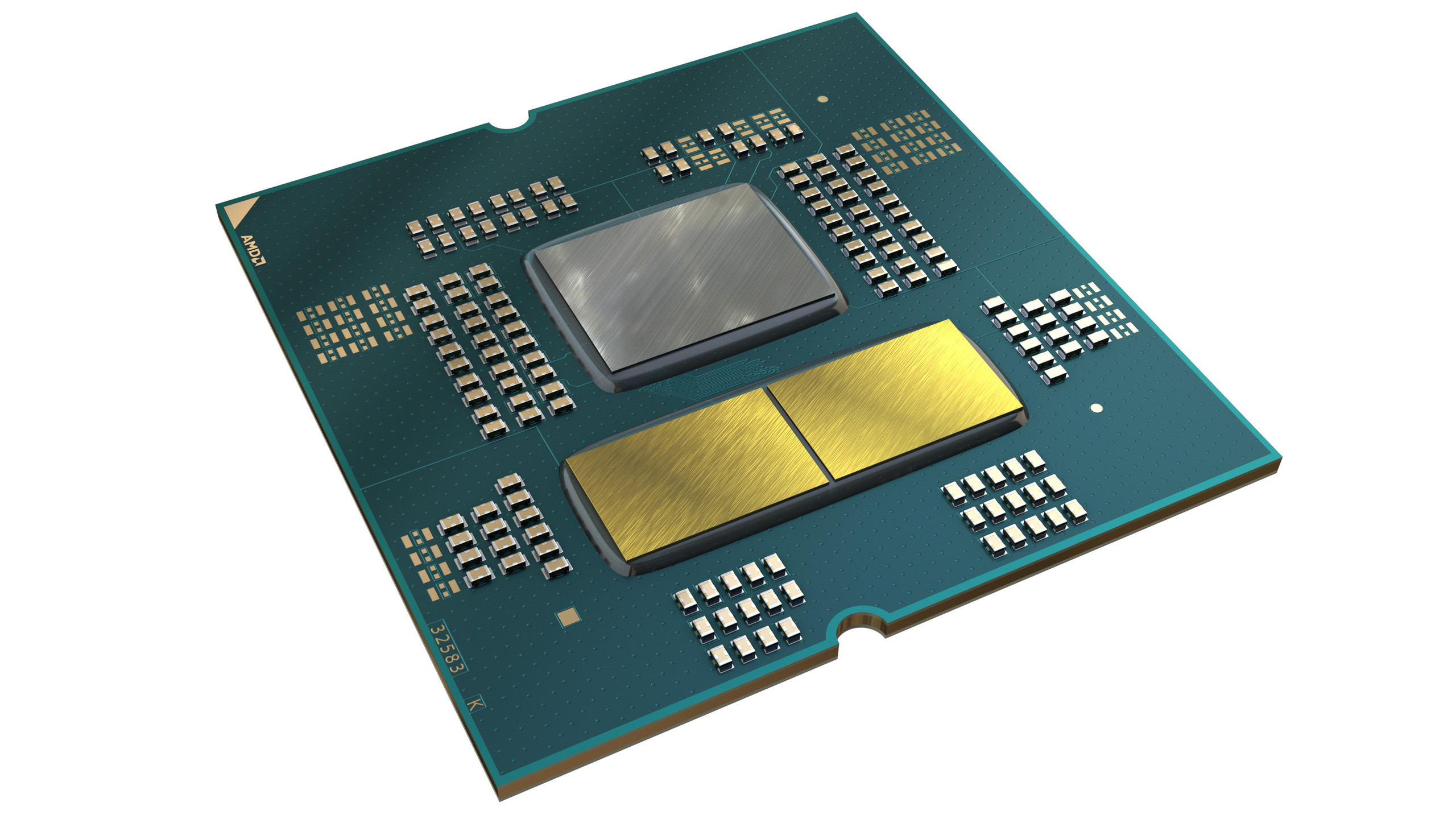
Here as well, a new variant will feature 10 cores per chiplet, resulting in a 20-core processor with 40 threads in the dual-chiplet configuration. And naturally, there will also be a model with the full core count enabled on both chiplets—the flagship 24-core processor with 48 threads.
The key question is pricing—whether a 16-core Zen 6 part will cost the same as today’s Ryzen 9 9950X, with the 20-core and 24-core models occupying higher tiers above it that have not existed until now (for example, prices could reach 1,000 USD and 1,200 USD). Ideally, we would prefer to see the 24-core model take over the current 16-core price position, with the 20-core variant slightly below it. Or at least a compromise where only the 24-core SKU carries a higher price, while the 20-core model lands where the Ryzen 9 9950X sits today. We’ll see how generous AMD chooses to be. Much will likely depend on how successful Intel’s Nova Lake processors prove to be, as they are also expected to deliver high multi-threaded performance via two CPU chiplets. In the high-core-count segment, competition could intensify, potentially pushing AMD toward more aggressive pricing.
Ryzen 10000?
These processors are expected to launch in the second half of the year—possibly October or November, although a more precise date is not yet known. They will continue to use the AM5 socket, and existing motherboards will support upgrades once they receive a UEFI firmware (BIOS) update. However, the final branding remains unclear—whether they will be called Ryzen 10000 or something else (Ryzen AI 500X, for example…).
Sources: HXL, VideoCardz
English translation and edit by Jozef Dudáš
⠀