A relatively small PC case with the potential to attract the masses. That is, if you care at least a little about colorful lighting. Otherwise, we’re still in the “midi-tower” class, where price accessibility also plays a role. Within BeQuiet!’s product lines, this case still belongs to the lowest (Pure Base), although it keeps a “higher” standard throughout. There’s nothing that would suggest excessive cuts or visible flaws.
… and internal details of the BeQuiet! Pure Base 501 DX
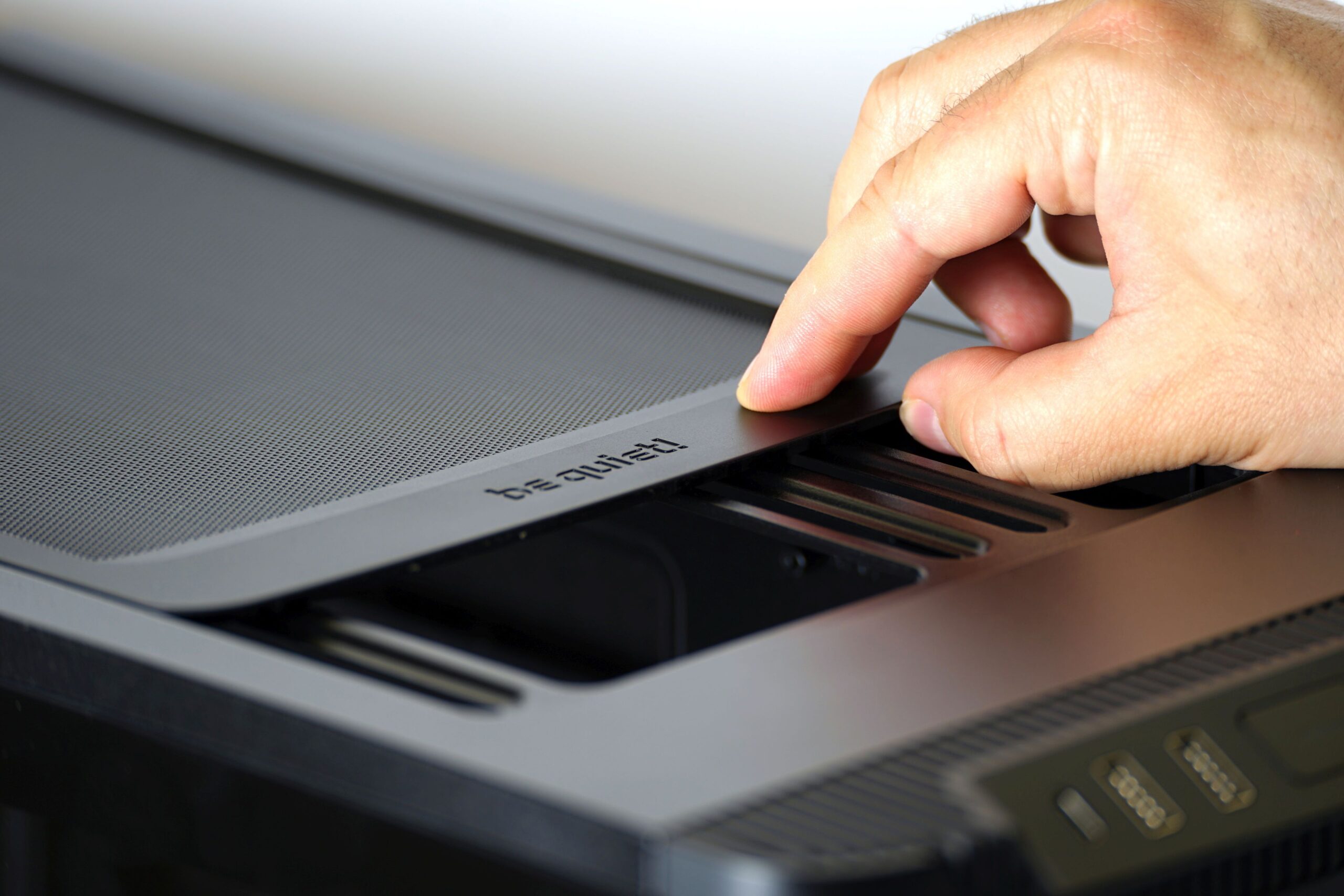
The top mesh panel can be easily removed by pushing it. Its perforation is mainly intended to prevent dust from freely falling into the case when the PC is powered off. However, for installing additional fans – or a radiator – you’ll need to remove it. The radiator is mounted from the top using screws, and only then is the mesh reattached onto those screws that hold the radiator or fans.
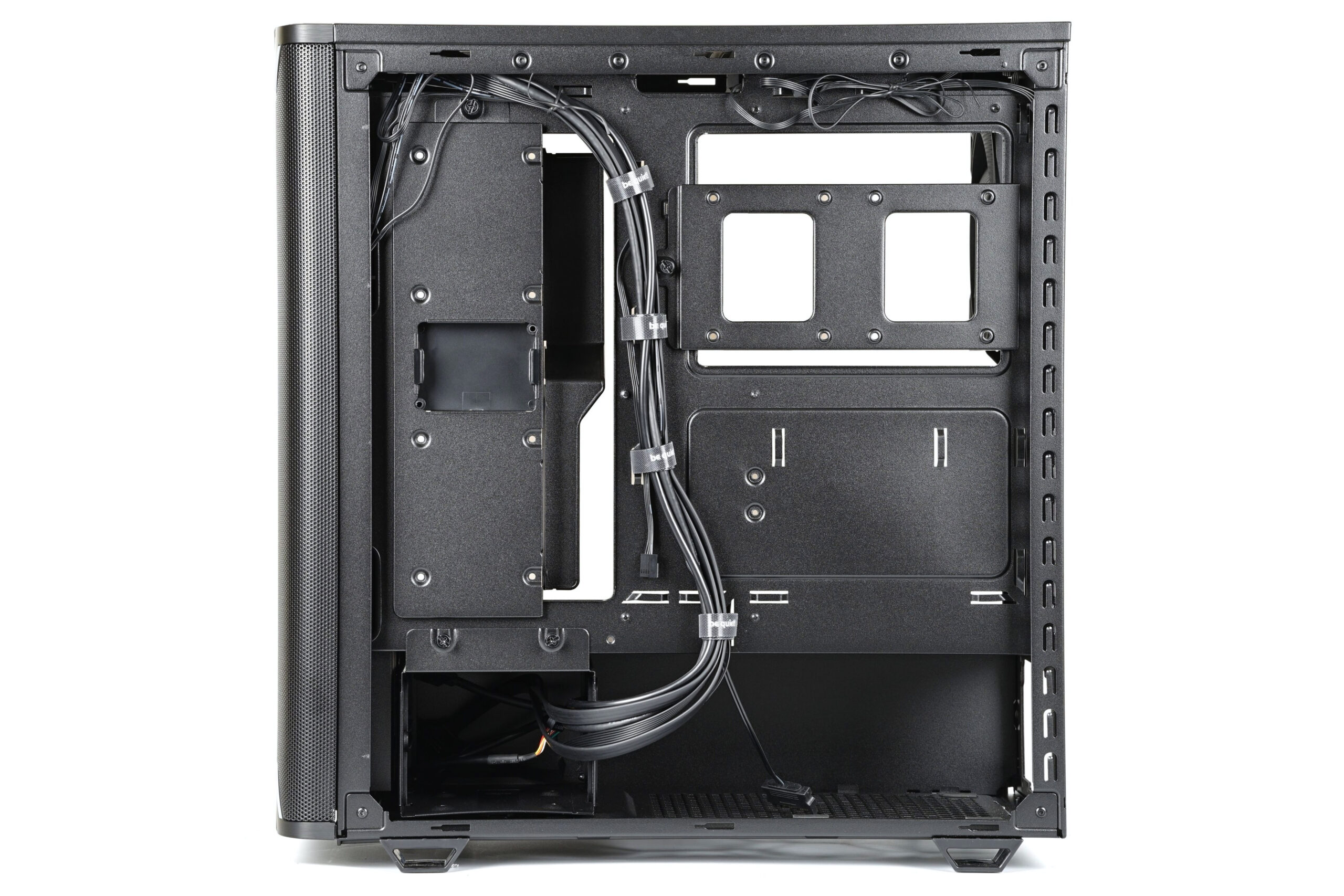
Looking at the case from the front with the side panels removed, we can add that motherboard support goes up to ATX size. Naturally, there are also standoffs for smaller form factors like Micro ATX or Mini-ITX. Some users might also be curious about the thickness of the case panels. It’s solid. Nothing flexes or bends, and everything feels as it should for a case in this price bracket. Yes, within BeQuiet!’s lineup, this is considered “low-end,” but it still maintains a high standard. The sheet metal is about 0.8 mm thick. You might measure more with a caliper, but part of that thickness includes the layer of surface finish applied to the metal.
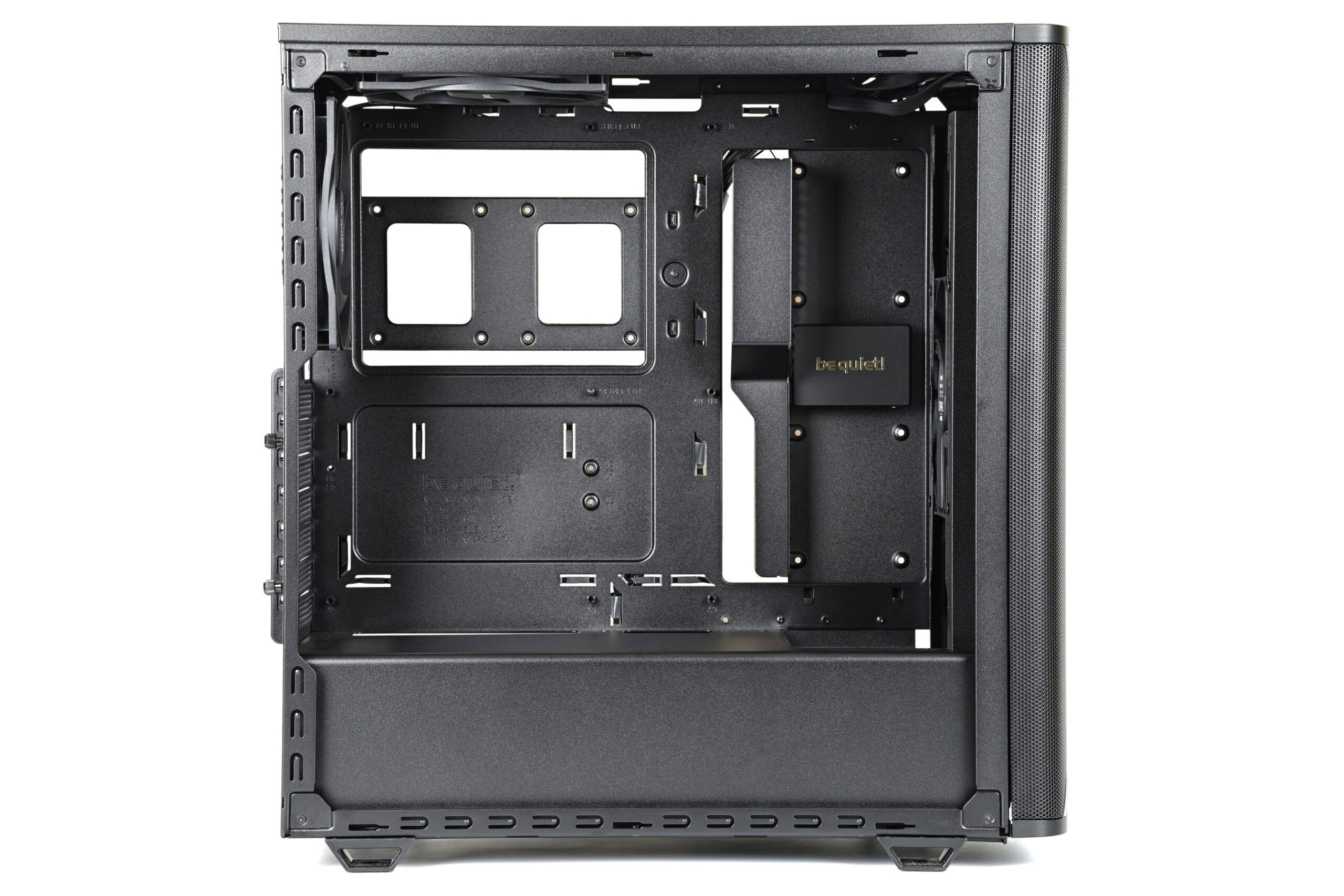
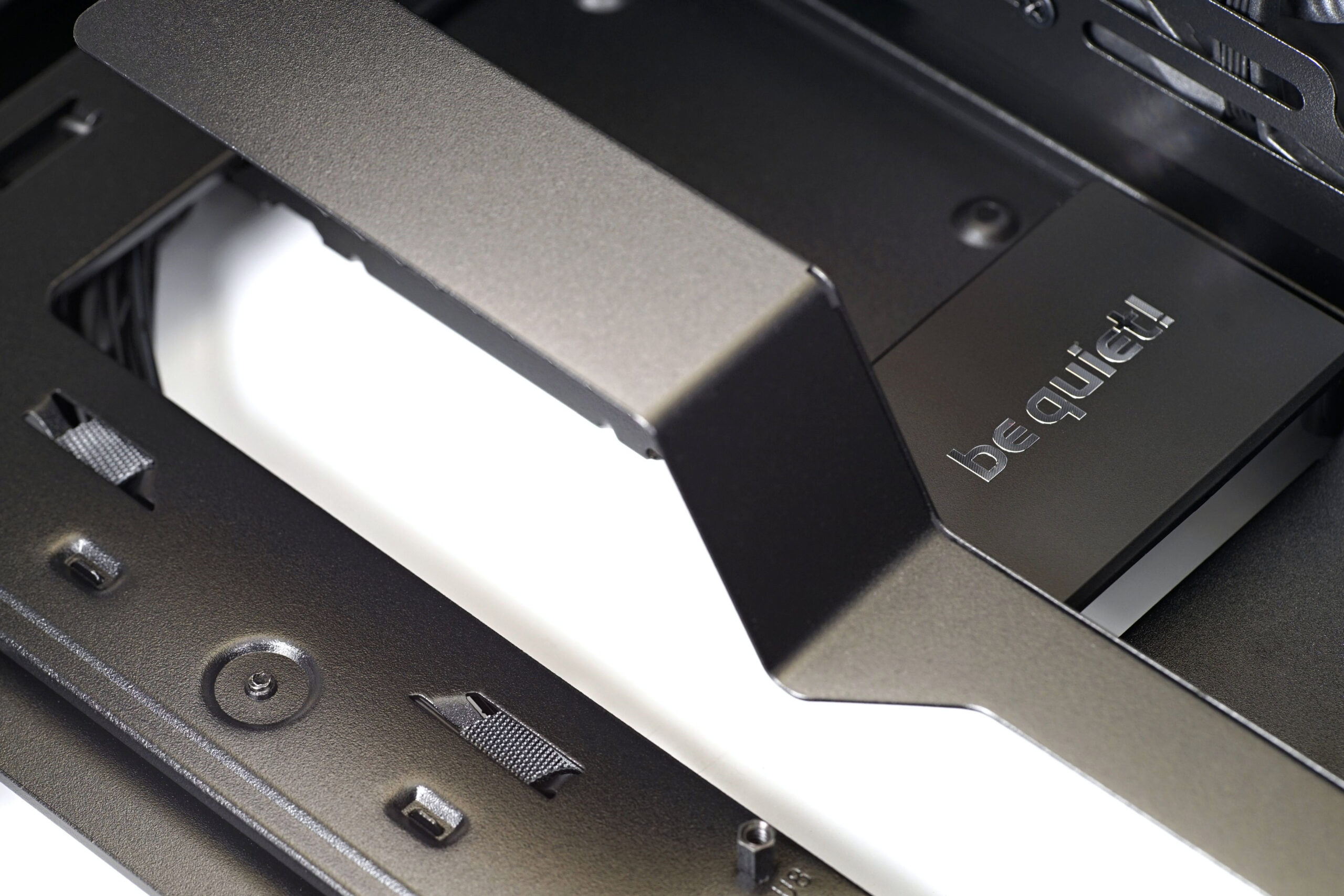
Inside the case, there’s also an effort to partially hide cables with a raised cover in the grommet area. This conceals the cables to some extent – but not completely. It’s worth noting that none of the pass-through holes are rubberized; instead, the case relies on rounded (non-sharp) edges that shouldn’t damage cable bundles or wire insulation. This isn’t unusual for entry-level cases, but yes, it can be seen as a cost-saving measure – which makes sense given the aggressive pricing BeQuiet! is aiming for with the Pure Base 501 DX. Ultimately, it comes down to compromises and personal preferences – what bothers some users might not matter to others.
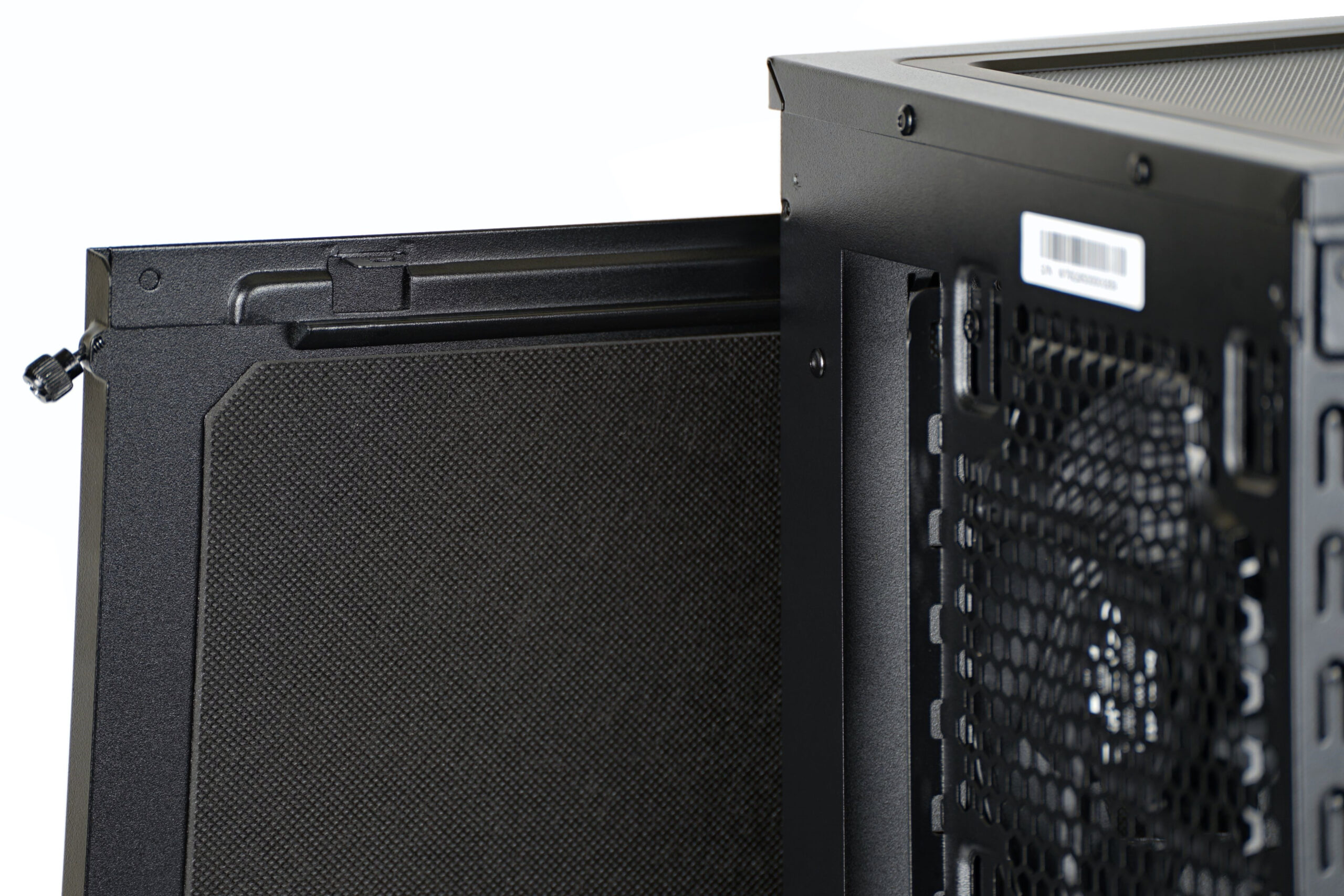
A nice added value is the sound-dampening material applied to the right side panel. This is the side used for installing HDDs, so any noise generated in that area will tend to get absorbed. Additionally, the damping material also reinforces the panel, making it sturdier and resistant to bending.

As for the fans: there are three 140 mm Pure Wings 3 models pre-installed – familiar from standalone tests. One fan is mounted at the intake, and two are at the exhaust. This setup means the case ships with a negative-pressure cooling configuration, which should remain even after installing a radiator on the top panel. Though that’s mostly theoretical, since standard AIO liquid coolers tend to conflict with motherboard components due to space limitations. Simply put, there’s not a lot of room up there.
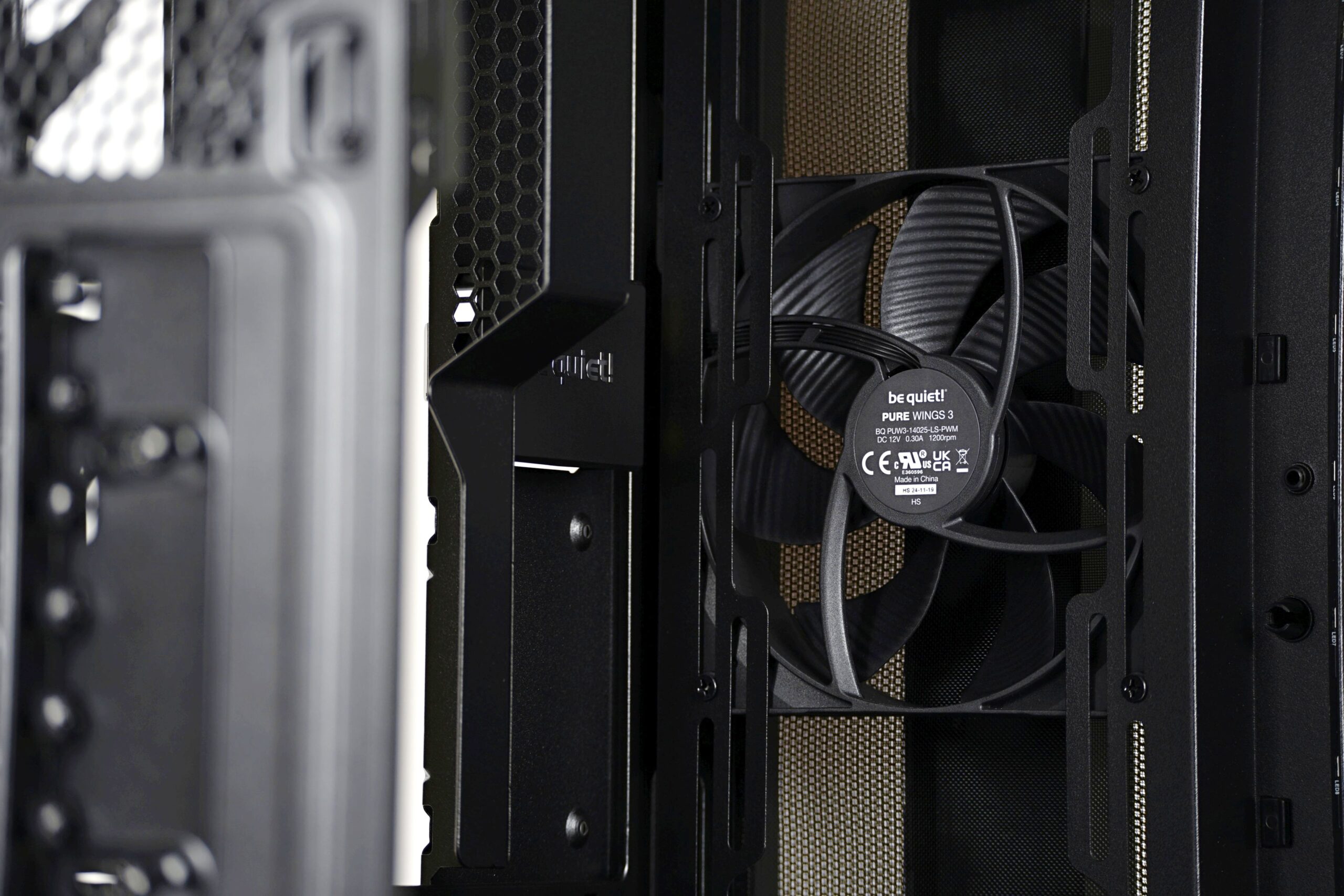
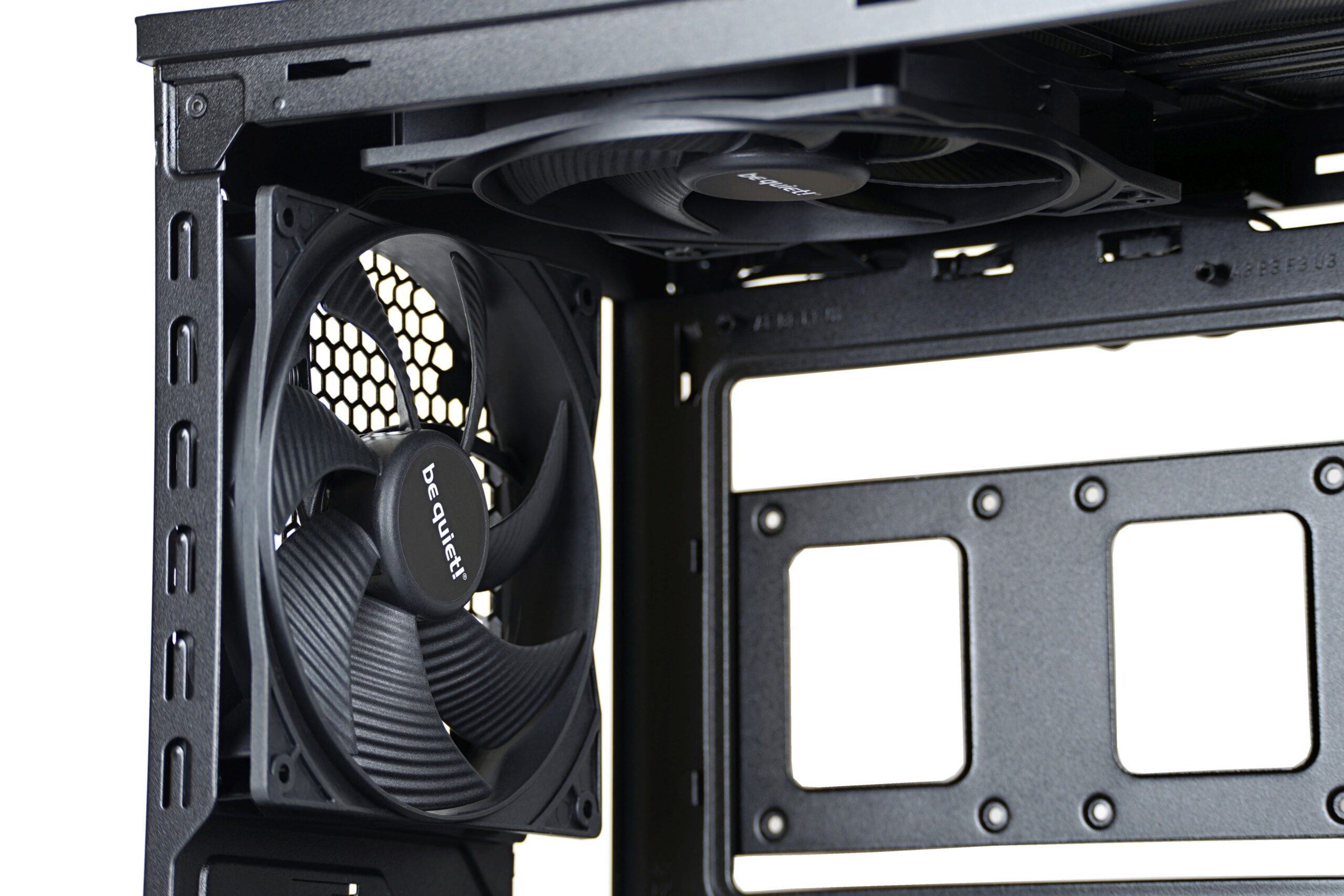
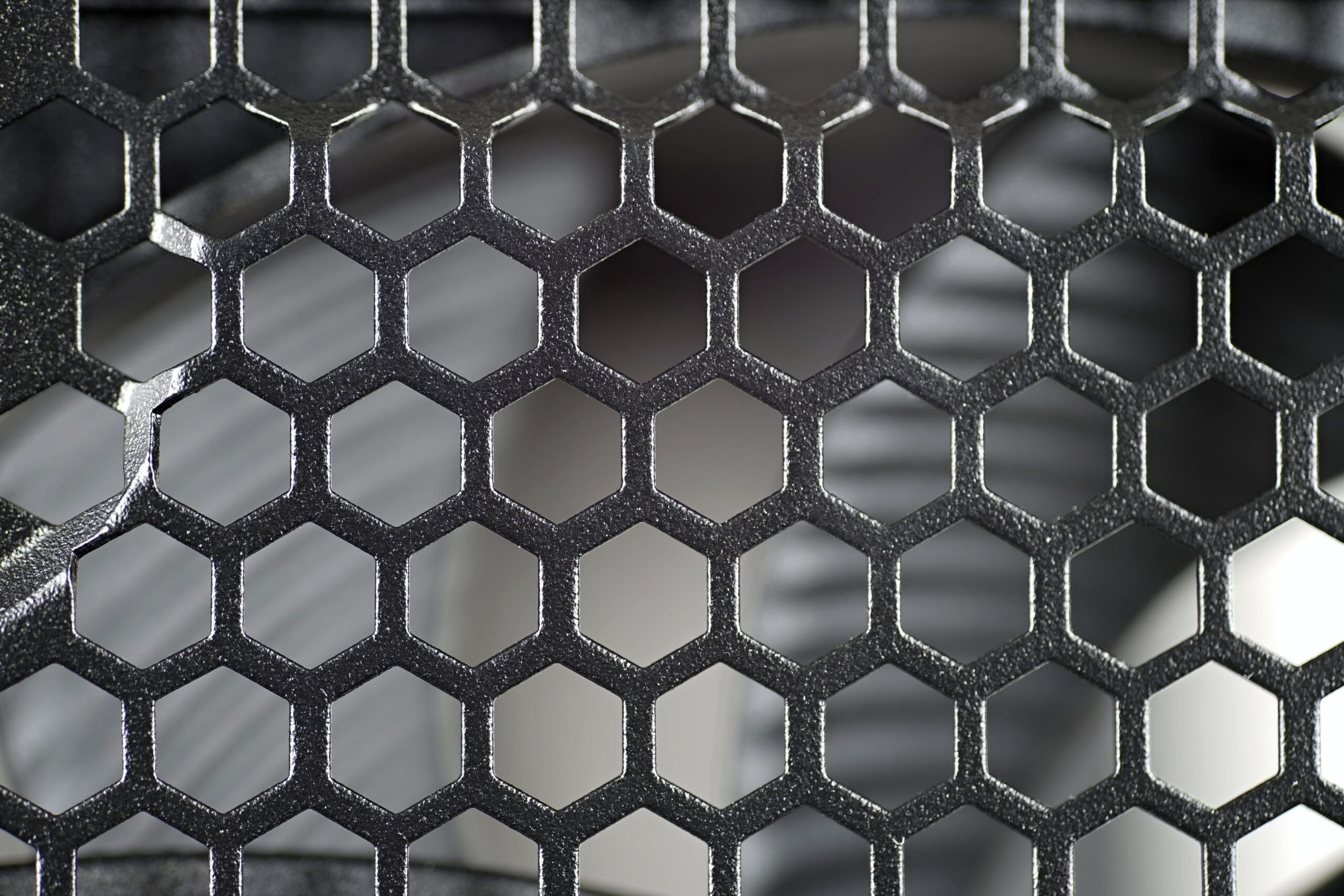
A closer look at the exhaust fan grill (the rear one – the other is on top) shows a hexagonal pattern. The walls are thinner, the open area larger, allowing better airflow through that section.
At the back, the cables from the front panel are nicely structured. Additional cables from the power supply can be routed and secured using Velcro straps. Other than that, there’s not much to comment on. A fan hub isn’t included with the case, so to connect the fans, you’ll either need a splitter or plug each one into a separate system fan header on the motherboard – your choice.