


This is a first – a fan with the leading edges of the impeller blades on the opposite side to normal ones. This is primarily done for a better view of “fans without stator struts” in cases with glass side panels. In addition, such an unconventional design also has quite clear and measurable advantages and disadvantages, also in terms of functional characteristics. Let’s take everything in turn.
Measuring the intensity (and power draw) of lighting
Modern fans often include lighting. This is no longer a “cooling” parameter, but for some users the presence of (A)RGB LEDs is important. Therefore, we also measure how intense this lighting is in our tests. These tests are the only ones that take place externally, outside the wind tunnel.
We record the luminosity of the fans in a chamber with reflective walls. This internal arrangement is important to increase the resolution for us to measure anything at all with lower luminosity fans. But also so that the readings do not blend together and it is obvious which fan is emitting more light and which one less.
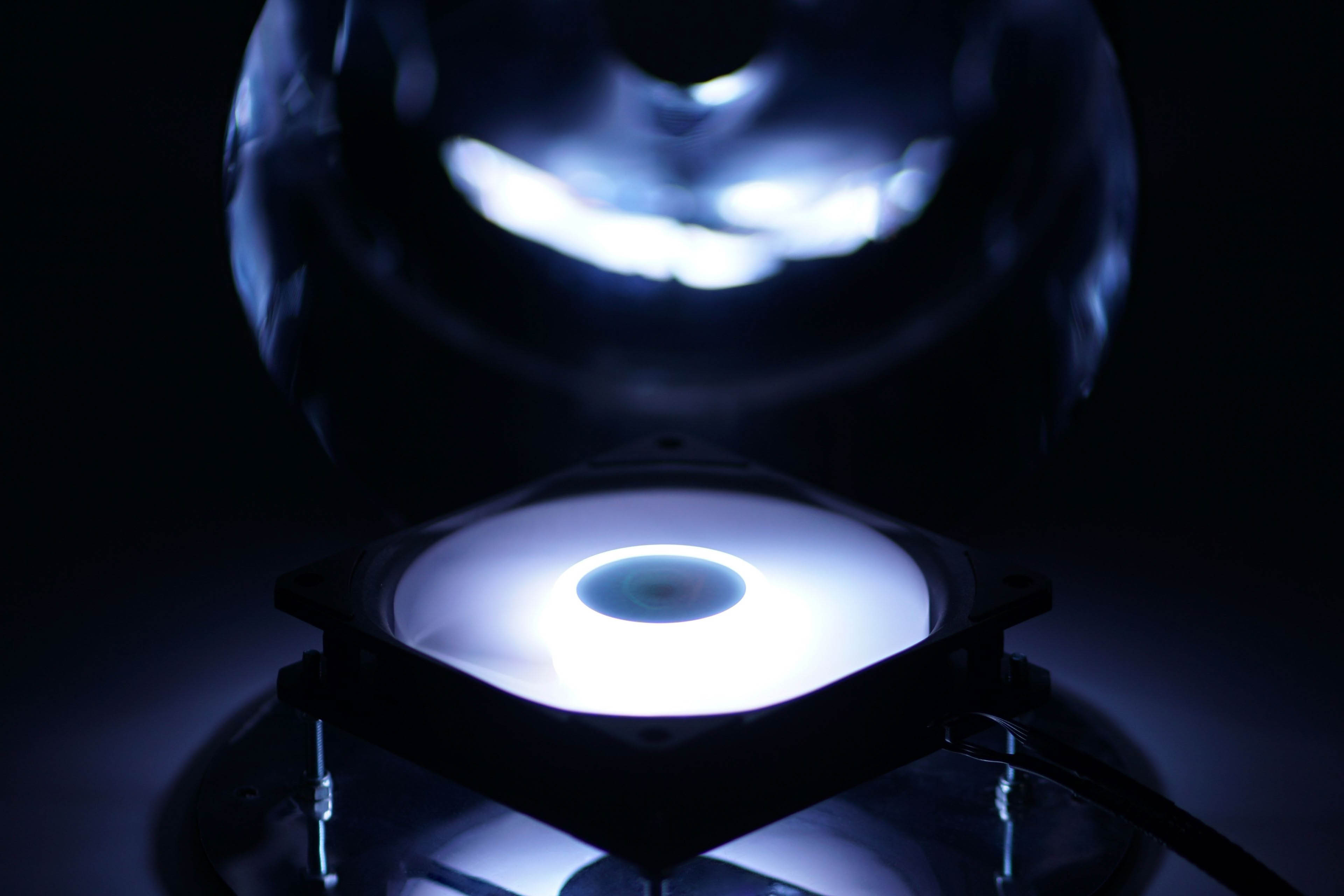
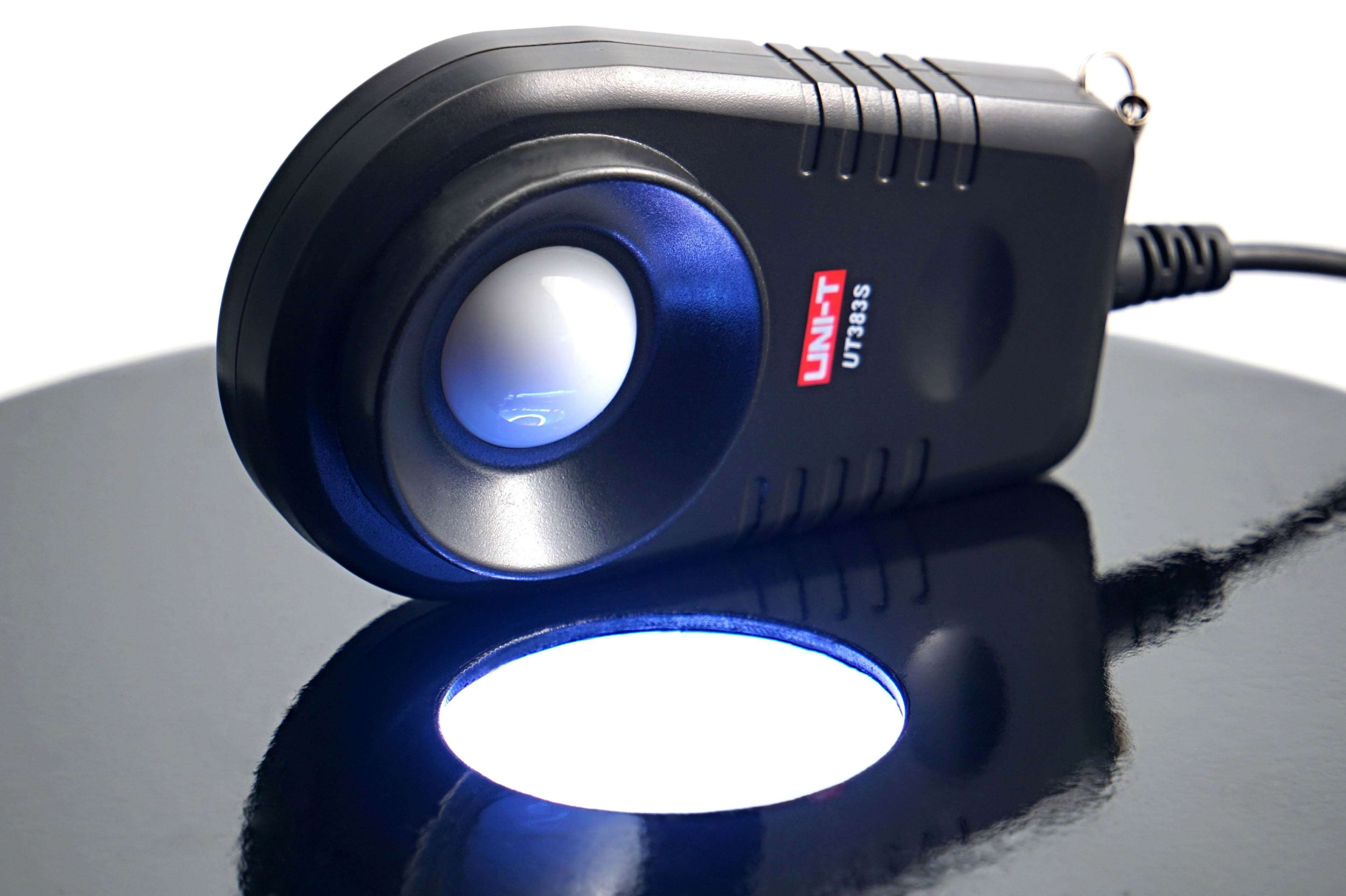
The illumination intensity is measured in the horizontal position of the fan, above which is the lux meter sensor (UNI-T UT383S). This is centered on the illumination intensity sensing chamber.
The illumination is controlled via an IR controller and the hue is set to RGB level 255, 255, 255 (white). We record the brightness at maximum and minimum intensity. According to this, you can easily see if the brightness is high enough, but conversely also if the lower level is low enough for you.
In addition to the brightness intensity, we also measure the power draw that it requires. This is again through the shunt, which is between the Gophert CPS-3205 power supply and the (A)RGB LED driver. After this we get a reading of the lighting power draw. In the graphs we show it separately, but also in sum with the motor power draw as the total maximum fan power.



That’s unexpected results. I would have guessed it performs better on radiators than vs no obstacles, but it’s the opposite!
Is the buzzing noise only present under ~750 RPM, or is it there across the whole speed range? On higher dBA settings, I can still see some of the peaks at 1-2 Khz.
There will probably be some buzzing at higher speeds, but because of the diminishing contribution to the total, in contrast with the aerodynamic noise (which drowns out these sounds) it fades out alongside other, significantly noisier frequencies. The buzzing is, of course, more pronounced at lower speeds (like ~750 rpm), at the limit of minimum rpm. But we don’t have a spectrogram for those. 🙂
Noticeable buzzing noise is present till the 20% of PWM or ~660RPM, have three of those on a 45mm rad :/
I mean buzzing is starting from 20% of PWM and 660RPM, and after 800-900RPM buzzing noise doesn’t bother because airflow noise is louder.
Little correction 🙂
Thank you for sharing your user experience. Yes, the buzzing noise also occurs at higher speeds, and the question is to what extent it is disruptive at which speed compared to the aerodynamic noise. This can be evaluated differently by everyone, as it is subjective.