
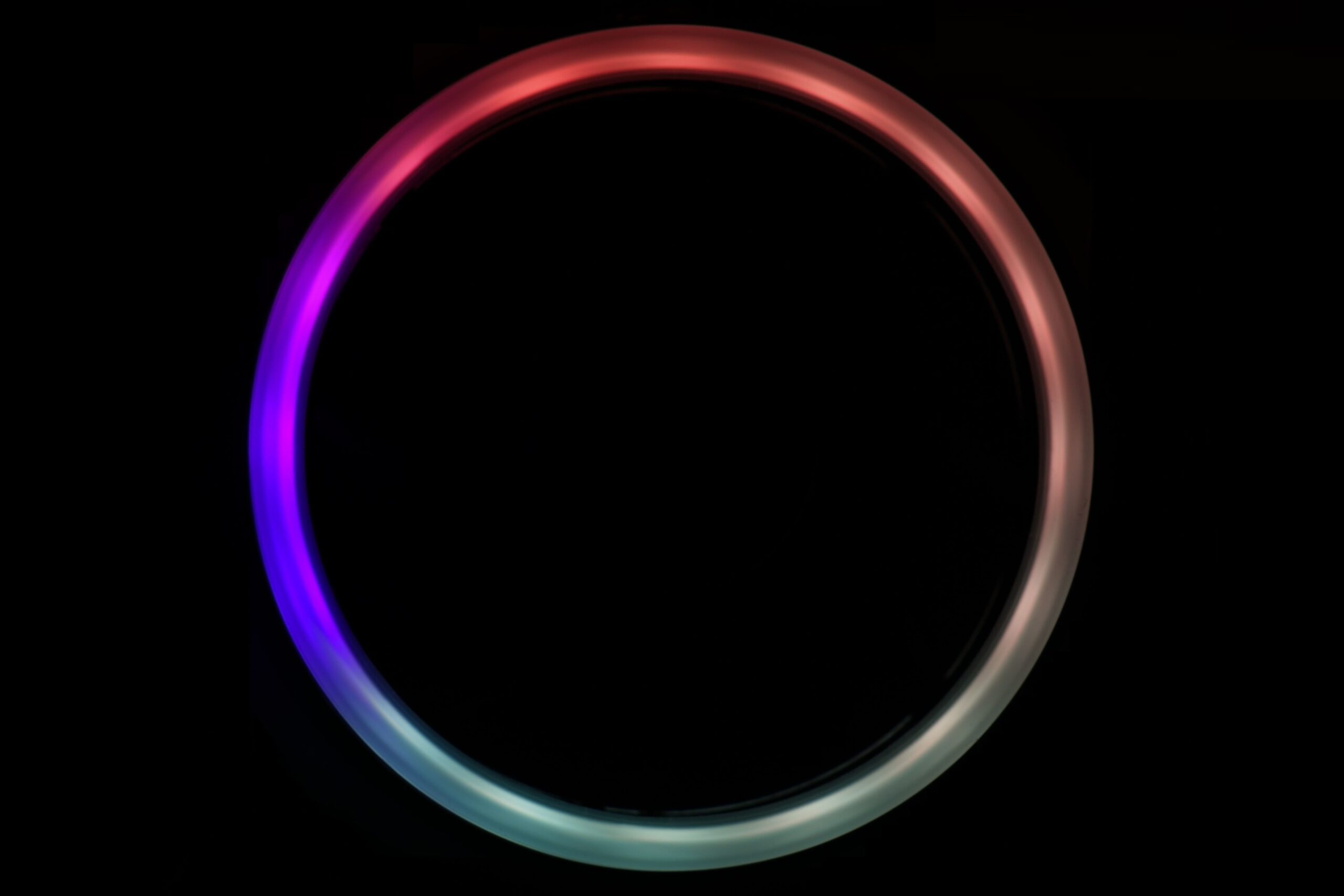
From the models still sold under the SilentiumPC brand, the Corona fans have come a long way. They are still more “showy” than “efficient,” although even in their primary function they don’t fall behind as much as you might expect (even if airflow per unit of noise is lower…). Their loyalty to the ring‑style light guide remains. Together with ARGB LEDs, it frames the fan’s impeller—and it really does look good. What do you think?
Explanatory note: The method for measuring vibration intensity has been previously described in the testing methodology section. Here, we clarify the term “aggregate vibration.” In order to be able to interpret the motion in the three axes (X, Y, Z) as simply as possible, with a single number, we consider the individual axes as vectors and calculate a so-called 3D vector from them. A more detailed account at the level of the individual axes is provided in the next three chapters of this article.
Why is a value sometimes missing for a fan? There can be several reasons. Most commonly, it’s because the fan couldn’t be regulated to the target noise level. Some fans have higher minimum RPM (or they spin slowly but have an excessively noisy motor), or they are simply slower models that can’t reach higher decibel thresholds. Results are also omitted from graphs if the impeller scrapes against the mesh of a nylon filter. In such cases, we classify the combination as incompatible. And of course, a zero in the graphs naturally appears in situations where we record an actual 0.00. This often occurs at extremely low speeds when obstacles are present or during vibration measurements.