


Low price also applies when it comes to the Stratus 140 White ARGB fans. Considering the presence of vivid ARGB lighting, there aren’t many cheaper models in the 140 mm category. Its excellent aerodynamic characteristics are held back by one thing only, and that’s higher vibration levels, and it doesn’t appear to be a “one‑off sample issue”—as usual, our detailed testing is based on multiple units. Still, the trade-off seems to be worth it.
With the Stratus White ARGB, Endorfy adds lighting that this product line previously lacked. The white variant is meant to complement white Arx cases, with which these fans come bundled. Beyond that, they’re also sold individually for users looking for an illuminated fan while keeping acquisition cost as low as possible.
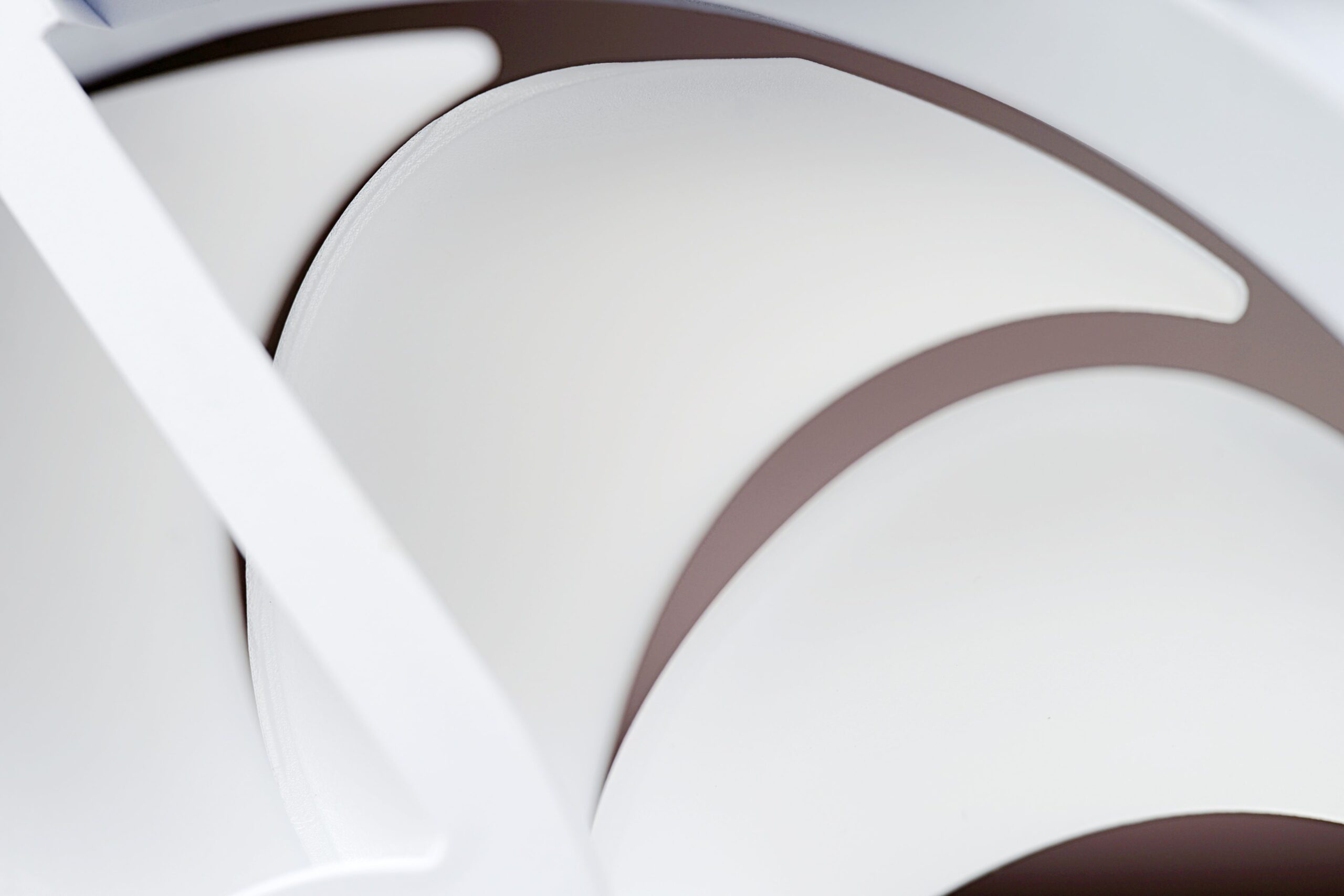
The lighting is modern, using a 3‑pin (ARGB) 5 V connector. The LEDs are placed on the PCB in the center, around the hub perimeter. As a result, brightness is highest in this area and gradually fades toward the blade tips. However, the light spreads through the entire impeller thanks to its milky (likely polycarbonate) material.
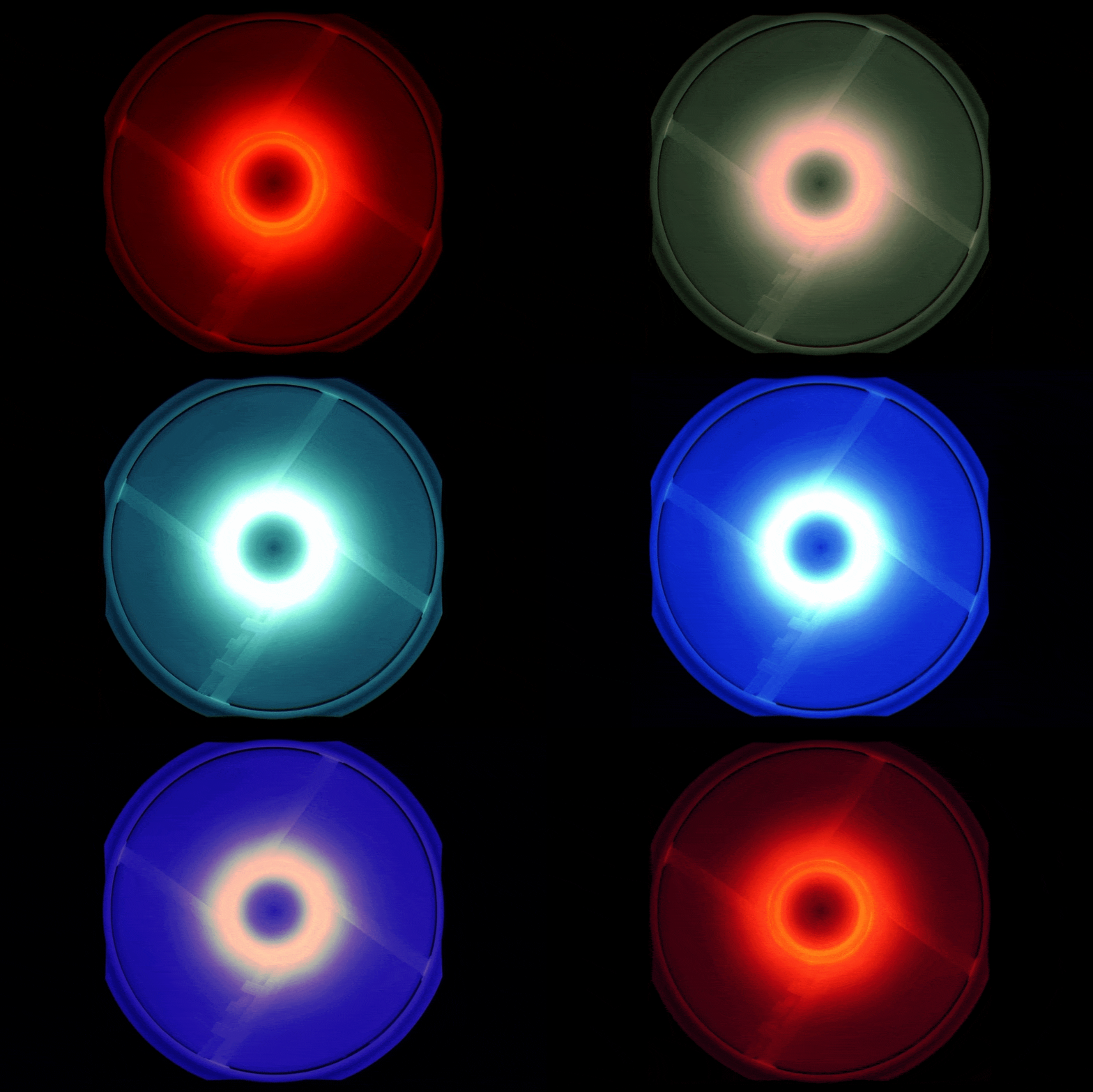
The impeller geometry features strongly curved leading edges, but without the serrations found on fans from the Fluctus series. Based on previous experience, we can already say this shape is aerodynamically efficient.
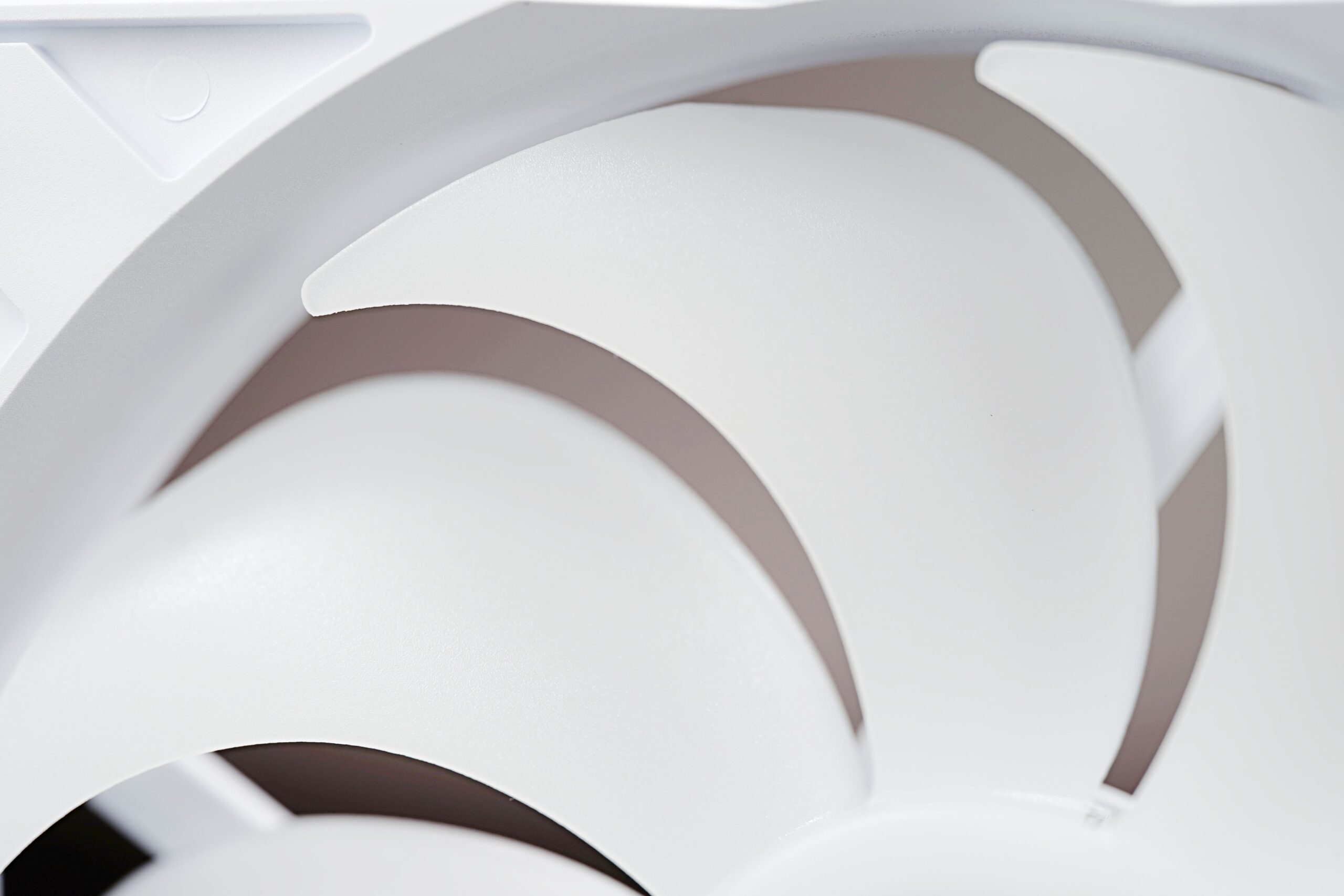
The spacing between blades can be described as medium, and we expect similarly medium static pressure. That means airflow loss through obstacles should also be moderate. This is an estimate—measurements in the following chapters will show the real‑world behavior. We already have some observations from the Stratus 140 PWM, whose “base shape” remains unchanged, as you can see by comparing the photos below with this one.
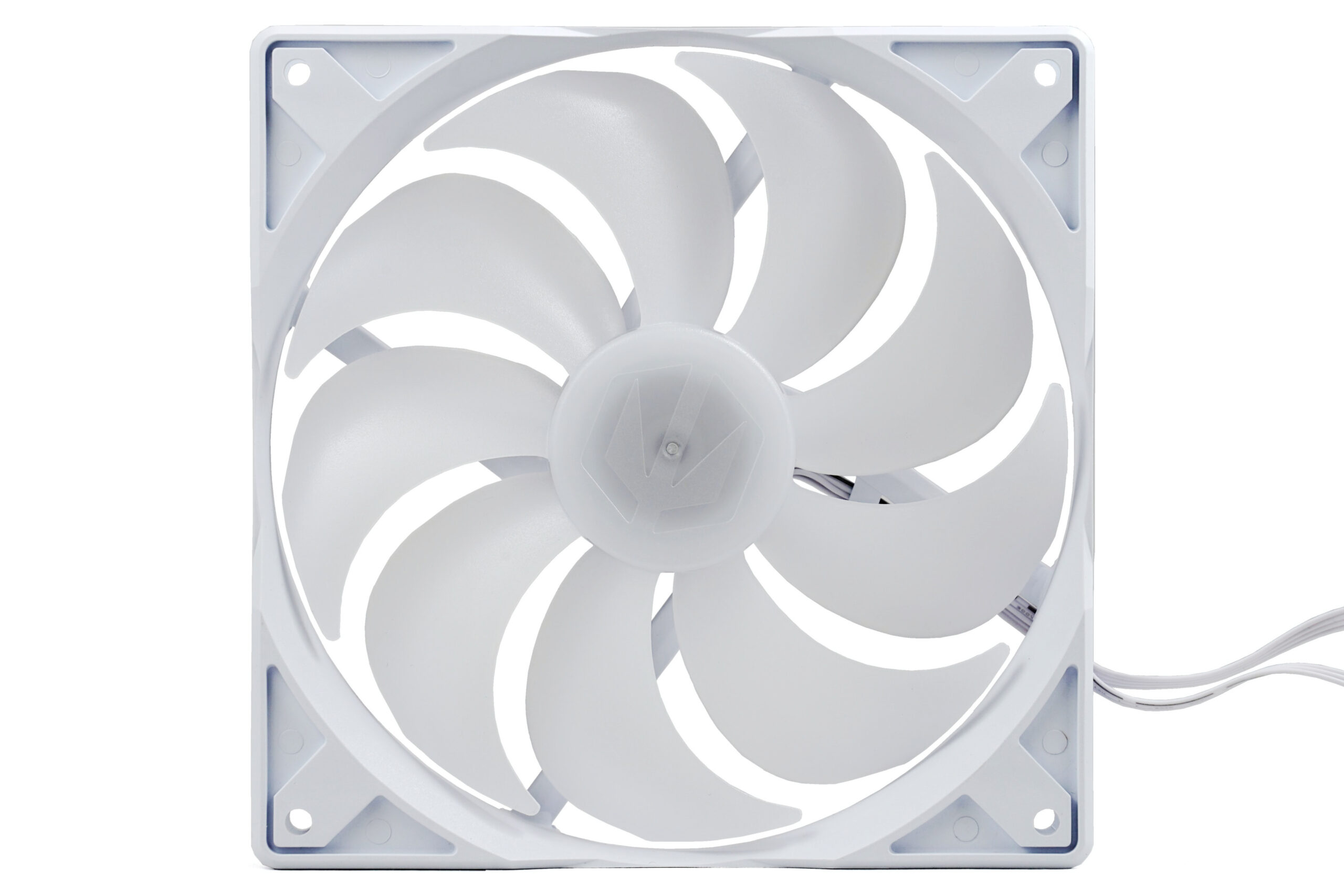
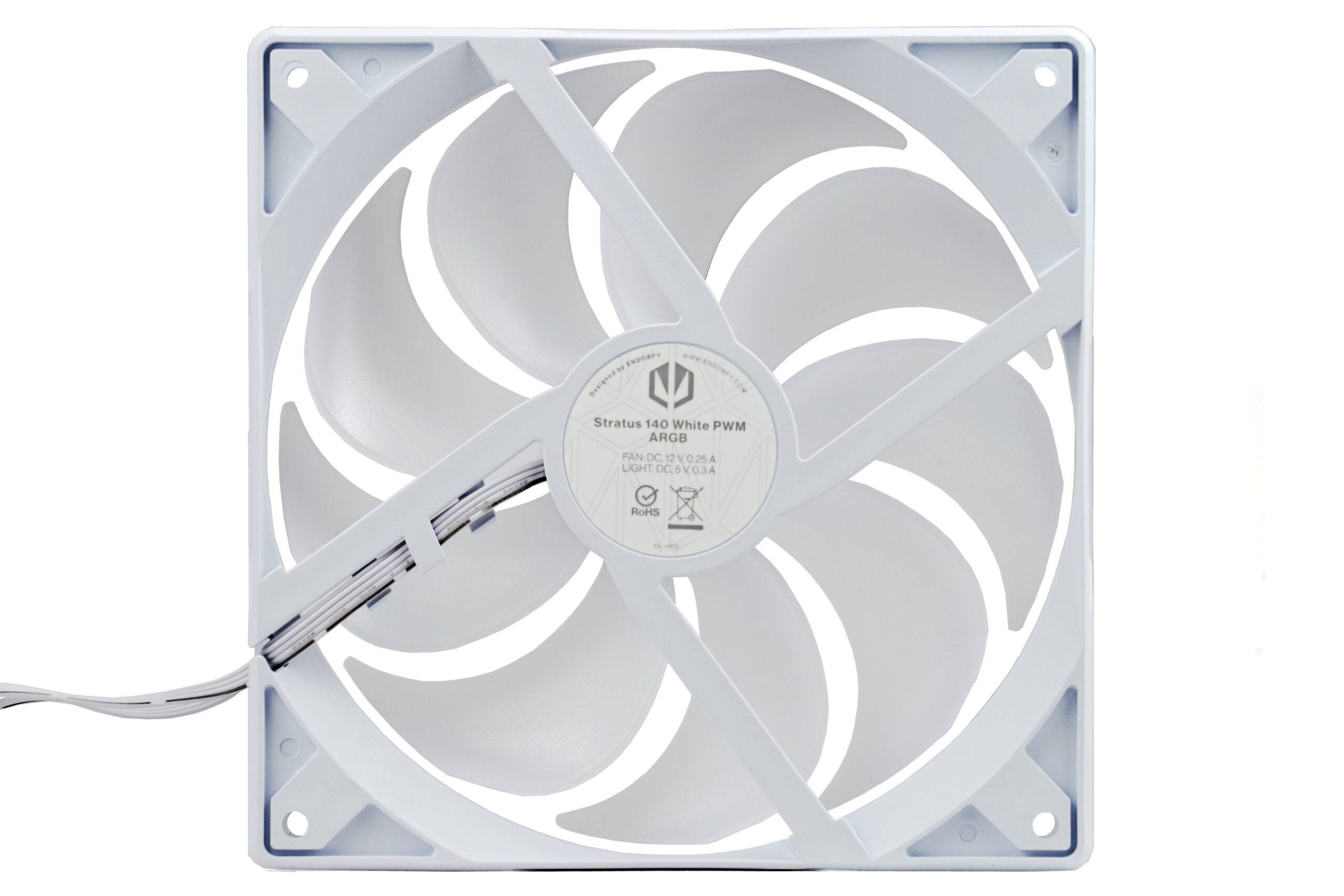
From the front, these two fans look nearly identical, which corresponds to the measured results. Differences are usually small, and when they do appear, they’re shaped mainly by the different materials, whose acoustic profile interacts with specific obstacles.
In line with the simple construction, the cabling is also straightforward: flat cables are used, meaning the insulation of the four individual wires is arranged in a single row, resulting in a slim profile. There are two cables (motor + lighting), each ending in its own connector, so there’s no possibility of daisy‑chaining multiple fans. The cables themselves are relatively long (about 50 cm), so they reach where needed even in larger cases.
Please note: The article continues in the following chapters.



