
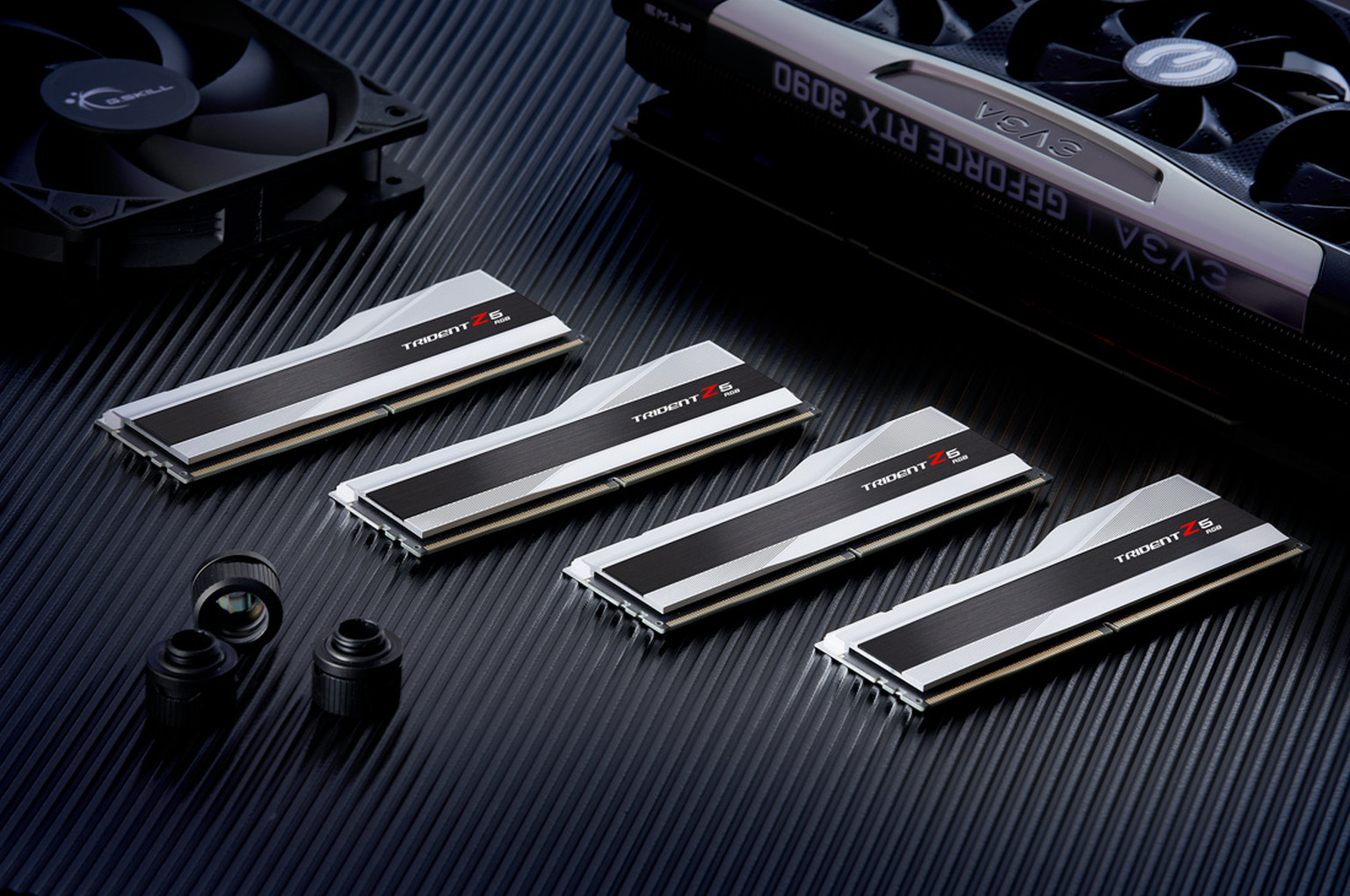
As recently reported, major traditional memory manufacturers are ending DDR4 production, leaving only new Chinese firms still in the game. The fears that DDR4 prices could rise as a result—and ironically get more expensive than the newer DDR5 technology are unfortunately coming true. Pricing forecasts now indicate a dramatic spike in DDR4 pricing. And the rise in RAM prices is happening across the board, to a lesser degree.
At the start of the year, we reported that memory prices would fall in Q1 and Q2. But now that we’re halfway through the year, it looks like the better days (in terms of memory pricing) are behind us. Market analysis firm TrendForce has released a forecast for DRAM price trends in the third quarter, predicting increases across nearly all memory types. The average rise is expected to be 10–15%, on top of a 5–10% hike that already occurred in Q2 according to the same analysis.
DDR4 rising another 40%
There are two sides to this story. Sadly, it’s now confirmed that due to the announced end of DDR4 production by the largest manufacturers, prices are climbing steeply—bad news for anyone who delayed RAM upgrades of older systems or planned to build a new PC based on the outgoing platforms using DDR4. Pricing of DDR4 modules for PCs rose by +13–18% in Q2 2025, but the third quarter looks even worse, with an expected price increase of +38–43%.
So, if you truly need DDR4 memory for any reason, it’s probably a good idea to buy as soon as possible (whether secondhand or new). Though in many cases, the sudden price jump seems to have already occurred. By the end of September, DDR4 could be 56–69% more expensive than it was at the end of March (this figure represents the combined Q2 and Q3 increases).
The sudden demand surge appears to have caught the market off guard, triggering almost panic-level purchasing as companies scrambled to stockpile DDR4. On the spot market, module prices rose by about 40% overnight, meaning the price increase has likely occurred (or is occurring) abruptly rather than being something that will be gradually built up over the summer quarter. Due to this, DDR4 is now more expensive than the newer, higher-performing DDR5 on the spot market.
Production of DDR4 isn’t ending entirely—some Chinese manufacturers are expected to continue. However, they have lower capacity, and some are also shifting toward DDR5. To a lesser extent, DDR4 is still being sold by the smaller Taiwanese manufacturer Nanya. Reportedly, Nanya has profited from the sudden price surge and demand for DDR4, as they can now offload inventory they previously considered a loss due to low Chinese pricing in earlier periods.
Price increases also affect LPDDR4X mobile memory. It rose only slightly in Q2, by 0–5%, but Q3 is expected to bring a further 23–28% increase. Server DDR4 memory prices are following a similar trend as PC modules—with Q2 hikes of 18–23% and further increases of 28–33% expected in Q3.
Fortunately, DDR5 prices are rising more moderately
On the brighter side: if you’re already using DDR5 memory or planning to build a new system with it, there’s no immediate cause for concern. These modules are also getting pricier, but the severity is well below the average. In Q2, prices rose by just 3–8%, and the same +3–8% increase is expected in Q3—for both PC and server modules. Mobile LPDDR5X also saw a 3–8% increase in Q2, with Q3 projections suggesting a slightly higher 5–10% rise.

Graphics cards using GDDR6 may get more expensive
Unfortunately, alongside DDR4, there’s also a looming price spike for the older generation of graphics memory, GDDR6. While prices of this memory held steady in Q2, they are expected to jump by up to a third in Q3 (+28–33%).
GDDR7 memory is also seeing a slight price increase, but the change was just 0–5% in Q2 and a is projected to be 5–10% in Q3. Unfortunately, the situation could lead to price hikes for graphics cards using GDDR6, which includes all Radeon GPUs and some of the more affordable Nvidia models (RTX 5050 and possibly RTX 4060 and RTX 4060 Ti cards where still in production).
Unfortunately, these pricing trends often persist for longer periods, so further deterioration in Q4 can’t be ruled out. The first and second quarters typically see lower demand for memory and PCs in general, so the situation might improve after they year’s end—but that doesn’t necessarily mean prices will fall; perhaps just that they’ll stop rising. Once the Q4 forecast is released, we’ll bring you an update.
Source: TrendForce
English translation and edit by Jozef Dudáš
⠀