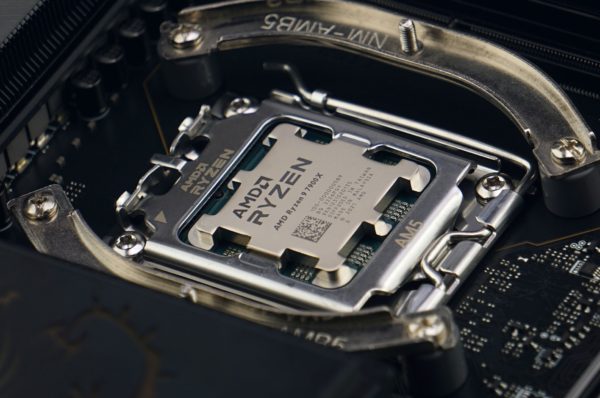
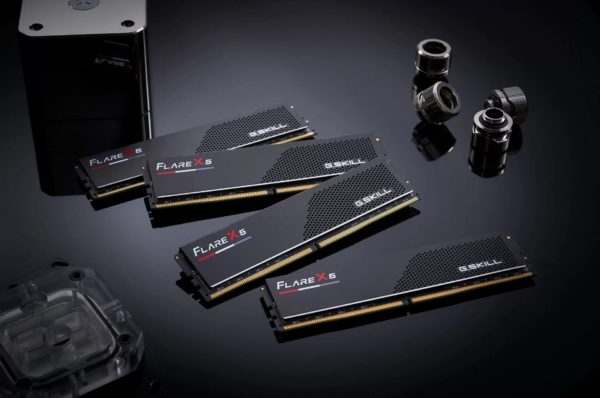
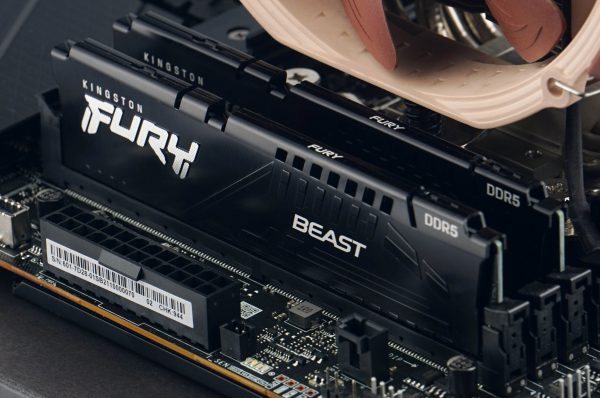
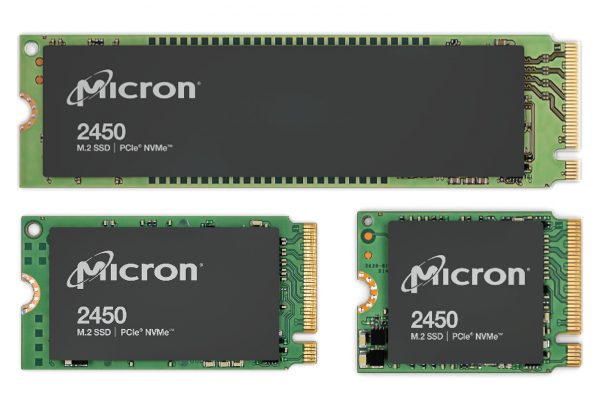
Memory prices to double in Q1 2026 compared to year-end

Once again, we return to a topic that is probably as popular in the PC world as artificial intelligence (and is close buddies with it): memory prices. TrendForce has released their outlook of how DRAM prices—that is, system memory and graphics memory—are expected to develop in Q1 2026. Unfortunately, it appears that the explosive price surge is not staying, but the three months we are now entering could be the worst yet. Read more “Memory prices to double in Q1 2026 compared to year-end” »

Memory price hikes until 2027? Micron says shortage will persist

Hardware market is in a dire situation—prices of DRAM have risen severalfold due to insufficient supply, a situation driven by the artificial intelligence craze and the plans of various involved companies to build massive AI server parks costing hundreds of billions. If you are wondering how long this state of affairs may last, Micron, as one of the three largest memory manufacturers, has bad news for you. Read more “Memory price hikes until 2027? Micron says shortage will persist” »

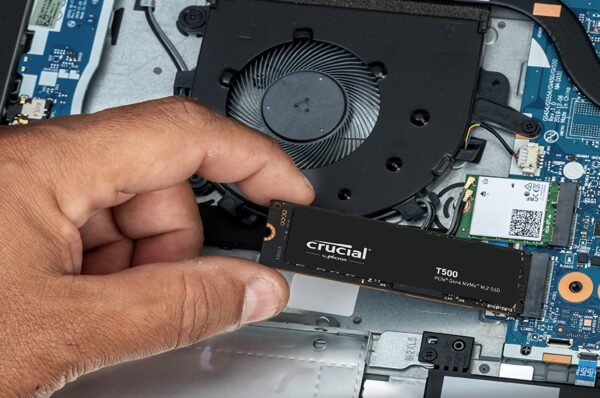
AI pays better: Micron kills Crucial, exits consumer memory & SSDs

The next casualty of the massive price hikes and memory shortages fuelled by the AI bubble is, ironically, an actual memory vendor. More precisely, a business that used to support them, but which now isn’t lucrative enough compared to the booming AI datacenter chip business. In a way, it’s symbolic of how the PC industry’s pursuit of AI profits is currently squeezing out “ordinary” everyday customers—both consumers and professionals. Read more “AI pays better: Micron kills Crucial, exits consumer memory & SSDs” »

Almost like price fixing, memory manufacturers hike prices in sync

Not long ago, we reported bad news about NAND Flash prices. Western Digital announced across-the-board increases for HDDs, and its SanDisk division raised prices for NAND and SSDs built from them. It now looks like that was just the beginning—broad price hikes across the memory market are ahead. Samsung, one of the largest producers, has also announced price increases. And it’s not just NAND and SSDs—things may get worse with DRAM. Read more “Almost like price fixing, memory manufacturers hike prices in sync” »

DDR6: New generation of PC memory is coming in 2027

Last month, the JEDEC consortium developing memory standards unveiled a new generation of mobile RAM: LPDDR6. It introduces sweeping changes, particularly in channel width and ECC option, offering significant gains in both performance and reliability. By contrast, news about the next desktop RAM standard, DDR6, has been relatively scarce—until now. We’re starting to see new details emerge, including a projected release timeline. Read more “DDR6: New generation of PC memory is coming in 2027” »

Memory prices are going up as DDR4 and GDDR6 see sharp increases

As recently reported, major traditional memory manufacturers are ending DDR4 production, leaving only new Chinese firms still in the game. The fears that DDR4 prices could rise as a result—and ironically get more expensive than the newer DDR5 technology are unfortunately coming true. Pricing forecasts now indicate a dramatic spike in DDR4 pricing. And the rise in RAM prices is happening across the board, to a lesser degree. Read more “Memory prices are going up as DDR4 and GDDR6 see sharp increases” »

Asus NitroPath: Improved DIMM slots boost RAM speed by 400 MHz

New X870E motherboards for AMD processors and Z890 boards for the new Intel Core Ultra 200S processors are now coming to the market. There will be one new feature on Asus boards that is supposed to improve the performance of RAM. It’s a new DIMM slot design that may not look any different on the outside, but has improvements that should allow DDR5 to overclock to higher clock speeds with better signal quality for more stable operation. Read more “Asus NitroPath: Improved DIMM slots boost RAM speed by 400 MHz” »

CUDIMM will work on AM5, MSI says, Ryzen 9000 or 8000 needed

Recently, we reported that the Intel LGA 1851 platform with Core Ultra 200 (“Arrow Lake”) processors will premiere certain memory innovation – CUDIMM modules that have an integrated clock driver (CKD) that enables operation at (hopefully) higher clock speeds. It was unclear for a while whether this would end up being an Intel exclusive feature, but now it looks like CUDIMMs will be usable on AM5 boards with Ryzen processors as well. Read more “CUDIMM will work on AM5, MSI says, Ryzen 9000 or 8000 needed” »

CAMM2 memory modules for desktop are closer than it seemed

While we focused on the new processor architectures most, Computex 2024 featured all sorts of things. One of these is worth revisiting. We’ve written several times recently about the hypothetical possibility of desktop motherboards switching to CAMM2 memory modules instead of the DIMMs that have been standard for almost thirty years. It seems that this is much closer to reality than it seemed, CAMM2 is indeed coming to desktop. Read more “CAMM2 memory modules for desktop are closer than it seemed” »

MSI’s first motherboard using new CAMM2 memory

Some time ago, we reported that CAMM2 (or LPCAMM2) compression memory modules could be extended from laptops to desktops in the future, where they could improve performance or enable the use of LPDDR-type memory. Now there is even talk that may move desktop processors from using DDR6 to LPDDR6 memory. MSI has shown what this could look like, and has already shown the first prototype motherboard for CAMM2 memory. Read more “MSI’s first motherboard using new CAMM2 memory” »

End of DDR3 memory, old PC upgrades to get costlier. Because of AI

HBM2, HBM3 etc. to be rare memory used on expensive server and compute hardware in low volumes. But the boom of AI accelerators (like Nvidia’s GPUs) suddenly catapulted the technology into a highly desirable component, now accounting for large percentages of total DRAM production. This is going to be at the expense of legacy RAM – a large portion of the lines previously producing DDR3 memory have reportedly switched to HBM. Read more “End of DDR3 memory, old PC upgrades to get costlier. Because of AI” »

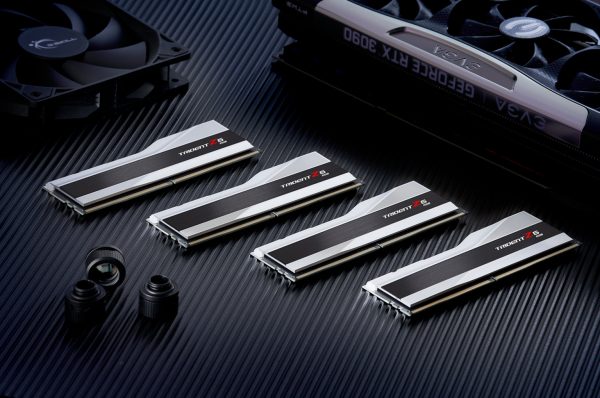
Caveat: RGB LEDs can damage graphics cards and other hardware

A curious “scandal” has now surfaced on the Internet: it seems that decorative RGB LEDs in your computer may not be a purely cosmetic feature that has no effect on the hardware. Users on social media have noticed that the illumination can leave an irreversible mark on your hardware, so to speak, such as on a graphics card that you have next to your RGB memory. Whether this can also have adverse effects on users is hard to say. Read more “Caveat: RGB LEDs can damage graphics cards and other hardware” »

Stacked DRAM on the horizon. Could be a revolution like 3D NAND

DRAM used in operating memory has long been experiencing problems. It doesn’t have the best scaling to new manufacturing nodes, which limits capacity growth. Things used to be similar with 15nm NAND Flash, the last gen  before planar technology was replaced by 3D NAND. That literally breathed new life (or at least TBWs) into SSDs. However, a stacked “3D” version is now shaping up for DRAM as well, giving hopes it could be similarly groundbreaking. Read more “Stacked DRAM on the horizon. Could be a revolution like 3D NAND” »

GDDR7 memory for next-gen GPUs is ready, up to 48GHz clocks

Nvidia’s new generation of graphics cards, GeForce RTX 5000, and upcoming cards from AMD (Radeon RX 8000) and Intel are likely planned to use new GDDR7 graphics memory technology to deliver better bandwidth than both GDDR6 and GDDR6X. This technology has now been finalized by the JEDEC consortium and will allow effective speeds of up to 48 GHz, so there will be significant increases in bandwidth, up to 2–3× compared to current GPUs. Read more “GDDR7 memory for next-gen GPUs is ready, up to 48GHz clocks” »

256GB RAM: 64GB DDR5 modules coming, motherboards are ready

Early this year DDR5 memory modules got capacity boost when 24GB and 48GB modules hit the market. These were based on 24Gb chips. However, it looks like another leap is coming and 64GB modules could soon be on the market, allowing up to 256GB of RAM to be installed into regular desktop PCs, or 128GB for laptops or Mini-ITX boards. Board manufacturers are already gearing up support, hopefully this time there won’t be compatibility issues. Read more “256GB RAM: 64GB DDR5 modules coming, motherboards are ready” »