



It has been quite a while since we learned details about the upcoming LPDDR6 and DDR6 technology—new generations of random access memory which are expected to be a significant shift, likely moving to “non‑binary” channel widths to increase RAM bandwidth. Originally, it seemed these memory types might arrive relatively soon. But at least for DDR6, it now appears we’ll be waiting considerably longer, according to current reports.
According to the Korean site TheElec, the JEDEC standard for DDR6 is apparently still not finished. However, major memory manufacturers—Hynix, Samsung, and Micron—have reportedly already begun developing modules together with substrate manufacturers. This should accelerate the availability of samples and enable earlier deployment of the new memory type—relatively speaking. It is still only the beginning of a long preparation phase.
We covered what to expect from DDR6 and the projected speeds in this article:
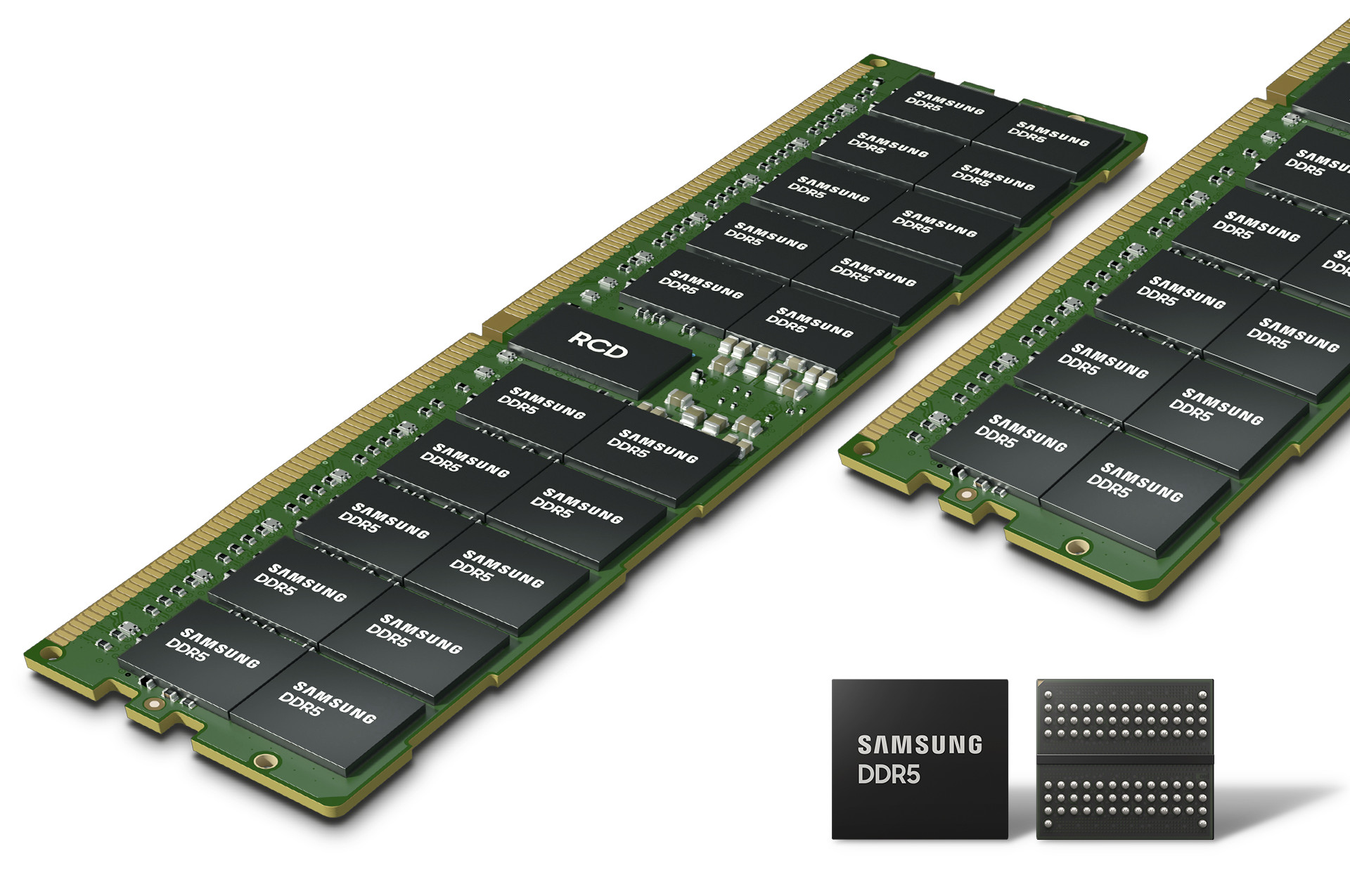
In the context of DRAM or NAND chips (more precisely, the packages containing memory chips), substrates play a similar role as in processors—a thin PCB that carries the silicon die and has contact pads or solder balls on the underside for mounting the package. Besides routing signals from the silicon’s contacts, the substrate also provides structural reinforcement.
At this stage, substrate manufacturers and DRAM makers are tuning signal routing for the highest possible effective communication frequency and energy efficiency. Due to increasing speeds and wider data interfaces, substrate design for DDR6 is more challenging than for previous generations. Physical dimensions (such as substrate and die thickness) also appear to still be under discussion.
According to TheElec, the entire process of designing chip packages, the memory modules themselves—DIMM, SO‑DIMM or possibly CAMM—and then improving and fine‑tuning them up to commercial market introduction will still take quite a long time. The companies themselves now reportedly expect that commercial deployment of these memory modules will not begin until 2028 or 2029.
And this is talking about the very first users of the new memory modules. These do not have to be personal computers at all, but rather servers and workstations (Xeon, Epyc, Threadripper processors and others), and the arrival to consumer PCs may take longer—for example, it could be 2029 or 2030. This is starting to fit quite well with what we’ve recently been learning about AMD and Intel desktop CPU plans.
There is still room for several CPU generations using DDR5
On Intel’s side, the incoming LGA 1954 desktop platform with Core Ultra 400 “Nova Lake” processors should be released at the end of this year or the beginning of 2027 and reportedly could last for up to four generations of processors (unless the cancellation of some of them due to problematic manufacturing processes gets in the way, as we’ve seen recently with Meteor Lake and Panther Lake).
This looked surprising at first since it was expected that new memory would arrive quite soon, while it’s known LGA 1954 will still be based on DDR5. However, if the second generation (Razor Lake) processors come at the end of 2027, the third (Titan Lake, or its desktop replacement) at the end of 2028, and the fourth (Hammer Lake?) at the end of 2029, this would roughly line up with DDR6 deployment at the end of 2030 with the launch of the following CPU generation with a new socket. Compared to 2029, that would be a relatively short and historically fairly typical delay behind the first adopters on the market.
For AMD, it works out quite similarly. According to current information, both the Zen 6 and the Zen 7 generation of processors will still keep the AM5 socket with DDR5 memory. Zen 7 will probably come in 2028 (more likely to be in the second half), and if its successor (Zen 8?) again arrives after another two years, then the new AM6 socket and new memory technology with it would also land in the second half or at the end of 2030—just in time for DDR6 adoption.

DDR6 or LPDDR6?
It is not certain, however, whether desktop personal computers as we know them today will actually move from DDR5 to DDR6. It is possible that manufacturers of desktop PCs and processors will instead switch to the LPDDR6 mobile memory technology (either using packages soldered on board if not on processor package, or with LPCAMM‑type modules), which is used in phones and laptops, leaving DDR6 only to servers and related HEDT and WS processors. Reportedly, this is at least being considered for future desktop platforms from AMD and Intel.
Such a transition would improve PC power consumption and further unify the hardware used in notebooks and desktops. In recent times, LPDDR‑type memories have scaled to higher effective speeds more quickly, so LPDDR6 could even provide desktops with better bandwidth and thus improve performance (for example, the transfer speeds achieved back in the day with LPDDR4X, and now with LPDDR5X have been beating the transfer speeds of desktop DDR4 and DDR5 modules for years).
In the laptop space, CPU manufacturers will not be as bound by the need to maintain compatibility with the previous generation, so LPDDR6 deployment could come earlier there. DDR6 adoption by higher-end notebook processors (in higher‑performance gaming models) will certainly only happen once it is deployment in desktop PCs, however—that is, if DDR6 is used in them at all and the market does not move over to mobile memory.
Sources: TheElec, techPowerUp
English translation and edit by Jozef Dudáš
⠀


