



The next casualty of the massive price hikes and memory shortages fuelled by the AI bubble is, ironically, an actual memory vendor. More precisely, a business that used to support them, but which now isn’t lucrative enough compared to the booming AI datacenter chip business. In a way, it’s symbolic of how the PC industry’s pursuit of AI profits is currently squeezing out “ordinary” everyday customers—both consumers and professionals.
Yesterday, the American company Micron Technology, one of the three largest manufacturers of DRAM and NAND memory (alongside Samsung and Hynix), announced a step that practically ends its offering of products to regular consumers. Micron produces memory chips, but also complete memory modules for computers and complete SSDs.
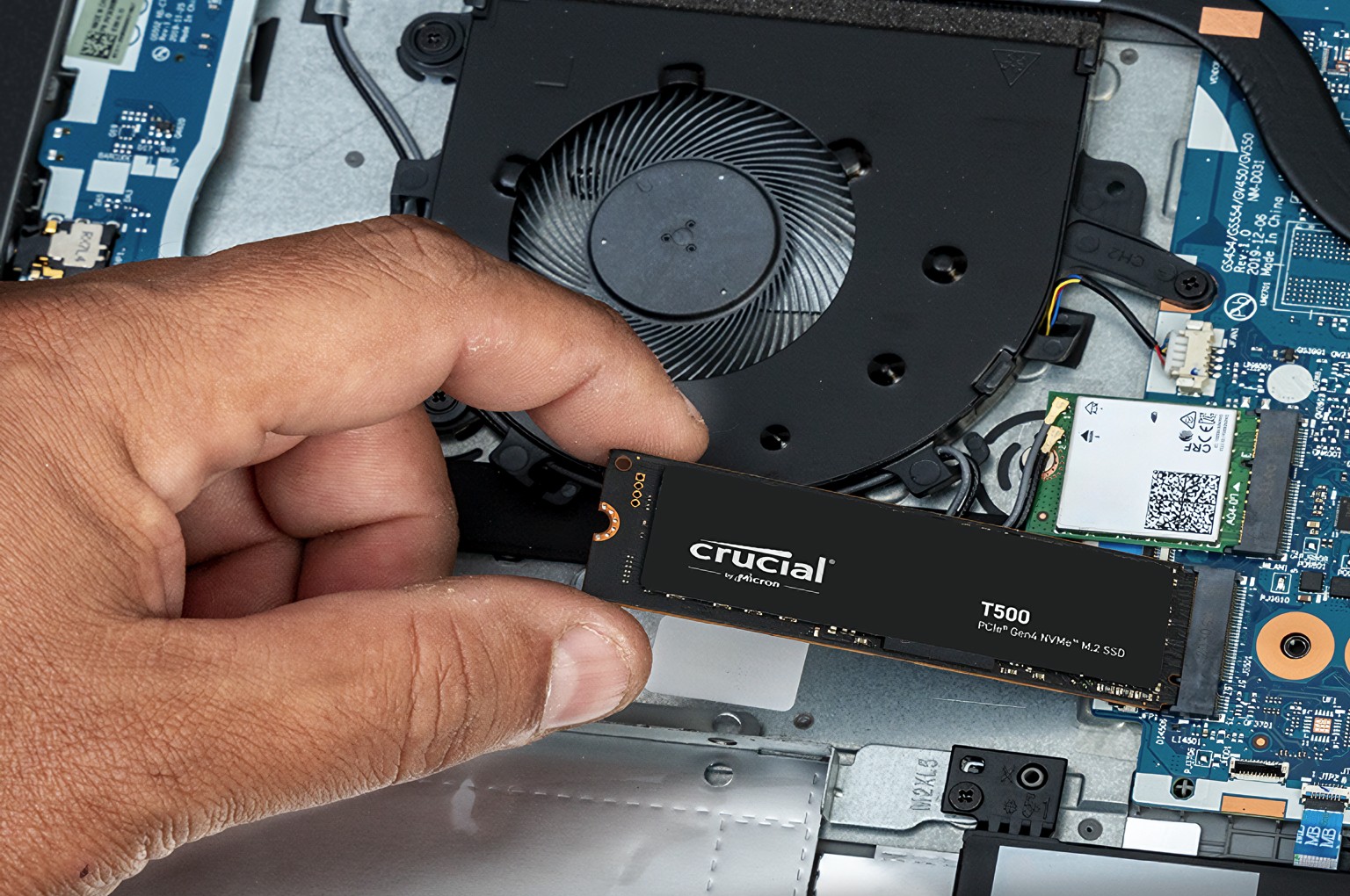
The company had until now operated the Crucial brand, under which its SSDs and memory modules were sold on the retail market in shops and brick-and-mortar stores. The company only sells Micron-branded (often slightly different) SSDs and memory modules exclusively to the OEM market, i.e., to large PC manufacturers. You won’t find them sold separately anywhere.
However, Micron has now announced that they are discontinuing the Crucial division completely and fully exiting the markets that Crucial served. These memory kits and SSDs will thus completely disappear from the market. Related modules under the Micron brand will now only be found in prebuilt PCs from large manufacturers. With this, Micron is effectively exiting the consumer market.

It’s a shame because Crucial SSDs were among those where the vendor was also the very manufacturer of the NAND chips used, and this is conventionally assumed or expected to create potential for the SSDs being higher quality, better tuned and more reliable, though that is not guaranteed. Such SSDs (others are from Hynix, Samsung, Kioxia, WD / SanDisk) are sometimes considered something of a premier league. Similarly, in the field of memory modules, Crucial represented one of the most reputable brands.
Why is the company doing this? It’s nothing other than following the current AI craze. Micron directly confirmed that discontinuing Crucial aims to completely focus the company on the growing for AI sector memory (and SSDs) market and other highly profitable areas like servers. This means focusing on manufacturing DDR5 chips for enterprise server modules and especially on producing HBM-type memory utilized by AI accelerators.
It’s probably not just about Micron directing resources and investments freed up by discontinuing Crucial into this area. It’s also about the manufacturing capacity of the company’s memory chip fabs themselves. By discontinuing Crucial, Micron is cutting off the sale of its chips to ordinary consumers so it can shift this production capacity to more profitable products for AI companies.
And it might not be just about Crucial. Micron could also stop supplying NAND and DRAM chips to third-party manufacturers of consumer memory modules and SSDs that base their products on Micron chhips.
Crucial SSDs and memory to disappear from the market in February
The Crucial discontinuation will be a very fast process. Shipments of Crucial memory and SSDs (and probably other related products like flash drives) are to continue only until February 2026, after which sales and distribution will be terminated. The company states it will try to move employees to currently open positions in its remaining business (which, however, may not apply to all by a long shot). The Crucial corporate structure will thus likely be dissolved promptly.

Micron, as the parent company, is supposed to take over support and warranty service for Crucial products, but it’s to be seen whether the level of care won’t be degraded since the relevant areas and customers are no longer a prospective market for the firm. There is a risk that if you buy a Crucial SSD now, there may be problems later if it requires some bug fix or other firmware update. It is true that the development of Micron and Crucial SSDs has been interconnected, so hopefully the teams handling products under the Micron brand will be well capable of maintaining and patching the firmware of Crucial SSDs as well. But it might be a reason for you to start preferring other SSD manufacturers and avoid Crucial (unless Crucial products are being cleared out at significantly attractive prices—that would be a different story).
The Crucial brand is going out after 29 years of activity. It’s likely that most of the time the business helped Micron to ultimately sell more of its chips on the market, so it was a long-term benefit to the company (after all, when selling a Crucial SSD or module, Micron should get more money from the whole device than it would get from SSDs and modules from brands like Adata or Kingston, where Micron earns margin just on the chips supplied to these manufacturers). However, now that Micron is riding high thanks to extreme revenues and demand from AI firms, the company evidently got the feeling that this ordinary and less trendy business is no longer worth bothering…
- Tip: Almost like price fixing, memory manufacturers hike prices in sync
- Tip: OpenAI’s megalomaniac plan could increase memory prices for 10 years to come
More money for shareholders, worse prices for regular users
According to Micron, this step will improve long-term financial results and generate value for strategic customers and shareholders. However, it can be assumed that the frantic redirection of a non-negligible part of memory production capacity from consumer hardware to modules and SSDs for servers and AI infrastructure will further exacerbate the shortage of system memory and SSDs that is currently rocking the market of general consumer computers and notebooks. And consequently, it will likely contribute to further price increases, which is an inevitable consequence of a situation where supply on the market is insufficient to satisfy demand.
English translation and edit by Jozef Dudáš
⠀


Wow, this was an unexpected move from Micron. I’m still surprised by all the short-term gambles companies are making to keep up with the AI craze. I wonder how things will be in 2030, hopefully AI loses its appeal by then.
Well, human greed shouldn’t be surprising at all. 🤑
“Come on, come on, love me for the money
Come on, come on, listen to the moneytalk”
🤟🎸🥁🤟