



At the end of this year, I have prepared a review of Valkyrie’s AIO liquid cooler. In the autumn I tested their flagship cooler Dragonfang 360 and today we will test its smaller brother, the Dragonfang 240. It is cheaper and has wider compatibility, as it is more compact. Valkyrie’s previous coolers have not fared badly in absolute numbers at all, hopefully this trend will continue in today’s article.
Key features of the cooler
If you’ve read my review of the Dragonfang 360, then you can practically skip the following lines and go straight to the results section. After all, the Dragonfang 240 is an identical cooler in design and the only difference from its larger version is the one-third shorter radiator. This means that it is a typical liquid cooler design with a pump hidden inside the cooling block. Thanks to the presence of the pump in the block, the liquid circulates in a loop through the 27 millimetre thick aluminium radiator and back into the block via a pair of tubes. These are made of a corrugated copolymer (FEP), which gives them good pliability, and they are fitted with a protective braid for added durability.

The design of the cooling block is identical for the entire Dragonfang cooler series. The whole upper part of the block rotates around its axis and in one half of this rotating part there is a small weight. This ensures that the top of the block will always be in a horizontal position regardless of the orientation of the rest of the build. The partition with the embossed manufacturer’s logo is attached to the top by small magnets and can be easily removed and rotated if necessary. The logo itself is translucent and there is an ARGB LED underneath the swivel section so you can illuminate the logo as you wish. In addition, the ARGB LEDs also illuminate the entire perimeter of the top of the cooling block just below the swivel section.
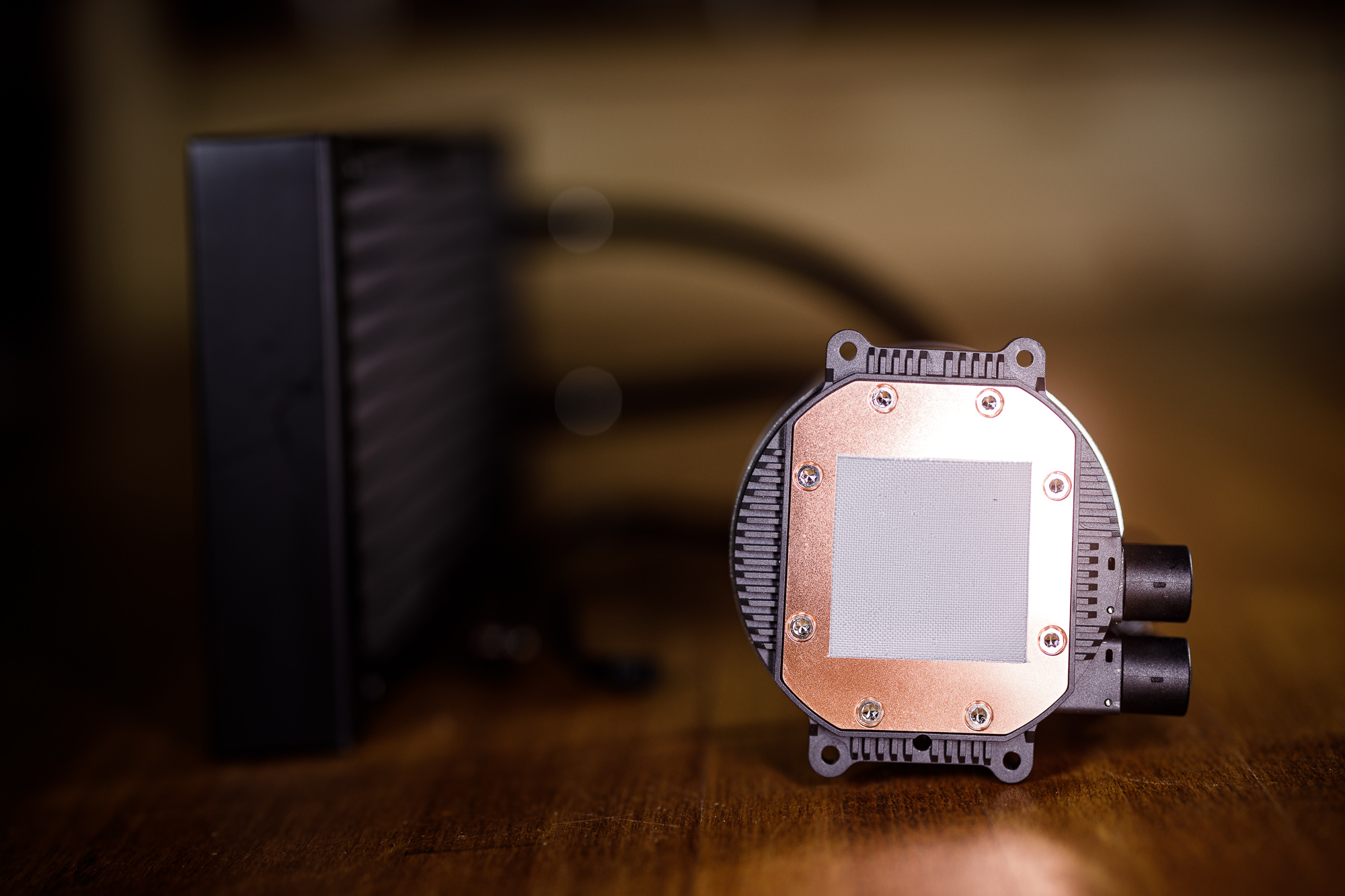
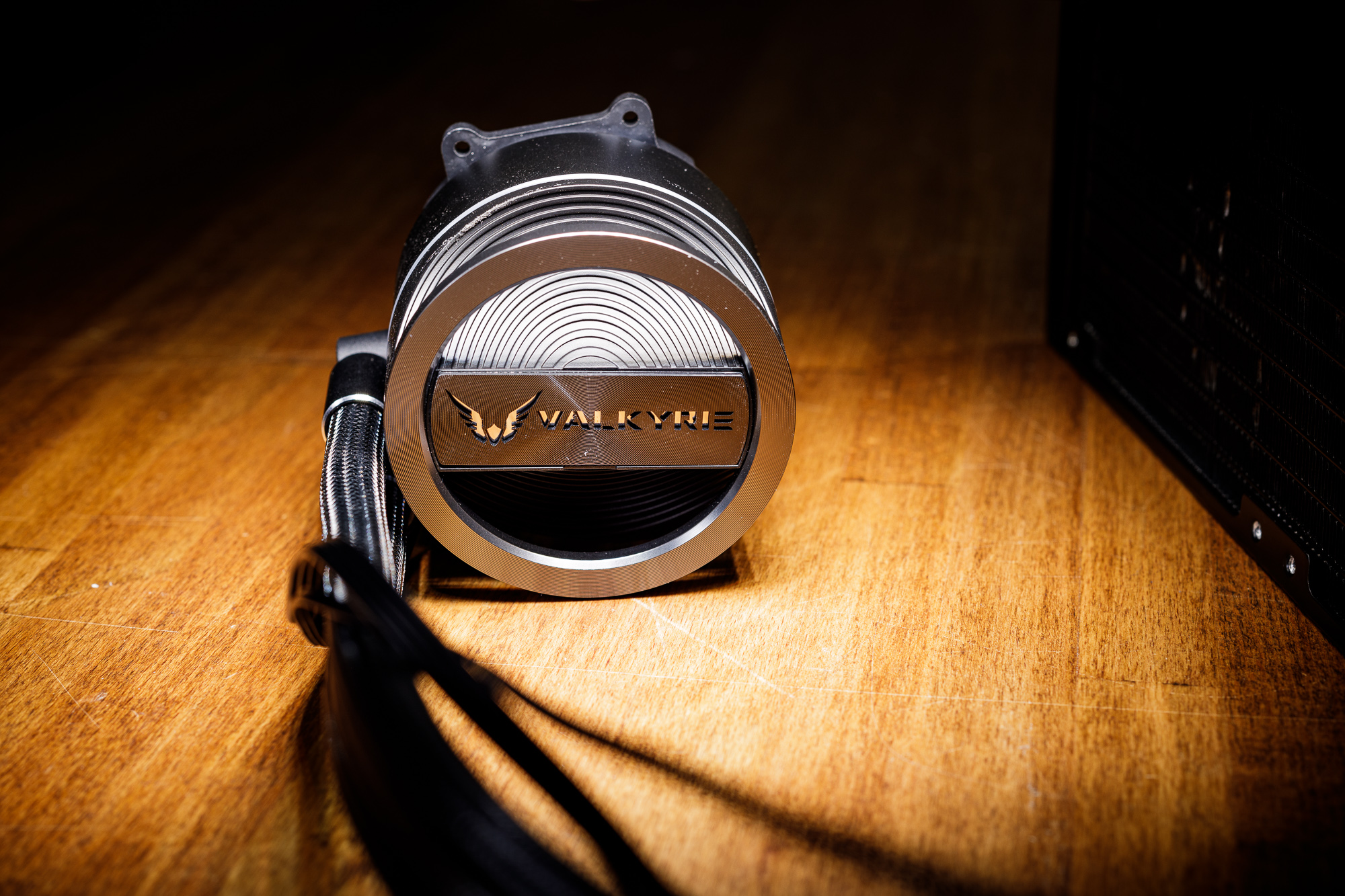
The copper coldplate is more than adequate for all current desktop processors and a thin layer of thermal paste is applied to it from the factory, thus reducing the worries about the correct amount and/or the correct way of applying the paste to the processor’s heat spreader. And in case you need to reseat the cooler or relocate it to another build, you’ll find a small tube of replacement paste in the package for approximately two to three additional applications.
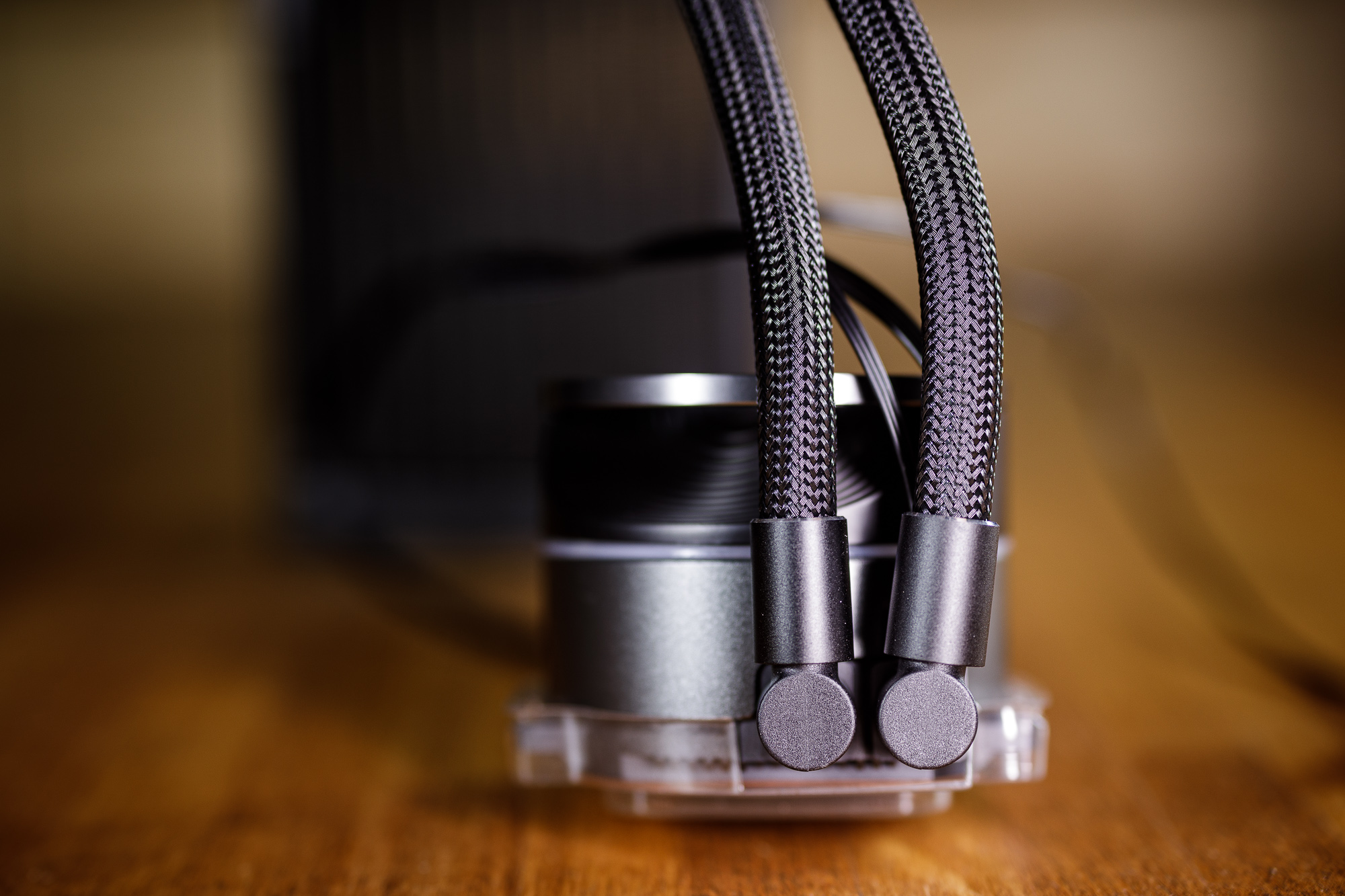
The connection of the tubes to the cooling block is also done in a classic way, i.e. by means of a pair of swivel fittings. And due to the identical design of all the Dragonfang coolers, these fittings are also slightly offset to the side outside the main axis of the cooling block. However, this is not an obstacle in terms of compatibility with RAM or motherboard VRM heatsinks. There are a pair of cables coming out of the block that provide a PWM signal to control the pump speed and ARGB backlighting of the cooling block. Other lighting elements can be found on the supplied X12E fans, where it is not a classic ring around the impeller, but four LED strips in each corner of the frame.
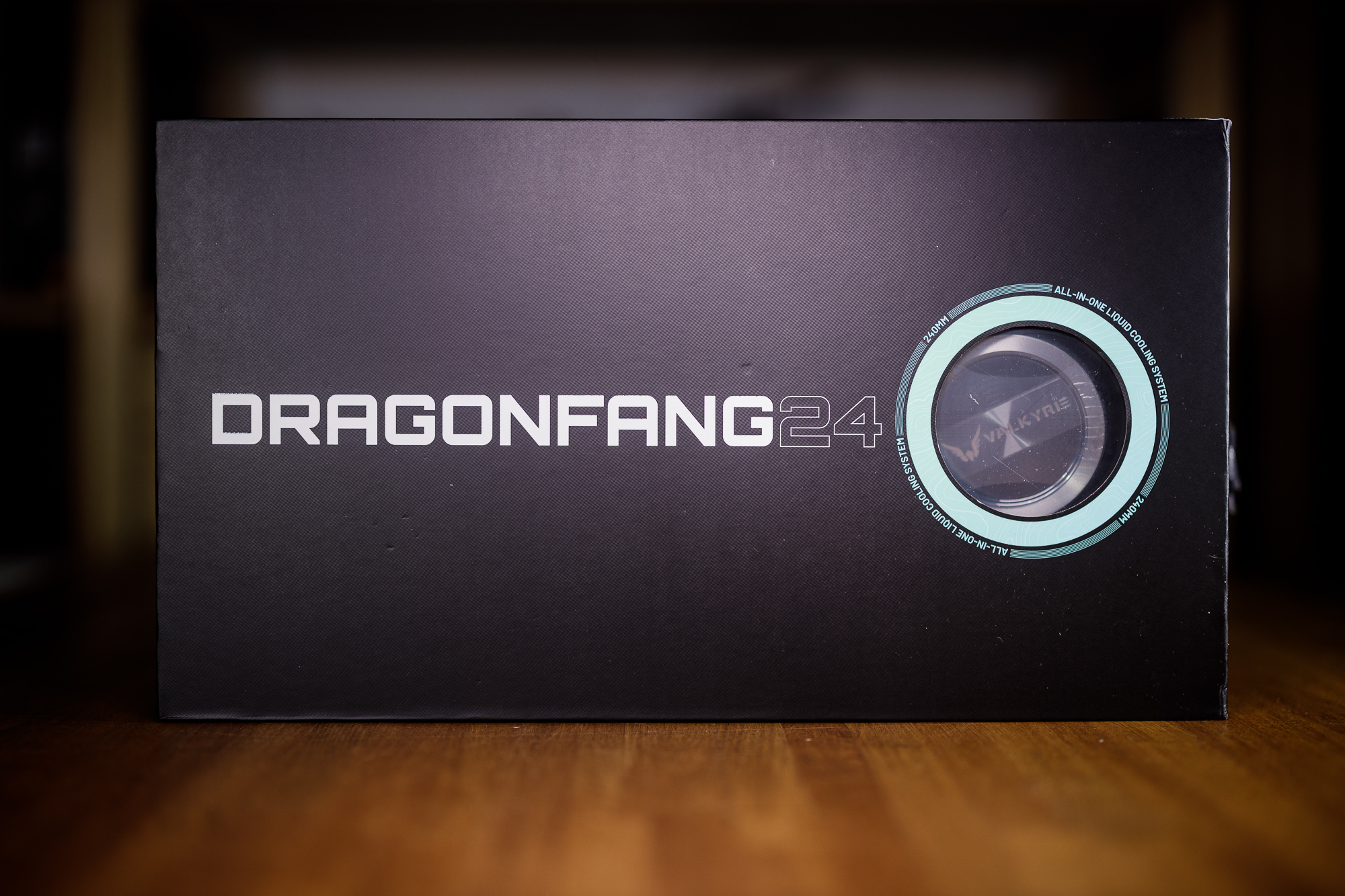
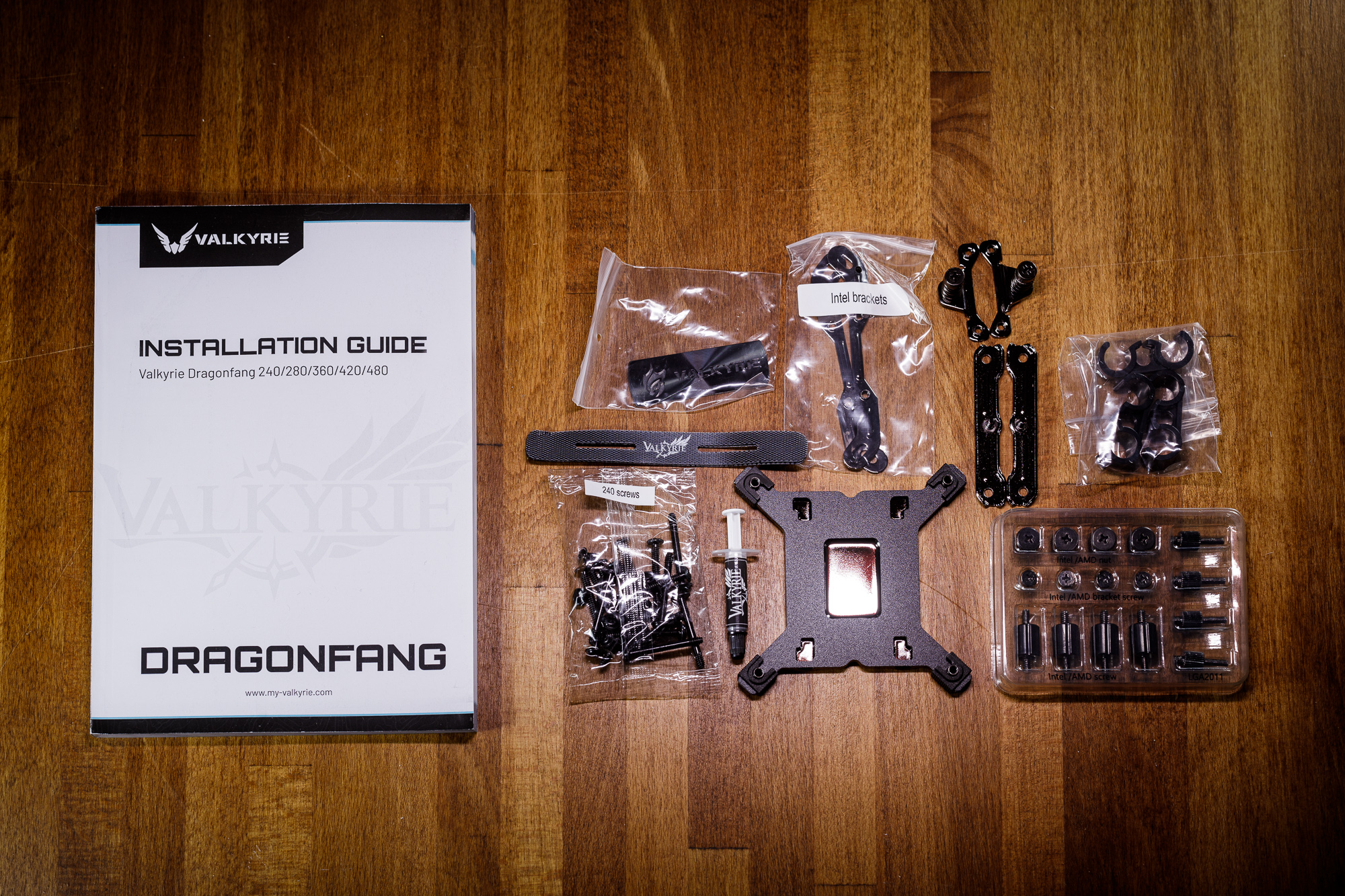
Once again the presentation and packaging did not disappoint and this is one of the things that always delights me about Valkyrie coolers. Everything is neatly packaged and labeled so that you know exactly where to reach and installing the cooler is a matter of a few moments. The contents of the package are no different from the larger version of the Dragonfang cooler, except of course you only find only two fans on the Dragonfang 240 version.


The accessories are not missing anything essential and on the contrary, you will find interesting elements in the form of plastic clips for the tubes or tape against accidental disconnection of ARGB cables. A very nice bonus is the PWM signal splitter for the fans combined with a splitter for the ARGB backlight, where you can connect up to seven fans and seven ARGB cables. Somewhat paradoxically, however, its presence is hardly needed, as the supplied fans have the option of serial cable connection. Realistically, you can get by with two PWM headers and one ARGB one on the motherboard.
Cooler and fan parameters
Valkyrie Dragonfang 240 fits nicely among other coolers of its class with its dimensions and parameters. You will find support for all modern sockets, the length of the radiator, tubes and block dimensions are also standard without significant deviations and the higher price tag is justified by a five-year warranty.
| Cooler | Valkyrie Dragonfang 240 | Endorfy Navis F280 | Enermax Aquafusion ADV 240 | |
| Supported sockets | Intel 115x, 1200, 1700, 20xx; AMD AM4, AM5 | |||
| Radiator dimensions (H × W × T) | 276 × 120 × 27 mm | 275 × 120 × 29 mm | 274 × 120 × 27 mm | |
| Block dimensions (H × W × T) | N/A | 76.5 × 76.5 × 48.5 mm | 68.5 × 69.5 × 54.5 mm | |
| Hose length | 395 mm | 390 mm | 400 mm | |
| Pump speed | N/A | 2600 rpm | 3100 rpm | |
| Radiator material | aluminium | aluminium | aluminium | |
| Max RAM height | no restrictions | |||
| Warranty | 5 years | 3 years | 2 years | |
| Approx. retail price | € 149 | € 109 | € 105 |
X12 fans have been tested previously here. They are solid fans with high enough static pressure, making them ideal for use on a radiator. They have only an occasional tendency to interfere with the radiator, resulting in minor vibrations and slightly higher noise levels.
| Fan | Valkyrie X12 | Endorfy Fluctus 140 PWM | Enermax SquA ADV | |
| Bearing | FDB | N/A | ||
| Max. speed | 2150 rpm | 1800 rpm | 2000 rpm | |
| Max static pressure | 3.14 mm H2O | N/A | 3.60 mm H2O | |
| Max. airflow | 135.9 m3/hod | N/A | 135.6 m3/hod |




What was the overall verdict or recommendation provided in the review for the Valkyrie Dragonfang 240 Smaller Edition of the Cypriot Liquid Cooler? Greeting : Telkom University
Decently perfoming cooler, which is undercut by its relatively high price tag.