
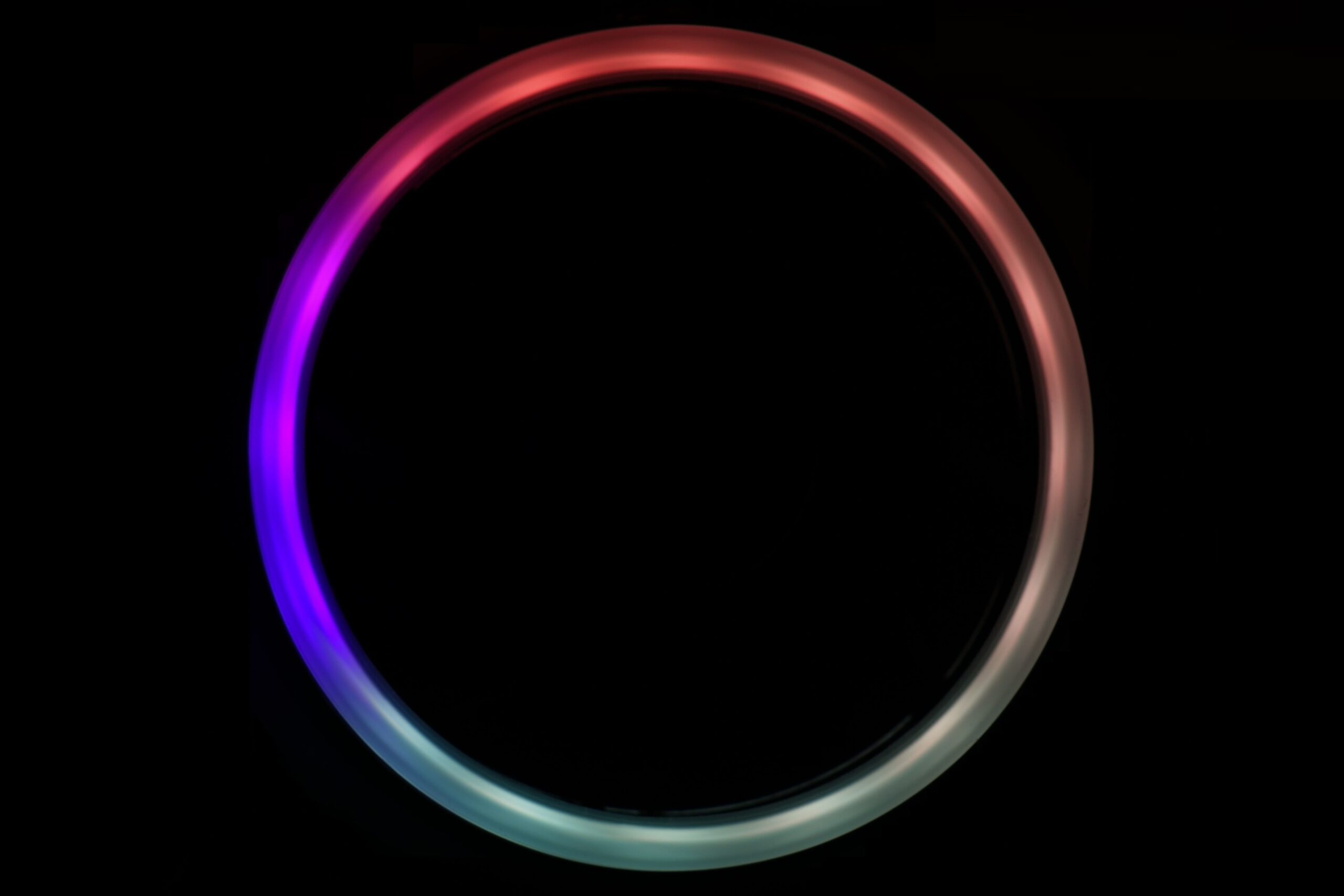
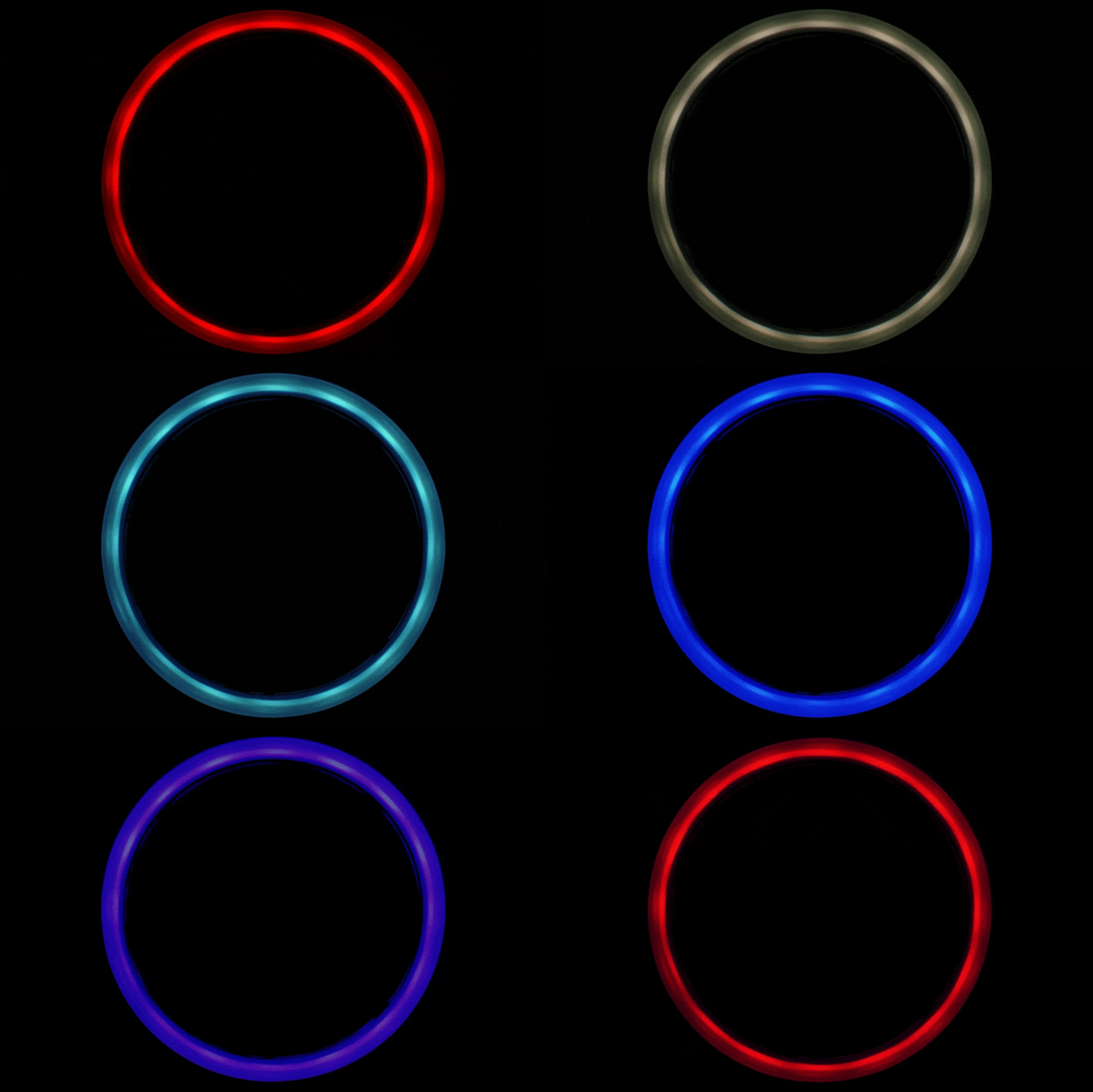
From the models still sold under the SilentiumPC brand, the Corona fans have come a long way. They are still more “showy” than “efficient,” although even in their primary function they don’t fall behind as much as you might expect (even if airflow per unit of noise is lower…). Their loyalty to the ring‑style light guide remains. Together with ARGB LEDs, it frames the fan’s impeller—and it really does look good. What do you think?
The news post about the Endorfy Corona 120 fans is already published, and now comes the analysis. First, it’s important to note that these are affordable ARGB‑lit fans where the goal is also to have the impeller made from a dark material. We start with this so it’s clear what these fans are aiming for, because—as you’ll find out—they are not models that excel in exceptionally attractive aerodynamic properties. On the contrary, those are weaker for clear technical reasons, but as usual—something is taken away, something is added, and this is one of those cases.
The fan geometry is efficient, with strongly curved leading edges on the blades. The advantage of using an opaque material may be higher rigidity (compared to “milky” translucent blades), which—given similar material volume and shape—can lead to lower vibrations and therefore lower secondary noise. Based on measurements, this seems to be the case with the Corona 120, though it must also be noted that its maximum speeds are relatively low (or mid‑range? About 1642 RPM…).
In any case, vibrations are at the edge of measurability—negligibly low. This may also be due to higher manufacturing precision in critical mechanical parts, such as the shaft. There may be several factors behind these attractive results.
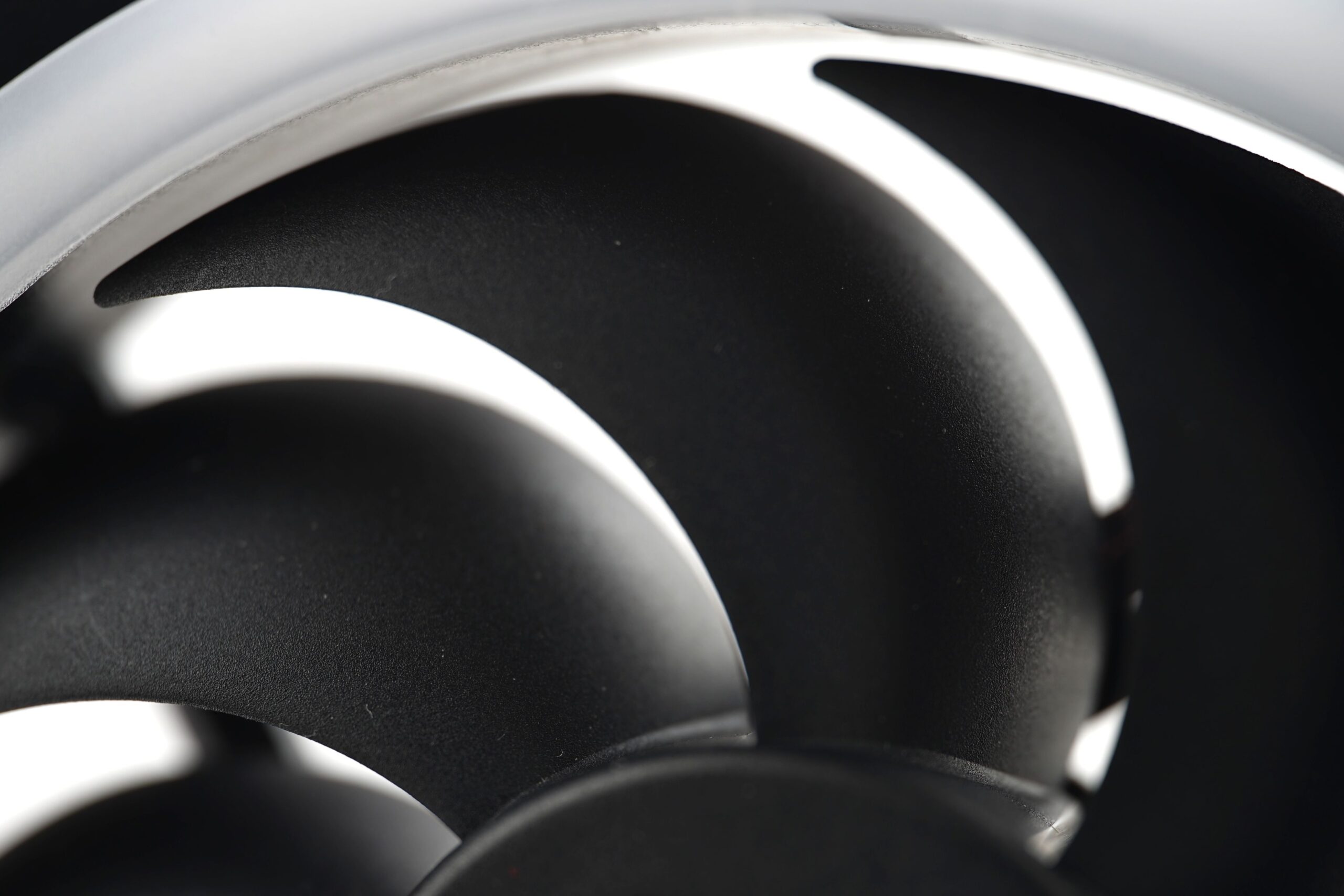
And then there are the elements that—intentionally or not—worsen aerodynamic properties. Because of the ARGB ring, the fan frame is relatively thick, reducing the available length for the blades. As a result, the blades are relatively shorter. The impeller diameter is around 100 mm, which is average to below average for a 120 mm fan. With smaller blades, at comparable noise levels, the airflow will naturally be lower than with geometrically similar fans that have a larger diameter and thus a larger cross‑sectional area. At similar speeds, of course. That’s physics—you can’t cheat it. Therefore, it’s best to view this fan through the lens of the advantages it brings, which were described above.
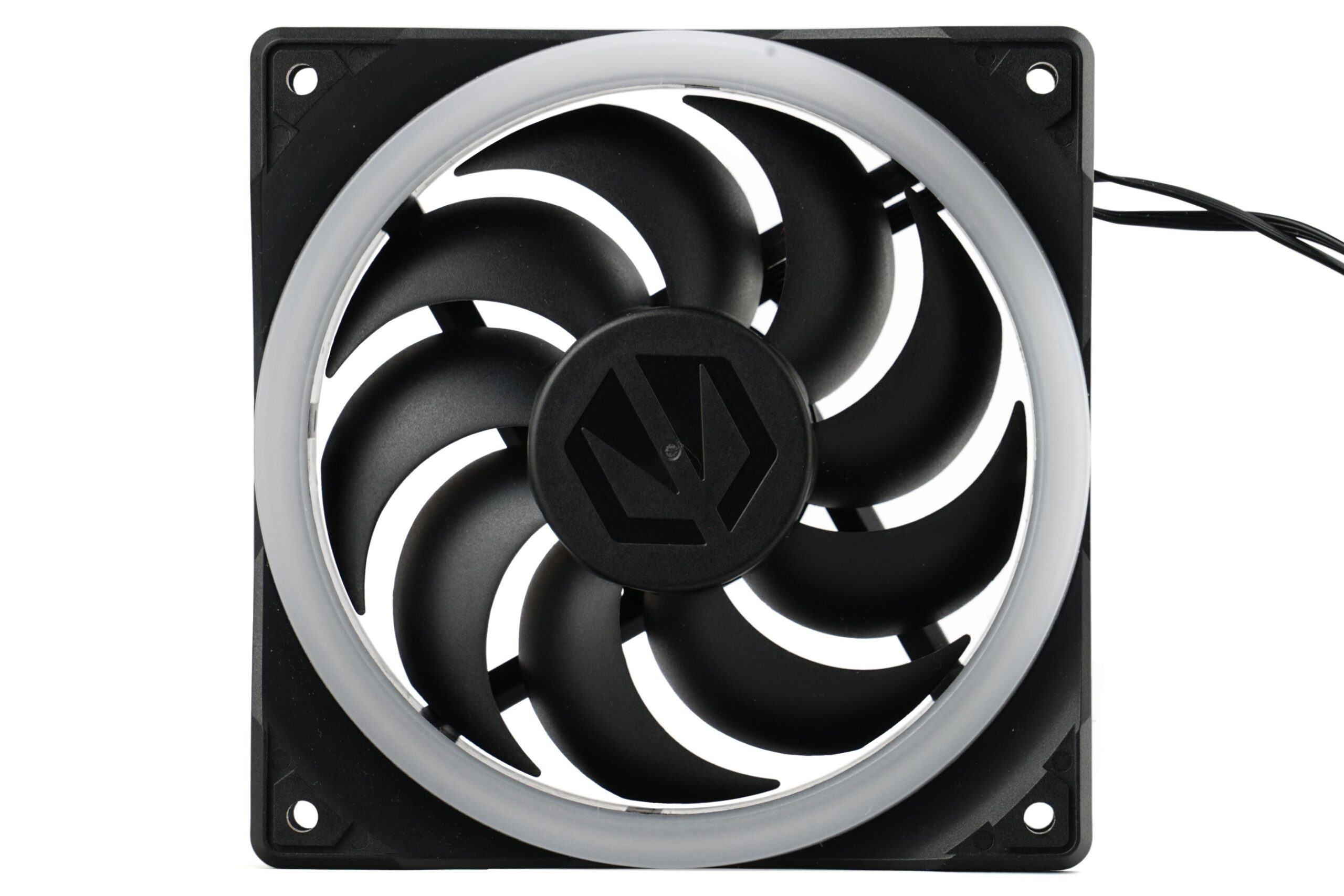
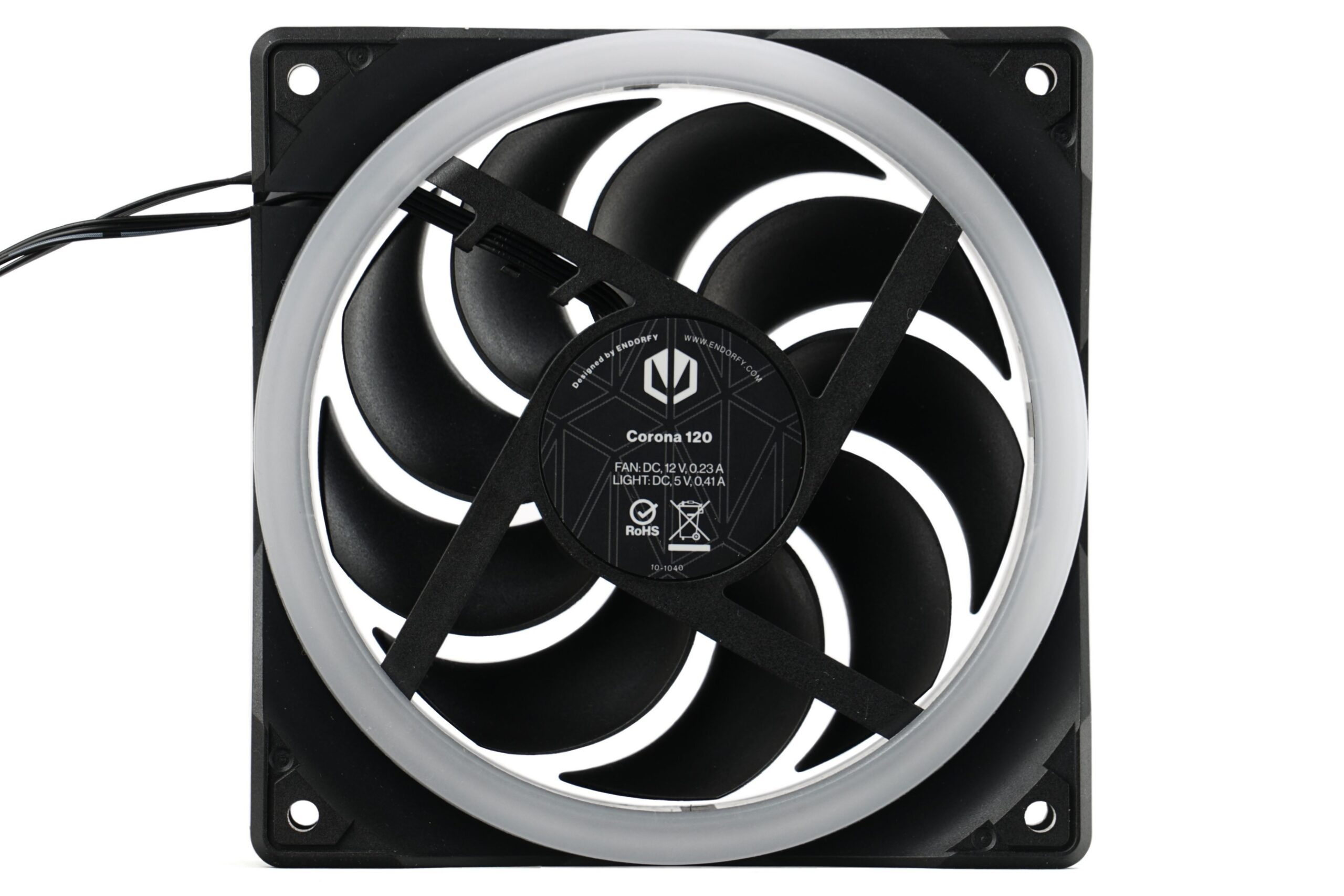
Static pressure—although Endorfy does not list it—will, based purely on the impeller shape, be average. There are quite a few blades, the dead space between them is average, and the exact static pressure performance will be shown in our measurements.
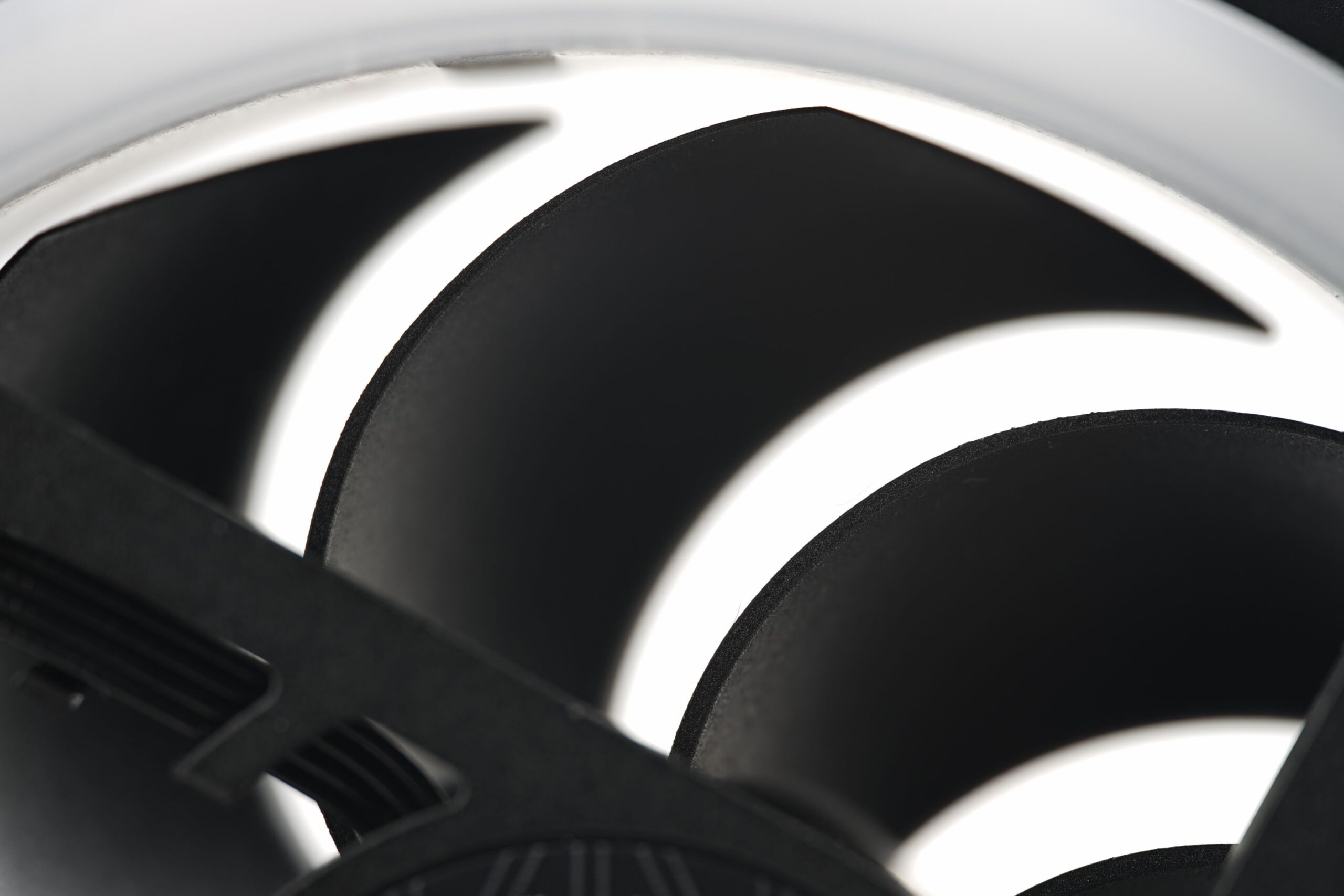
As for optimizations, we’ve already discussed acoustics, but otherwise the geometric design has no protrusions, serrations, or other modifications on the trailing or leading edges. The blade edges are simply smooth.
The power cables are long—about 60 centimeters. This applies to both the 4‑pin motor connector and the 3‑pin ARGB LED connector. Each cable ends in a single connector, with no option for daisy‑chaining fans.
Please note: The article continues in the following chapters.