


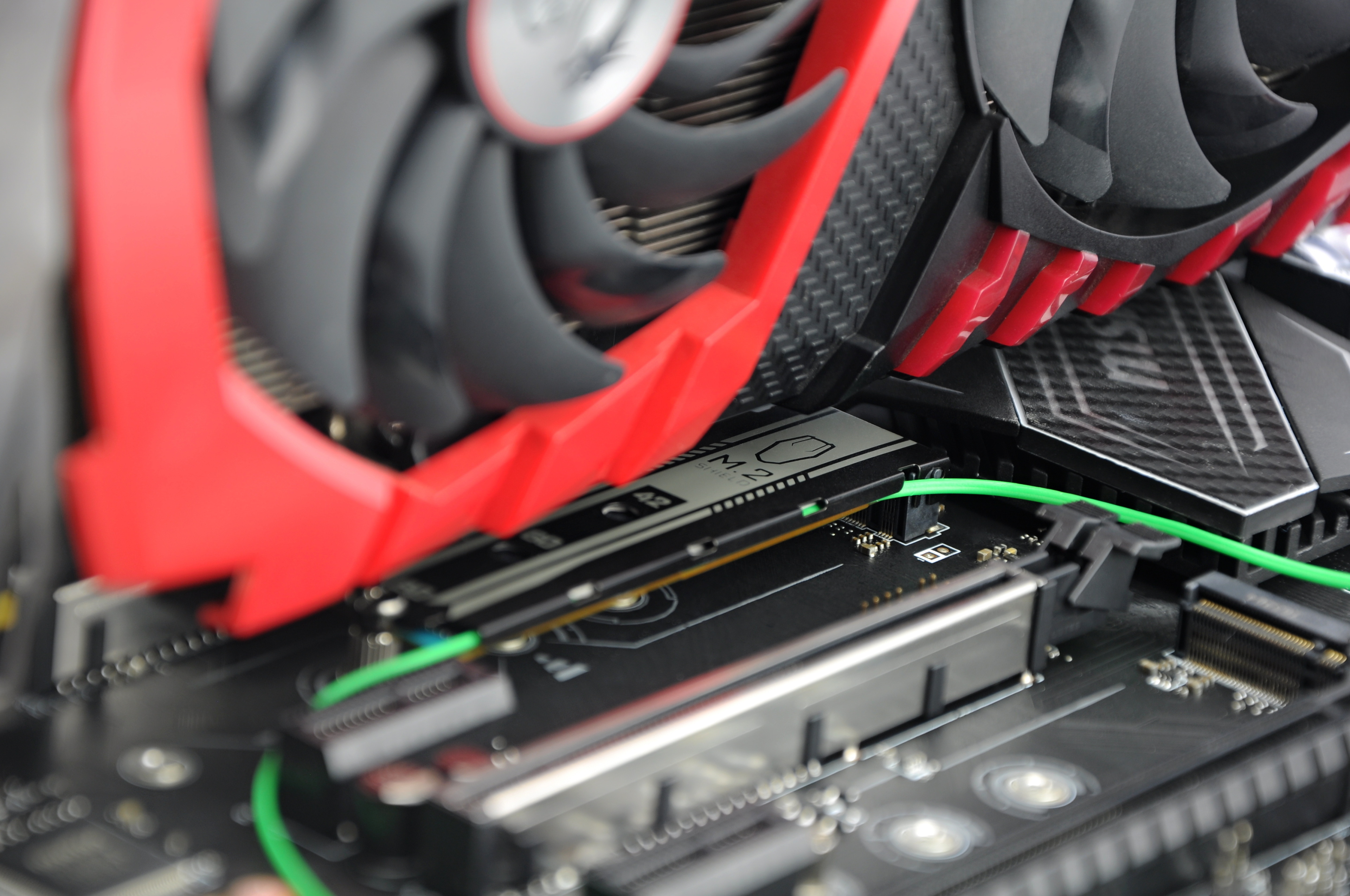
HWC has published several analyses that deserve to be revisited. Although they are not from today—or even yesterday—we still consider them useful in practice. SSD below the graphics card or above it? How much can mounting pressure affect cooling performance, and does a thicker thermal pad really mean higher temperatures for the critical component?That’s what we covered in the tests featured in this article.
A common dilemma accompanied by the following line of reasoning: If the SSD is installed beneath the graphics card, it will run hotter because, for example, the GeForce RTX 5090 can approach 600 W. Yes, that’s true, and concerns about higher temperatures are justified. However, it’s also worth noting that at higher power draw, the graphics card’s cooler is typically operating actively, which to some extent also improves airflow around the SSD. As a result, SSD cooling performance can paradoxically end up being better.
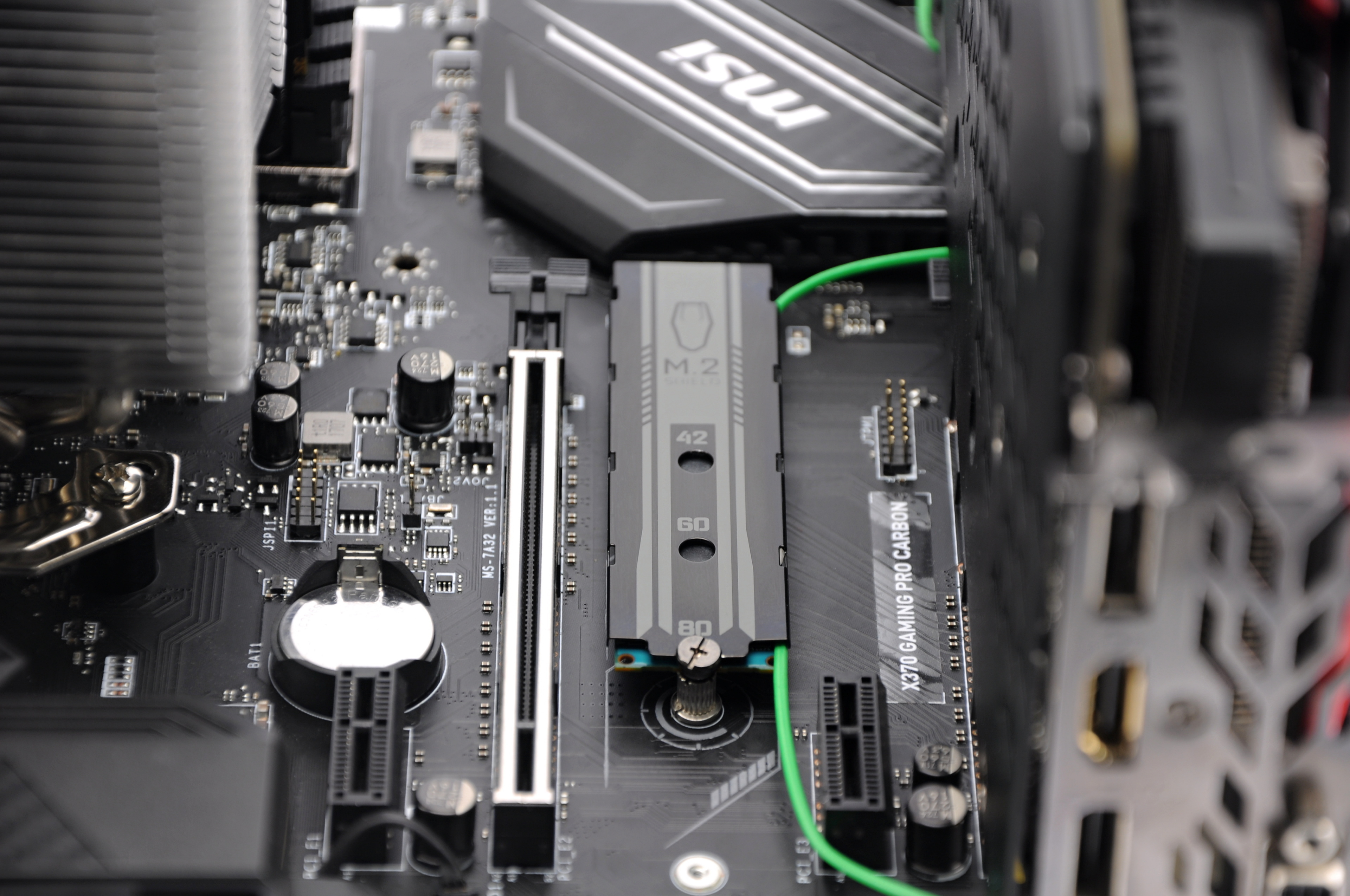
- Link to analysis: What’s the best position for your M.2 SSD?
The mounting pressure between the cooler and the processor naturally affects heat transfer. The more firmly the cooler presses against the processor, the larger the contact area through which heat can flow (it’s similar to touching a hot radiator lightly with your fingertip versus pressing your finger firmly against it). However, excessive mounting pressure can also cause too much bending of the motherboard, potentially leading to system instability or preventing the computer from functioning properly.
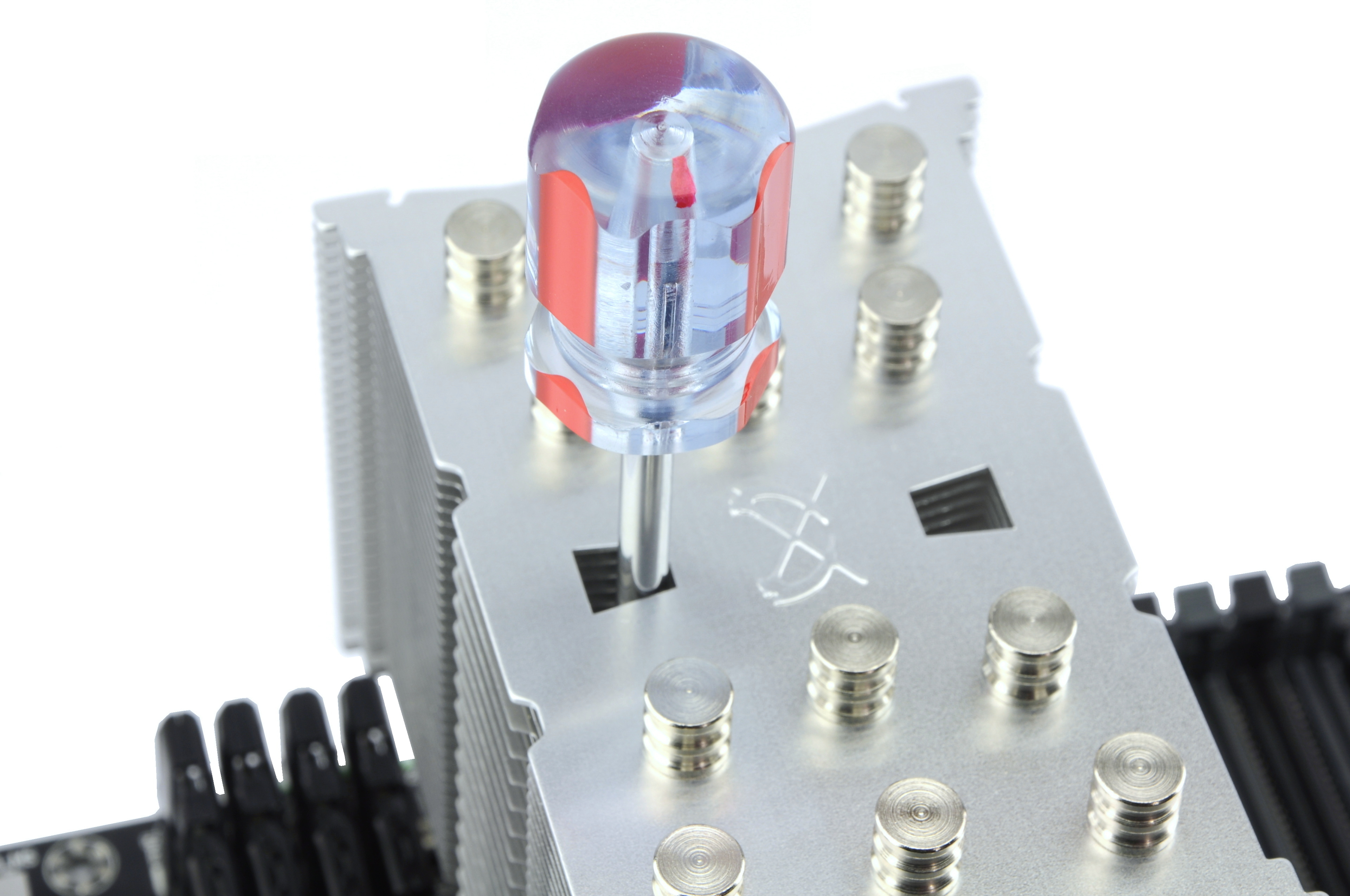
- Link to analysis: How can a pressure of a cooler affect its cooling performance?
A thicker thermal pad can also deliver more attractive results with faster heat transfer. When compressed to the same final thickness as a thinner thermal pad, it contains more material—a larger volume through which heat can flow. As a result, its effective thermal conductivity becomes higher.

- Link to analysis: Test of “chewing gums”: 3× Arctic and Thermal Grizzly Minus Pads
English translation and edit by Jozef Dudáš



It’s all “relics” from 2017–2018, but… 🙂