
The key announcement from Nvidia at Gamescom 2025 is the planned upgrade of the GeForce NOW game-streaming platform. With the transition to the Blackwell architecture, subscribers can look forward to not only higher performance, but also increased resolutions, refresh rates, improved stream quality with Cinematic Quality Streaming (CQS), and enhanced controller support. There are more updates for GeForce owners.
Nvidia’s long-term ambition is to bring GeForce to platforms that can’t run discrete graphics cards, transforming less powerful devices—notebooks, Chromebooks, MacBooks, smart TVs, handhelds—into gaming machines with Nvidia chips through cloud and internet streaming.
The company has agreements with four major publishers and PC game distributors: Steam, Epic, Xbox and Ubisoft.
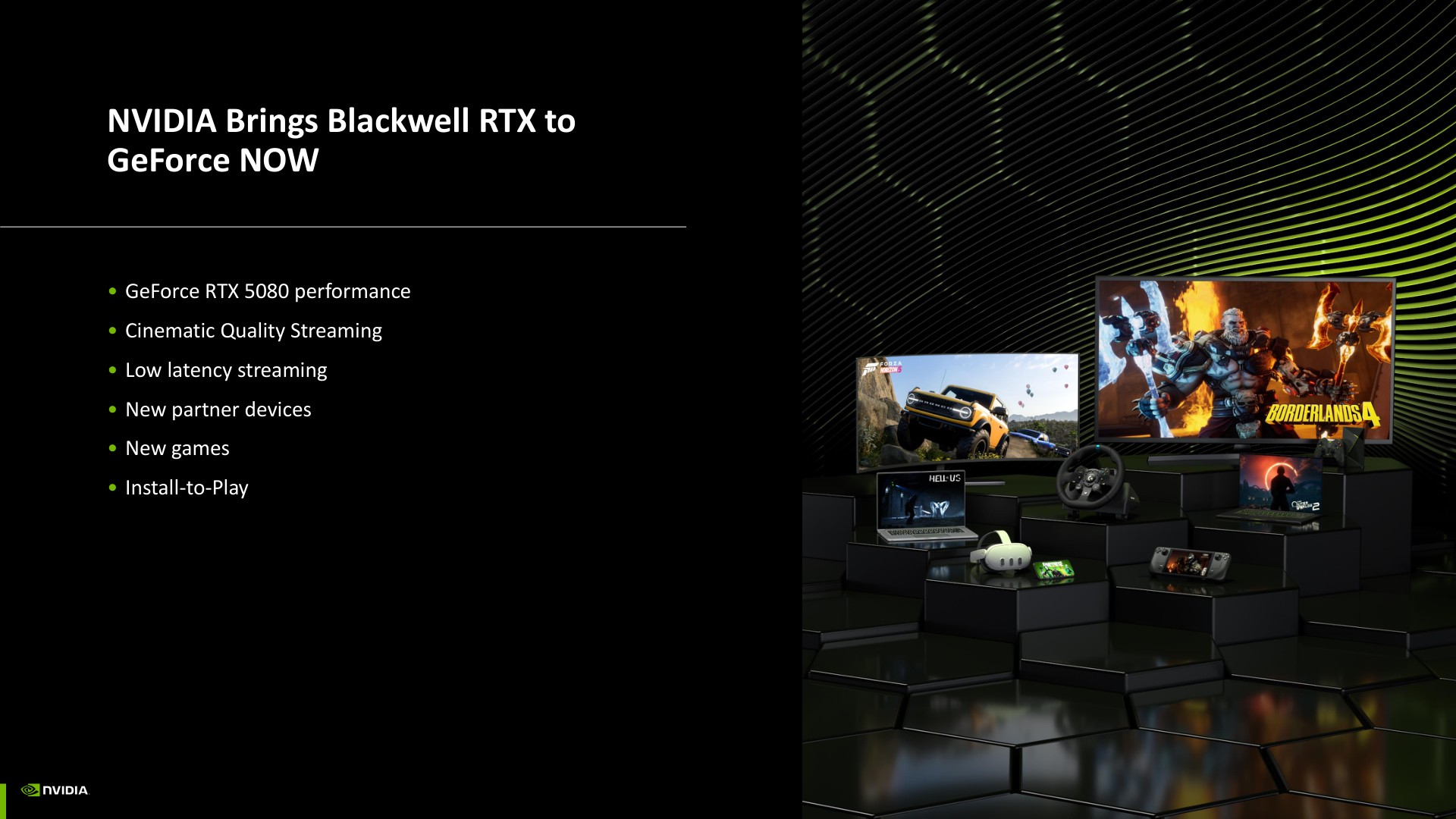
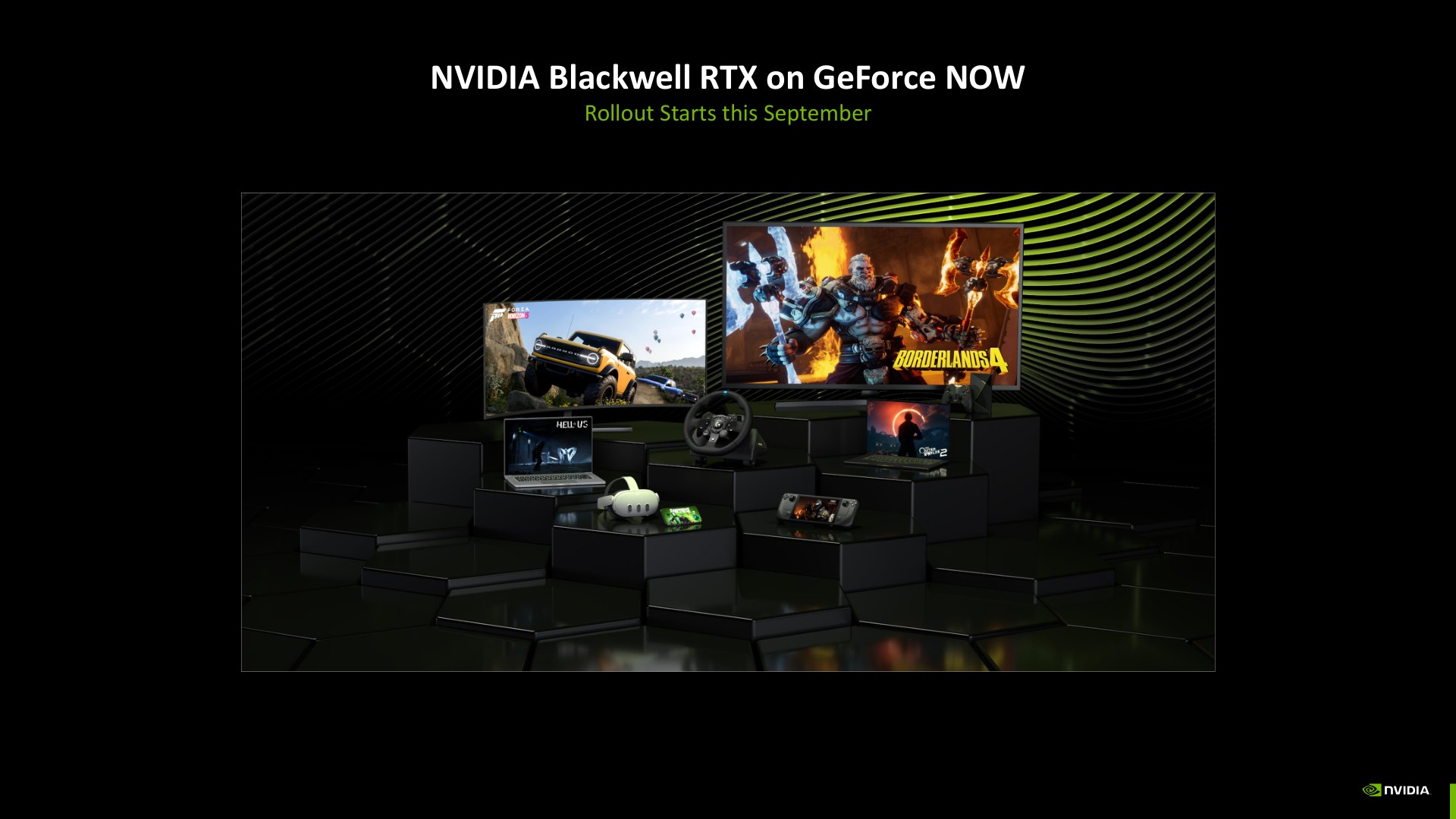
Now, GeForce NOW is getting Blackwell. The service promises:
- GeForce RTX 5080-class performance
- Cinematic Quality Streaming
- Low-latency streaming
- Support for new partner devices
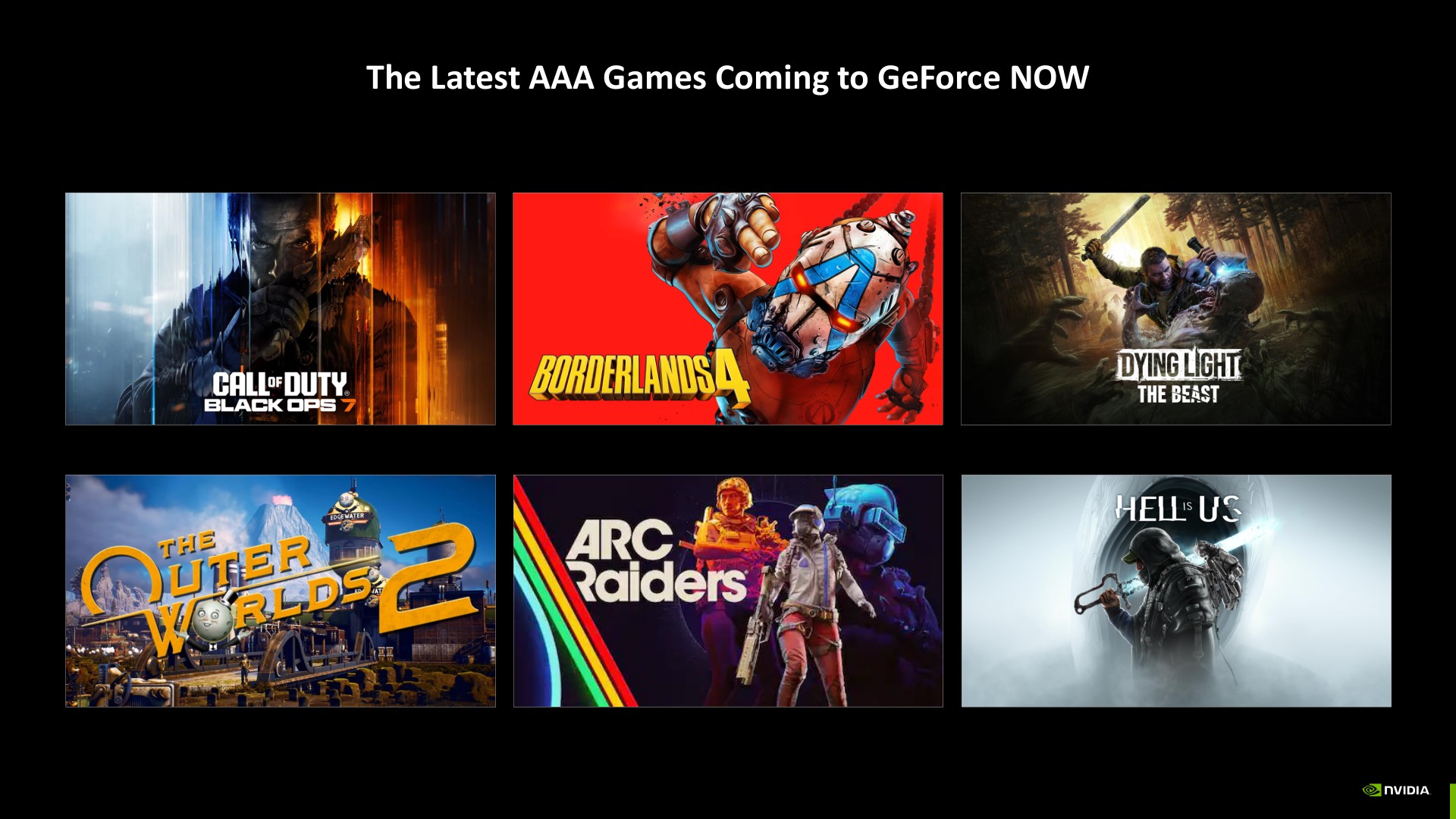
- New games
- Install-to-Play
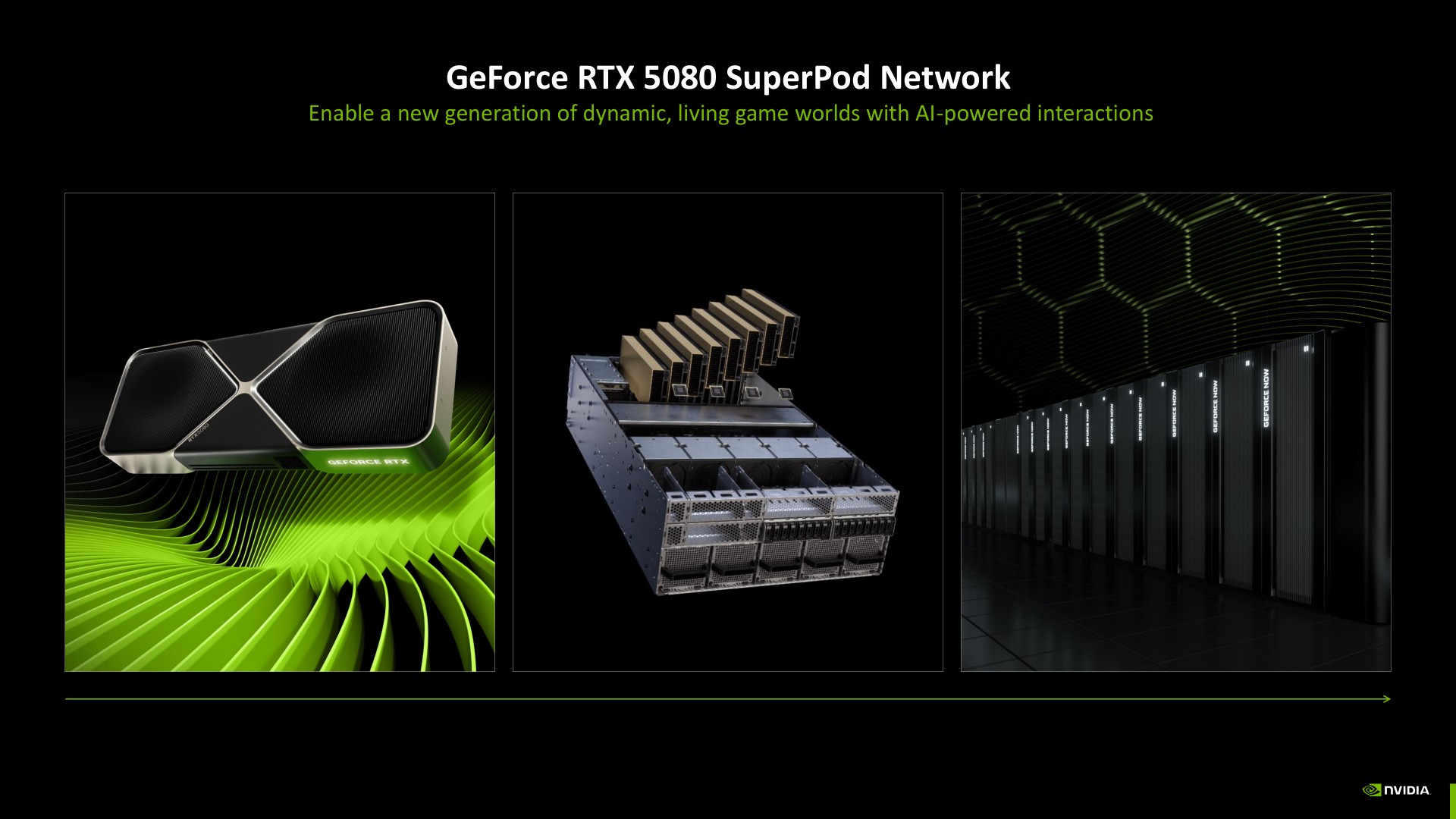
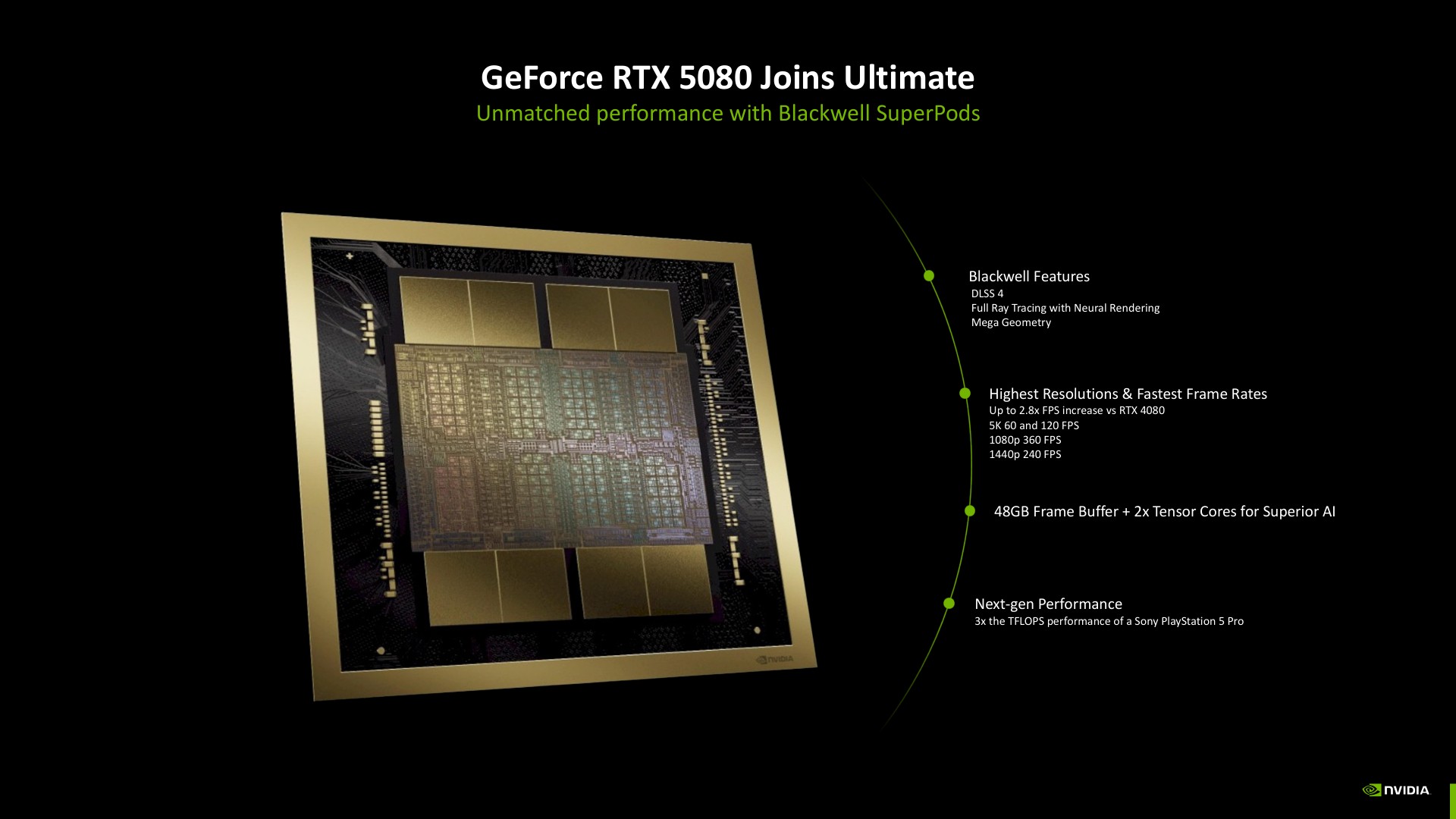
GeForce NOW runs on SuperPOD servers, which integrate all hardware required for the service. The new generation uses server-grade RTX 5080 GPUs with a 48 GB frame buffer and a range of upgrades for higher performance.
Chief among them are Ryzen Threadripper Pro CPUs with eight cores, sixteen threads and boost clocks up to 4.4 GHz, delivering 30% more performance than the previous platform. System memory has also doubled.
Key innovations coming with the Blackwell architecture include support for DLSS 4 and the new “Mega Geometry” technology. It supports higher resolutions and frame rates — delivering 5K at 60 or 120 frames per second, up to 360 FPS in Full HD, and 240 FPS at 1440p. Of course, you’ll need devices capable of displaying such streams.
The hardware is further equipped with a 48GB framebuffer and twice the number of tensor cores, bringing a significant boost in AI workloads. Overall theoretical compute performance is expected to be around three times that of the PlayStation 5 Pro. This may not impress gaming PC owners, but Nvidia is clearly targeting console gamers with this message.
Betting on Multi Frame Generation
Nvidia promises up to 2.8× higher speed compared to RTX 4080, and resolutions up to 5K at 60 or 120 fps.

As with the RTX 50 series, an important note is that this comparison is made in 4K resolution with maximum settings in DLSS Balanced mode, with DLSS Multi Frame Generation 4× on GFN Ultimate 5080 versus Frame Generation 2× on GFN Ultimate 4080. It is therefore a comparison of frame rates with three generated frames on “RTX 5080” and one on “RTX 4080,” not a pure GPU performance increase.
Just like the entire RTX 50 generation, GeForce NOW relies on multi frame generation. The RTX 5080 can generate up to three frames of four frames using AI, whereas the current GeForce NOW Ultimate with a virtual RTX 4080 could only generate one between two rendered frames. A new Reflex mode for lower latency at 360 fps will also be added.
Players are often worried about higher latency with frame generation, and in the case of streamed content that applies even more. But if it hasn’t been a problem with the current tariffs when generating one frame, with higher base frame rates you don’t need to fear significantly worse latency with three generated frames either. In both cases, only one rendered frame is delayed, so the delay itself does not grow dramatically. The important part is that the base frame rate is high enough—you can’t set a game to 30 fps and expect MFG 4× to push it to a playable eighty.
Higher-quality format, better compression, and higher bitrates
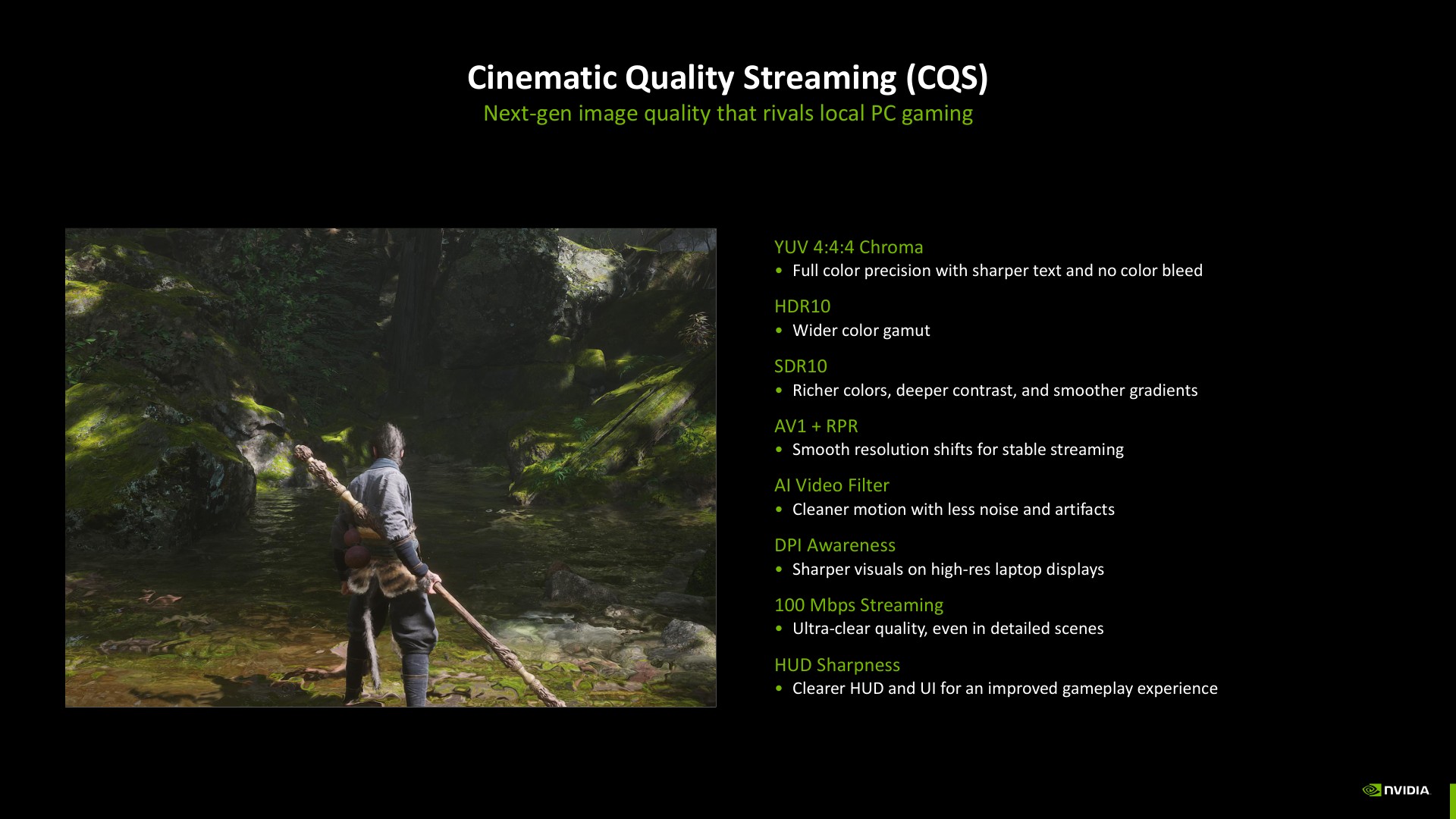
The quality of the stream has also improved. In Cinematic Quality mode, it can now run with YUV 4:4:4 sampling, without subsampling and blending of colors. This is most noticeable on fine colored lines or text. When bitrate drops, AV1 and RPR are supposed to ensure smoother transitions to lower bandwidth streams. AI filters will help remove possible artifacts. In addition, the data rate can be raised to 100 Mbps. With CQS enabled, video compression preserves far more detail—even in areas where lossy algorithms tend to discard it at lower stream quality, such as dark parts of the image that players usually don’t pay much attention to.

On the server side, more precise frame compression timing is supposed to reduce latency. Nvidia has also started cooperating with internet providers on L4S (Low Latency, Low Loss) technology, which improves data transfer for delay-sensitive services. Instead of dropping packets, L4S signals to the application that the network is congested, which then adjusts transfer speed in real time to avoid interruptions or losses.
With a strong connection, the combination of higher GPU performance and higher frame rates can result in noticeably lower latency than when playing on a home console connected to a TV.

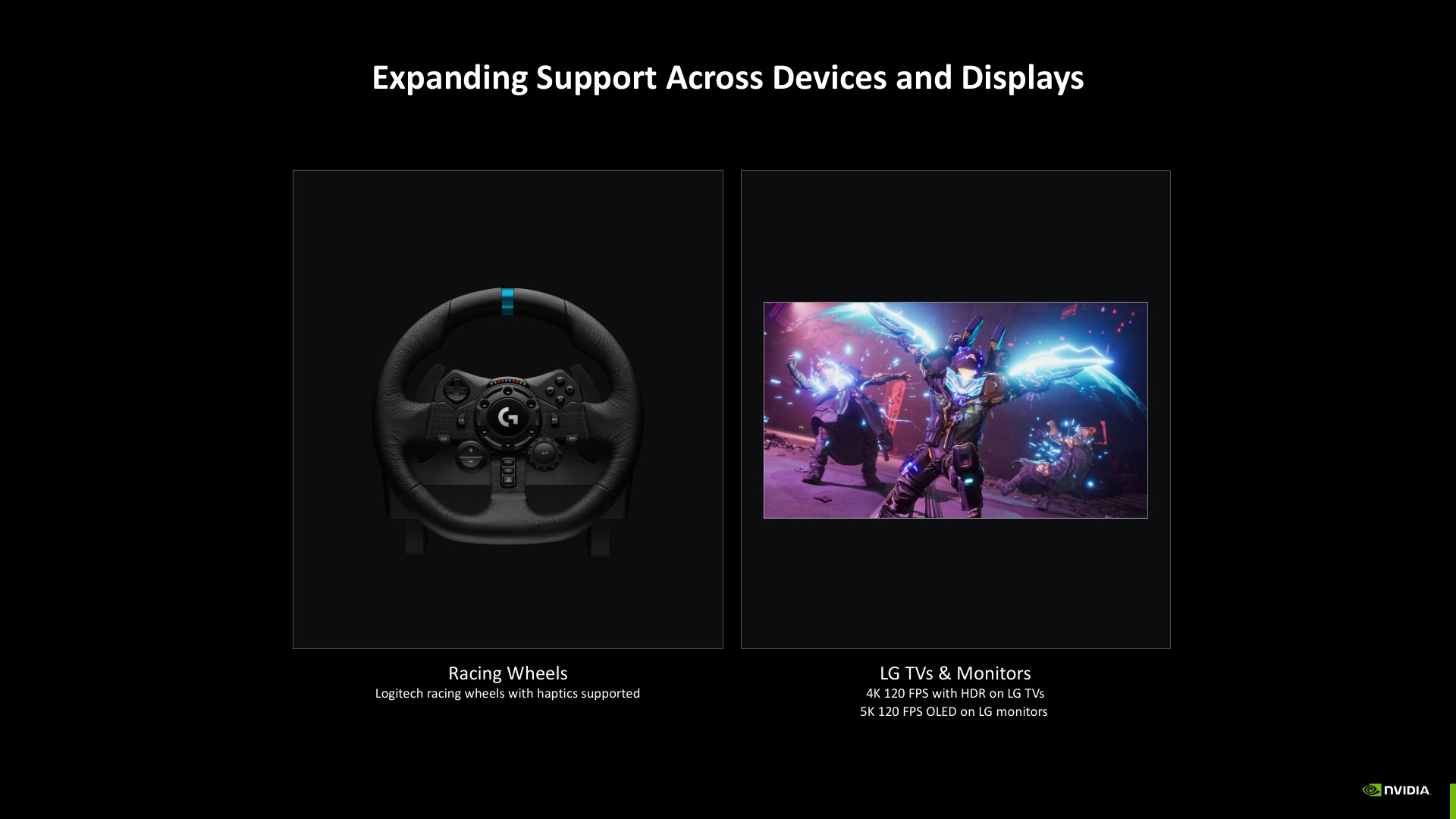
For racing wheels, support for force feedback and haptic response will be added. Support is also coming for LG TVs and monitors with higher refresh rates—4K or 5K at 120 fps.

Instant play on Discord
Nvidia, in collaboration with Discord and Epic, is introducing “instant” gaming to make it easier for more people to try cloud gaming. The idea is to let users jump into a game quickly and easily. On Discord, you’ll be able to team up with friends and launch a game with a single click—no need to create a GeForce NOW account, download files, install anything, or use separate launchers.
You’ll also be able to try a limited version of GeForce NOW Performance with Fortnite directly from Discord. All you will need to do is link your Epic account—there’s no downloading or registration needed. Just connect and start playing.
Install-to-Play
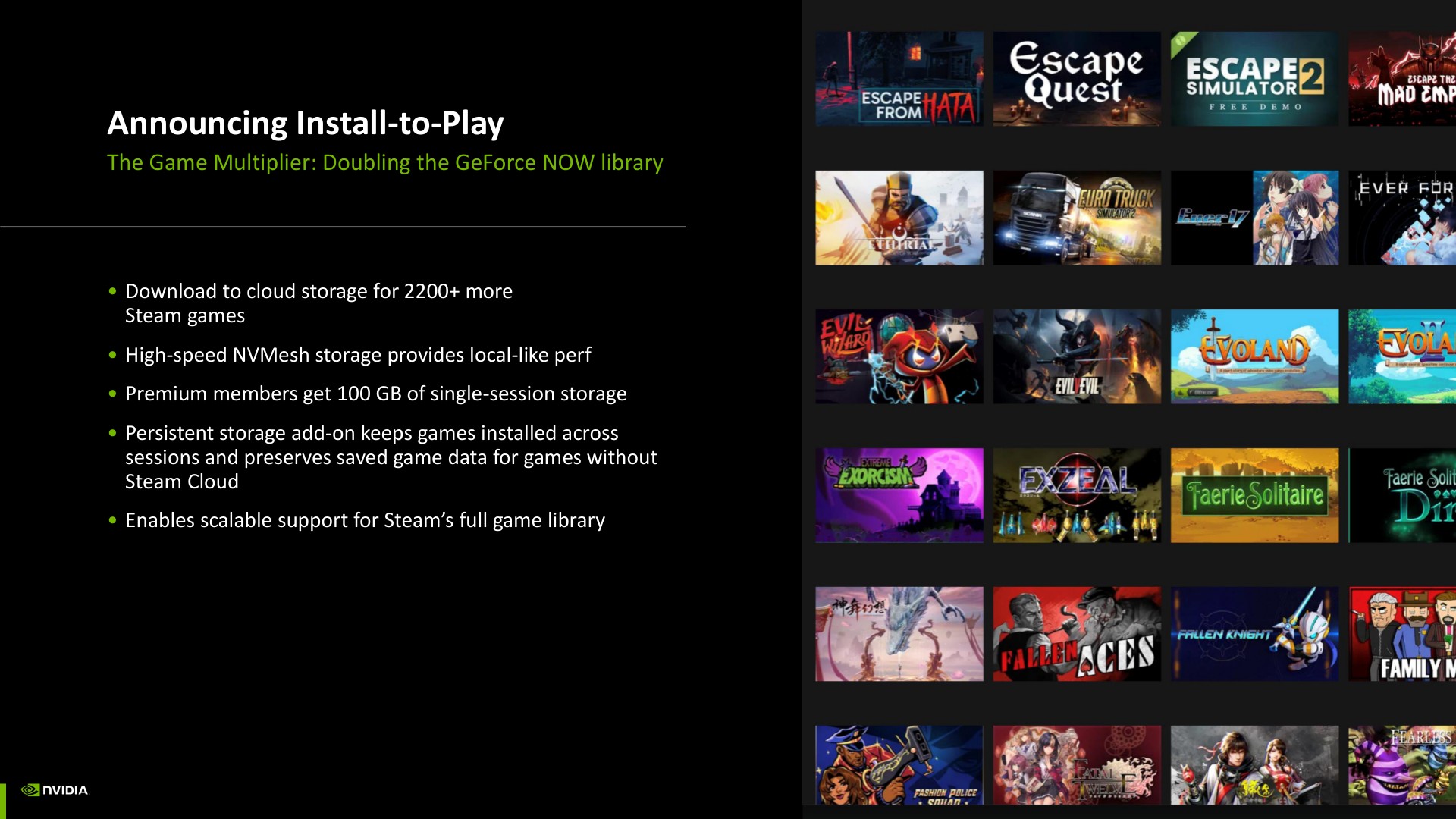
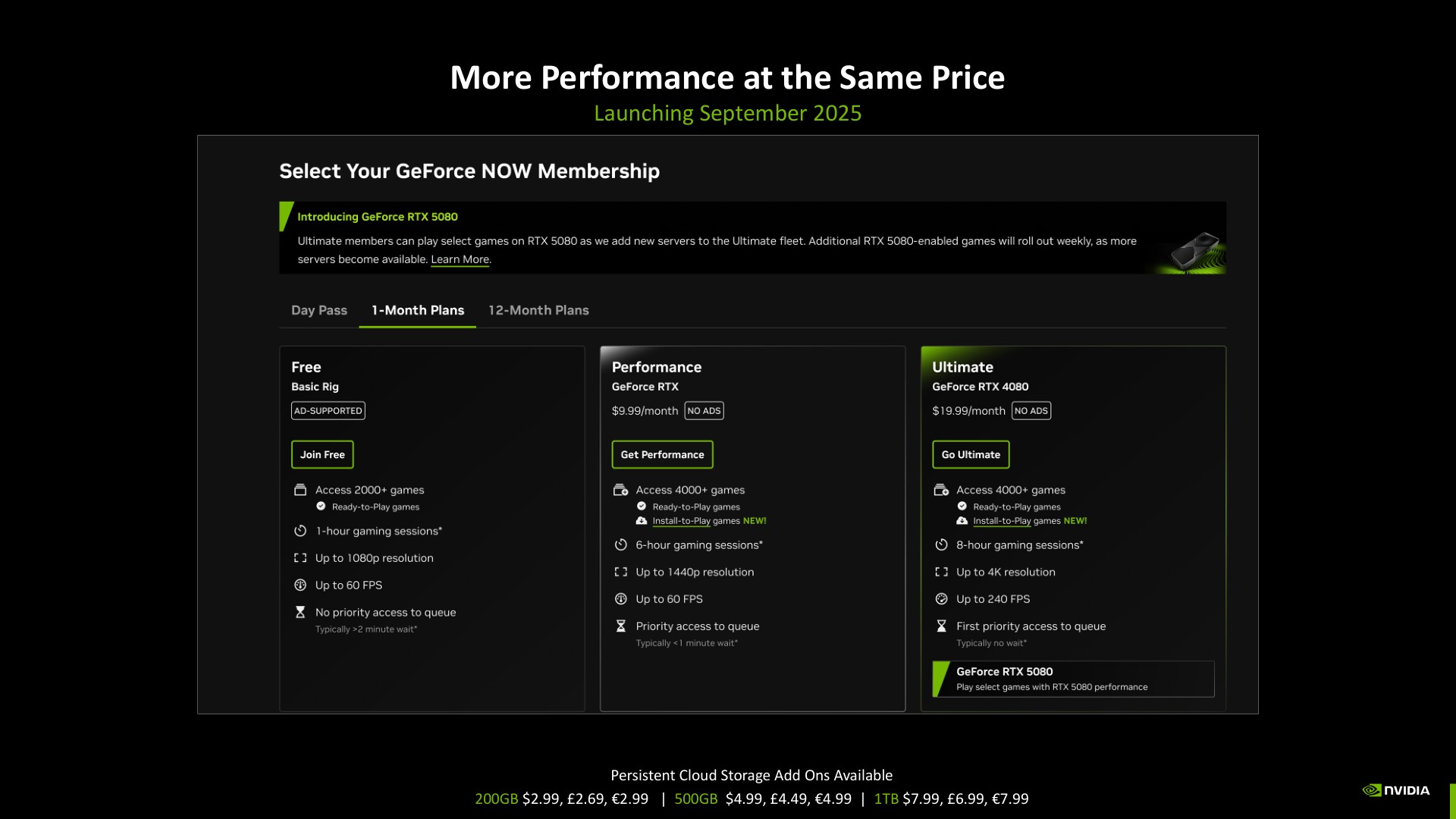
GeForce NOW already offers more than two thousand titles, but not everything. More than 2,500 additional Steam games will be installable into temporary 100 GB cloud storage for premium subscribers. While storage doesn’t persist between sessions by default, users can purchase permanent storage, which retains data even without services like Steam Cloud. Pricing for additional space starts at €2.99 per month for 200 GB, with 500 GB available for €4.99 and 1 TB for €7.99.
Nvidia will begin the transition in September 2025. Ultimate GeForce RTX 4080 will be upgraded to Ultimate RTX 5080 at the same price once servers in the respective region are ready.
Updates for GeForce owners
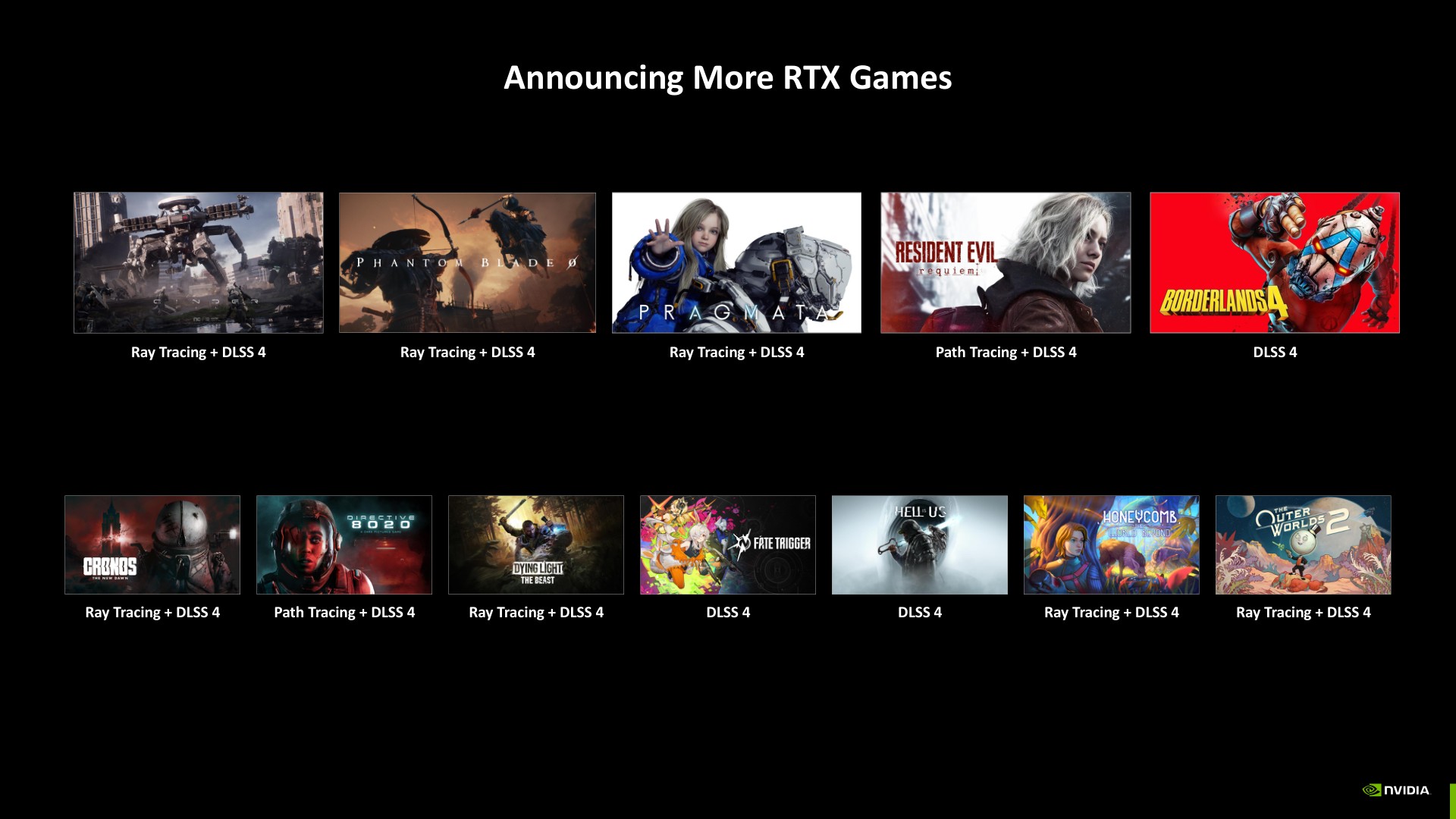
More updates and improvements are aimed at GeForce owners. NVIDIA showcased new and upcoming titles with support for DLSS 4, ray tracing, and path tracing, including Resident Evil Requiem, Directive 8020, Phantom Blade Zero, PRAGMATA, and CINDER CITY. As a bonus, buyers of higher-end GeForce RTX 50 graphics cards will receive the upcoming Borderlands 4 in a bundle.
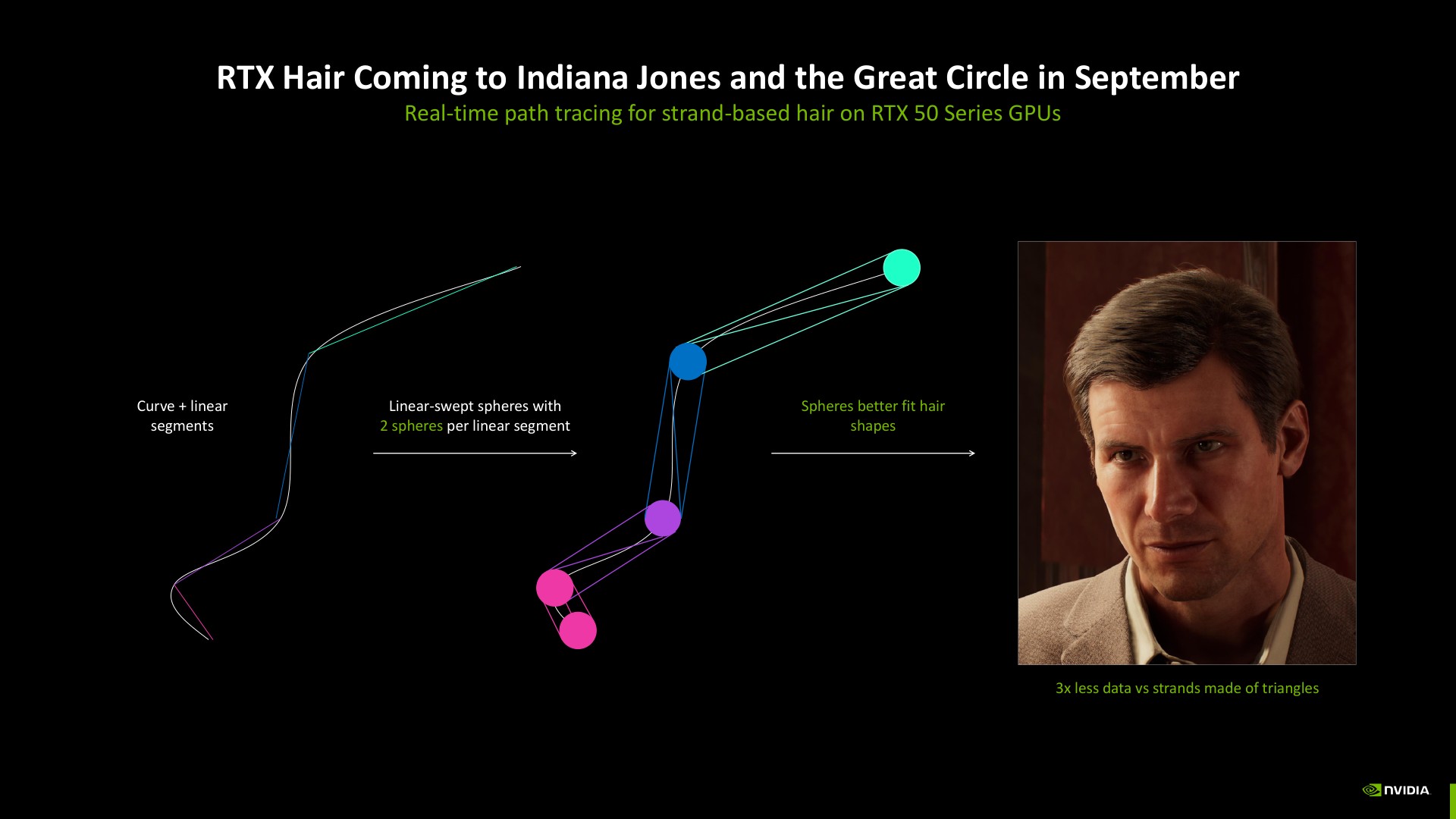
A new update for Indiana Jones and the Great Circle, planned for September, will introduce RTX Hair, which takes advantage of new technologies NVIDIA introduced with the Blackwell-based GeForce RTX 50 Series. As a result, it will run exclusively on these GPUs. Instead of rendering hair with traditional triangle polygons, RTX Hair represents strands as lines composed of multiple swept spheres (LSS – linear swept spheres). This method more closely resembles the shape of real hair strands while reducing the geometric complexity needed for each one. It also enables more realistic lighting and shadows with lower GPU load and VRAM usage, while simplifying the simulation of reflections and shading on hair.

New features in the NVIDIA App
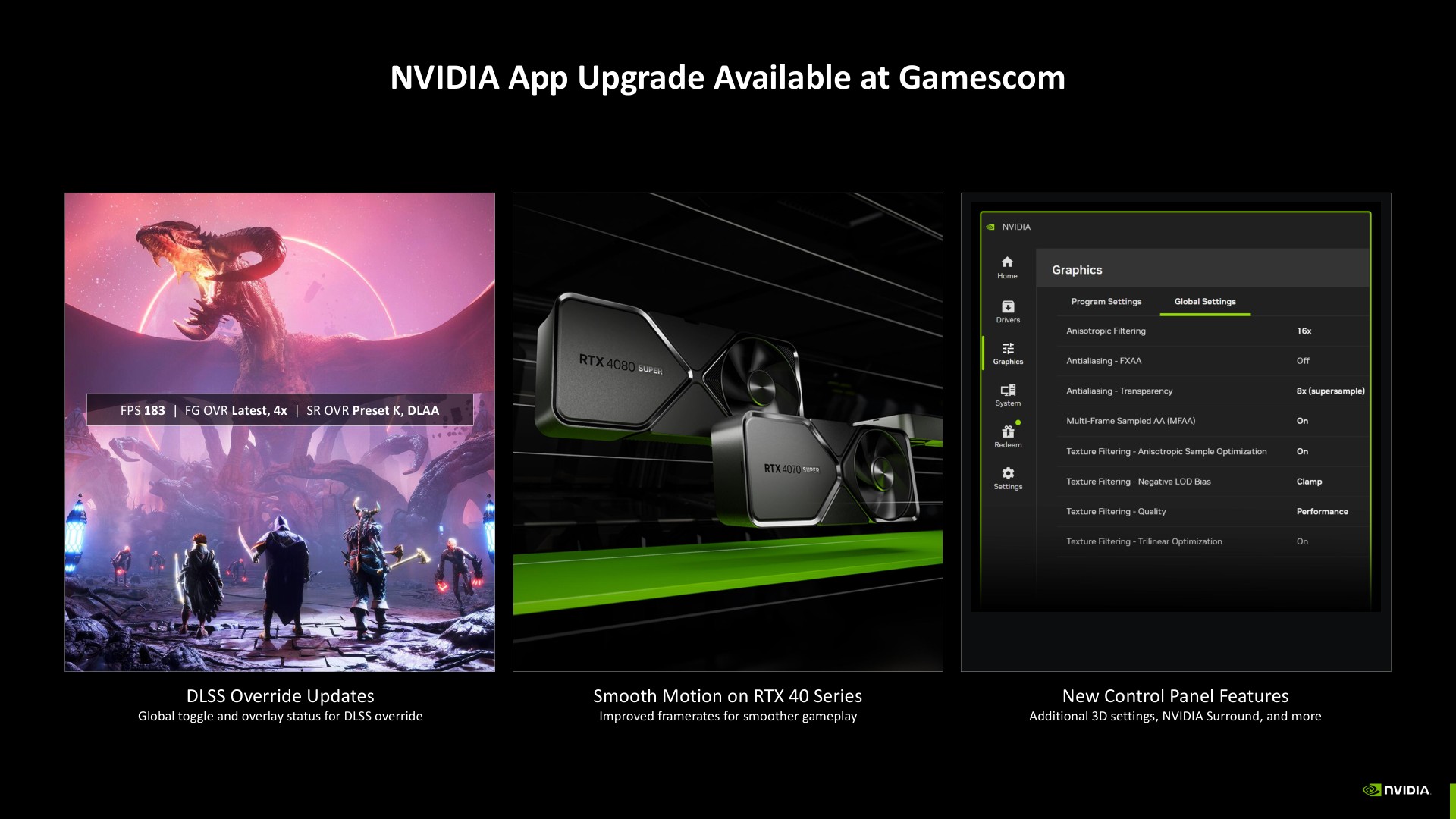
Updates and improvements are also coming to the NVIDIA App, first in beta and later in the full release. These include:
- Global DLSS Overrides: DLSS Multi-Frame Generation or DLSS Super Resolution no longer need to be enabled individually. They can now be activated globally across hundreds of DLSS Override titles.
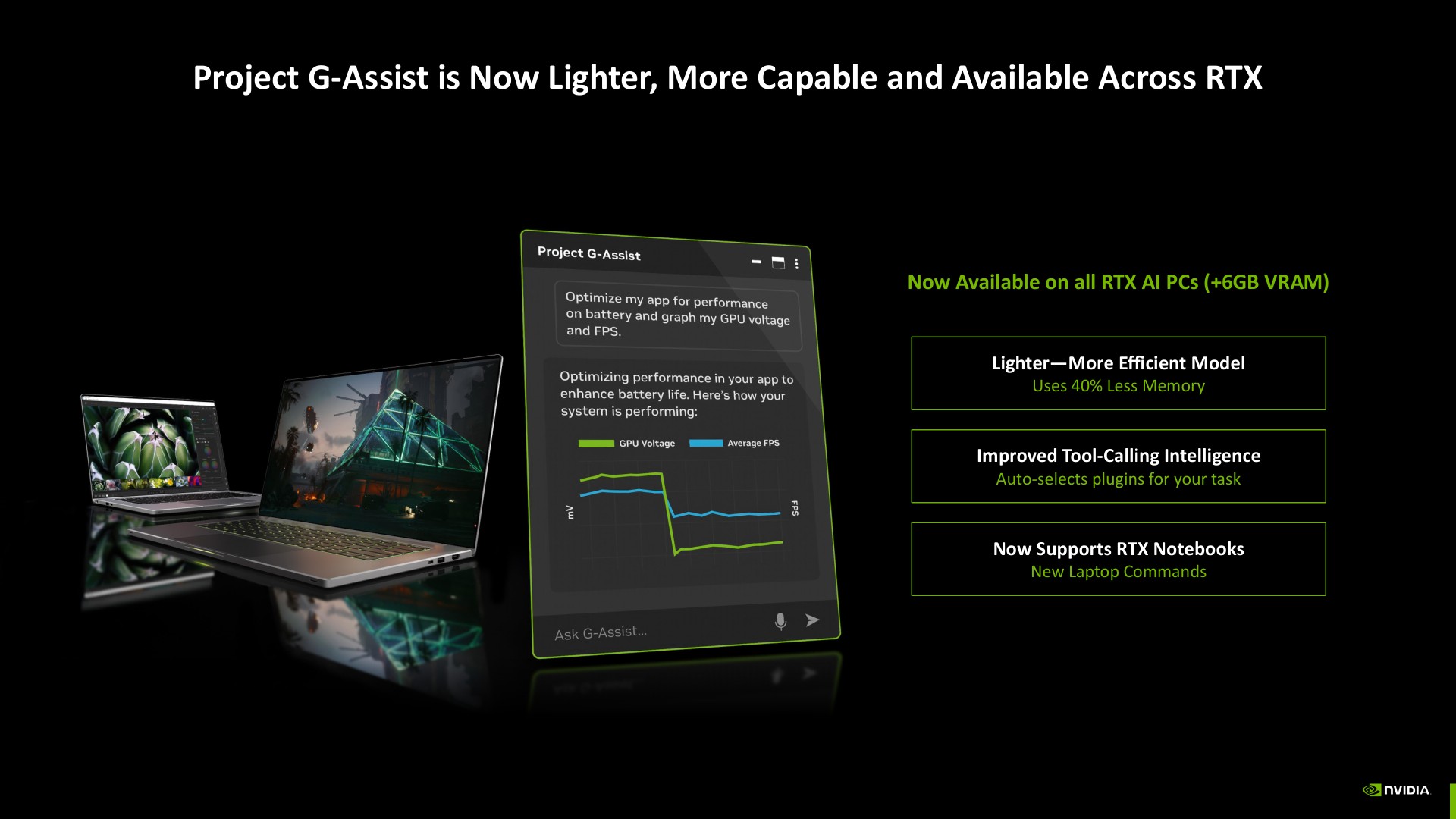
- Project G-Assist Upgrades: The latest update to Project G-Assist — the on-device AI assistant for controlling RTX systems with voice or text — introduces a far more efficient AI model. It uses 40% less memory while responding faster and more accurately triggering the right tools.
- Legacy 3D Settings: Several long-requested options from the classic Control Panel are now included, such as anisotropic filtering, anti-aliasing, and ambient occlusion, making it easier to enhance older games.
- The NVIDIA App will also add NVIDIA Surround settings, which until now were only available in the classic Control Panel.

RTX Remix expands with community tools and a new particle system
More RTX Remix news came during Gamescom. The open-source platform for remastering classic games with path tracing continues to grow, largely thanks to community contributions. Modders are using large language models to develop new tools that extend RTX Remix’s functionality — one plugin links RTX Remix with Adobe Substance 3D, while another enables automatic emissive effects based on original game data.
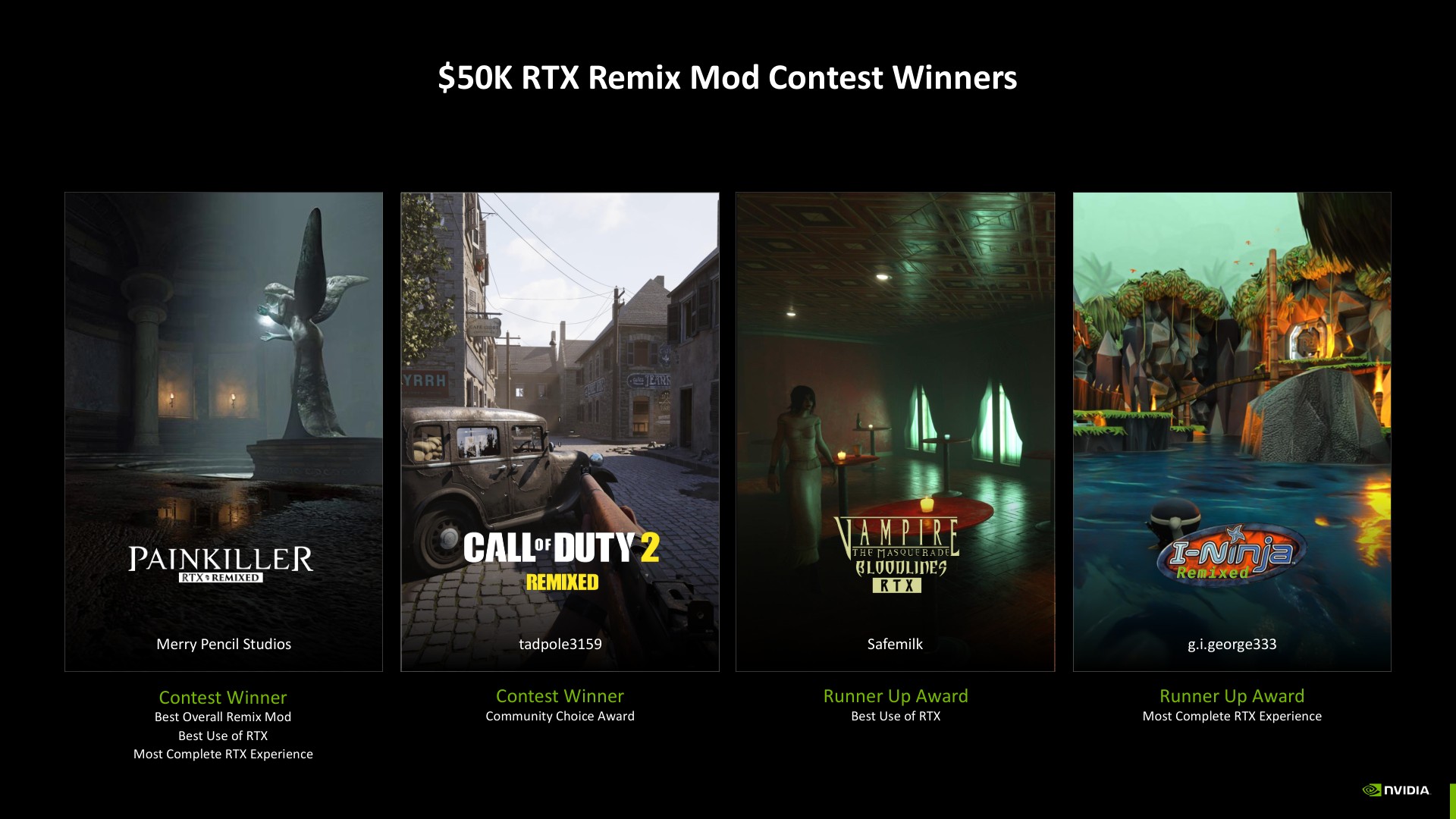
Support has also expanded to include games like Call of Duty 4: Modern Warfare, Knights of the Old Republic, Doom 3, Half-Life: Black Mesa, and Bioshock. Some of these titles appeared in the recent $50K RTX Remix modding contest, where Painkiller RTX won top honors.
At the same event, NVIDIA introduced a new particle system for RTX Remix, which is expected to launch in September. It adds dynamic effects to 165 classic games — most of which previously lacked any particle editing tools. Modders can customize particle size, color, light emission, turbulence, and gravity.

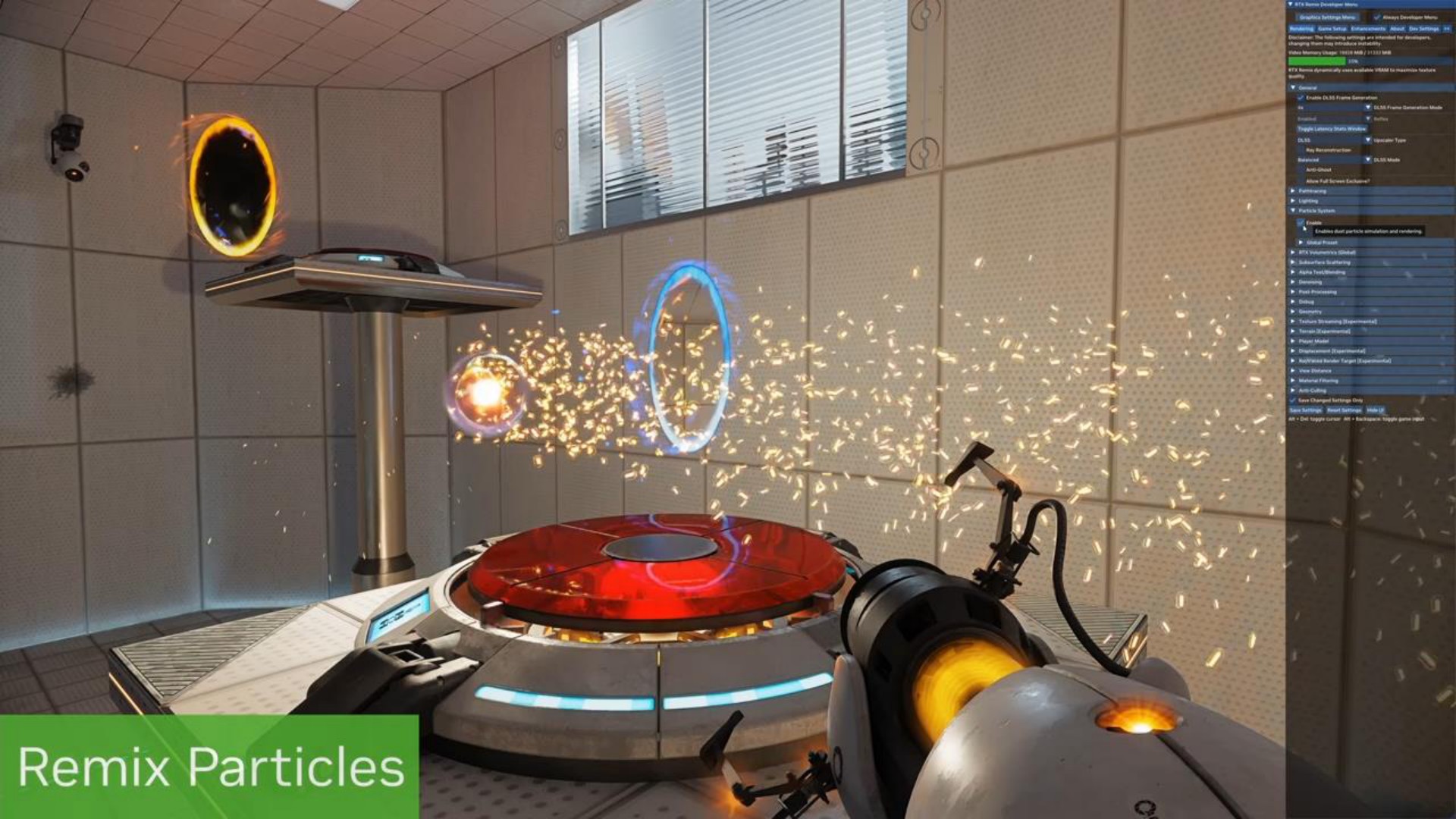
The following highlight reel shows upcoming games along with the new updates and technologies in action.
At the end, you can browse the full slide deck for more details and examples.









English translation and edit by Jozef Dudáš