Radeon RX 9070 XT Gaming OC: Gigabyte’s affordable choice

The AMD Radeon RX 9070 XT delivers better price-to-performance than competing GeForce cards and 4 GB more memory than the RTX 5070. The Radeon RX 9070 XT Gaming OC 16G is the more affordable of Gigabyte’s two RX 9070 XT models. While it doesn’t match premium variants in overall performance, it offers more capable power delivery, a higher power limit for factory overclocking, and greater overclocking headroom than base models. Read more “Radeon RX 9070 XT Gaming OC: Gigabyte’s affordable choice” »

Asus TUF GeForce RTX 5070 12GB OC Ed.: Perfectionism

While the more powerful GeForce RTX 50 models face no direct competition, AMD has positioned two strong contenders against the RTX 5070—the Radeon RX 9070 and RX 9070 XT. Both offer slightly better value and more memory. Your choice depends on whether you need a graphics card purely for gaming or also for professional applications, and how reliant you are on Nvidia’s broader, more polished ecosystem with proprietary technologies. Read more “Asus TUF GeForce RTX 5070 12GB OC Ed.: Perfectionism” »

Sapphire Pure AMD Radeon RX 9070: Better than RTX 5070, but…

AMD set the price of the more affordable Radeon RX 9070 as a direct competitor to GeForce RTX 5070. Compared to Nvidia’s card, it offers better raw performance and 16 GB of memory instead of 12 GB. For dedicated gamers, AMD’s Radeon is the more attractive option. However, there’s one compelling reason to avoid the RX 9070 from AMD—the slightly more expensive but significantly more powerful Radeon RX 9070 XT. Read more “Sapphire Pure AMD Radeon RX 9070: Better than RTX 5070, but…” »

Sapphire Pulse AMD Radeon RX 9070 XT: A Big Comeback

AMD has listened to gamers and seized an opportunity created by criticism of the new GeForce RTX 50 series. With the Radeon RX 9070 and RX 9070 XT, it has set aggressive prices that make many overlook minor drawbacks compared to GeForce. The RX 9070 XT is only slightly slower than the RTX 5070 Ti in rasterization but offers a far more attractive price, especially compared to overpriced non-reference GeForce cards. Read more “Sapphire Pulse AMD Radeon RX 9070 XT: A Big Comeback” »

Gigabyte GeForce RTX 5070 Ti Aero OC 16G Review: White Elegance

The Gigabyte GeForce RTX 5070 Ti AERO OC 16G targets gamers moving away from flashy RGB setups and pitch-black components, opting instead for an all-white aesthetic. Its elegant design and massive cooler take it clear that it’s built for demanding gamers who want more than just the best price-to-performance. Beyond its unconventional look, it also delivers slightly higher performance thanks to factory overclocking and excellent cooler. Read more “Gigabyte GeForce RTX 5070 Ti Aero OC 16G Review: White Elegance” »

MSI GeForce RTX 5070 Ti 16G Vanguard SOC review

The new GeForce RTX 5070 Ti goes on sale as the most affordable GeForce model with the Blackwell architecture to date. We’re looking at one of the best-equipped versions—the MSI GeForce RTX 5070 Ti 16G Vanguard SOC, a top-tier model from MSI. It features an extremely powerful cooler with massive headroom and excellent performance but comes at a price comparable to the RTX 4080 Super from the previous generation. Read more “MSI GeForce RTX 5070 Ti 16G Vanguard SOC review” »

Radeon RX 7900 XTX Gaming OC: Gigabyte’s Base Model

The Radeon RX 7900 XTX Gaming OC from Gigabyte is among the more affordable models which are rarely reviewed. Manufacturers lower production costs mainly by reducing the size of the heatsink. As a result, these cards don’t perform as well as premium high-end models in thermal and acoustic tests. However, their lower price makes them popular not only with individual buyers but also OEMs assembling prebuilt PCs. Read more “Radeon RX 7900 XTX Gaming OC: Gigabyte’s Base Model” »

Tweaking Asus ROG Astral RTX 5080: Cut the Noise and Power Draw

Last week, we took a look at the Asus ROG Astral GeForce RTX 5080 OC Edition. It has a powerful cooler, but by default, the fan control pushes speeds high, and card is anything but quiet. So, I also measured how the card’s behavior changes when lowering fan speeds, how different power limit settings affect performance, and what the OC scanner does to the clock speed/voltage curve and how that impacts performance. Read more “Tweaking Asus ROG Astral RTX 5080: Cut the Noise and Power Draw” »

Gigabyte GeForce RTX 5080 Gaming OC Review: The Sweet Spot

At first glance, the Gigabyte GeForce RTX 5080 Gaming OC isn’t striking in terms of flashy design or vibrant lighting. It’s neither the cheapest nor the most expensive model. In a standard setup, the lighting is subtle, but the backlit fans stand out more when mounted vertically. The real advantage, though, is its oversized cooler and well-tuned fan control, allowing it to outperform even pricier competitors in terms of overall performance. Read more “Gigabyte GeForce RTX 5080 Gaming OC Review: The Sweet Spot” »

Asus ROG Astral GeForce RTX 5080 OC Ed.: Brutalism in PC

With the new generation of GeForce GPUs, Asus is introducing the new ROG Astral series. Positioned at the top of Asus’s lineup, it inherits high-end features from previous ROG Strix models, including a dual BIOS, system fan control, a robust design, factory overclocking, and a large, top-notch cooler. It doesn’t just come with three but a total of four fans. However, this premium package comes at a significant price. Read more “Asus ROG Astral GeForce RTX 5080 OC Ed.: Brutalism in PC” »

Nvidia GeForce RTX 5080 FE Review: More Performance, Same Price

The GeForce RTX 5080 series gaming graphics cards go on sale today, and simultaneously, we can now publish performance test results. The biggest improvement over the last generation is an interesting performance boost in the most demanding titles at 4K and support for new standards and technologies. The edge is especially gained in demanding ray tracing scenarios, and vice versa. Read more “Nvidia GeForce RTX 5080 FE Review: More Performance, Same Price” »

Nvidia GeForce RTX 5090 FE review: Next-Level Gaming

Today ends the information embargo on tests of Nvidia’s top-tier GeForce RTX 5090 Founders Edition graphics card. It delivers extreme performance but at the cost of unprecedented power consumption and the highest price yet. Even so, it is expected to attract immense interest from gamers and professionals for its 32 GB of memory and exceptional application performance. Read more “Nvidia GeForce RTX 5090 FE review: Next-Level Gaming” »

3DMark Steel Nomad and three generations of graphics cards in test

UL Solutions’ 3DMark suite of performance tests recently added a new multi-platform test, Steel Nomad. With it, UL aims to replace the popular Time Spy in DirectX 12 for Windows while offering cross-platform performance measurement on other modern gaming platforms using other APIs such as Vulkan for Windows on Arm and Android and Metal for Apple iOS. Read more “3DMark Steel Nomad and three generations of graphics cards in test” »

“All” graphics cards in in-depth coil whine analysis

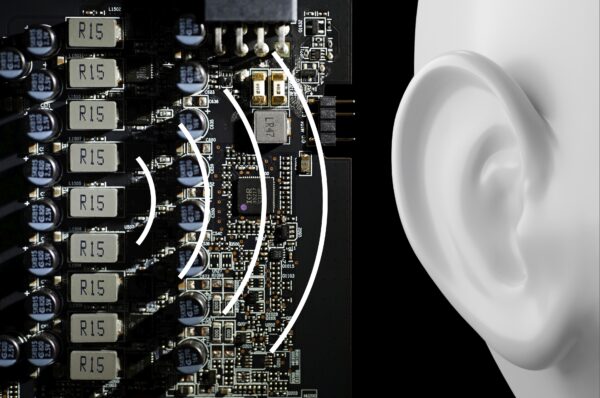
The number of graphics cards tested over the recent period has reached a number after which we can pause a bit and specifically focus on the noise level of their coils. The latter has always been recorded in standard measurements, but in large tests with lots of other information, this unique data was getting lost. That is why it will now, within the scope of this article, be limited to these only. So which of the modern graphics cards has the quieter coils? Read more ““All” graphics cards in in-depth coil whine analysis” »

Gigabyte RX 7900 GRE Gaming OC 16G in test of 30 graphics cards

The most “lightweight” AMD Navi 31 (XL) GPU, the slowest memory subsystem, but also the lowest price. That’s the RX 7900 GRE compared to the RX 7900 XT. This Radeon is also noticeably cheaper compared to the RTX 4070 Super, although the GeForce’s power efficiency is more favorable. The gaming performance of the RX 7900 GRE (RTX 4070S), meanwhile, is comparable. That is, as long as you won’t miss ray-tracing graphics. Read more “Gigabyte RX 7900 GRE Gaming OC 16G in test of 30 graphics cards” »

Ray tracing for old games: NVIDIA RTX Remix tested

Sometimes people say that today’s games don’t measure up to the old ones and don’t offer much besides visuals. But what if modern visuals could be added to classic games that are even twenty years old? NVIDIA’s RTX Remix technology (or software) is supposed to do just that, making it relatively easy to add better graphics to even very old games using a mod – including raytracing effects and things like DLSS or DLAA. Let’s see how it works. Read more “Ray tracing for old games: NVIDIA RTX Remix tested” »

Nvidia DLSS (3.5) in Alan Wake II. When does the game run best?

Alan Wake II is the first game to support Nvidia DLSS 3.5 from the start. In addition to the technological aspect, there is also the high popularity among gamers. This gives us the basic reasons to take a close look at the performance under different settings. In diving in with the gaming performance, we will be interested not only in the visual side, but also the power consumption. Not just of the graphics card, but the CPU as well. Read more “Nvidia DLSS (3.5) in Alan Wake II. When does the game run best?” »

Minitest: Cheap PSUs vs. graphics cards coils whine

You’ve already read the extensive analysis of graphics card coil whine changes depending on the PSU used. One last thing is missing for it to be complete. And that is to add the behavior of cheap PSUs with lower quality components. Otherwise, one could still speculate that across classes the situation could be significantly different. Could it? This is what we will focus on in the measurements with “80 Plus” PSUs, one of which is also already quite old. Read more “Minitest: Cheap PSUs vs. graphics cards coils whine” »

Which combo whines the least? 12 PSUs, 3 graphics cards…

“After replacing the PSU, the video card coils stopped whining”. An extremely common statement and yet it always remains on a subjective level, which is a pity. But that is also why we will now look at things in an exact, numerical way. We do this by testing several graphics cards, where for each, noise levels of VRM coils are monitored with each ATX (3.0) power supply used. So how is it with the “whining”? When is it stronger and when is it weaker? Read more “Which combo whines the least? 12 PSUs, 3 graphics cards…” »

Rare host: How does an SSD work in the Asus Dual RTX 4060 Ti?

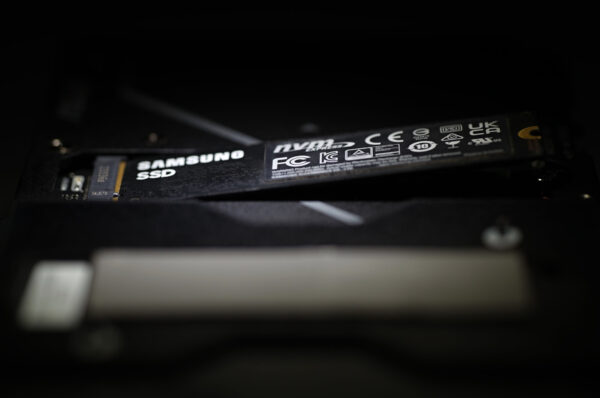
Among RTX 4060 Ti graphics cards, Asus has multi-functional designs with an M.2 slot for NVMe SSDs. These, unlike other models, don’t waste the potential of the PCI Express ×16 interface so significantly. To evaluate this design, partial results from motherboard tests are now extremely useful. Those results that relate to the M.2 slot speeds and the efficiency of SSD coolers. After all, the Asus Dual RTX 4060 Ti SSD also competes in both disciplines. Read more “Rare host: How does an SSD work in the Asus Dual RTX 4060 Ti?” »