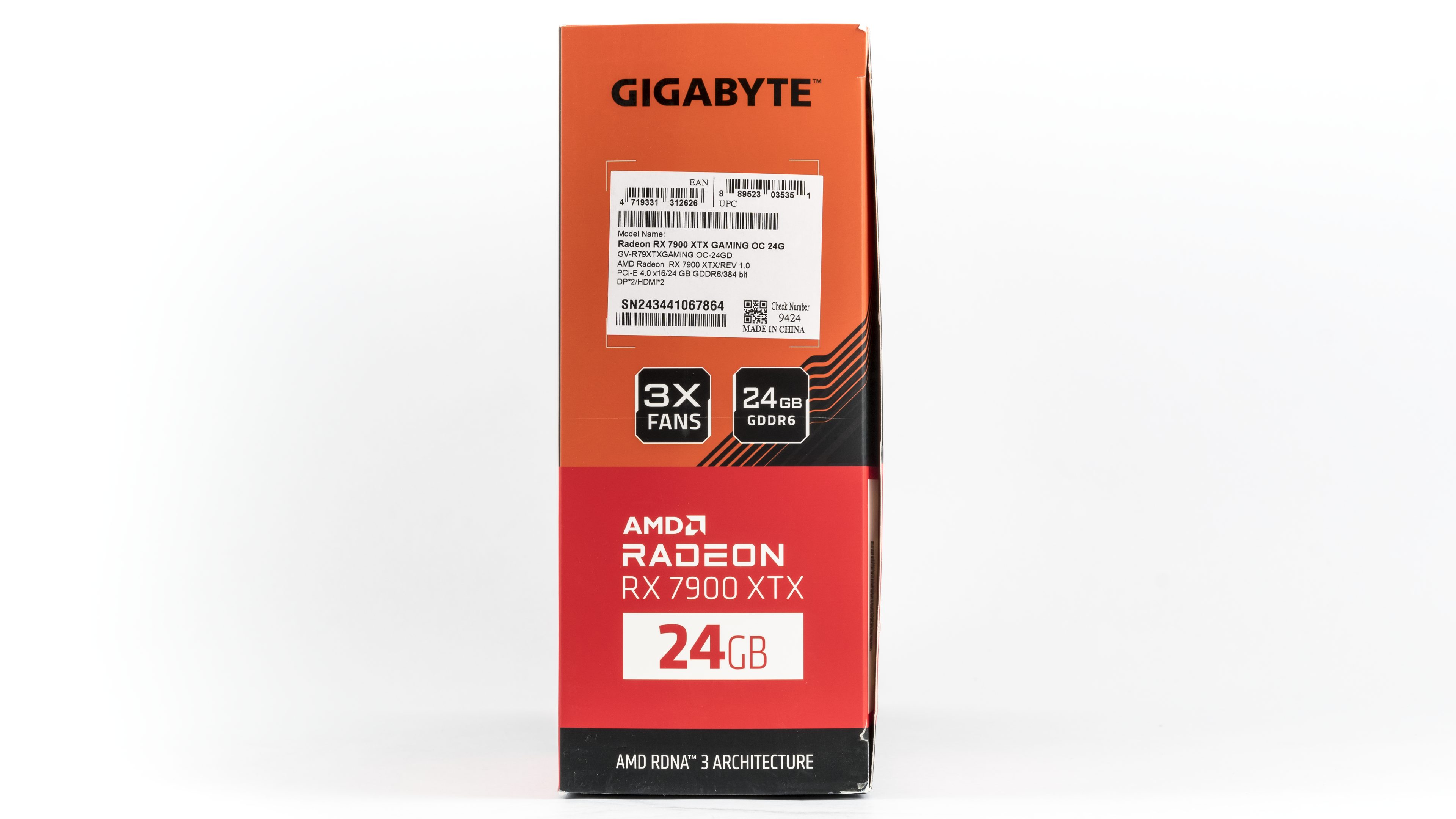
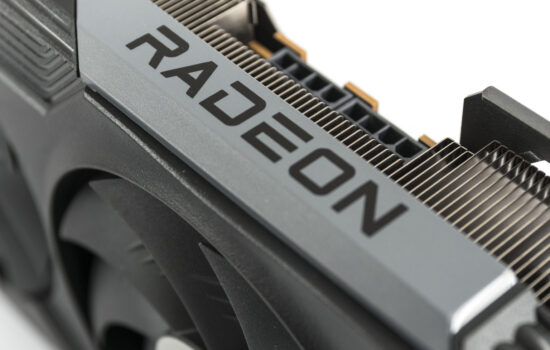
The Radeon RX 7900 XTX Gaming OC from Gigabyte is among the more affordable models which are rarely reviewed. Manufacturers lower production costs mainly by reducing the size of the heatsink. As a result, these cards don’t perform as well as premium high-end models in thermal and acoustic tests. However, their lower price makes them popular not only with individual buyers but also OEMs assembling prebuilt PCs.
The Radeon RX 7900 XTX probably doesn’t need an introduction anymore. AMD launched its RDNA3 architecture in December 2022. The first representatives of this generation were the Radeon RX 7900 XTX and RX 7900 XT graphics cards, which utilize the most powerful RDNA3 chip, codenamed Navi 31. This marked the first GPU to combine a large compute die (GCD) with smaller chiplets (MCD), where the infinity cache and memory controllers were relocated.
The more powerful Radeon RX 7900 XTX features a fully enabled version of the chip and is equipped with 24 GB of GDDR6 memory running at 20 Gb/s on a 384-bit bus. At launch, AMD set the suggested price at 999 USD. Currently, the most affordable models start at 899 USD.
The slightly weaker Radeon RX 7900 XT has a somewhat cut-down version of the chip, utilizing five functional MCD chiplets with 80MB of Infinity Cache and a 320-bit bus. The card comes with 20 GB of GDDR6 memory running at 20 Gb/s. AMD introduced it with a suggested price of 899 USD.
With these models, AMD aimed to compete against the rival GeForce RTX 4080, which comes with 16GB of memory and had a suggested price of 1,200 USD
For additional testing, I borrowed an affordable RX 7900 XTX model from Gigabyte via Datacomp. This particular card belongs to the Gaming OC series. According to official specifications, the RX 7900 XTX features a base clock of 1929 MHz, a gaming clock from 2300 MHz to 2330 MHz, and a boost clock reaching up to 2498 MHz, with memory running at 20 Gb/s. The Gigabyte RX 7900 XTX Gaming OC model has a slightly increased gaming clock and only a minor boost clock bump from 2498 MHz to 2525 MHz.

The card features a dual BIOS with two modes – Silent and OC. By default, the OC mode is active. The modes differ in fan control settings and behavior, while clock speeds and the power limit (GPU PPT Limit Short) remain the same at 363 W for both. For our testing, we will be using the Silent mode.


The second BIOS is Performance. The power limit is the same, as well as the extent to which it can be increased.


HWiNFO provides much more detailed monitoring data for the card. A full list of values can be seen in the screenshot.

In addition to a brief manual, the accessories include something worthy of praise for Gigabyte – a graphics card support bracket. This bracket can be mounted using motherboard installation holes and secured to hold the graphics card in place.

The packaging highlights several key features, including the Windforce cooler with counter-rotating fans, support for RGB Fusion customizable lighting, a vapor chamber and heat pipe cooling system for improved heat dissipation from the GPU and memory, an open-fin design at the rear for better airflow, and a metal backplate for added structural support.