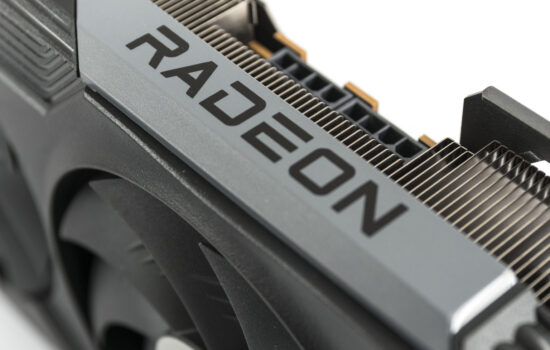
The Radeon RX 7900 XTX Gaming OC from Gigabyte belongs to the more affordable models, which you won’t find reviewed very often. When designing these cards, manufacturers focus on lowering costs, mainly by reducing the size or quality of the heatsink. As a result, they don’t perform as well as premium high-end models in thermal and performance tests. However, their lower price makes them a popular choice not only for individual buyers but also for OEMs assembling prebuilt PCs.
Closing summary
The Radeon RX 7900 XTX is nearing the end of its life cycle. I didn’t test it expecting any surprises, but rather to provide a comparison against the new graphics cards. In just a few days, the GeForce RTX 5070 Ti will enter this price segment, followed by the Radeon RX 9070 XT.
Under normal circumstances, I would say that if you haven’t bought an RX 7900 XTX by now, you should wait a few more days to see how the pricing and performance of the new cards pan out before making a decision. However, looking at the current availability of high-performance GPUs, things are not so clear-cut. Due to limited stock, the prices of new models are skyrocketing to absurd levels. This might be the last chance to buy a reasonably powerful 4K gaming card at a fair price. Given that RX 7900 XTX units are disappearing from listings, it doesn’t seem like retailers in our region have large stockpiles of these cards. I wouldn’t bet on being able to buy one at the same price a month from now if you hesitate now.
The GeForce RTX 5070 Ti is theoretically expected to offer a better price-to-performance ratio, but in practice, it will largely depend on the actual market prices of available models. Many of them are likely to be priced similarly to the RX 7900 XTX. The GeForce RTX 5070, with its 12 GB of memory, will be more suited for 1440p gaming rather than 4K.
How the RTX 5070 Ti stacks up against the RX 7900 XTX in terms of performance will be revealed in benchmark tests of MSRP models starting tomorrow. However, we didn’t receive a GeForce RTX 5070 Ti at MSRP this time, so we will instead focus on testing the more expensive, factory-overclocked models a day later, when the RTX 5070 Ti officially launches.
For those considering purchasing an RX 7900 XTX, a comparison with the Radeon RX 9070 XT, which is expected to launch in early March, might be more relevant. Initially, availability of the RX 9070 models is expected to be better, and despite a smaller memory capacity and lower expected raw performance, they could offer better performance in modern games with ray tracing compared to older Radeon models. Additionally, they are likely to provide a better balance of features and improved support for AMD’s latest technologies. The biggest uncertainty remains how much these cards will cost given the current market situation.
As for the RX 7900 XTX Gaming OC itself, it delivers exactly what was expected. It’s a basic model at a lower price point, so you can’t expect miracles in terms of cooling. The cooler’s design and performance align with this positioning. While the card has no trouble managing heat, this comes at the expense of slightly higher noise levels. Coil whine is about average, but in this model, you will rarely hear it over the fan noise.
In terms of performance, the card still has decent headroom, but that’s mainly due to the possibility of increasing fan speeds by another 1,000 rpm – though at the cost of significantly higher noise levels. On the other hand, by fine-tuning undervolting and power limits, you can achieve solid operational characteristics with minimal performance loss.
The biggest issue with this model is that, for a similar price, you can get the Nitro+ RX 7900 XTX from Sapphire, which features a significantly better nearly four-slot cooler. Compared to the Gigabyte Radeon, it is much quieter – not just with the silent BIOS, but also with the performance BIOS, which has a raised power limit of 406 W.
Pros and cons
+ Price-to-performance ratio in rasterization
+ The cooler has sufficient performance, but is slightly noisier than average
+ 24 GB of memory
+ Dual BIOS
+ Included mounting kit to support the rear of the card and prevent bending
– Worse performance-to-watt ratio
– Slightly louder than average cards with default control settings even in Quiet mode
– Noisy in OC mode, the performance increase against Quiet is negligible
– In games with more demanding ray tracing, it falls significantly behind newer cards
Special thanks to Datacomp.sk for the loan of Radeon RX 7900 XTX Gaming OC from Gigabyte.
Information about the current offers of Radeon RX 7900 XTX cards, their prices in both EUR and CZK and their availability can be found in the Datacomp e-store.

English translation and edit by Jozef Dudáš