


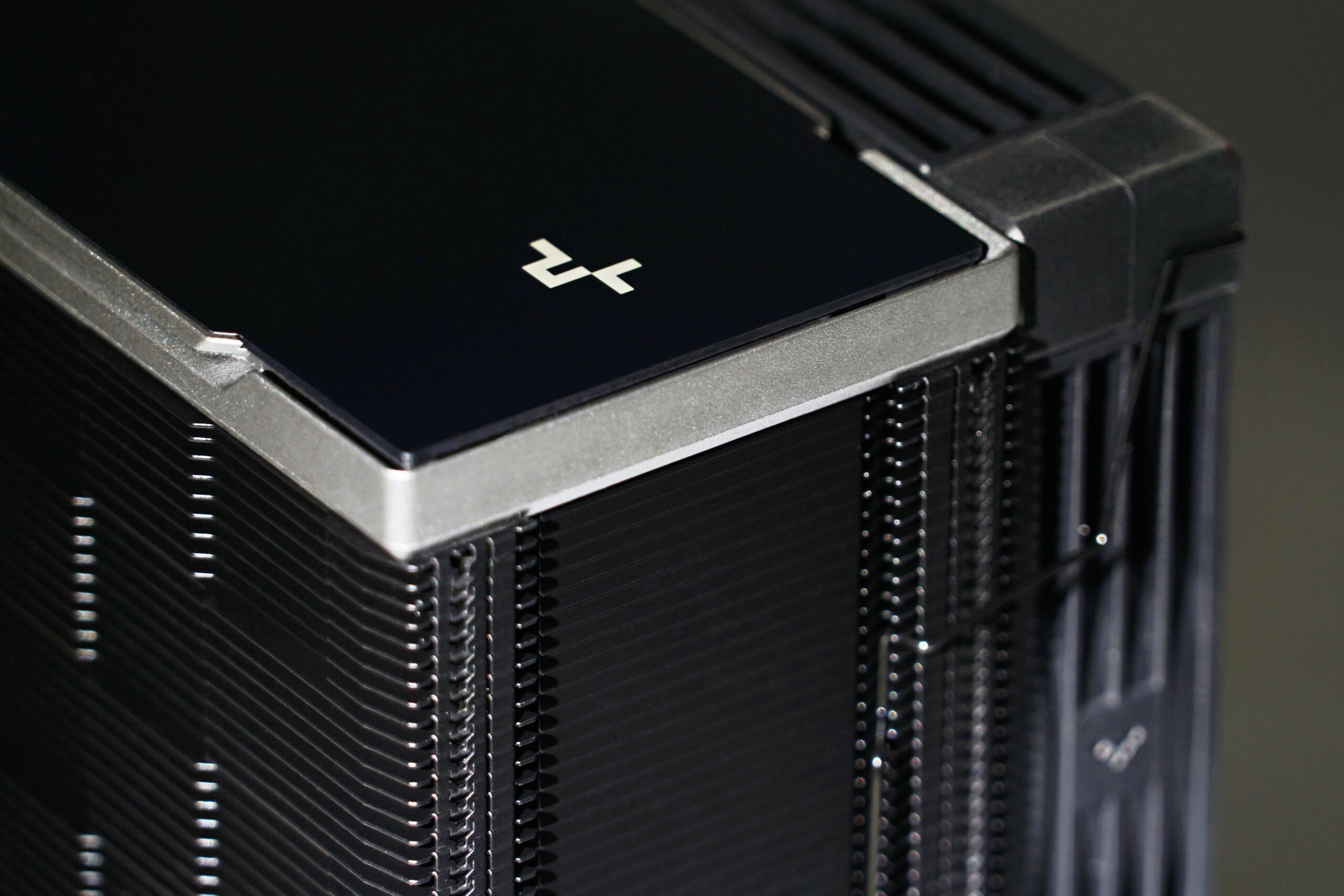
A relatively thick tower and as many as seven heatpipes. The fin surface area of the DeepCool AK700 Digital NYX is quite large, even though it is cooled by a single fan. This may be attractive for those who prefer tower coolers (typically over liquid coolers) but still want the best possible memory compatibility, which many dual‑tower designs obstruct.
Here we have a cooler design that has the potential to handle high‑performance processors while also offering above‑standard compatibility with surrounding components.
| Basic parameters | DeepCool AK700 Digital NYX | |
| Supported sockets | Intel LGA 1851, 1700, 1200, 115x; AMD AM5, AM4 | |
| Build type | tower | |
| Height (with fan) in mm | 157 | |
| Width (with fan) in mm * | 98 | |
| Depth (with fan) in mm ** | 125 | |
| Daisy chaining of fans | yes | |
| (A)RGB elements | yes | |
| Number of fans and their format in mm | 1× 120 | |
| Fan speed (rpm) | 2700 | |
| Weight (with fan) in g | 1015 | |
| Approximate retail price in EUR | 70 |
* This dimension indicates the width of the heatsink together with the fan, typically toward the DIMM slots. That is, assuming the cooler is installed vertically.
** The distance between the shorter sides of the heatsink fins. The larger it is, the closer a symmetrical heatsink sits to the first PCIe ×16 slot. Or, in a horizontal orientation, potentially to the memory slots that the cooler may already cover.
Details of the DeepCool AK700 Digital NYX Cooler
You’re dealing with a tower‑type cooler whose heatsink—specifically its fins—is roughly 70 mm wide. In other words, the cooler is relatively wide for a single‑tower design. The fan faces the challenge of pushing air through a longer path, so it could be said that it benefits from higher static pressure. And the FD12 V1 model does indeed have higher static pressure. Even a thicker heatsink shouldn’t pose a problem for it, and although some pressure will inevitably be lost from one side to the other (also because the inter‑fin latching points are permeable…), this combination of fan and heatsink looks technically sound.

We’ve already tested this fan in a standalone review, which you can check out. Although at the time of writing there is already a second revision (or version…) of the FD12 fan, the one used in the AK700 Digital NYX cooler also features attractive aerodynamic characteristics.

The heatsink fins use the checkerboard pattern common to DeepCool. This is created by alternating fins with differently positioned cutouts. It is mostly an aesthetic choice that should have virtually no practical impact on cooler performance.


The photo below (and also the very last one) gives a better idea of what the cooler looks like as a whole.

Mounting to the motherboard is done via a solid metal backplate. For Intel platforms, this bracket is included in the accessories. As for AMD processors, their motherboards already have a backplate through which the AK700 Digital NYX is installed.

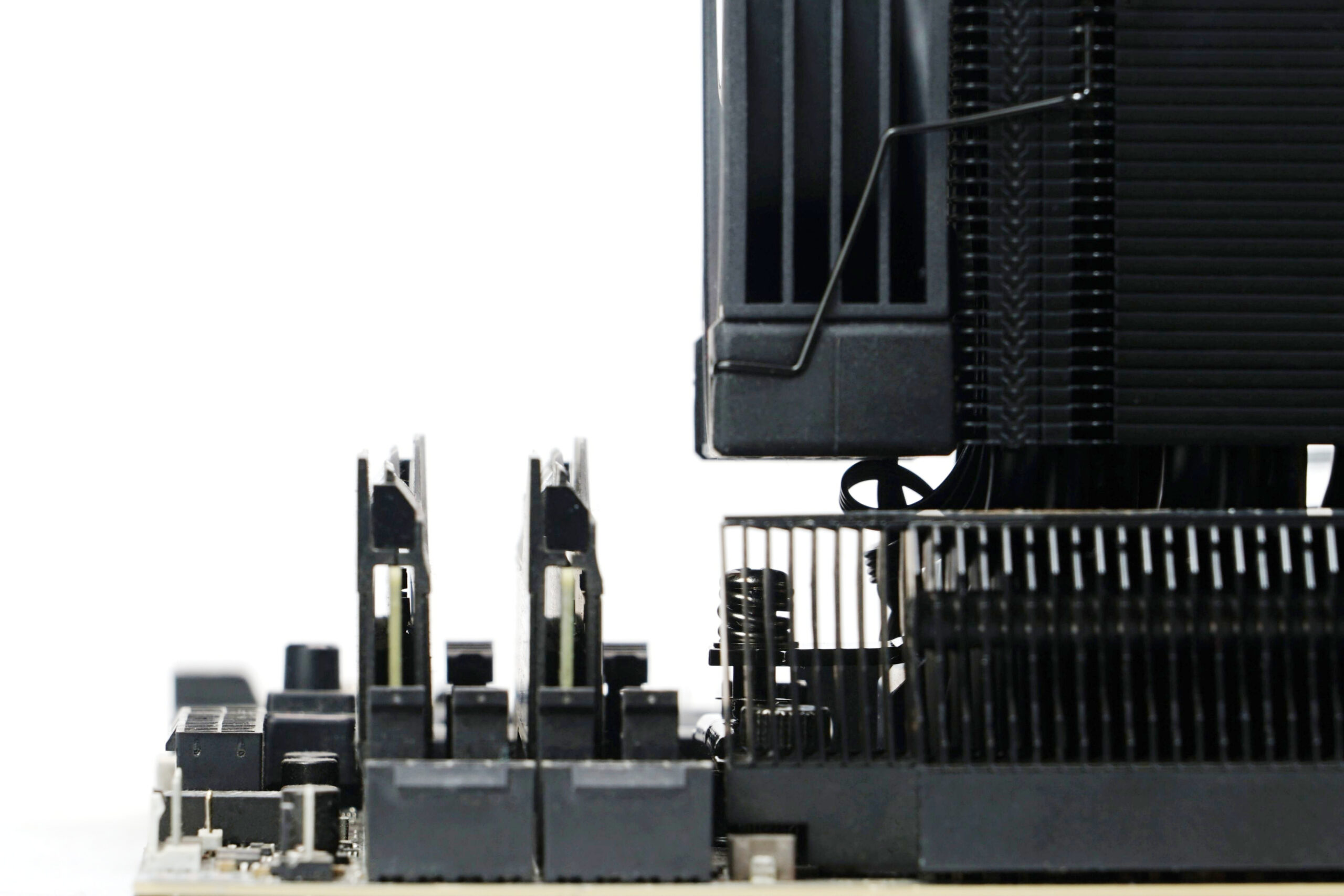
Memory compatibility is truly excellent. The fan does not extend over the DIMM slots, meaning even modules with very tall heatsinks can be used.
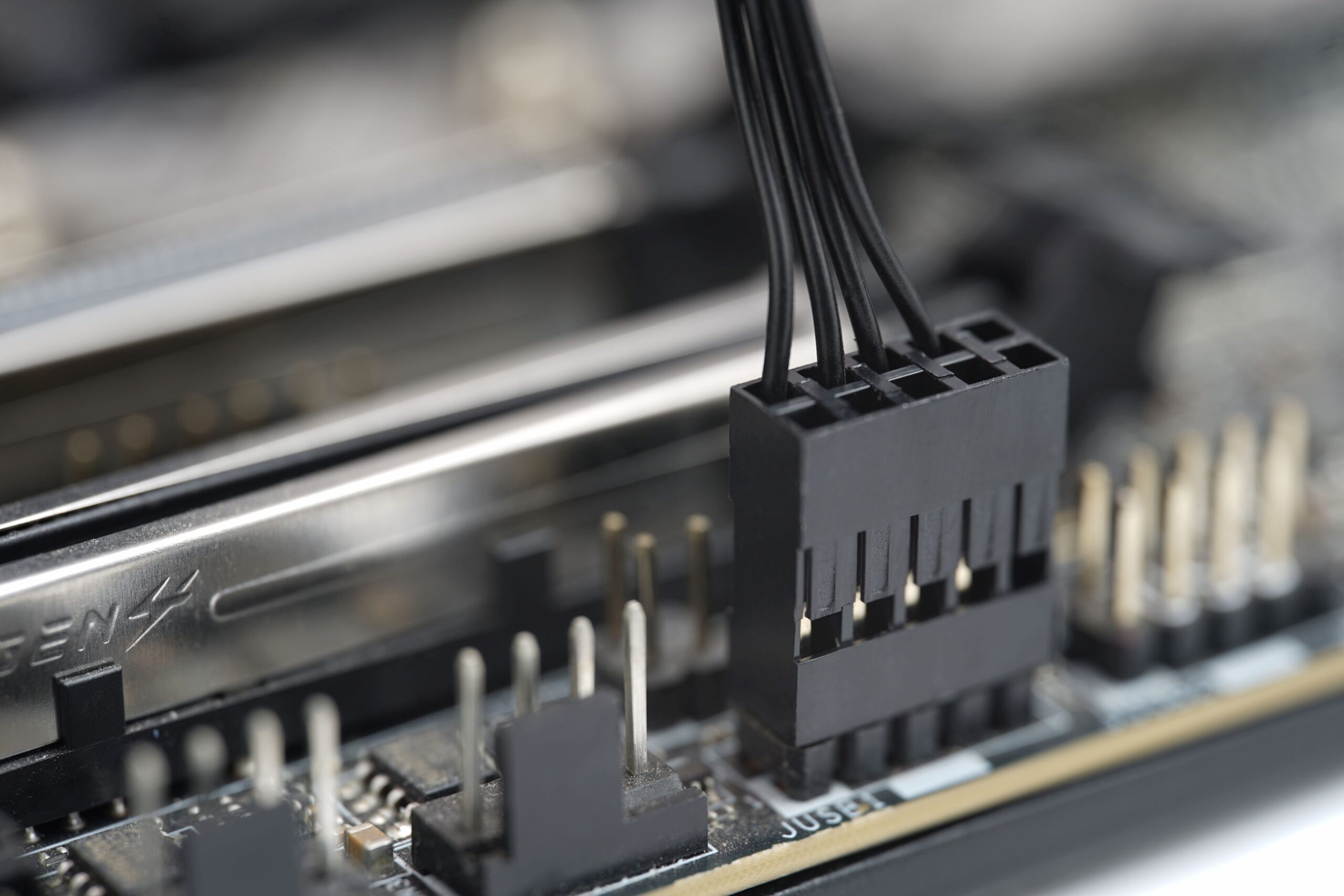
An important part of the cooler is the display, which connects to the motherboard via USB 2.0. This is how the display data is transmitted.
And that data includes, for example, CPU temperature or CPU utilization. Through the tempered glass side panel of a case, this provides a quick overview of the processor’s basic parameters.

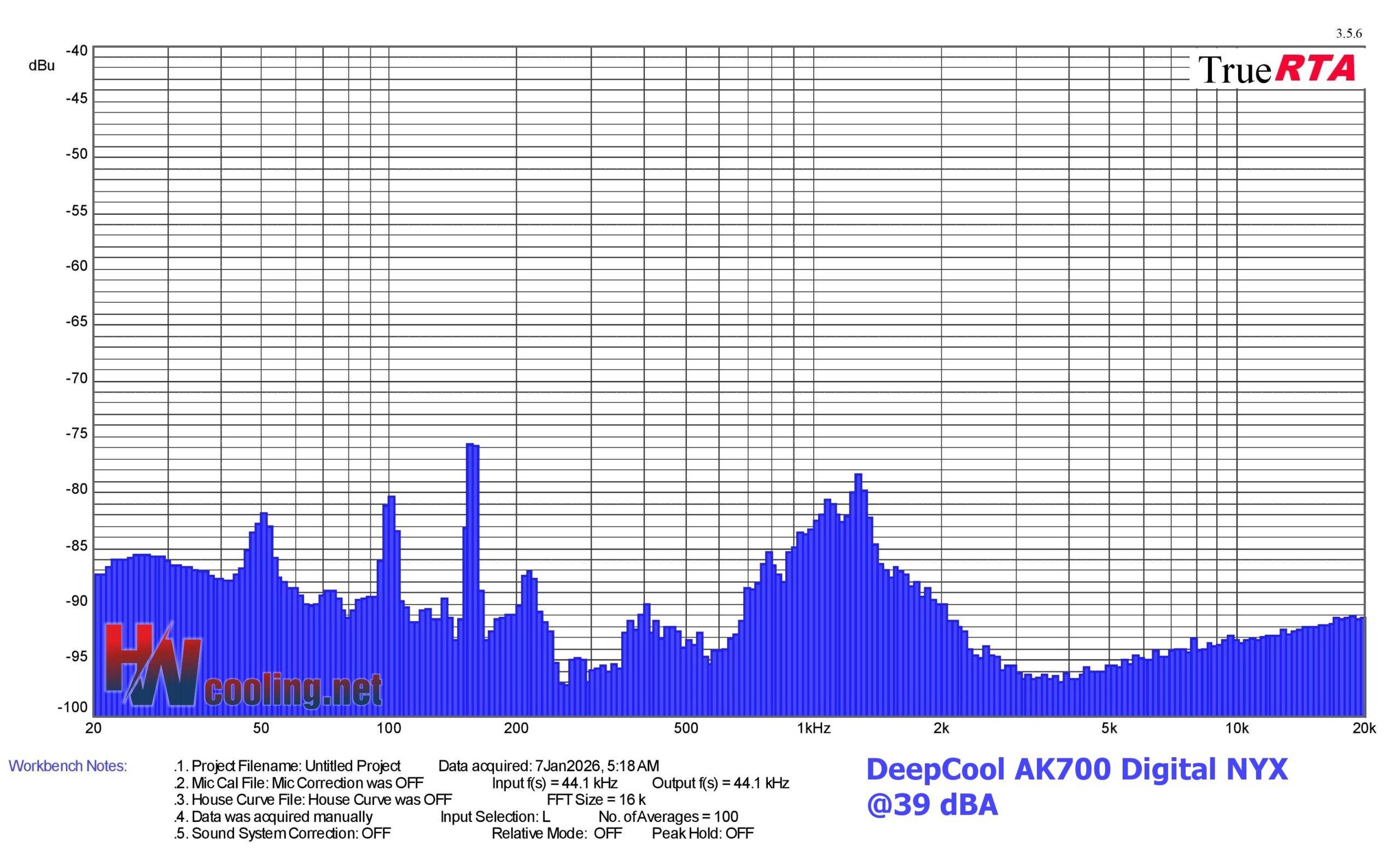
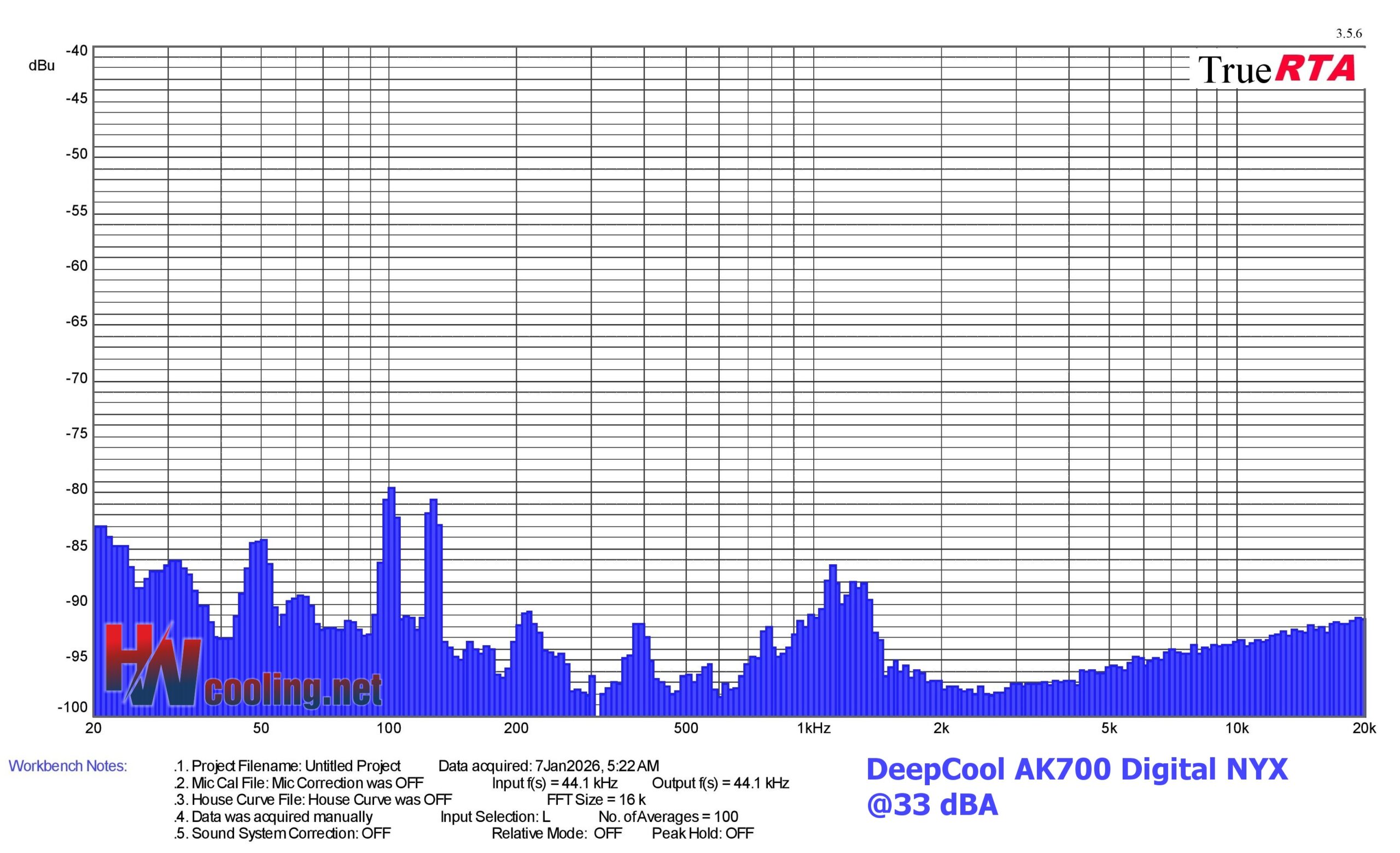
What Do the Spectrograms Show?
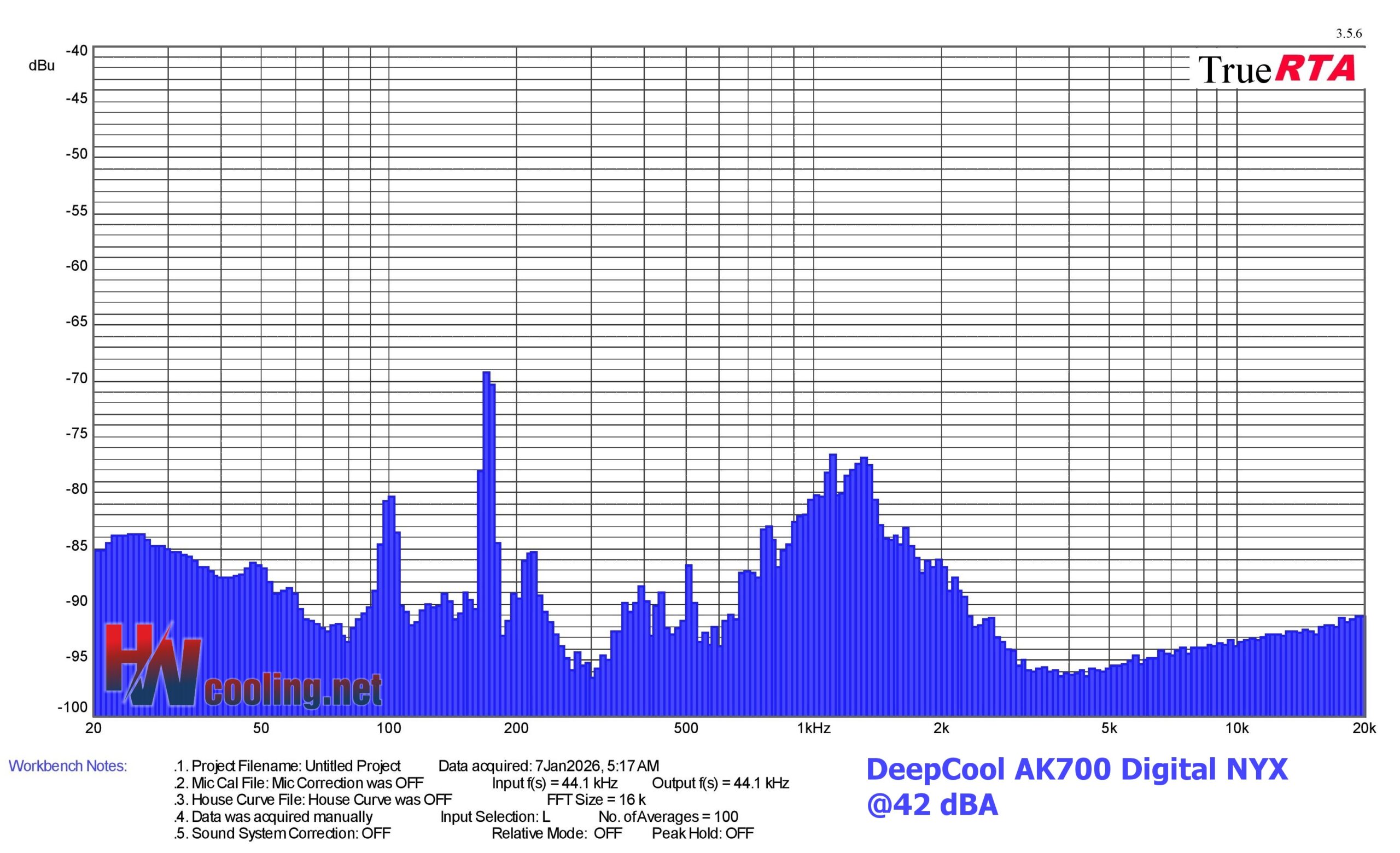
The cooler exhibits tonal peaks in the 100–200 Hz range. This mirrors the behavior of the fan alone (without obstacles), which means the heatsink is not at fault here. And what does this mean for the user? Essentially nothing major—except that those more sensitive to lower sound frequencies may perceive the cooler’s acoustic profile as “boomier.”





English translation and edit by Jozef Dudáš



