


Thanks to the addition of E cores even in the lowest Core i5 Raptor Lake models (13400F and 13400), the raw performance between generations has advanced the most in years. However, the improvement may not always happen, the relatively small number of performance ones (P) combined with the lower Turbo Boost 2.0 clock speeds some games don’t like, and when they reach for E cores, the concept of big.LITTLE is at once detrimental.
Conclusion
This processor may or may not be the unbeatable choice, and in many situations the competing Ryzen 5 7600 makes more sense. Traditionally, a detailed sub-feature analysis is necessary to properly evaluate when a particular processor is suitable.
The key change from its predecessor (Ci5-12400F) is the activation of four E cores, due to which multi-threading performance has been significantly increased.In this regard, the Core i5-13400(F) has a fairly crushing speed advantage over the Ryzen 5 7600, while being the significantly more efficient processor at the same time. Notably, there is no cheaper option for a computing environment than the Core i5-13400(F). A 16-thread Raptor Lake, be it built on an Alder Lake chip, may thus appeal to technical fields students, for example, for whom any saving is good.
In terms of single-threaded performance, it’s already “worse” with the Core i5-13400(F), at least compared to the AMD Ryzen 5 processors. These reach significantly higher clock speeds on a single core (R5 7600 by up to 600 MHz, for example) and the Core i5 lags far behind here. Due to only supporting Turbo Boost 2.0 there is a very big difference with the Ci5-13400(F) even compared to the Ci5-13600K (with TB 3.0), which also has six P cores. These are faster always, the all-core boost is abysmally faster, by more than 1 GHz (in favor of the “K” Core i5 Raptor Lake).
And now to the most controversial topic for the Ci5-13400(F) – gaming. Their running can be even slower than on the Ci5-12400(F), and you don’t have to go far for the reason, which is the presence of “slow” E cores. Games that don’t use more than six cores in a particular setup, or don’t run more demanding tasks on E cores, perform better on the Ci5-13400(F). Although only by a bit, because the intergenerational gain on P cores is more or less symbolic (100 MHz). The always higher gaming performance of the Ci5-13400F (than the 12400F) is, for example, in Assassin’s Creed: Valhalla, in Borderlands 3 or in Metro Exodus.
But then there are games where lower gaming performance is achieved compared to the Ci5-12400(F), especially in practice. In 720p@low, which is an inherently synthetic load, the Ci5-13400F still usually achieves better results (up to 8% on average), but at higher resolutions with higher detail, i.e. under different workloads, the situation sometimes gets a bit more complicated.
Where the game uses and heavily loads more than six cores, fps drops often occur compared to the Ci5-12400F. There are quite a few such cases where the Ci5-13400(F) is slower in gaming. From our test games, it’s CS:GO, DOOM Eternal, F1 2020, Shadow of the Tomb Raider and lastly Total War Saga: Troy. Of course, these are not dramatic drops, but on average it comes out to minus 3–6%. With more powerful graphics cards (than the test RTX 3080) this, shall we say, variance of deterioration can be even wider, but also (with slower graphics) smaller, to vanishing. It’s just such a small warning to those who would consider, for example, swapping the Ci5-12400(F) for the Ci5-13400(F), which is quite convenient since you’re making do with the same motherboard and memory. For higher multithreading performance this will be a good move, but for select games it may not have such a positive impact. Colleagues from Overclock3D, for example, have come to similar conclusions, where in every other game the Ci5-13400 is slower than the Ci5-12400.
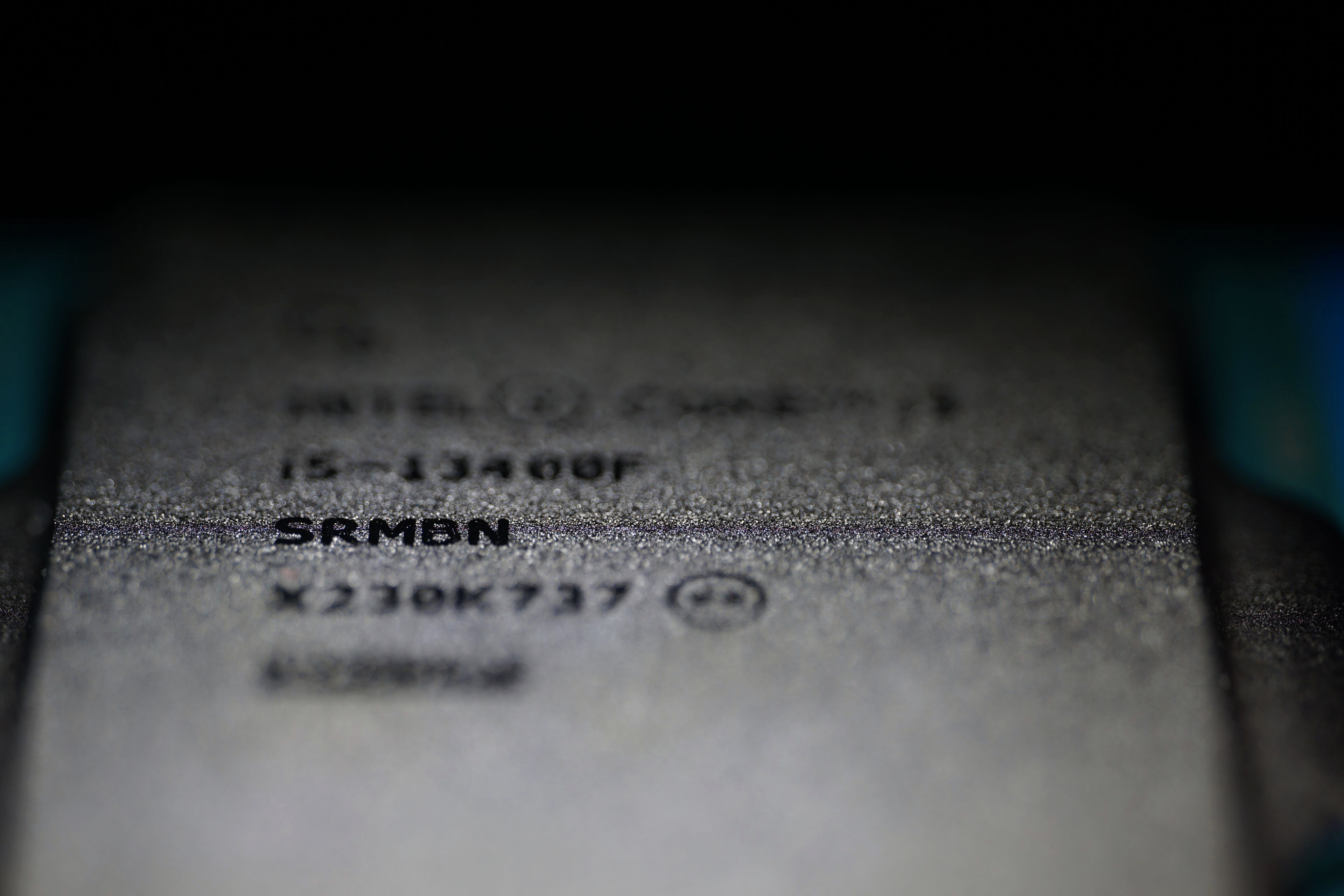
Aside from the rare titles where the Core i5-13400(F) has the edge, the Ryzen 5 7600 can be considered a more “gaming” and reliable processor overall. It is also more advantageous in terms of energy efficiency, at least compared to the Ci5-13400F stepping C0 (SRMBN), while the other B0 variant (made by Intel 7 Ultra process) may or may not be different. However, the heat dissipation from both variants will be fast, as they are built on large chips, and thus at this power draw (up to 100W) a simpler, cheaper cooler will always be enough to achieve quiet operation.
It should also be pointed out, in a good sense, that there has been a significant drop in idle power draw. The Ci5-13400(F) drops the multiplier for P cores down to 4 (400 MHz) while the minimum multiplier for the Ci5-12400(F) is 8 (800 MHz). For lower clock speeds, a less intensive power supply is sufficient, resulting in lower power draw. Core i5-13600K (and open multiplier models in general) are no longer concerned. Those max out at 800 MHz idle, and that may be in order to have faster responses for Turbo Boost 3.0. So we may have finally found at least something positive about TB 2.0.
We are giving the “Smart buy!” award to the Core i5-13400F mainly for its excellent price/multi-threaded performance ratio. But unless you can take advantage of this, the Ryzen 5 7600 is more attractive in most scenarios. And the cheaper the boards get, and there’s s promise of lower prices, the more so.
| Intel Core i5-13400F |
| + As many as 10 cores and 16 threads |
| + ... at higher power efficiency on top of that |
| + Attractive price/performance ratio (especially multi-threaded) |
| + High single-thread performance |
| + Vysoký jednovláknový výkon |
| + High power efficiency regardless of load intensity |
| + Extremely low idle power draw |
| + Very high performance per clock |
| + Finally, the modern 7 nm manufacturing node |
| + Low temperatures |
| + Sometimes top-notch gaming performance... |
| - ... but in some games, due to the E cores slowing it down, lower than the Core i5-12400(F) |
| - Single-threaded performance significantly weaker than Ryzen 5 7600 |
| - Does not have an integrated GPU |
| Approximate retail price: 196 EUR |
English translation and edit by Jozef Dudáš
We are grateful to Datacomp e-shop for cooperation in providing the tested hardware

Special thanks also to Blackmagic Design (for DaVinci Resolve Studio license), Topaz Labs (for DeNoise AI, Gigapixel AI and Sharpen AI licenses) and Zoner (for Photo Studio X license)


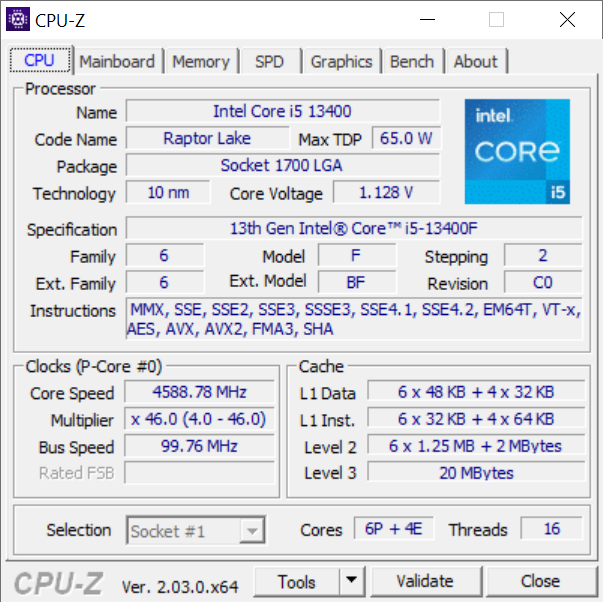
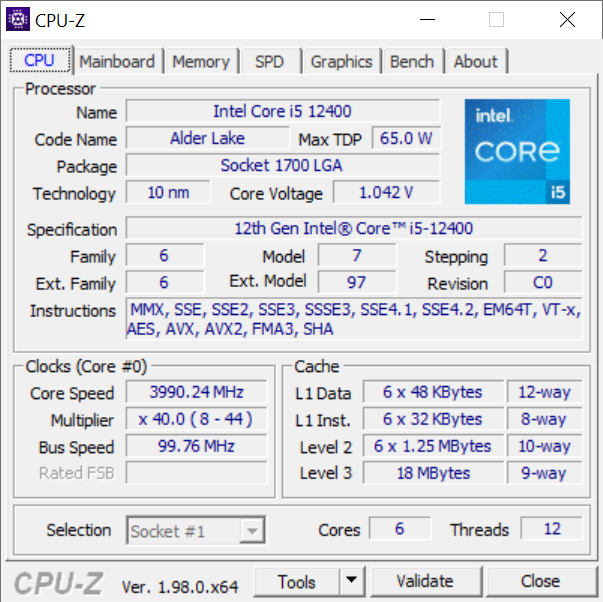
I wonder how the gaming results, especially power consumption, would look with E-cores turned off. Also, whether the Raptor Lake stepping has any performance advantage over Alder Lake one.
We will do ASAP.
After all, it seems that it might not be so easy to get Ci5-13400F in stepping B0. Big domestic shops (on the Czech-Slovak market) have only stepping C0 available, but we believe that sooner or later at least one piece will appear for testing. The availability of the variant based on Raptor Cove will probably be very low.
When we were looking for Ci5-12400 stepping H0 last year, they were also in the minority, but there were still some, about in 40/60 ratio (H0/C0). It’s worse over here, and Intel is obviously trying to use as many B0 “silicon” as possible for more powerful processors.