

Yesterday, Intel officially unveiled two initial models of the new generation of Arc graphics cards. Their chips use an architecture codenamed Battlemage, and one of key advantages is expected to be a strong price-to-performance ratio in the lower mid-range segment. They offer significant improvements over the previous generation in nearly every aspect and introduce alternatives to most competing technologies Intel has lacked in previous lineup.
The only performance data we have so far is measured directly by Intel, so take it with a grain of salt. How well they match in practice is still a question. One can assume that they flatter the new cards, but there are enough results to give us some idea of the B580’s performance.
One more thing to watch out for, which applies to both the comparison with the previous-generation A580 and the comparison with the competing GeForce RTX 4060 – at 1440p resolution, the B580 can rack up a bigger edge in some games due to the higher memory capacity than the difference in graphics chip performance corresponds to, and it will be reflected in the overall average. But Nvidia was targeting 1080p resolution with the RTX 4060, and Intel itself with the A700 series was targeting games at 1080p with Ultra details and 1440p with High details. Additionally, some games using these settings require XeSS supersampling for smooth frame rates at 1440p.
The differences in performance due to memory capacity are also pointed out in the presentation itself. The biggest difference is in the Ultra setting with Ray Tracing, but even on the Intel card won’t be ideal to play action-packed Forza at an average of 50 frames per second. On both cards, it will likely be necessary to opt for lower detail settings or upscaling, where differences become less noticeable.

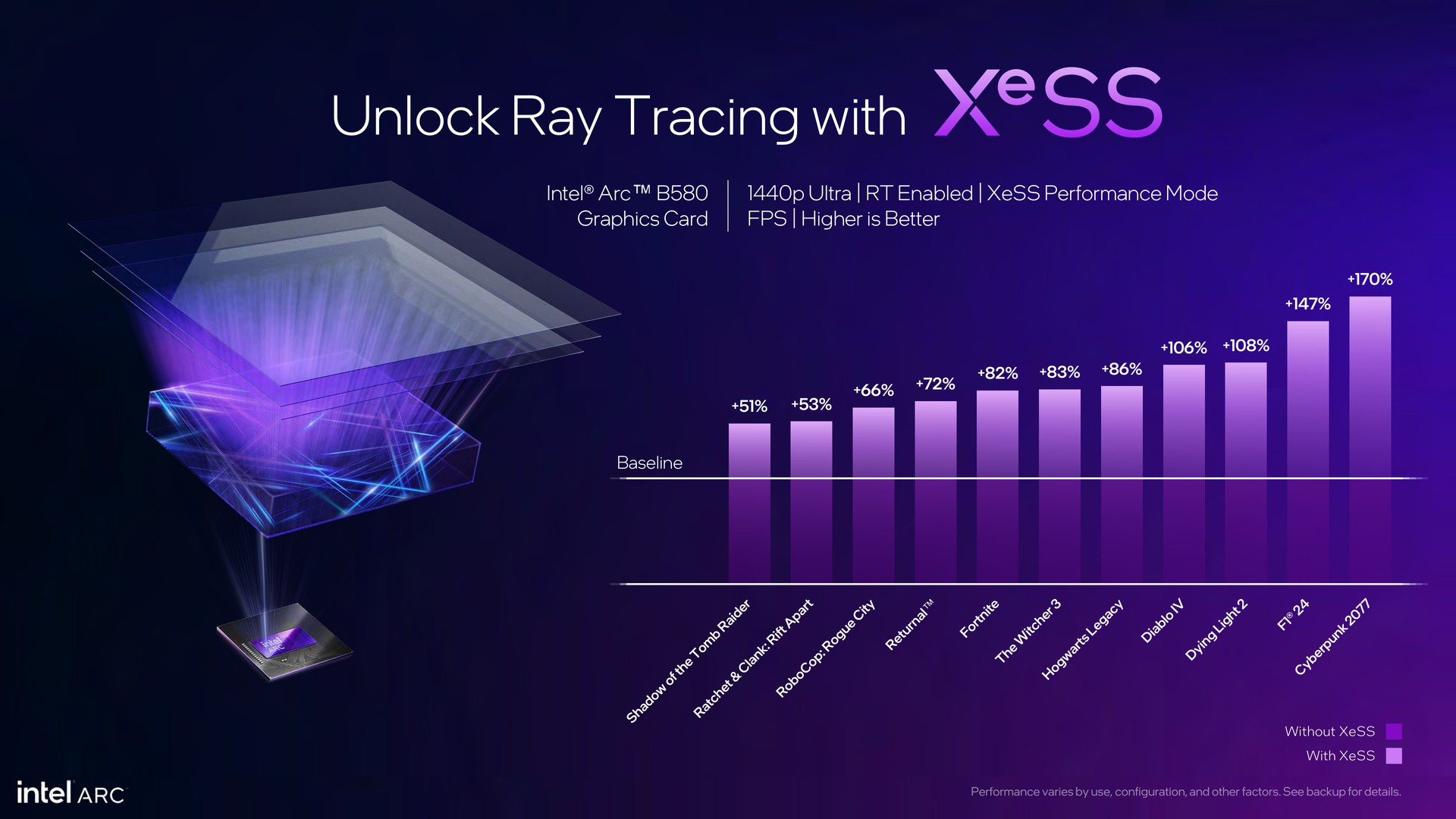
The following images show Intel’s measured frame rates mostly in newer games at 1440p resolution with details on Ultra settings. You can see that in some games, upscaling is already necessary to achieve solid frame rates at this setting. The XeSS Performance mode is better suited for 4K resolution due to its lower render resolution, and the balanced mode is typically recommended for 1440p.


On the positive side, with XeSS you can play with ray tracing even on cheaper cards.

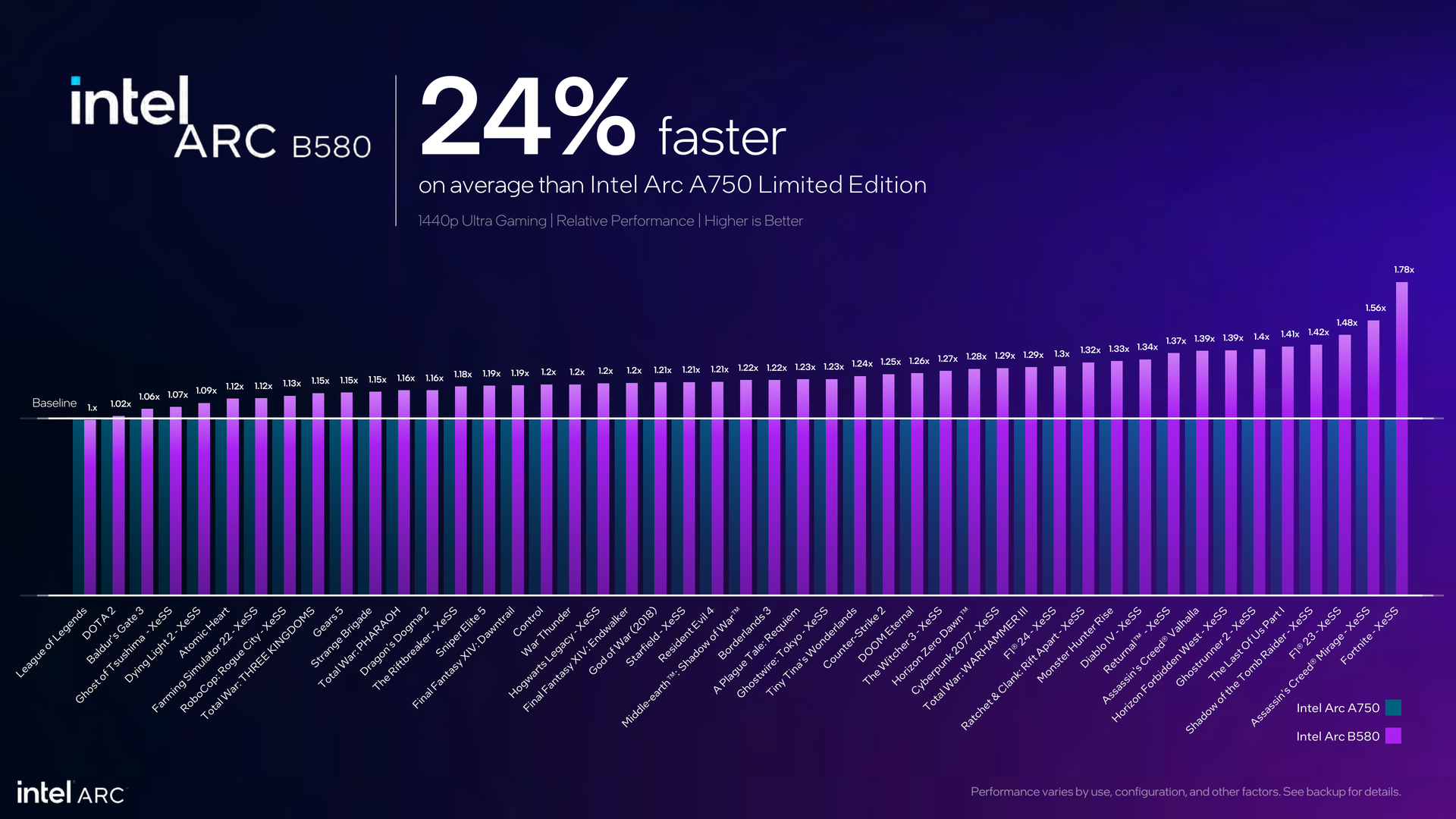
On the next set of tests is a performance comparison with the 8GB Arc A750. XeSS is active in a number of titles. The first chart shows the frame rates, the second shows the results sorted by relative performance differences.

Compared to RTX 4060, the differences are a bit smaller.
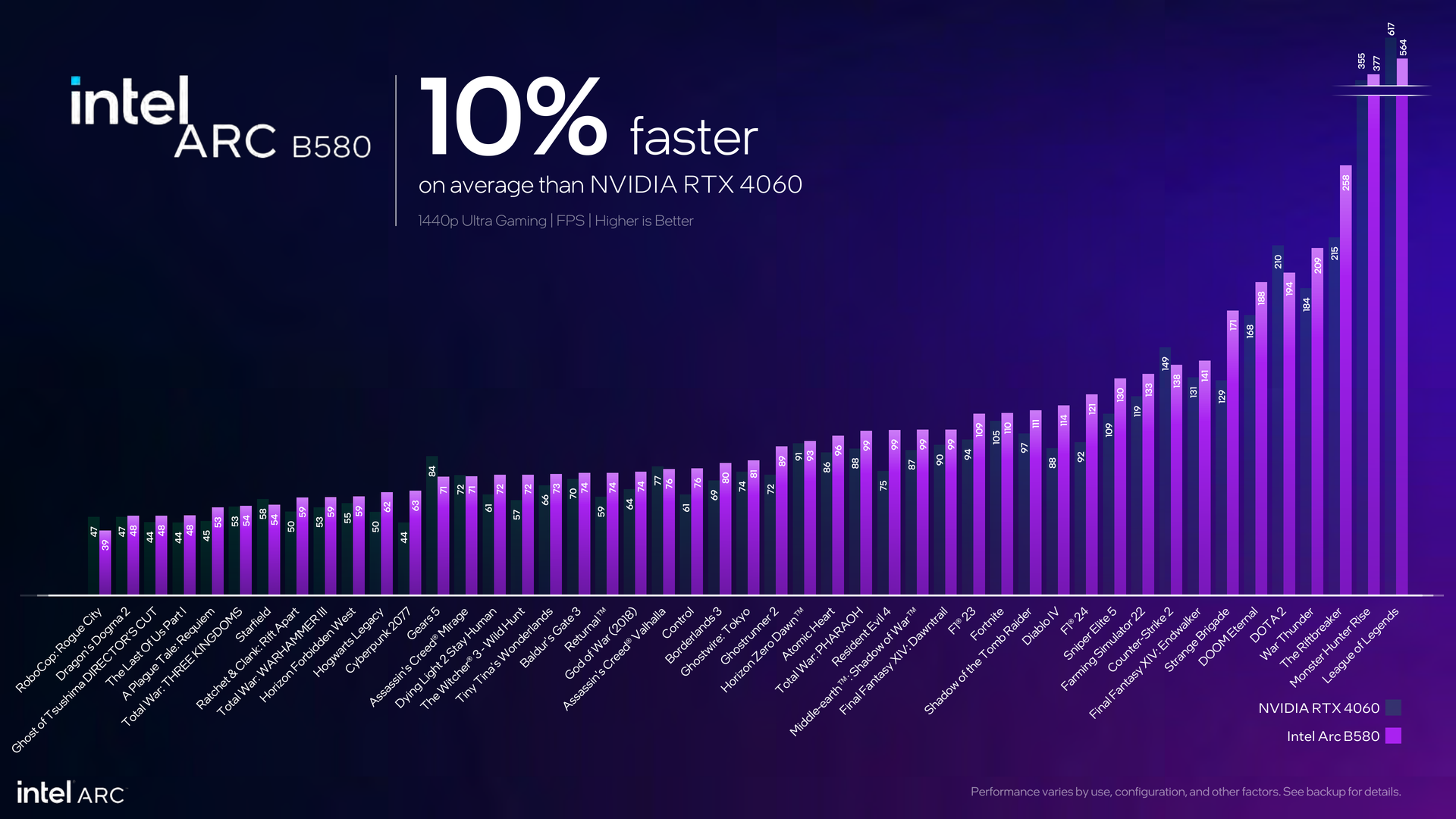
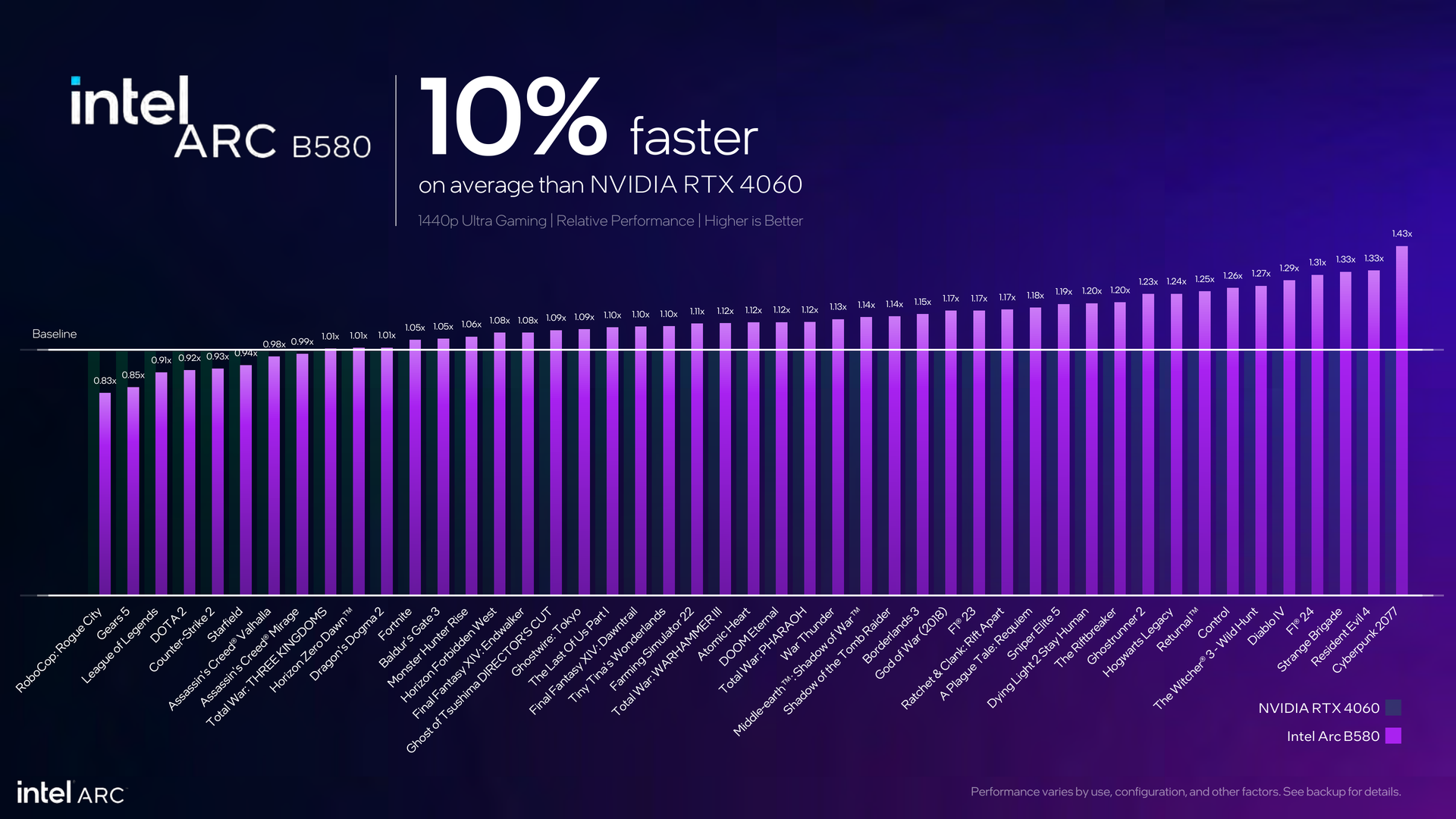
In the next slide, Intel wants to convince owners of the older GeForce GTX 1060 and GTX 1660 Super to upgrade.

Keep in mind the following slide, which focuses on the price/performance ratio instead of showing performance differences. Intel leads there by a wide margin. However, it doesn’t match the current situation – because it assumes the prices of the RX 7600 and RTX 4060 as suggested at launch, some year and a half ago. Depending on the country, the current prices of the RX 7600 and RTX 4060 can be already lower than the MSRP of the B580.
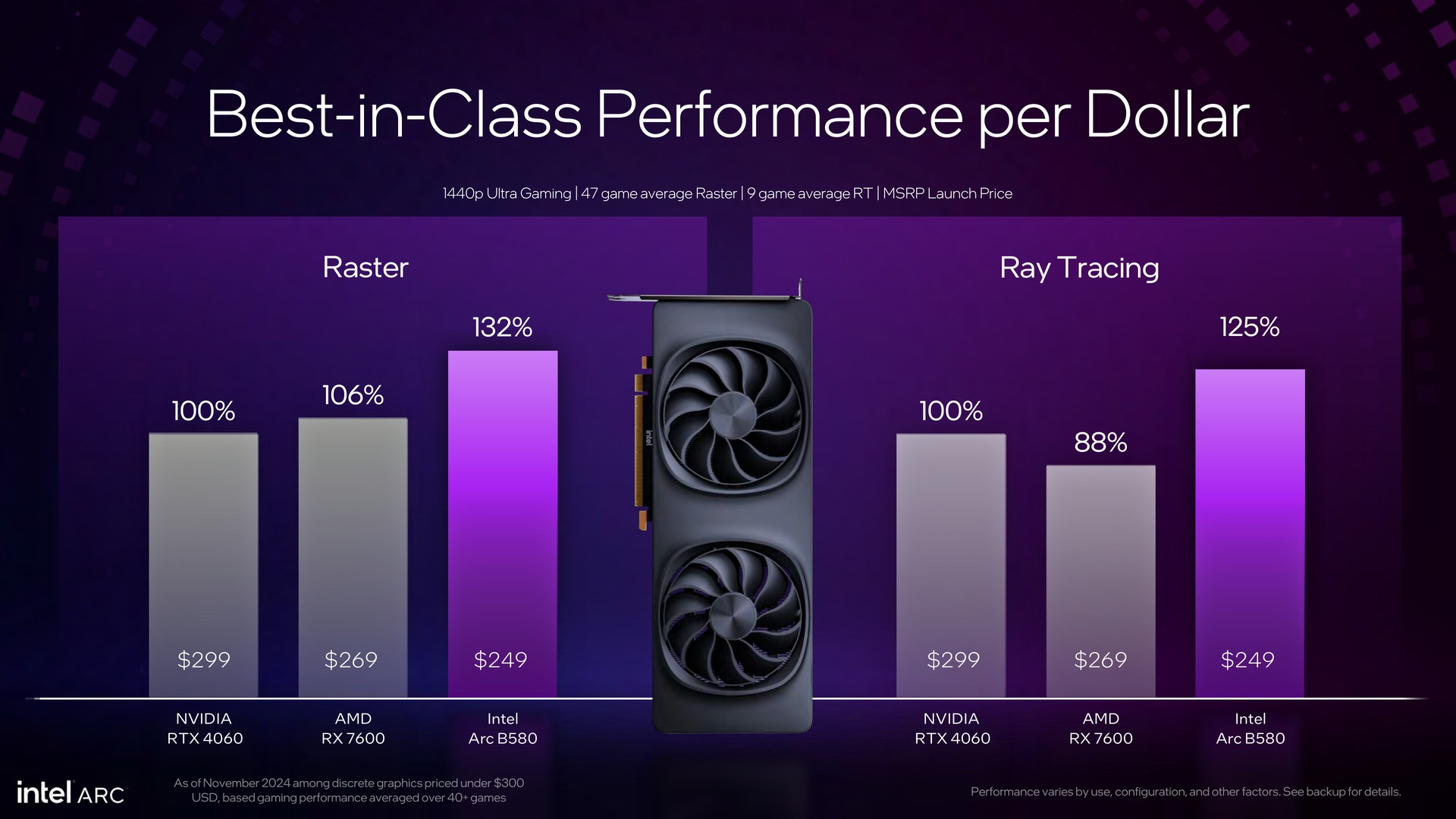
We will have to wait until next week, when test results from reviews can be published.
⠀