



We interviewed Endorfy—or more precisely, the manager of R&D of the brand formerly known as SilentiumPC. The discussion covers fans, CPU coolers, and the hardware responsible for keeping PC temperatures under control. Find out how the future of cooling is taking shape and hear the perspective of the person behind these products in our in-depth interview. Yes, even these kinds of products can be shaped by what customers actually want.
The Endorfy brand will be represented in the answers below by Mateusz Brzostek, who works as manager of Research and Development (Cooling sp. z o.o). In this interview we will focus on desktop components, even though it was peripherals and the attempt at a broader product scope that “buried” the SilentiumPC brand, which has since been replaced by Endorfy. We also have a separate article with more detailed information about the circumstances of this transition.

HWCooling: Why did you decide to focus on affordable products instead of premium, technically more advanced ones that, among other things, come with higher margins?
Endorfy: This focus was not a single decision taken at the brand’s creation. Rather it is something that was the very origin of the parent company, Cooling. It’s something our founders and the company grew up with throughout the years. This focus is made of hundreds of bigger and smaller decisions we take, not just on the level of company-wide strategy, but in the everyday development efforts. Cooling was born out of our founders’ enthusiasm for DIY PC space. At the time, high-end computer components were not a very mature, competitive space. Doubly so in Poland, where availability of foreign brands was lower than in Western Europe and most PC enthusiasts had much smaller purchasing power than in other markets. Our founders felt that good performance and function could be brought to Polish customers at lower prices than competing brands offered. This worked out well for SilentiumPC, the satellite brands, and now—for Endorfy.
The same mindset shaped my colleagues in R&D—a majority of us have been computer enthusiasts of various kinds long before we started working here. We always had occasions where we looked at a piece of computer hardware news, at the price of some new gadget we could barely afford, and thought “I wish they’d done it simpler, for a lower price! I bet I could do it if I was in charge”. We were wrong, of course—creating hardware and navigating the market realities successfully is much harder than it seems from the outside—but we are trying to keep that young enthusiasts’ fire alive.
Of course the focus on affordable solutions doesn’t mean that we are not aiming high. Enthusiasts naturally gravitate towards high-end solutions, the ones that employ the most exciting technology. We’ve always been breaking down (sometimes literally) the latest tech products to see what makes them tick, and to find out which aspects are essential to high performance or good function, and which are just luxury icing on top and can be sacrificed for better bang-per-buck. In many cases great performance comes only partially thanks to expensive materials or processes, and mostly thanks to smart design and good engineering decisions. This is the essence of our approach: we want to bring as much innovation and high-end technology as we can to the price-conscious customers.
HWCooling: Which cooling product in your lineup are you most proud of, and why that one? I understand you have a positive relationship with all of them since you created them, but if you had to choose just one, which would it be?
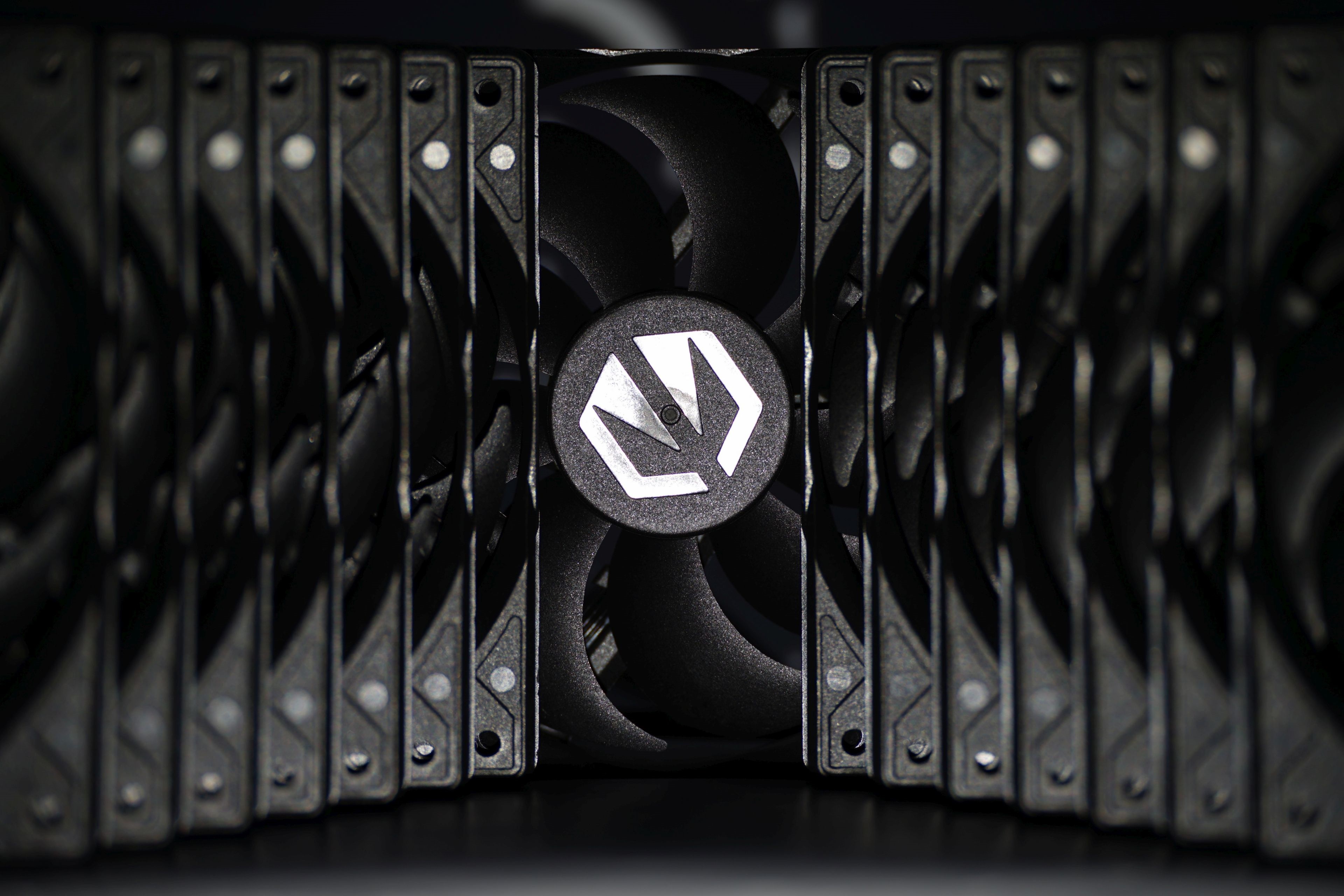
Endorfy: It’s hard to decide because each product could be a favourite for different reasons. There is no simple, one-dimensional scale of pride. If I had to pick a career-long favourite, it would be the Fluctus 120 fan. There are several variants used in different products, but since they share all of the same technology, inside R&D we treat them as one. It’s not a shiny, new product (as you are reading this, we’ve probably passed the 5-year anniversary of first sales of Fluctus 120), but it’s proven to be a very reliable workhorse for many of our more complex products. We use variants of the Fluctus 120 in almost all our air coolers, AIO liquid coolers and top PSU series. Over the years we have found many other tradeoffs that we could have made, but very little that can be straight-up improved in this product just by design, without making it more expensive. Many years ago we set out to make a fan that could power a big part of our product lineup; something that could be relied upon and not fall short in future applications. I think we achieved that. By luck and good practices we even exceeded what we could have reasonably expected of ourselves at that time.
Personally I have stronger favouritism towards certain parts of products, or some technical solutions that don’t make the entire product, but are by themselves a single development project each. I’m also not free of the natural recency bias—I feel more proud of and more attached to things that we worked on recently. Some of them still didn’t prove their value to the rest of the company or the customers (either because they are too new, or they aren’t even on sale yet).

HWCooling: Do you enjoy working on fan designs more, or on heatsinks, or perhaps radiators? Especially with liquid‑cooling radiators we often write that fans are what make the biggest differences between AIO coolers, although of course more components contribute (including the pump, etc.). Still, could you break down which area you focus on more from a technical standpoint—where you put “more detail,” what you have firmer control over during development, and so on? It probably isn’t always clear‑cut and hard to generalize. We don’t know, so we’re asking.
Endorfy: We are still a relatively small organization with limited resources, so we have to take a pragmatic approach to development. We try to find out which part or aspect of a complete product has the most low-hanging fruit; how we can improve the product the most in the easiest way. At our scale, we have to work more on physical design and matching many features of products together in a good way. A great majority of our products are made of parts and materials that are widely available in the industry, and if we want to improve these individual parts, we have to make a new combination of existing materials, tools and processes. Liquid cooling radiators or bearings are a good example. They are widely used in many industries (not just PC parts), and the material science and processes are well known. So there’s not much for us to work on in this area: even if we come up with a better radiator, the process won’t be the most engaging and enjoyable thing we do.
Personally, and I think most of my colleagues would agree, the most enjoyable part is figuring out the limits of some design, of the materials used and processes employed, and trying to find where we can stretch them a bit more for good effect. It’s both learning and creation, and it can happen in any category of products.
HWCooling: Yes, the Fluctus 120 is an excellent fan, but what I was secretly hoping to get to was the Fera 5 cooler. By the way, that’s another product where you use this fan. Why do you think this cooler has been so successful over the years? Of course, its low price, strong cooling performance, and the attractive balance between the two are major factors. I remember a time when the Gelid Tranquillo (including Rev. 2, I believe) occupied a very similar position. Its decline in popularity, at least in my mind, coincided with the arrival—or perhaps the discovery—of the original Fera cooler. Before the Tranquillo, the Cooler Master Hyper 212 Plus was also hugely popular, but that’s all history now, and the Fera series seems to enjoy even greater popularity among users. How do you see it?

Endorfy: I think you hit the biggest reasons already. Performance to price ratio is absolutely the most important aspect of a product like this. But even that is not a ticket to success—if you have it, you have passed the qualifier event to compete in the big league.
You mentioned the names of two legendary coolers, and I’m sure many people reading this will add one or two of their own to this list. I think these two show this effect very well: there have been many coolers similar in price and performance, but very few of them became household names. Once in the big leagues, you have to be a well-rounded player: for PC hardware that involves constant and wide availability, effective quality control, good customer support, being able to deliver not just to DIY users but also to commercial clients (PC building companies) and more. This combination of a few big advantages and many small, easily missed ones is what made Fera successful.
HWCooling: You mentioned the Fluctus fan, but going back a few years, the fans released under the SilentiumPC brand weren’t particularly outstanding. They didn’t really stand out in any specific way and, in our tests, models such as the Sigma Pro or the original Corona series tended to exhibit relatively high vibration levels. (The latest generations are significantly better in that regard, as we now know.) Could you shed some light on the evolution of your fan development and explain what has changed over the years?
Endorfy: Fluctus and Stratus series fans are our own in-house development. We kickstarted the actual development at that time, as opposed to smart trading and ODM procurement that the company did before. The SilentiumPC branded products, other than the last few just before we became Endorfy, are from a completely different era.
If you compare Fluctus to Sigma or Sigma Pro, there’s nothing fundamentally different about the mechanics of both fans that makes one of them better. Both work by the same principles, are made from similar materials and by very similar processes. Our biggest improvement was in air moving performance and airflow noise (not mechanical noise), and it results mostly from better design. The mechanical improvements (including less vibration) come from better quality control, using better materials (still within the same family or types of materials) and paying more attention to mechanical and electrical design.
Obviously, most mechanical improvements in bearing operation, motor performance or the stiffness of the structure also give us acoustic improvements. Small changes in several places can give synergistic effects, sometimes in unexpected areas. We focused more on details in all the aspects of a product and all the processes involved in production, and that gave us many similar synergies.
HWCooling: Looking at cooling technologies as a whole, do you see any gaps that you think are worth addressing? Whether they’re realistic ideas that you’re actively working on, or concepts that aren’t currently feasible because of budget constraints or simply because they wouldn’t make commercial sense. The feasibility isn’t really what interests me most. I’m more curious about the directions in which cooling technology could still evolve and what kind of improvements you think could realistically be achieved.
Endorfy: I’m not at liberty to answer this professionally, speaking for the company—naming the nearest, most easily fillable gaps would reveal our plans. I will talk about some general trends or things I notice simply as an enthusiast.
One of my greatest annoyances are form factors, and the biggest offender among them is the typical ATX PC. This includes most derived form factors like Micro ATX, miniITX or some server and workstation standards. Two biggest heat emitters, the CPU and the GPU, are mechanically separated and oriented at right angles to each other, blocking the airflow and making it more difficult to design the system-level cooling architecture. For many years this was a small cost that enthusiasts of personal computing were happy to pay for the freedom it gave us. We could mix and match ATX components, because they were so widely compatible. We could replace major parts often, one by one, and cascade the leftovers down to friends and family. Today we need to remove more heat than we used to. It could be done more efficiently, more quietly and cheaper in a form factor different than and incompatible with ATX. I also think the benefits of ATX compatibility are smaller than ever, with parts being very expensive and not improving as much generation-to-generation as they used to. I think the industry should make some brave moves to create a more up-to-date, futureproof standard that could have a chance to prolong the life of local, personal, private high-performance computing. Otherwise we might get stuck at a local maximum, and out of fear of breaking compatibility or paying slightly more we will be outlived by closed one-company ecosystems.
At the same time I think the future of cooling is bright—every day there is more and more computing machinery to be cooled. It is by no means a solved problem, or even close to maximum theoretical efficiency. I expect interesting times for computer enthusiasts.
HWCooling:By the way, the Fluctus fan was originally released under the SilentiumPC brand, but it’s now part of the Endorfy lineup. Is this purely a branding and packaging change, or has anything been redesigned internally that affects the fan’s performance or characteristics?

Endorfy: There were no technical changes related to the rebranding itself. We also didn’t change any features or functional parameters since the release. Throughout the years we’ve made some small changes to the mechanical design and the motor, but only to improve the yield and reliability—nothing that would change the performance or fitness for any purpose. This is actually an unwritten policy for us: no silent, unannounced revisions, and most of all—no quiet downgrades. You can be sure the product you buy today is the same or better as when it was reviewed or certified (in case of PSUs) by third parties.
HWCooling: Can you think of any specific technical improvements you’d like to make to selected Endorfy products—particularly your fans or coolers? I understand you probably can’t reveal everything.
Endorfy: Yes, a ton! Unfortunately, most of them involve more expensive materials or more complicated technical processes. If the technical improvement is so big it would change the specification of a product, or change the price significantly, we usually think of it as a new product. Many ideas have been floated in our internal meetings about the Fera 5 or Navis, but most of them would have to become a new product.

There are also details that we in R&D consider strictly better, but for market reasons we have to do it the way that most customers expect. In fans, I would completely give up support for voltage-based speed control. PWM control is strictly better, easier to implement and has been present on motherboards for decades now. But for some reason many motherboards still default to voltage control, and there’s a large group of people that can’t be expected to switch it to PWM manually in the UEFI. These compromises are easier to see in cases or PSUs—the amount of 2.5” SSD mounting locations, or USB ports, or the amount of SATA power connections in a power supply are often dictated by customer expectations, not technical reasons. And I don’t mean that customers expect to be able to use that many—they expect a certain number to appear when searching online, but they have no intention of putting it to use.

This also touches on the matter of revisions—if there is something we can improve without changing the product substantially, like moving it to a different price point because of manufacturing costs, we do it as a revision. Revisions are associated with some cost and sometimes they don’t fit favourably in schedules, so there are one or two that are fully developed but have not yet been introduced.
HWCooling: Is there anything you’re particularly proud of—something that Endorfy offers that sets it apart from the competition? I won’t name any specific brands, but I think we both know which ones come to mind.

Endorfy: I permitted myself to ask my colleagues from R&D for their opinions on this. We independently arrived at very similar answers. We’re proud of our attention to detail and holistic approach to the product. We think it sets us apart from a lot of the competing brands, at least in our price ranges. We try to think of every aspect and deliver a product as complete and well-rounded as possible in the constraints we have. In cases, this can show as small convenience features that make it easier to build and use your PC. In coolers—as attention to cooling performance and acoustic performance without sacrificing either. In power supplies—as attention to all safety features, electrical performance and quiet operation all at the same time.
It’s very easy to sacrifice some of these details to cut costs, and most of the time one could get away with it, even in front of strict reviewers or certification schemes. But small annoyances or corner-cutting are eventually noticed and become a pain point, like a pebble stuck in your shoe. Attention to detail is often easy to miss, but you would immediately notice if it was lacking. If your case has a USB-C port in front, you don’t notice anything special about it—but you would, if your USB-C device worked only at USB 2.0 speeds when plugged in in the wrong orientation. If your power supply is very efficient, but the fans take off like a turbojet when you launch a game—you will notice the bad aspect, not the good one. We hope that you won’t have any frustrating experiences with our hardware.
HWCooling: So would it be fair to say that the review of the SilentiumPC Fluctus 120 PWM is still relevant for the Endorfy Fluctus 120 PWM as well? Naturally, there have been some minor changes, as you mentioned, particularly to the motor; but the aerodynamic foundation has remained largely the same?
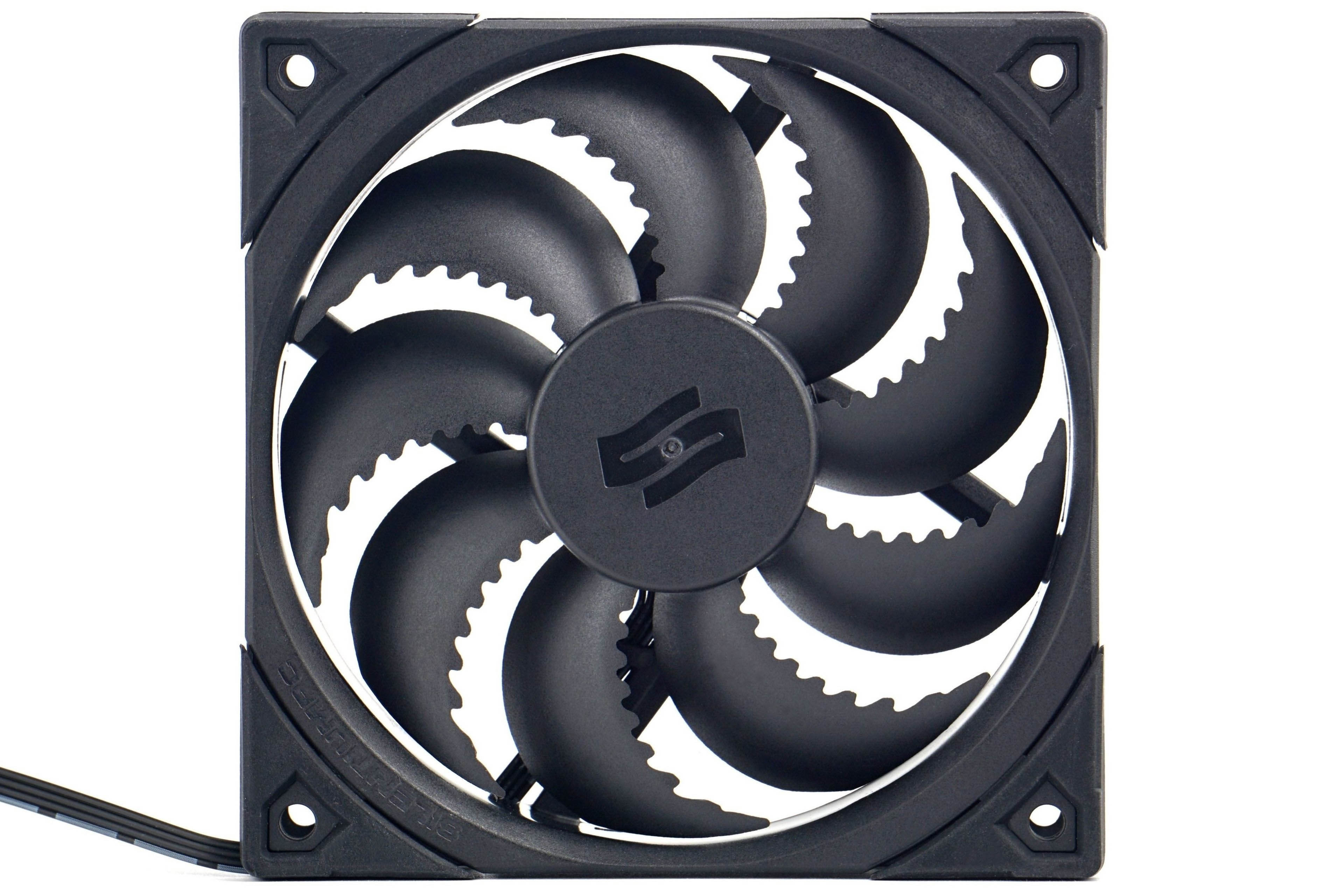
Endorfy: Yes, all the aerodynamic properties are the same, and the data that you base your review conclusions on is still relevant.
HWCooling: Let me try to rephrase the question about technical improvements. Let’s assume the manufacturing costs remain the same, or at least don’t increase significantly. In other words, we’re talking purely about changes at the design level. The materials would stay the same, but the geometry could be refined—for example, the impeller design of a fan, or the way the heatpipes pass through a heatsink. I understand that using more expensive materials can lead to better results, but let’s assume the material costs cannot increase. Naturally, investing more in development and engineering makes perfect sense. With those assumptions in mind, I’d be interested to hear your perspective on where you think meaningful improvements could still be made.
Endorfy: In my opinion, with these constraints we can mostly make tradeoffs—none of the significant design changes are clear improvements without downsides. For example, we could adjust the blade area to make a different balance between airflow and static pressure; we could change the number of blades to change the balance even further, or add a stiffening ring to allow for a higher speed without improving materials and processes. All of these things take something away to give some benefit. Most of the low-hanging fruit has already been picked, and the next generation of fans will probably not represent a new understanding of aerodynamics. They will be either a different set of tradeoffs that will make more sense at the time, or an improvement in processes and materials.
We have a few purely design ideas that make for a strictly better fan, but they are definitely evolutionary, not revolutionary. I’m not at liberty to satisfy your curiosity now, but I hope you will see them in our next generation fans.

HWCooling: Thanks for all your replies. If you agree that it’s best to stop while we’re ahead, then I think we’ve reached the end of the interview from the HWCooling side. 🙂
English translation and edit by Jozef Dudáš




I’d definitely like to see a Fera‑type slim model in the 140 mm format.
Hmm, that’s probably a question best directed to Mateusz. I’ll forward it to him, and if he’d like to comment, I’m sure he will. A slim tower would certainly be interesting—provided it doesn’t run into the same issue Noctua reportedly faced, namely that customer demand simply isn’t high enough. 🙂
If you’d be interested in a similar interview with Arctic, let us know what you’d like us to ask. You can post your questions here in the comments or send them to our editorial email at info@hwcooling.net.
We’ll collect the most interesting ones, reach out to Arctic, and see what comes of it. To make it even more engaging, we could turn it into a giveaway: one reader who submits a question, selected at random, will receive a triple pack of Arctic P14 Pro A-RGB White fans. 🙂