


Established and well-known producers in the field are certainly familiar to our readers. In recent years, several new companies have appeared on the scene that may not yet be widely recognized. This series focuses precisely on such relatively new players. Although these brands have been on the market for a short time, their ambitions, fresh ideas, and technical solutions should not be underestimated. The fourth one is not afraid to experiment.
Experiment instead of conservatism—TRYX
In this part, we take a look at a functionally and visually distinctive project from TRYX. It is a company with an independent hardware team and the ambition to break through with unconventional solutions. According to available information, the company was founded by people with many years of experience in the PC components segment, including work for established manufacturers such as Asetek, Cooler Master and ASUS.
TRYX was created with a clear goal—to develop cases, coolers, and fans that stand out significantly from common solutions, both functionally and especially visually. The first mentions date back to 2023, when the company was founded. The brand began attracting broader attention after unveiling several design concepts at Computex 2024 and subsequently Computex 2025, including an unconventional 3D panoramic display integrated into the pump of its liquid cooler. What clearly set the company apart, however, was its unique cross-flow fan concept and a case front panel composed of an organized tangle of cords, which drew the attention of both the community and media outlets. TRYX thus quickly earned a reputation as a brand unafraid to experiment—not only aesthetically, but technically as well.
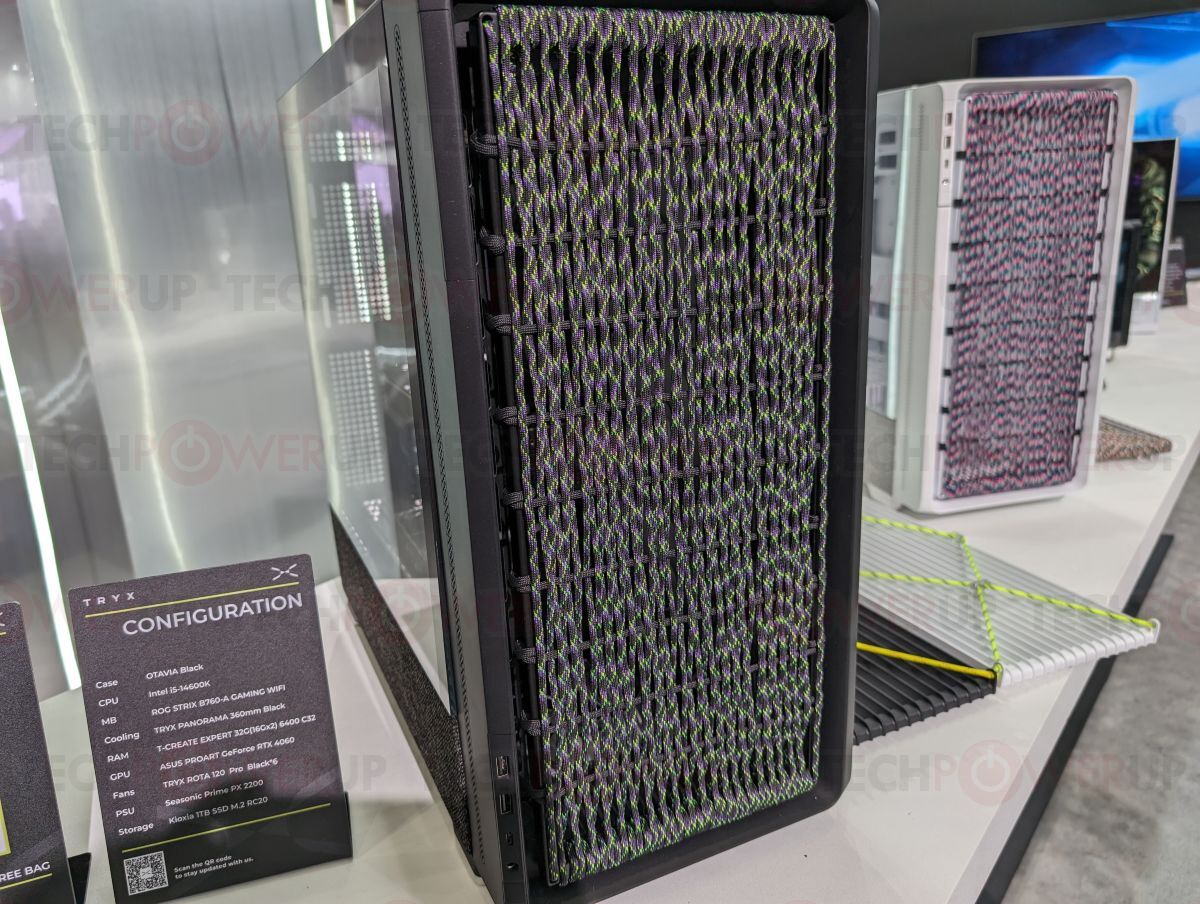
Unlike many new players who attempt to “safely” copy proven designs, TRYX approaches hardware development as an experiment. Its products often do not look like an evolution of existing solutions, but rather something entirely new. They combine unconventional airflow approaches (cross-flow fan) and internal layouts, 3D panoramic displays on AIO pumps, front-panel designs with markedly different visual elements, and asymmetric shapes. This mix of design experimentation is precisely what makes TRYX an interesting candidate to monitor for new products. It should be noted, however, that not all solutions resonate entirely successfully in real-world testing.
Cases from TRYX
One of the first TRYX products to attract media attention was the LUCA L70 case. The TechPowerUp review pointed out that the chassis offers design and conceptual differences that distinguish it from most mainstream competitors. At the same time, it highlighted numerous quality and design shortcomings, including incorrect screw sizing, insufficient rigidity, overlapping and collisions of certain parts, and even some counterproductive “improvements”. A similarly critical tone was present in the primary review by GamersNexus. However, the editors also noted that after the initial negative coverage, TRYX responded publicly and implemented design changes based on feedback. This indicates the brand’s willingness to listen to the community and iterate on its solutions.
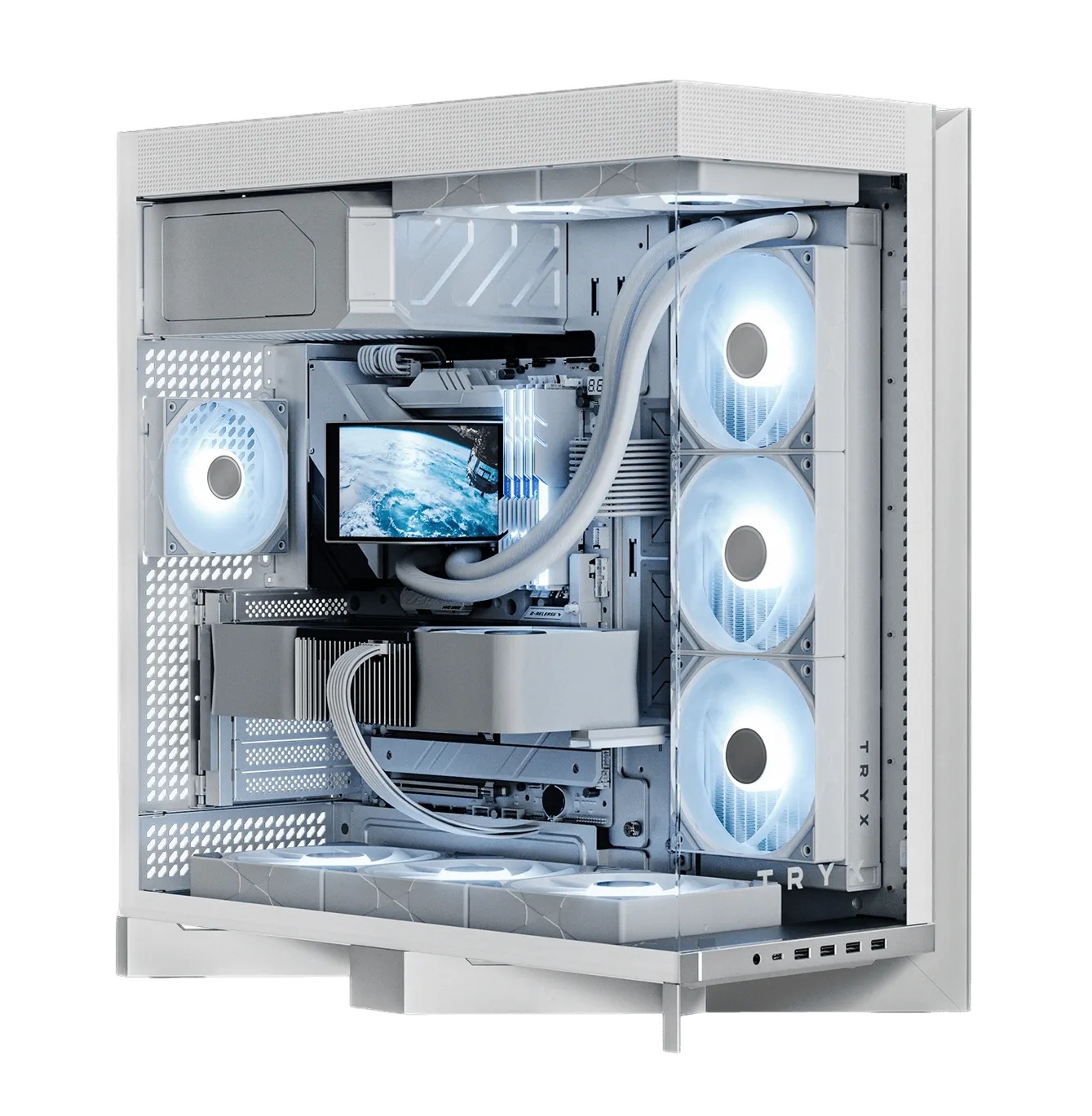
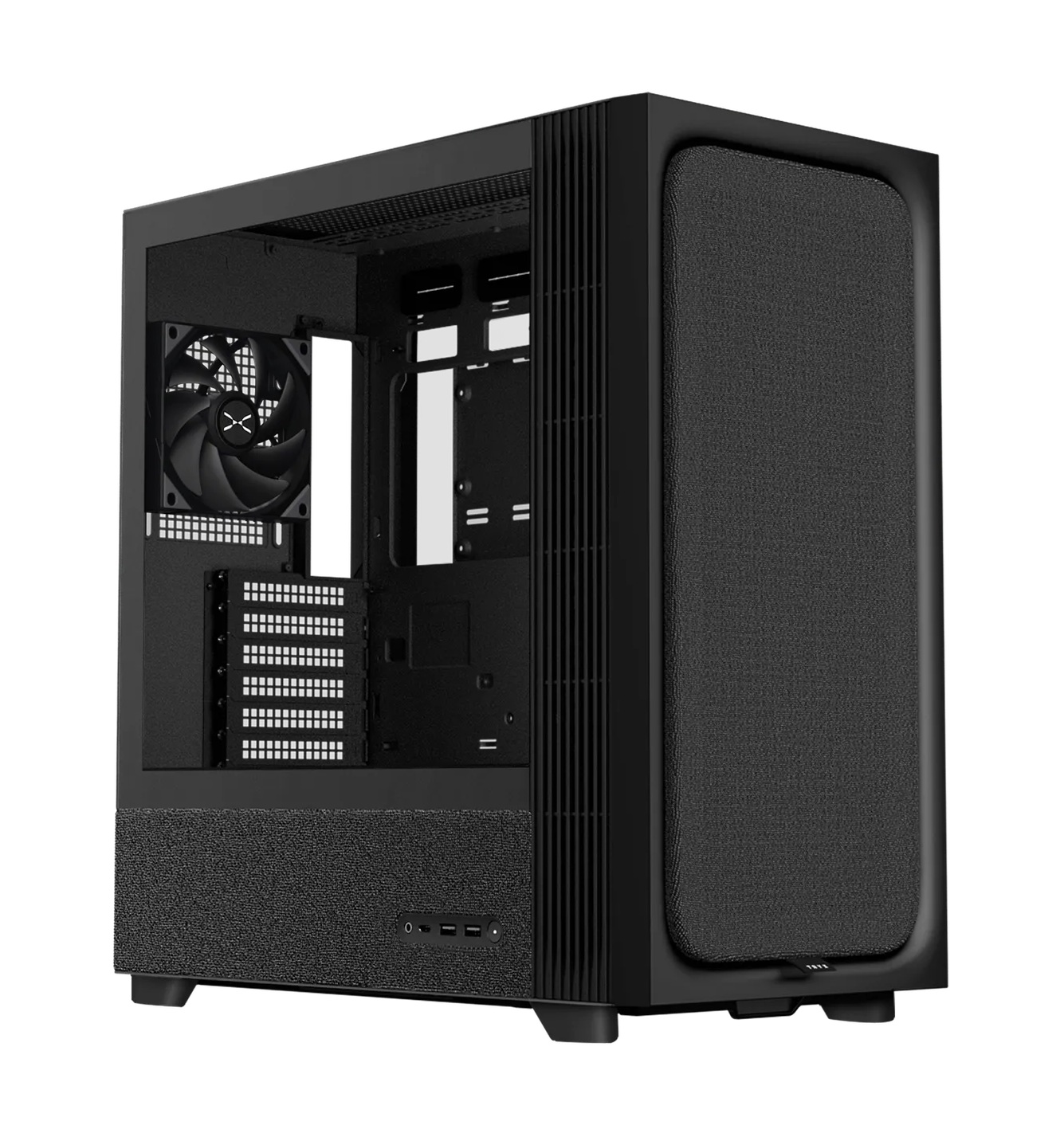
Later, the company introduced and launched another case under the designation FLOVA F50. In addition to the aforementioned unconventional fan (discussed in more detail below), it also brought a not entirely groundbreaking, yet still unconventional integration of fabric into the case design.
Cross-flow fan—unconventional approach to airflow
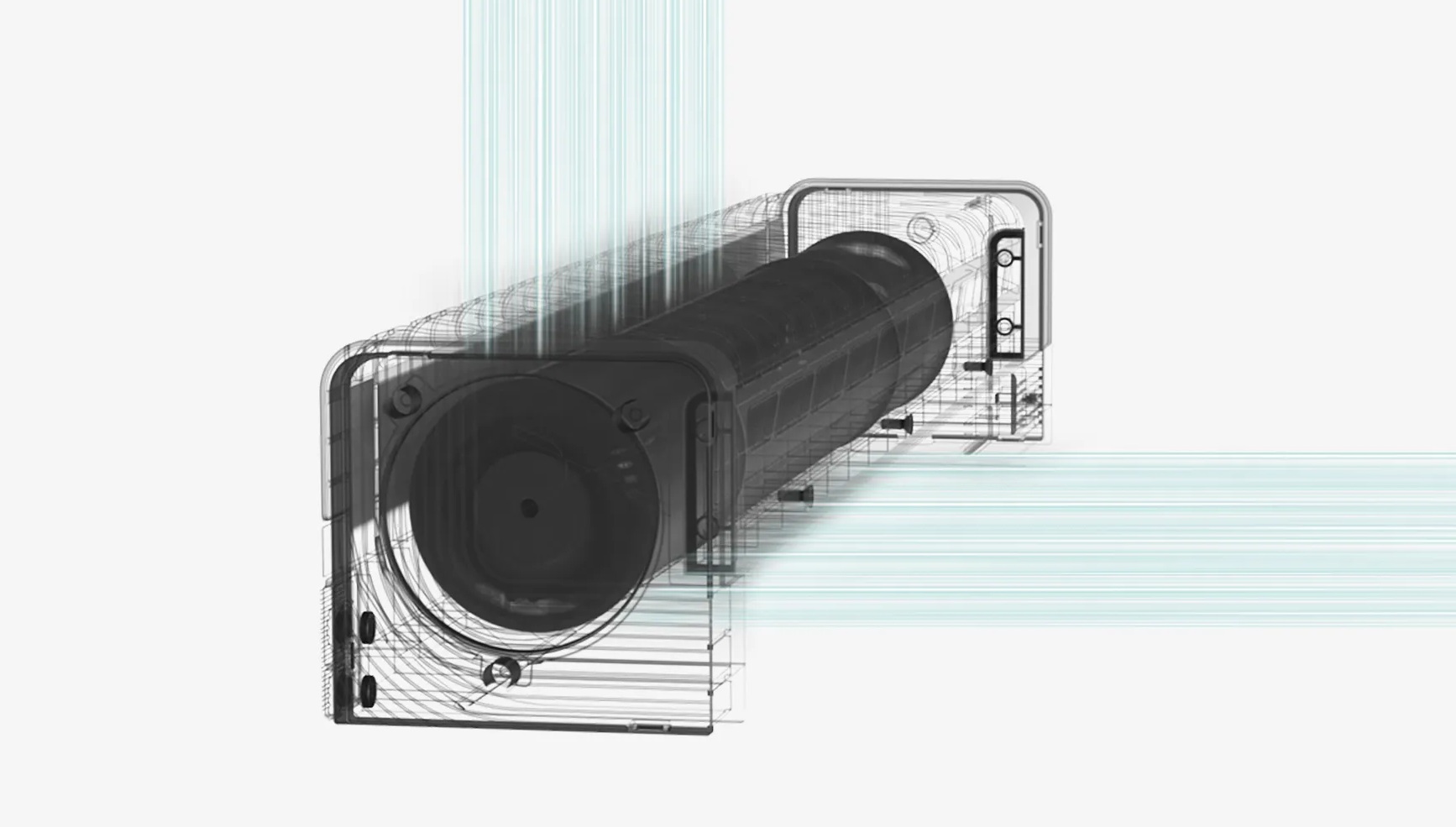
As mentioned above, TRYX introduced its own proprietary cross-flow fan integrated into the FLOVA F50 case. Instead of the direct airflow of a traditional axial fan, it generates airflow perpendicular to the direction of intake, meaning it draws air from the side rather than the front. According to published information, the goal of this concept is to achieve performance equivalent to three 120 mm fans at low noise levels. This aspect of the design remains relatively unique and demonstrates that TRYX is not afraid to experiment with new concepts that differ from mainstream solutions. Such an approach positions TRYX as an experimental player with the potential to discover ideas that may find broader application in the future.
AIO pump cover design as a statement
One of TRYX’s most widely covered products is the Panorama 360 AIO. This liquid cooler features a 3D LCD display on the pump that can show system metrics, animations, or visual effects, adding aesthetic value to a build. A Tom’s Hardware review shows that the Panorama 360 delivers competitive performance in tests with modern processors. However, its pricing and large LCD element target more aesthetically oriented enthusiasts rather than traditional performance-focused users unconcerned with cost. This product is typical of TRYX—strong aesthetics and visual identity go hand in hand with functionality, which does not always mean the best price/performance ratio, but certainly results in an original and unmistakable design.
TURRIS air cooler
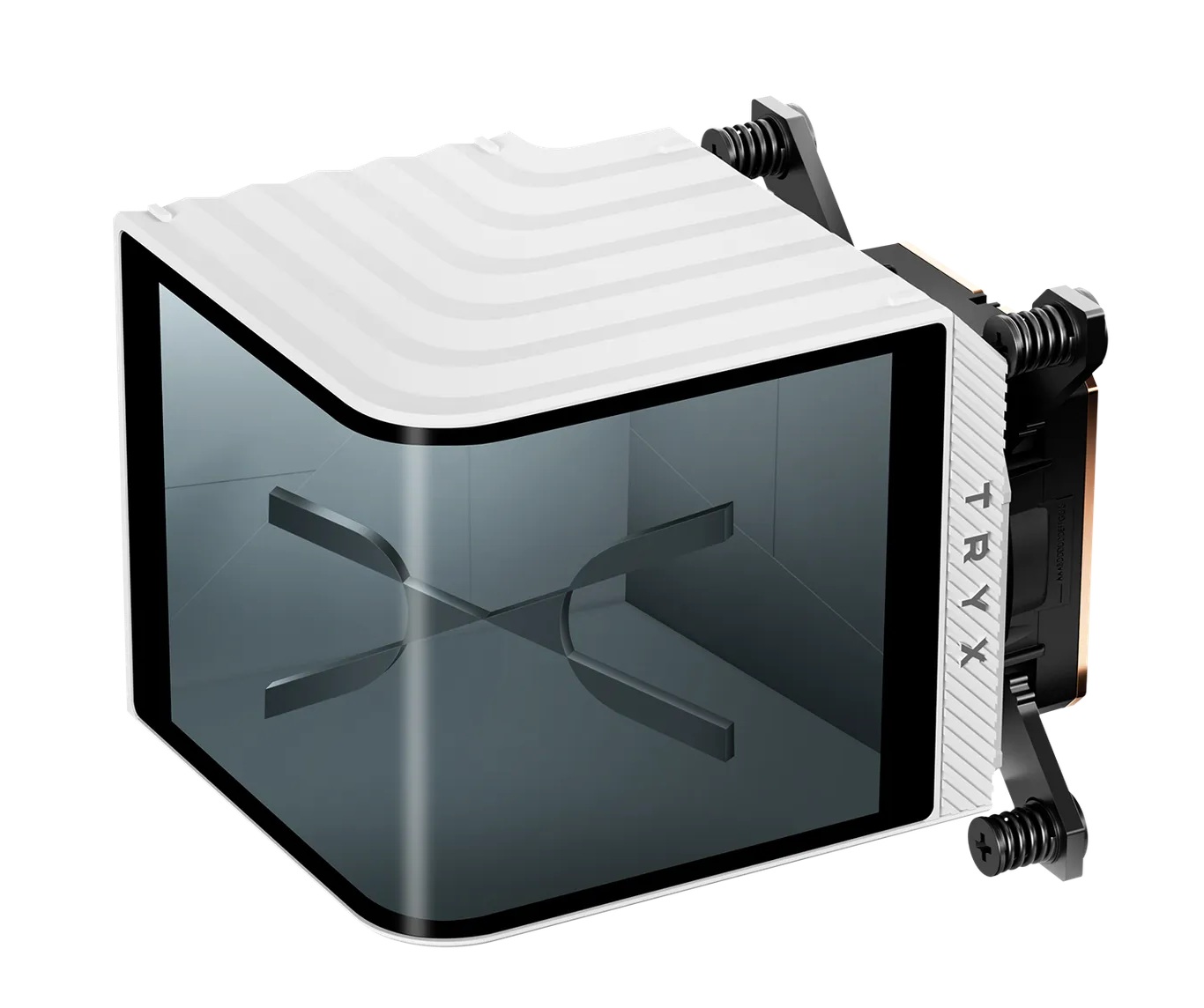
As a counterbalance to its stronger AIO product line, TRYX also offers the TURRIS air cooler, featuring a more traditional dual-tower design and distinctive heatsink surface shaping. Although TURRIS has not yet undergone testing by major review outlets—indeed, it has not yet been officially launched—the robust heatsink construction with fin stack soldered to the heatpipes and a modern visual impression via an LCD panel suggest an attempt to deliver strong performance under an attractive design.
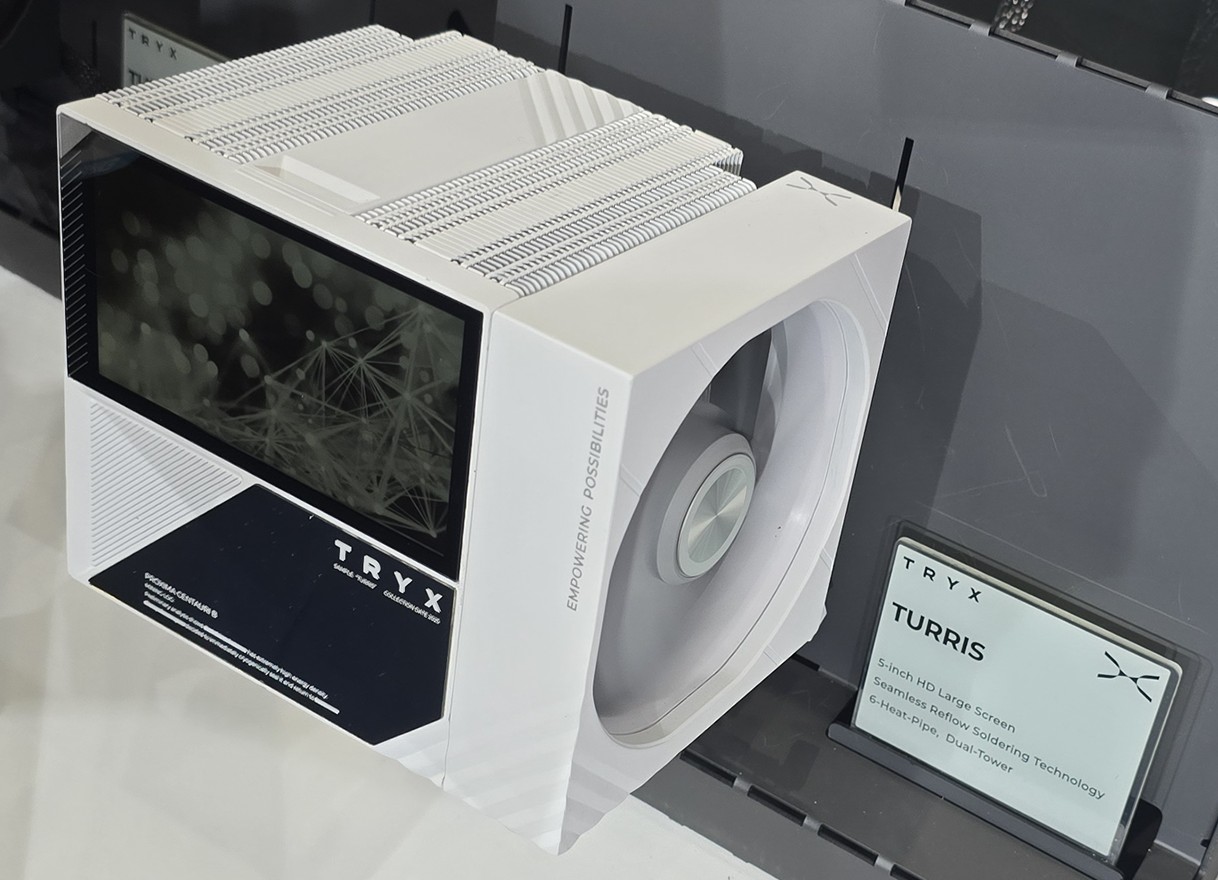
The air cooler combines six heatpipes that transfer heat into two towers, cooled by two fans made from glass-fiber-reinforced PBT, which is less expensive than LCP. The visible top side is dominated by an integrated 5.0″ IPS display capable of showing system data or other graphics directly on the cooler. According to the manufacturer, it can handle up to 280 W TDP and does not exceed approximately 32.5 dBA at maximum load (likely measured according to standard methodology—at a 45° angle from one meter, effectively about 1.4 m). TRYX considers this a successful combination of performance and quiet operation.
ROTA fans—serious technical foundation
Very positive news for TRYX is the ROTA Pro fan. The 120 mm version has already undergone a relevant review. This format was tested by HWBusters, where it achieved excellent noise-normalized performance results.
For a new brand, this is an important success, as a fan is one of the most demanding components to design and manufacture. A high-quality fan can therefore serve as a technical foundation and proof that TRYX can deliver products capable of competing with established manufacturers.
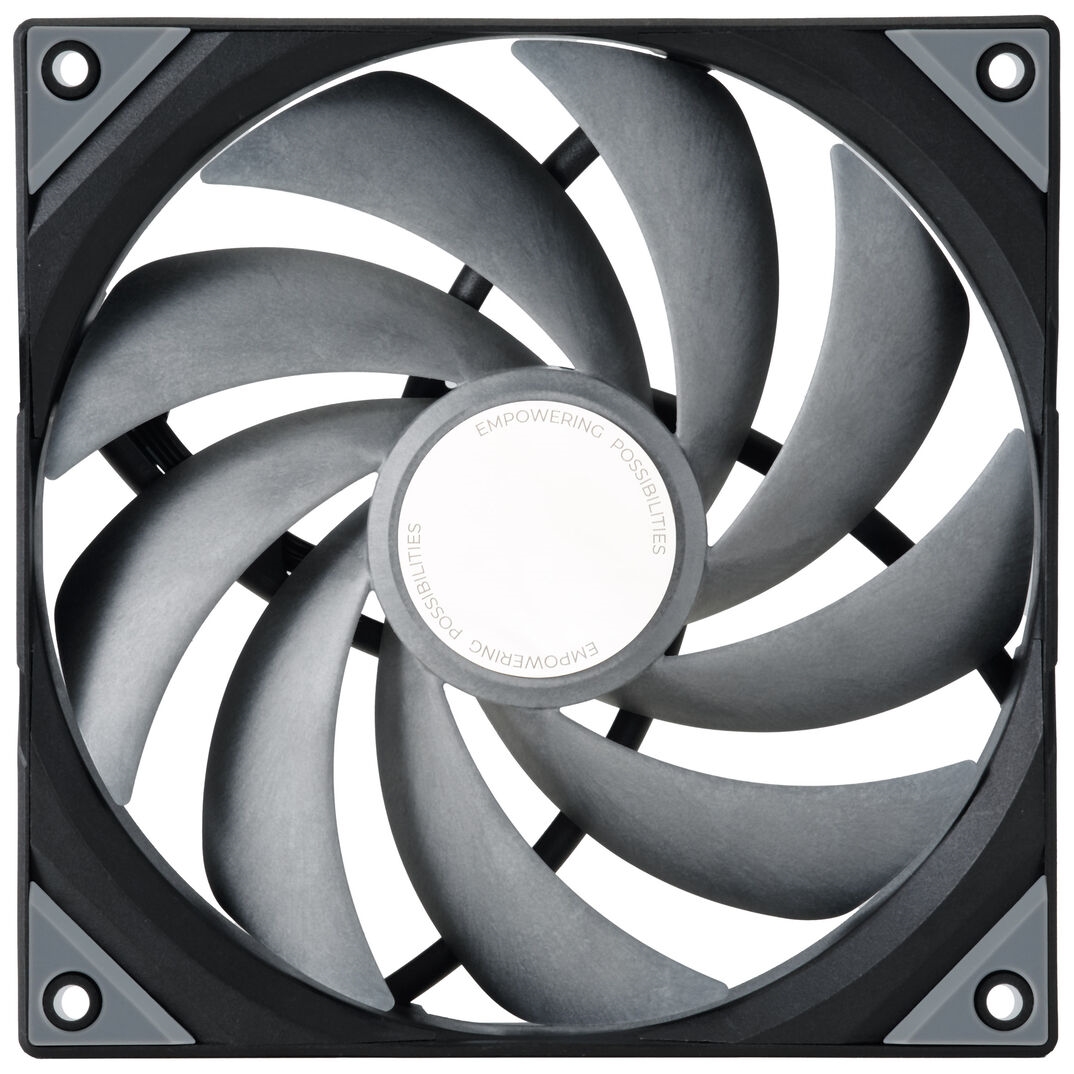
Performance was certainly aided by a quality six-pole motor with three-phase torque, as well as the more durable LCP material combined with FDB bearings. The fans also support daisy-chaining and use a standard 25 mm thickness to ensure higher compatibility within builds. It is worth noting that at the time of writing the 140 mm format is already available locally.
Between design and performance reality
TRYX represents an interesting new direction in cooling hardware design. Instead of cautiously copying established concepts, the brand moves directly into experimentation with new elements. While not all experiments must be immediately successful or technically ideal, TRYX brings important energy into the segment that may ultimately encourage competition and accelerate the development of new solutions. Despite its short history, TRYX is ultimately a brand worth watching. Its approach is living proof that the cooling hardware segment has not exhausted its ideas—and that new stars may shine even where we would least expect them.
In the next part of the series, we will take a closer look at the antlers of one predatory beetle.
English translation and edit by Jozef Dudáš
