Blades, hub—everywhere there are features disrupting an otherwise smooth design. This kind of detailing defines the HAVN H12 at first glance—and the second impression is just as striking. With the kind of geometry the H12 brings to the table, reaching the absolute top tier is possible. In practice, however, it’s essential to find the right scenarios and fine-tune the right settings to end up truly satisfied.
The leading edges of the blades feature pronounced serrations near the tips. These are intended to suppress unwanted micro-turbulence at the fan intake, thereby reducing noise. At the same time, the goal is to maintain the highest possible airflow—vortices forming in these areas reduce it. The HAVN H12 is designed to mitigate this effect and maximize efficiency both aerodynamically and acoustically.

The hub surface is also shaped with protrusions. It somewhat resembles Noctua’s Centrifugal Turbulator, but the direction in which the structures cut through the air is reversed. It follows the same orientation as the impeller blades. These hub protrusions may help redistribute airflow toward the rotor blades, potentially increasing airflow. This occurs closer to the center of the fan, where aerodynamic efficiency drops due to reduced pressure differential. In any case, the attention to detail is evident—and appreciated.
Static pressure should also be above average, supported by the relatively small gaps between the blades. These indicate reduced dead space and, at least theoretically, the higher static pressure.


Airflow performance is, of course, defined by blade shape. Like the frame, the blades are reinforced with fiberglass (PBT + GF), which partly explains why the HAVN H12 exceeds 200 grams—relatively heavy for a 120 mm fan. The construction is robust, and especially at lower speeds, blade vibration that negatively affects the acoustic profile should be minimal. Some influence may remain, but the effort to suppress it is clear.

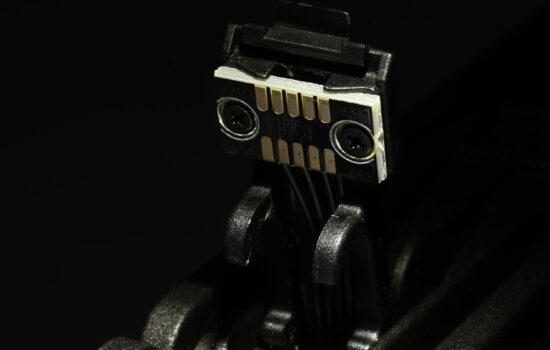
The fan has an above-standard thickness of 30 mm. On one hand, this reduces compatibility with surrounding components, but on the other, greater thickness increases static pressure. HAVN positions the H12 as a high-performance fan and clearly aims at radiator users as well. Daisy-chain cables with dual connectors facilitate multi-fan setups—whether on radiators or as system fans.

Be aware, however, that motor power is genuinely high, with peak draw potentially exceeding 1 A, although operational consumption remains below that threshold. This applies even at maximum speeds of around 2150 RPM.
Please note: The article continues in the following chapter.