




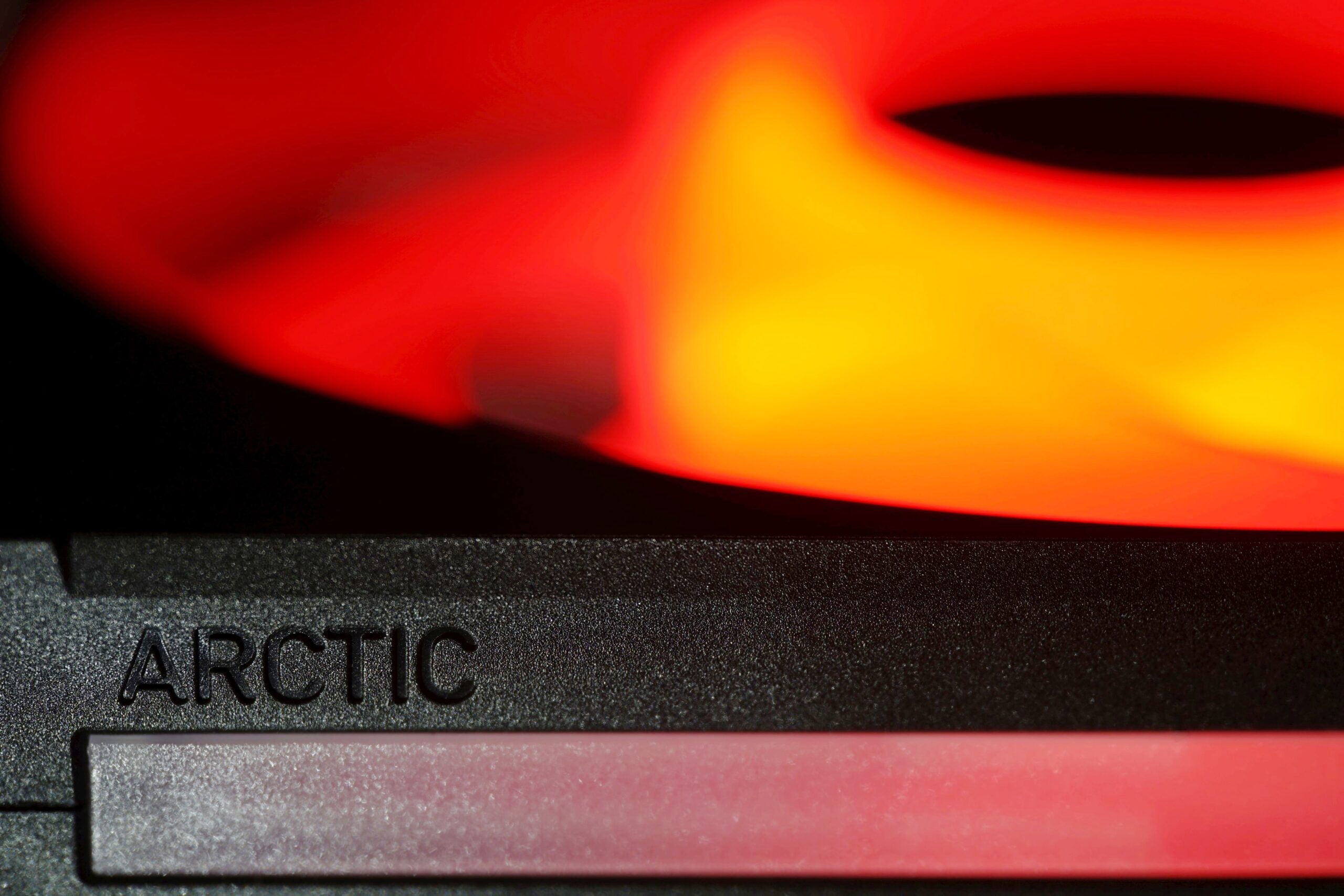
High cooling efficiency is the foundation, but with the BioniX P14 A-RGB fans, Arctic has also made efforts on other fronts. In addition to the clever daisy-chaining method (with the aim of reducing cabling to a minimum), this includes, for example, illumination as intense as possible. The light is guided not only through the entire impeller, but also through the surface of the frame, from the side. There are light guides in these areas as well.
Basis of the methodology, the wind tunnel
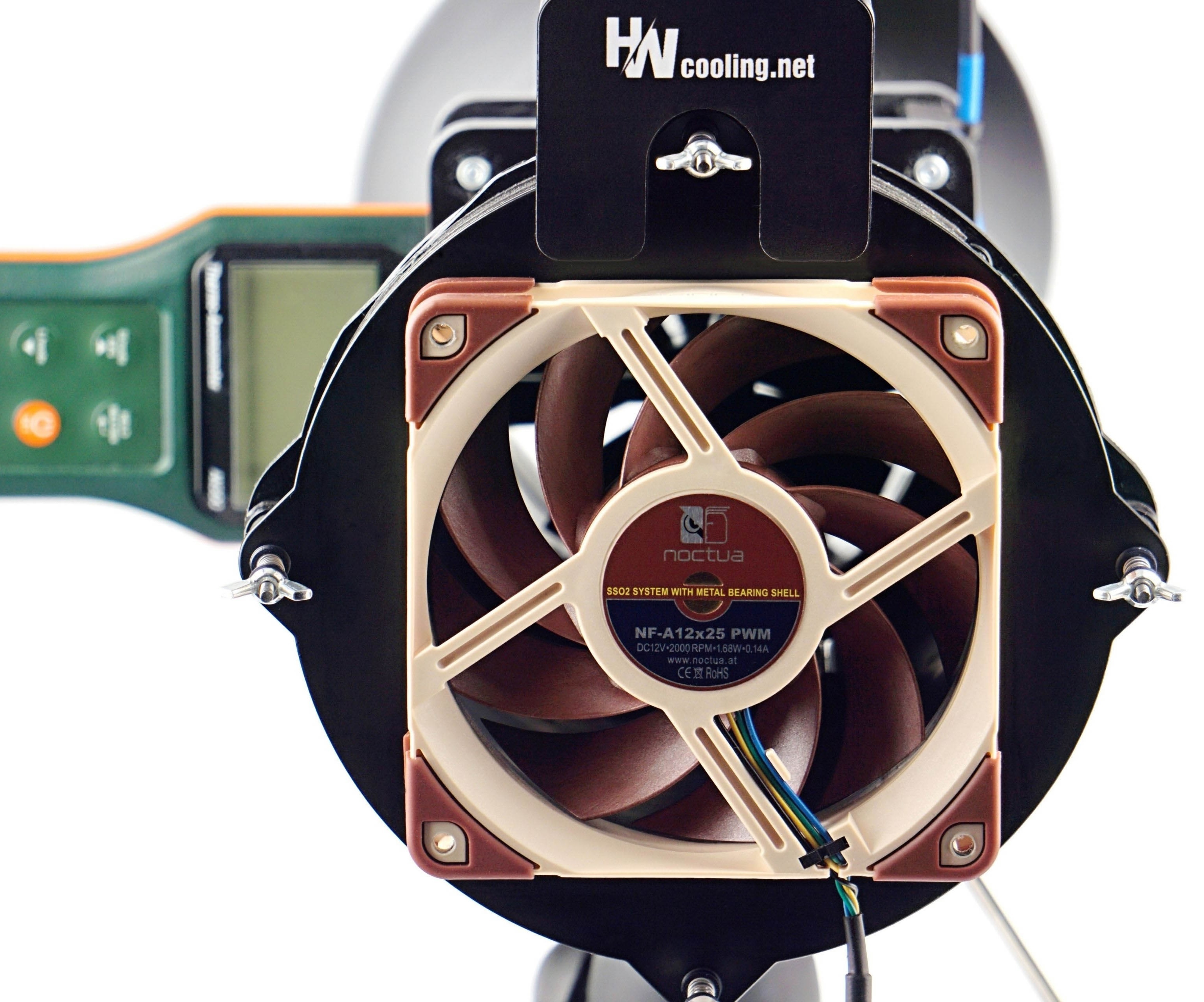
Before you start reading the methodology with all the details, take a look at the test tunnel as a whole. This is the heart of the whole system, to which other arteries are connected (manometer, vibrometer, powermeter, …). The only solid part of the tunnel from the measuring instruments is the anemometer.
The shape of the wind tunnel is inspired by the Venturi tube, which has long been used to measure the flow of liquids and gasses. The Venturi effect for wind speed measuring is also known from the aerospace industry. However, the design for measuring computer fans has its own specificities, which this proposal of ours reflects.
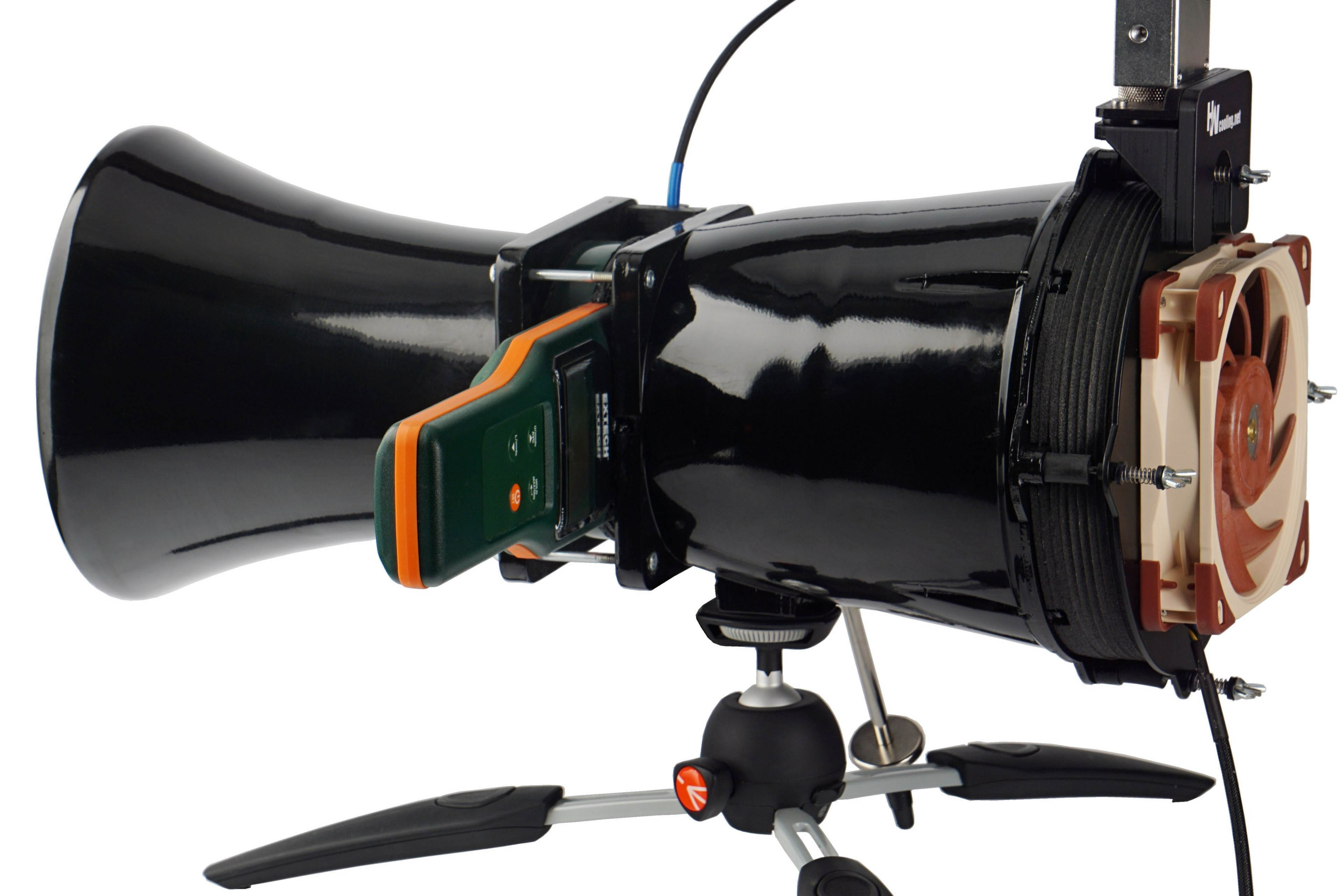
The individual parameters of the HWC wind tunnel for fan tests are the result of physical simulations and practical debugging. All the details (folds, material or finish used) have a rationale behind them and are designed this way for a specific reason. We will discuss the individual design details in turn in the description of the sub-variable measurements.
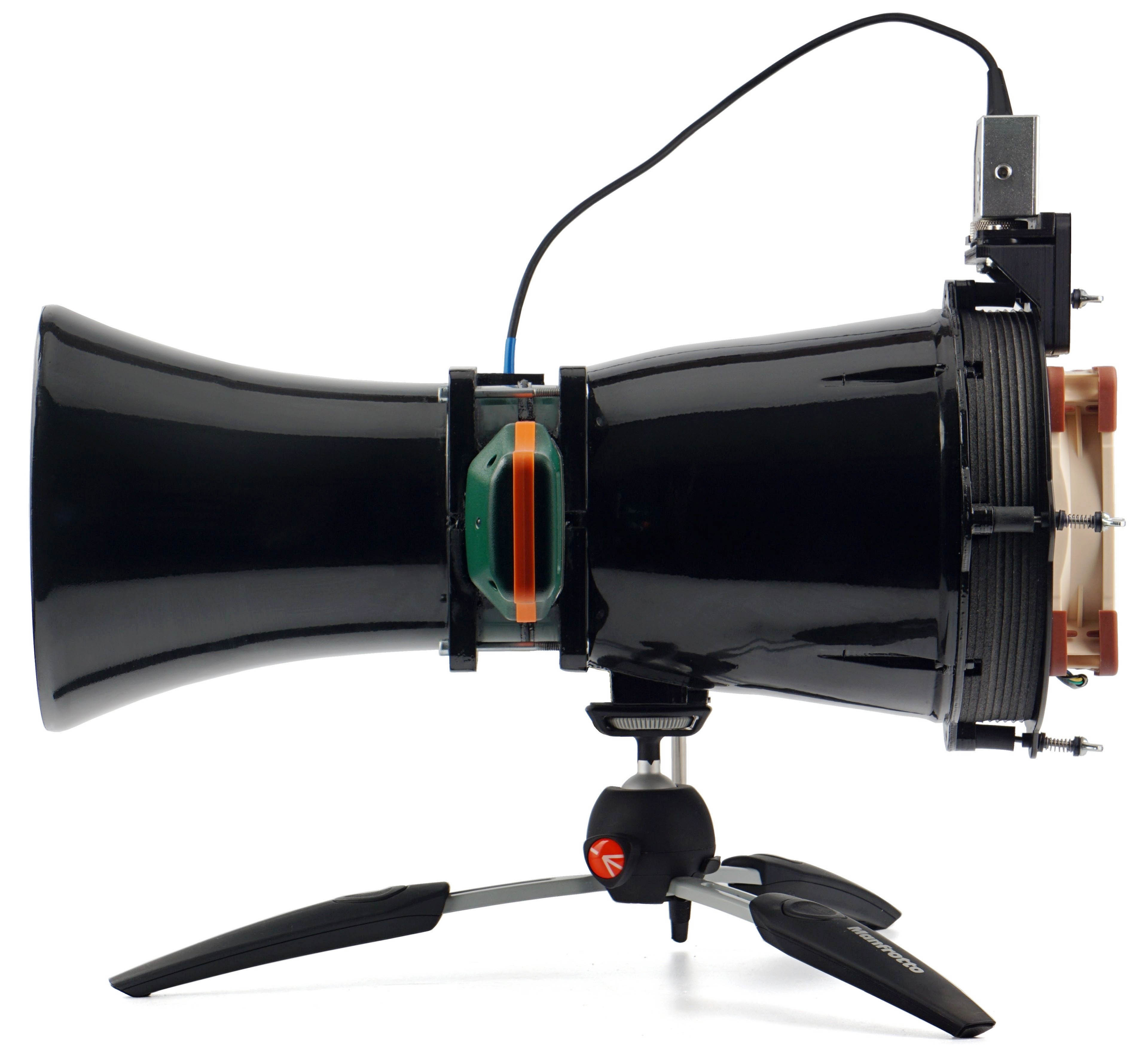
Now we will briefly elaborate on some things that do not fit thematically into the text of the following chapters. Namely, for example, that the skeleton of the wind tunnel is the work of a 3D printer (PLA). The rough print was, of course, then thoroughly machined by grinding, fusing, polishing and varnishing. Especially important is the smooth finish of the interior walls.
When joining the individual parts, the emphasis was on making sure that they fit together flawlessly, that they were sealed flawlessly (we will come back to this when we describe the test procedures for pressure measurement), but also that the joints were not loosened by use. Everything is disassemblable for servicing purposes, but it is ensured that the properties are maintained during use and, for example, even under the stress of vibration. The threads are secured with either lock nuts or thread-locking fluid. It depends on which is more suitable in which place.
When the wind tunnel is not in use, it is enclosed in a dust-tight chamber. In addition to the technical equipment and its correct storage, it is also important for objective outputs that all measuring instruments are calibrated according to the standard. Without this, it would be impossible to stand behind your results and rely on the manufacturers’ specifications. Calibration protocols are therefore an important part of the methodology. Testing is carried out at an ambient air temperature of 21–21.3 °C, humidity is approximately 45 % (± 2 %).
Fans come to us for testing in at least two pieces of the same model. If the deviations of any of the measured values are greater than 5 %, we also work with a third or fourth sample and the average value is formed by the results of the fans that came out the most similar and the differences between them fit under 5 %.




And next time, shall we do the Seasonic MaxFlow fan? 🙂
Me again. Still none of tables do show up. Instead only error messages show. I did check using three devices and two different browsers. Only your newest Arctic BioniX test is affected.
Could you please give me some examples of pages where the charts aren’t displaying correctly? I’ll take a look afterwards and we’ll incorporate the fix—I’ll fix them. Thanks! 🙂
Hey, it might be an issue on my end but several pages of this test don’t load correctly on two devices of mine. Apart from that, thanks a lot for the test. It did perform exceptionally well in the hwbusters-test, too.
Personally, I would like to see a test of the “Noiseblocker NB-eLoop X B14-P ARGB”, since I own several of them. However, testing them probably wouldn’t be interessting to you, since they are really old and I know only of one vendor still selling them
https://www.caseking.de/search?q=eloop+B14&search-button=&lang=de_DE
They used to cost 25 or even 30€ per fan, if I remember correctly. I think, the noiseblocker fans were one of the first to use an outer ring on the impeller.
Thanks for the contribution. Yeah, there were a few charts that weren’t displaying correctly, or weren’t showing up at all. If you spot anything like that, please let me know. Everything should be there completely now, but…
The NB-eLoop X B14-P ARGB is definitely worth testing, of course, but our capacity… Anyway, one Noiseblocker fan will definitely appear in our tests down the line, as it has been planned for quite some time and we already have the samples. 🙂
The issue regarding the results pages not loading is still ongoing – even without VPN and no ad blocker.
The div-container usually containing the result tables shows:
“Oops! That page can’t be found.
It looks like nothing was found at this location. Maybe try one of the links below or a search?”
Everything should be fine now. The issue was on our end. The charts were being linked to URLs with the wrong month in them, which we’ve corrected (from 08 to 09), and they’re working now, haha. 🙂
Just a small addition: In the case of the three-pack, you can connect only one fan separately to a single motherboard header. But, of course, you can connect all three if the fans are daisy-chained with the tokens. 🙂